
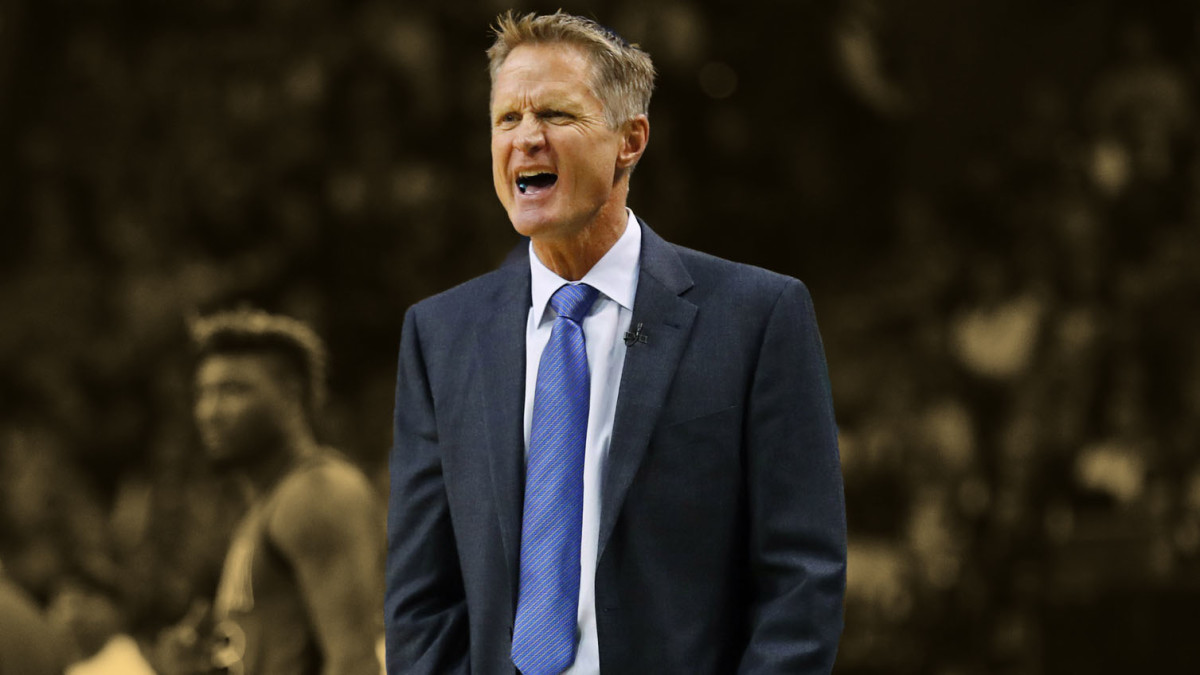
Steve Kerr is, by no means, one to hold his tongue. At some point during the 2017 NBA All-Star voting, the Golden State Warriors head coach couldn’t hold himself back after finding out that nearly 300 players had at least one vote across their names.
“I am very disappointed in the players,” Kerr told a group of reporters back in 2017.” They’ve asked for a vote, and a lot of them just made a mockery of it. I don’t know what the point is.”
Advertisement
In Kerr’s eyes, several of those names shouldn’t have made it anywhere near the ballot. Some, like Mo Williams, received votes despite not playing a single minute up until that point.
“I saw the list,” Kerr said. “I saw all the guys who got votes…There were 50 guys on there who had no business getting votes. Although a lot of people wrote in their buddies in the presidential vote as well. So maybe that’s just their own way of making a statement. I think if you’re going to give the players a vote, I think they should take it seriously.”
Not much has changed since then
The NBA adopted a weighted All-Star voting system starting in the 2016–17 season, giving fans 50 percent of the vote, while players and media each account for 25 percent. The new rule aimed to prevent fans from having sole power to determine the starting five, ensuring that on-court performance and peer respect played a bigger role in the final selections.
Advertisement
Or so the league thought.
Kerr’s issue with the weighted system in its inaugural season carried on until the subsequent years. In January 2022, for instance, Tim Reynolds called the voting an “annual joke” that “NBA players keep repeating.”
Among the players who got starter votes were John Wall and Kawhi Leonard (both missed the entire 2021-22 season because of injuries), plus Luka Samanic, T.J. Warren and Michael Carter-Williams. Even virtual unknowns like Joel Ayayi, Moses Wright, McKinley Wright IV, Zylan Cheatham and George King got a couple here and there.
Advertisement
Per Reynolds, only four players appeared in more than 50 percent of the player ballots: Kevin Durant, Nikola Jokic, LeBron James and Giannis Antetokounmpo.
That means less than half of all NBA players thought Joel Embiid, who finished second behind Jokic for MVP that season, and Luka Doncic (who essentially averaged 28/9/9) did not deserve to be All-Stars!
Zaza forced a system change
Before the 2016-17 season, the NBA allowed fans to have the sole responsibility of voting the All-Star starters while coaches chose the reserves. The primary concern, however, was that deserving players could lose a starting spot to someone with a significantly larger fanbase.
Advertisement
That’s precisely what happened to Zaza Pachulia, then playing for the Dallas Mavericks in the 2015-16 season. Pachulia, the only Georgian in the NBA at the time, had an entire nation rally behind him, while celebrities like Wyclef Jean and Hayes Grier pushed for fans to vote for the bruising center.
As a result, Zaza came within 14,227 votes of becoming the Western Conference All-Star starter. That would be preposterous, to say the least, since Pachulia only averaged 8.6 points and 9.4 rebounds for the season!
Even with the voting tweaks, the system remains flawed. The line between popularity and performance is still blurred, especially when players treat ballots like inside jokes. As long as fanfare and favoritism exist, the All-Star Game will always reflect more of the league’s politics than its purest performers.
Advertisement
This story was originally reported by Basketball Network on Sep 14, 2025, where it first appeared in the Old School section. Add Basketball Network as a Preferred Source by clicking here.