
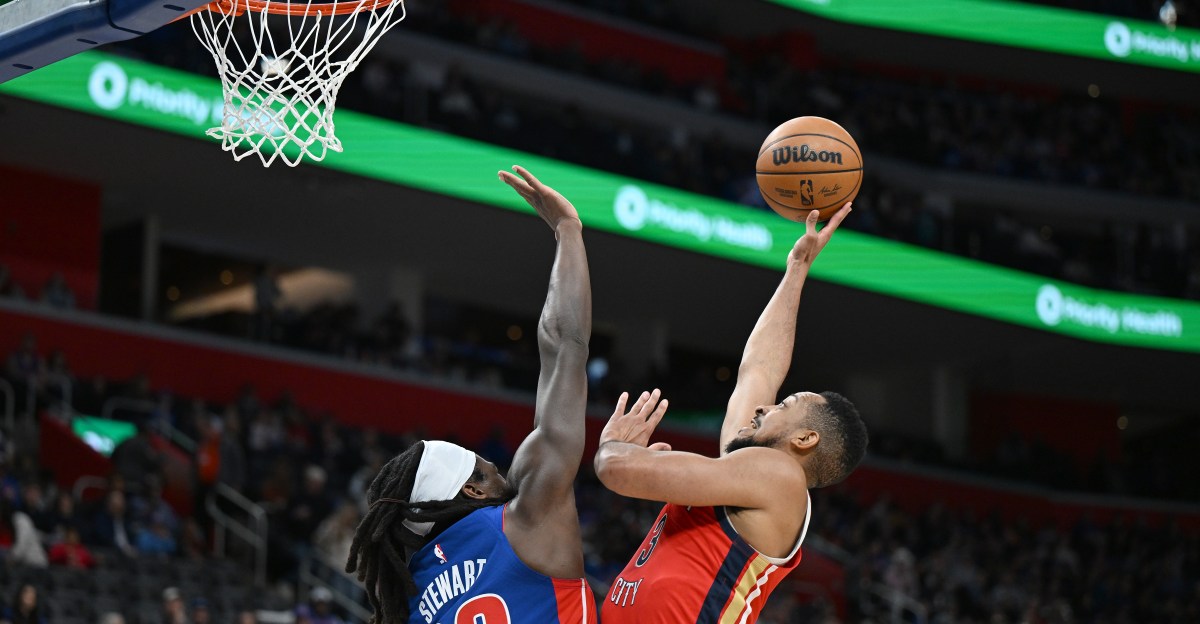
There are only two players remaining on the roster whose statistical doppelgangers interest me much: CJ McCollum and Khris Middleton. Today, we’ll run McCollum through the Statistical Doppelganger Machine.
McCollum was a little better than average when he could stay on the court. He managed 56 games. Odds are, he’ll probably be around average again, though he’s at an age where a sudden and steep decline is normal. Improvement is unlikely.
When the season ends (if not sooner) he’ll be gone, unless he’s willing to stick around as an assistant coaches in uniform mentor making a lot less. Which wouldn’t be a bad thing — he’s well respected and probably has much to teach Washington’s youngsters. That said, he’ll probably make more money and be able to have a meaningful role on a good team trying to win something.
For those new to the doppelganger series, here’s the sum up:
Weary of player comps based on superficial traits like height, build, perceived athleticism, nationality, and skin color, I joined the legion* of stat goobers in constructing an algorithm that uses statistics to generate players with similar production patterns.
Editor’s Note: A legion consisted of 5,000 to 6,000 soldiers. This “legion” Kevin mentions is maybe 10 people, which makes it more like a modern squad.
My version uses 14 categories including box score stats and age. I don’t use height or position, though players tend to get comps from the same position group.
For McCollum, who was 33 last season, the Machine spits out guards who could shoot and a non-rebounding forward who could shoot.
So, a mix of very good players in decline and decent players who aged well.
Next up: Khris Middleton.