
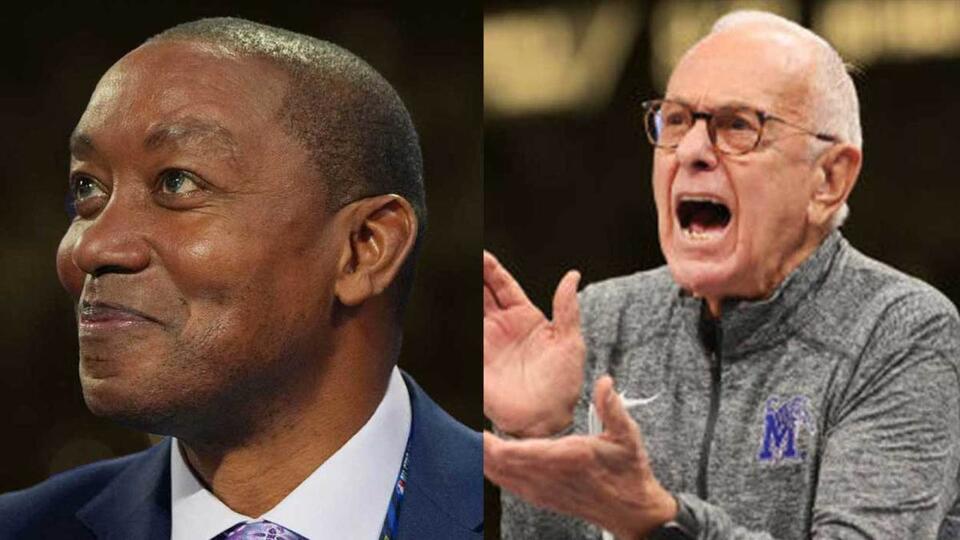
After Larry Brown‘s firing from the New York Knicks in June 2006, a bitter fight erupted over money and power. The Knicks refused to pay more than $40 million left on his contract, claiming “for cause” termination.
Brown, however, saw it differently. He challenged the Knicks’ stance and took the dispute to arbitration, setting off a high-stakes showdown that exposed deep cracks in the franchise’s leadership.
At the heart of the turmoil was the uneasy partnership between him and Isiah Thomas, who then ran the Knicks‘ front office as General Manager and President of Basketball Operations.
Brown and Thomas’ power struggle
Brown, hired in the summer of 2005 by Thomas, arrived with a Hall of Fame resume and a reputation for turning struggling franchises around. Yet his lone season in New York was a disaster: the team went 23‑59, the second-worst record in the league.
On-court struggles are one thing, but they often accompany deeper issues within the organization. Longtime Knicks owner James Dolan would certainly agree, noting that this was the case during the 2005‑06 season.
Speaking publicly, Dolan shared insights into Brown and Thomas’ rather ineffective working relationship. He, for instance, said that Brown had repeatedly undercut Thomas’ authority by negotiating trades — a responsibility normally reserved for the GM.
“We actually had two instances where Isiah was negotiating with a team and the GM said, ‘That’s great, but I got a better offer from your coach,'”recalled Dolan, per ESPN.
Such actions are unprofessional and can cast an entire front office — or even a whole organization — in a negative light. Dolan recognized this and responded by holding a series of meetings with both men, attempting to clarify roles and restore order.
From missteps to settlement
You might think Brown — the championship-winning architect of the 2003‑04 Detroit Pistons — had been in the league long enough to understand its inner workings. Undermining the GM and then getting exposed publicly is a costly misstep. It’s especially damaging because it diverts attention from a coach’s primary responsibility: leading the team. Dolan said that’s exactly what he told Brown.
To his defense, Brown likely felt compelled to act, frustrated by the lack of progress in trade negotiations under Thomas. He may have believed that if nothing was happening, he had to take matters into his own hands. After all, a coach can’t lead a team to success without the right roster.
Realizing that, Dolan said he, after those two instances, told both to focus on their own roles, not each other’s. Moving forward, the process was clear: Brown should communicate his player requests clearly with Thomas, who would then handle trades.
Despite these efforts, the approach failed and Brown was let go after the season. Yet, it wasn’t the end of the story as the public fallout came quickly.
There was, however, a silver lining. Before the ensuing contract dispute reached then-NBA Commissioner David Stern, Brown reached a settlement with the Knicks, who agreed to pay him $18.5 million. Considering the chaos of Brown’s tenure the resolution provided at least a measure of closure to his otherwise turbulent chapter with the Knicks.