
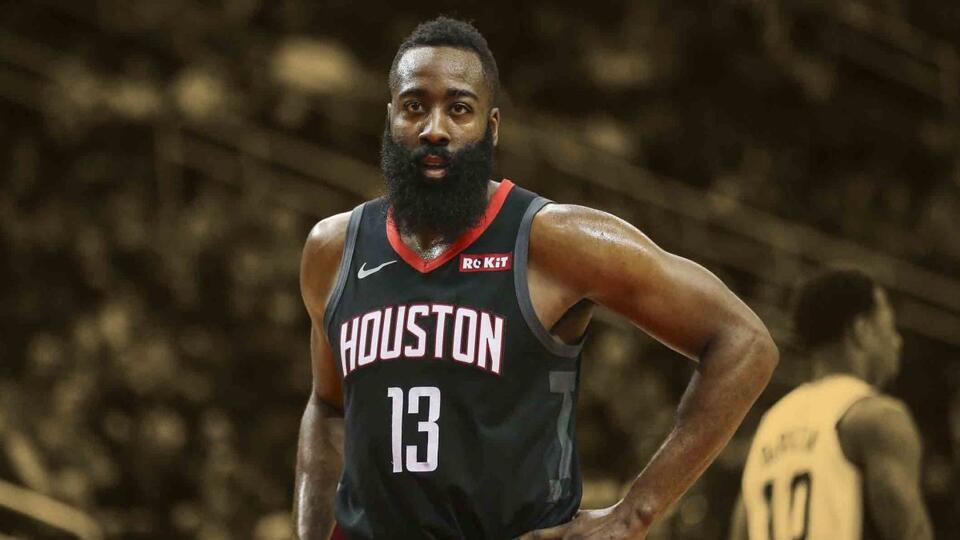
James Harden undoubtedly ranks among the elite scorers the game of basketball has ever seen.
At his offensive peak when playing for the Houston Rockets, The Beard led the league in scoring between 2018 and 2020. As a walking bucket, he averaged a career high of 36.1 points during the 2018-19 season.
That said, Harden had earned a reputation as an iso-player during his tenure in Houston, with coach Mike D’Antoni having a pivotal role in giving him that leash.
The veteran coach developed a system that heavily favored Harden on the offensive end, which many felt would hurt them in the Playoffs when the game slows down a little bit.
Nonetheless, the Rockets stuck to their methods, with Harden emerging as an offensive powerhouse. Whether it was his signature step-back jumper or ability to get to the rim, James could also come across as counterintuitive, something he acknowledged as well.
“I’m not the fastest guy, from end to end on the floor, or the most athletic. I don’t touch the top of the backboard. But I can get to my spots, get to where I need to be. That’s all that matters, Harden said in 2018.
“I’m at my own pace. You’re not going to make me play faster than I want to play. Most guys speed up. I need to get to point A. I’m going to get to point A when I want to get point A. When I need to change direction to get to point B, it’s when I need to go to point B. So it’s a different mentality you have to have. It’s thinking a step or two steps ahead of the defender,”added Harden, addressing the counterintuitive label attached to him.
However, come postseason time, it was a complete turnaround for D’Antoni and Harden.
Iso-ball consistently failed the Rockets on big stages
Always among the top contenders in the West, the Rockets were never able to translate their regular-season success into playoff success. Their ceiling remained a Western Conference finals appearance, with Harden coming up short on several occasions.
The D’Antoni system of 3-point shooting and iso-ball stood heavily exposed during the playoffs. It did not take the opposition long to figure out how the Rockets ran their offense. Making matters worse was their minimal focus on defense, given their scoring-driven approach.
At the same time, Harden has consistently underperformed when the stakes are high. This is evident from him shooting 35 percent from the field during Game 7s and avearging 4.0 turnovers. His inability to rise to the occasion continues to hurt his case as an all-time great.
D’Antoni defended his iso-ball approach
The former Rockets coach remained defiant about his iso-driven coaching style hurting the team and Harden in big games. He defended his playbook with Harden, explaining why it made complete sense to project Harden as the sole offensive engine.
“If that 1-on-1 was not efficient, we wouldn’t do it. But it was doing, if I’m not mistaken, 1.2-something (points per possession), something ridiculous. For a long time, 1.16 was the standard of the best offense an NBA team had. Our isolation game was 1.25 or 1.24. So why wouldn’t we isolate?” said D’Antoni, though agreeing that it was not aesthetically pleasing.
No denying the D’Antoni system won the Rockets a lot of games, but it indeed did not translate into winning basketball when it mattered the most. Something that was visible from the contrasting difference in Harden’s output between the regular season and the playoffs.
The opposing teams game-planned better for him, but also for the Rockets, who lived and died by Harden’s performance and ability to knock down threes.
If one or the other wasn’t up to par in the Playoffs, they lost more often than not.