
Today, NBA teams have access to every piece of information they need. Whether it’s shooting percentages, turnover ratios or hustle stats, coaches and players know exactly where they need to improve. However, this wasn’t always the case in the early days of basketball.
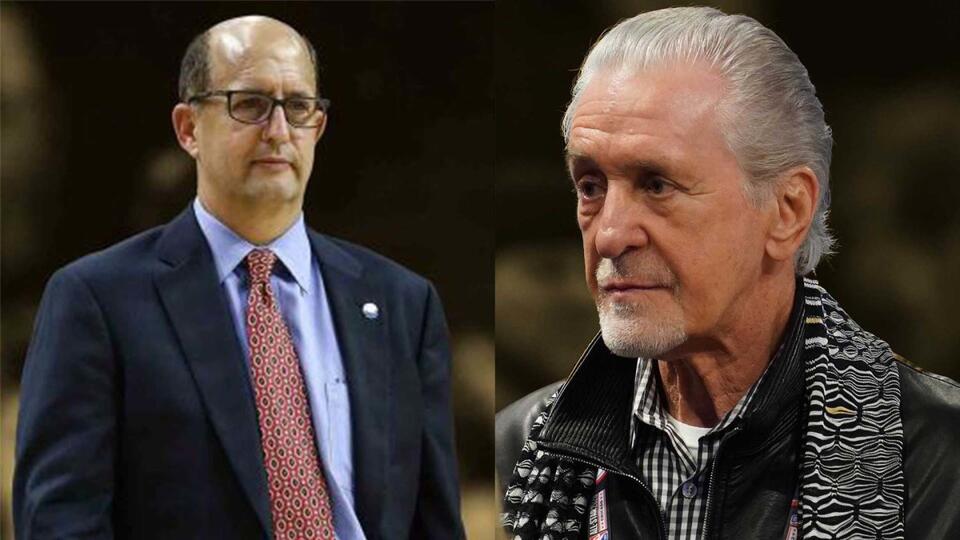
Back in the 1990s, when Jeff Van Gundy was an assistant coach for the New York Knicks under head coach Pat Riley, there was no such thing as “hustle stats”. But that didn’t stop Riley from finding a way to motivate his players on the defensive end. During one particularly lackluster stretch, Riley devised an ingenious way to get his players to put their bodies on the line more in their pursuit of wins — he incentivized drawing offensive fouls.
Money talks
Despite being a legendary coach who boasted of an impressive resume highlighted by numerous championships with the Los Angeles Lakers, there were times when Riley felt his message wasn’t getting across to the players. So, he realized that if his voice wasn’t enough to motivate them, maybe money would do the trick.
According to Van Gundy, Riley pledged $100 for every offensive foul drawn by a player in a game and another $100 if the Knicks won. This may not seem like much, but it was enough to catch the players’ attention. Before long, the Knicks found their groove.
However, it came at a steep cost, especially to Riley’s wallet.
“By the time we won 15 in a row,” Van Gundy remembered. “He was paying out like $1,500 a charge.”
The tactic eventually set the tone for how the Knicks played that season. With players like Patrick Ewing, John Starks, Anthony Mason and Charles Oakley, Knicks games resembled wrestling matches more than basketball games. But it worked; the Knicks became one of the toughest and most feared teams in the league.
Everyone held each other accountable on the court. And if anyone slacked off, especially when it came to doing things that didn’t show up on the stat sheet, they absolutely heard about it in the locker room as Riley had his assistants keep an unofficial record of these intangibles.
“You saw at halftime where you ranked,” Kiki Vandeweghe shared. “If you wanted to play in the second half, you ranked high.”
Everyone was engaged
While $1,500 was chump change for the team’s highest-paid players, it was more than enough for little-used reserves like 6’9″ forward Eric Anderson, who received the league minimum during the 1993-94 season.
Van Gundy recalled that Anderson fully embraced Riley’s incentive program, giving his all on the court during the rare opportunities he had in blowout wins.
“Toward the end of the streak, we’re in the last couple minutes of a blowout at the Garden, and Anderson goes in,” Van Gundy disclosed. “He’s running around all over the place, throwing himself in front of every drive, flopping like a charge whore.”
“He gets the first call, bounces up and screams at the bench. There’s $1,500! Then he takes another one. There’s $3,000! In two minutes I think he made about three grand, and the next day at practice, coach Riley paid it off,” he added.
While players with incredible offensive skills usually get the big bucks, Riley’s recognition of hustle and determination serves as a reminder that hard work can also pay off in the NBA. And with that type of commitment to making plays that matter, the Knicks earned a reputation as one of the few teams that gave the mighty Chicago Bulls a real run for their money during the ’90s.