
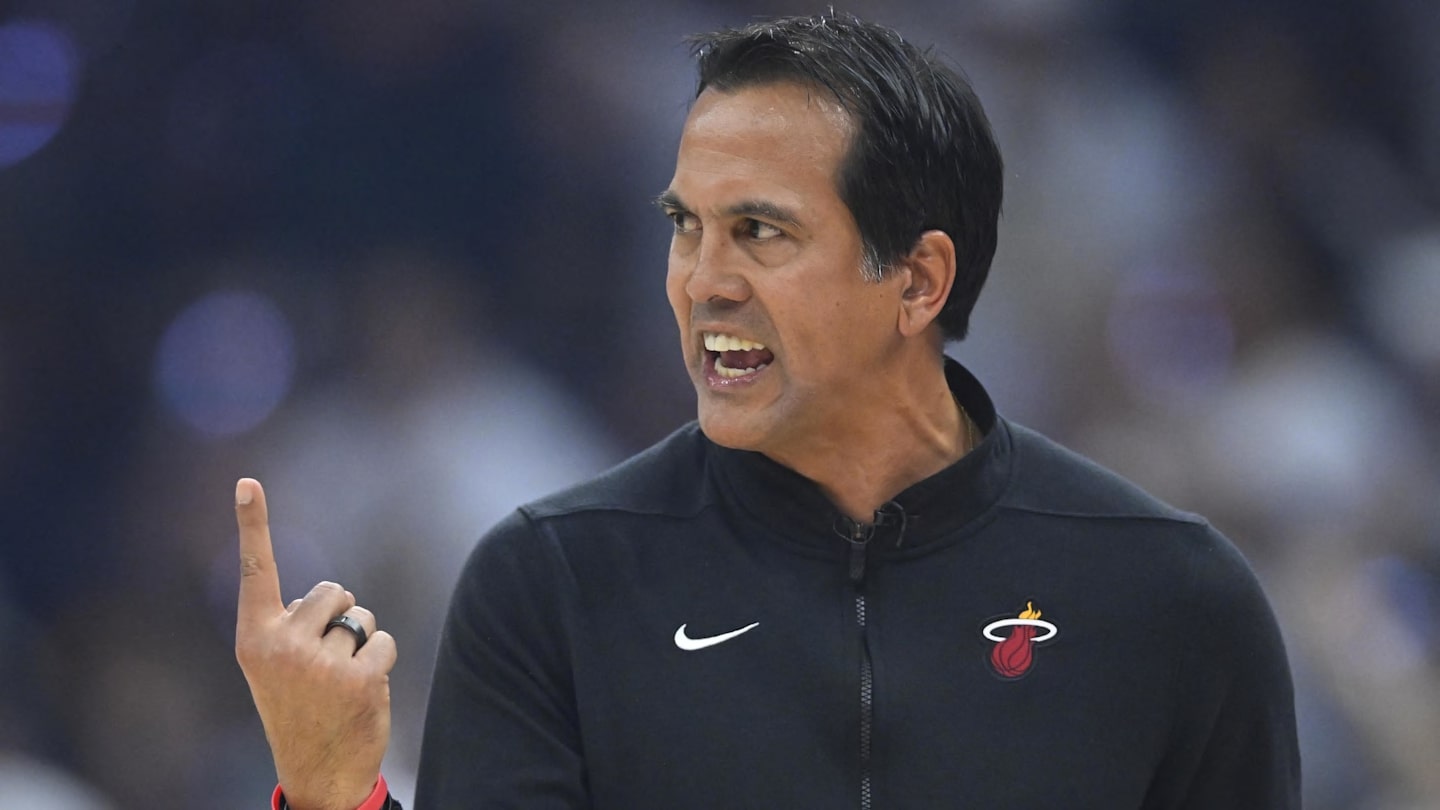
 (Mandatory Credit: David Richard-Imagn Images)
At this time last year, the Miami Heat was not only focused on changing its shot diet, but tailoring their offense around Terry Rozier and Tyler Herro, taking more pressure off Jimmy Butler and Bam Adebayo.
The Heat were more intentional attempting threes and keeping the offense spaced during the preseason. Though they quickly reverted back to poor spacing not long into the regular season despite attempting a similar volume of 3-pointers.
Furthermore, Terry Rozier regressed altogether and Tyler Herro became the primary focal point offensively — even though he was expecting to play more off-ball heading into the season.
Heading into the 2025-26, their first without Butler since 2018-19, the focus has been on pushing the pace. Will that sustain itself?
Erik Spoelstra’s teams have not played fast since the Big 3 era:
In nine of the last 11 seasons, the Heat have been a bottom-12 team in transition frequency, according to Cleaning The Glass. Last year, they had the fifth-lowest transition frequency while finishing with the fourth-slowest pace.
They also were No. 6 in shot clock violations while being T-3 in eight-second violations. Throughout training camp, however, playing quicker has been a focal point — which has bled into the preseason.
Through two games, they are third in pace. It’s a microscopic sample, but the intention is noticeably there. However, they also played with pace last preseason, placing ninth in pace through five games. Obviously, that didn’t sustain itself.
The team’s collective mindset is different heading into the new campaign.
“That has been the main focus, sustaining this pace,” Heat guard Norman Powell said, according to Anthony Chiang of the Miami Herald. “We’ve done a great job. They’ve been pushing us, making sure we’re pushing through the fatigue, the tiredness and still playing at a high level. Not only fast, but thinking at a high level when you’re fatigued and tired. They haven’t waned on that. Every single day, it’s been about pace, getting out in transition, running. All the drills have been full court, running to our spots with speed and pushing through that tiredness and fatigue. I don’t think we’re going to slow down going into the season.”
“We’ve been a very slow team historically,” Heat forward Jaime Jaquez Jr. told Chiang. “The Heat, just in general, have been a slower team. We’re just trying to change that. The game just continues to get faster, and we want to grow with the game and not get left behind. Part of that is the pace.”
Heat’s personnel is more suited to play quicker this season:
Not only is Butler no longer in the mix (he didn’t like playing fast), but two of the Heat’s most important rotation players — Nikola Jovic and Norman Powell — thrive in transition.
Jovic is one of the Heat’s best initiators and quick decision-makers, specifically in transition. Powell is another good snap decision-maker who knows how to space with the threat to either score or attack an already-bent defense.
Neither are great ballhandlers, but they don’t have to be when you’re causing defenses to backpedal and play on its heels.
Andrew Wiggins, Simone Fontecchio, Bam Adebayo, Dru Smith and Keshad Johnson have filled the lanes well, too, for what it’s worth. When Tyler Herro, Davion Mitchell, Pelle Larsson and Kasparas Jakucionis return, the Heat should only look more functional when they have to run.
Time will tell if the Heat’s new-found pace is a mirage or not. We know they won’t be one of the fastest teams in the NBA for a full 82, but it would help if they were toward the middle of the pack. Being versatile stylistically is important, especially if they want to crawl out of the bottom-third offensively, where they’ve (unfortunately) forged a home each of the last three seasons.
***
To check out our other content, click here.
Follow Hot Hot Hoops on Twitter/X here!
Follow Hot Hot Hoops on Instagram here!
Subscribe to our YouTube channel here!