
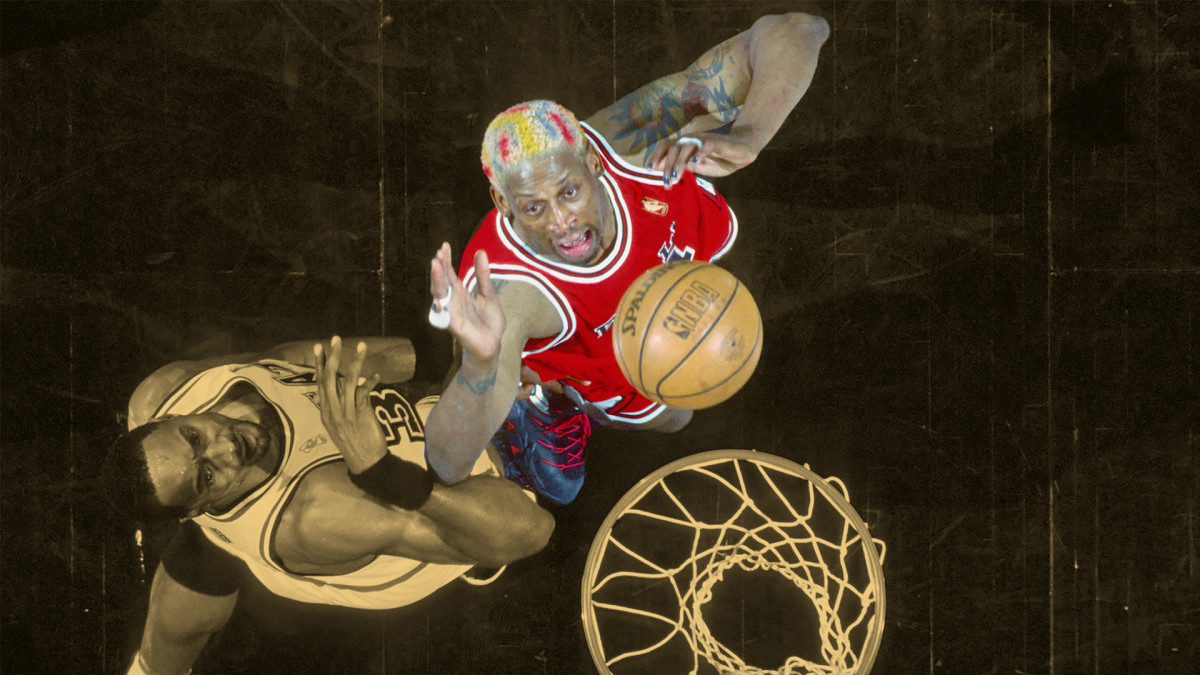
Dennis Rodman was arguably one of the best defenders and rebounders of the 1990s, although his unconventional behavior concerned teams. Still, the Chicago Bulls took a chance on Rodman in 1995, aware that his defense and rebounding would give the team a boost.
When it came to his disruptive behavior, the Bulls’ head coach Phil Jackson approached it differently. Instead of trying to control Rodman, he allowed him to be his authentic self.
Advertisement
That approach proved effective and was exactly the kind of reception Rodman had been looking for.
“When you move from one city to another, you have to feel wanted,” he said. “I felt wanted in Chicago from the beginning from a basketball sense [because] they weren’t interested in taming me or keeping me in line. That’s the only feeling of comfort I needed.”
Rodman quickly felt at home with the Bulls, and the gamble appeared to have paid off. However, his notorious antics persisted throughout his first season with the franchise.
Advertisement
The Bulls ignored Rodman’s antics
Rodman continued with his disruptive ways, which critics felt would hinder the Bulls’ championship drive. But Jackson, Michael Jordan and Scottie Pippen hardly paid attention. Nothing else mattered for them as long as he played his usual game.
With Jordan and Pippen leading the Bulls offense, Rodman focused on what he did best – rebounding. In his first season with Chicago, the seven-time rebounding champion controlled the boards with a 14.9 rebounds per game average in 64 regular-season contests.
Advertisement
Aside from that, he also excelled defensively. He was tenacious and relied on mind games on whoever stood in his way, often leading to skirmishes. However, one thing noticeable about Rodman was that he had remarkable restraint, responding with a sly grin that further enraged opponents.
The Rodman investment paid off handsomely
Despite a rocky first season, Rodman played a vital role in the team’s 1996 title run. His unconventional ways helped Chicago in its Finals battle against the Seattle SuperSonics.
Advertisement
Rodman was the king of the boards in that final, averaging 14.7 rebounds per contest. That effort proved pivotal — his rebounding gave Chicago crucial extra possessions and opportunities. Many even felt he deserved Finals MVP honors in that series, given his performance.
With his role defined, Rodman’s impact on the Bulls carried through the following seasons. He focused on defending and rebounding, which helped Chicago achieve its second three-peat in that decade.
Rodman showed that even with his off-court antics, he was all business once he stepped on the court. He made headlines for all the wrong reasons, but they hardly hindered the Bulls’ success in those years.
Advertisement
Ultimately, Rodman’s tenure with the Bulls was noteworthy. Thanks to his relentless rebounding and defensive presence, he was a vital part of the team’s second three-peat.
Rodman turned out to be the perfect complement to Jordan and Pippen, filling in a void that the Bulls sorely needed. He proved that there were ways to be counted among the greats – through defense and rebounding. Although unconventional, these were often overlooked contributions.
This story was originally reported by Basketball Network on Oct 11, 2025, where it first appeared in the Old School section. Add Basketball Network as a Preferred Source by clicking here.