
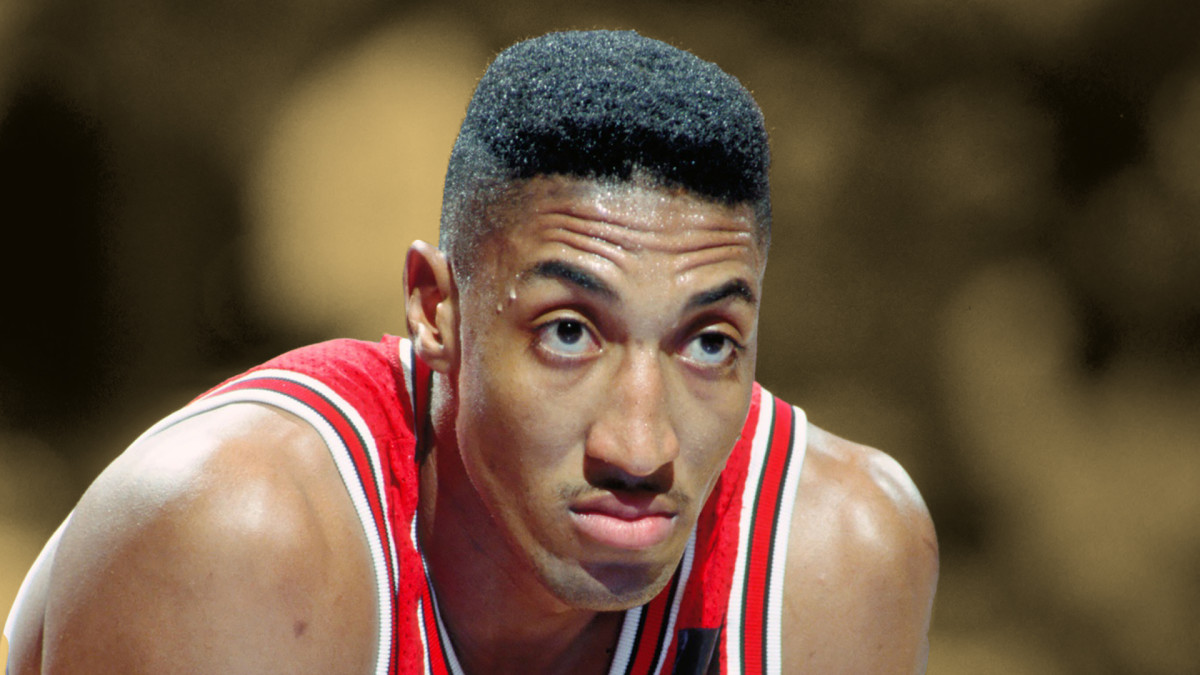
Michael Jordan and Scottie Pippen are arguably the best duo to ever grace an NBA hardwood. Many great players won together, but the fact that these two practically ruled for a whole decade and captured six titles in six Finals appearances only reinforces that point.
It’s also well-known that Jordan never even made the NBA Finals before Pippen joined the Chicago Bulls, nor after they left. While Jordan was undoubtedly the team leader, Pippen was equally important, doing absolutely everything on the court, both offensively and defensively. Yet after winning the Bulls’ first title in 1991, he arguably made the biggest mistake of his illustrious career.
Advertisement
Reinsdorf warned Pippen about the deal
At that time, long-term contracts were a common thing in the NBA. Naturally, Pippen agreed to a seven-year deal worth $18 million, but the contract didn’t override the final two years of his rookie contract. Instead, the new money he was getting was stretched across eight years.
Years later, team owner Jerry Reinsdorf addressed Pippen’s contract situation.
“I told him when he was getting ready to sign this deal that ‘Halfway through it you’re going to think you’re underpaid, especially since we front-loaded it,'” Reinsdorf told Sam Smith of The Chicago Tribune.
Advertisement
“His answer was, ‘You’ll never hear from me.’ I told him I didn’t believe it, but he promised that would be the case. I know he’s underpaid. Sometimes I make good deals and sometimes I make bad deals,” he added.
Pippen was Bulls’ sixth-highest-paid player
Fast forward to the 1997-98 campaign — the final season of the Bulls dynasty under Phil Jackson, masterminded by Jerry Krause — Pippen was the sixth-highest-paid player on the team. He earned $2,7 million, while Jordan made $33.1 million
Advertisement
The league’s second-highest-paid player during that season was Patrick Ewing, who earned $20.5 million, according to Eskimo. Jordan was taking 55.5 percent of all the Bulls’ player salaries and 123 percent of that season’s salary cap.
Years later, it became clear that Michael’s contract had helped usher the league into a new era after his first retirement. In 1999, the NBA imposed a maximum salary based on years of service, meaning the max for Jordan would have been $14 million.
Pippen only cared about winning
Knowing that without his contribution, the Bulls dynasty likely wouldn’t have existed, earning over $30 million less than Jordan and being sixth on the payroll while second in hierarchy, behind the likes of Dennis Rodman and Toni Kukoc, who were making nearly double, understandably began to weigh on Pippen. Ron Harper and Luc Longley were also paid more, adding to his frustration.
Advertisement
Years later, Pippen admitted that being the only underpaid Bull bothered him, but he enjoyed winning too much to dwell on it.
“I think at the time there were moments when it was upsetting,” he told The Guardian, reflecting on those contract years. “But also, there was so much joy that rose among the pain that I was feeling. There was too much to celebrate and enjoy to be thinking about the negative side of it.”
After helping the Bulls win their sixth title in the 1997-98 season, Pippen left Chicago via a sign-and-trade to join the Houston Rockets on a five-year, $69 million contract. Even though he amassed $109 million in NBA salary over his career, he could have gotten way more during his prime years.
Advertisement
This story was originally reported by Basketball Network on Oct 18, 2025, where it first appeared in the Old School section. Add Basketball Network as a Preferred Source by clicking here.