
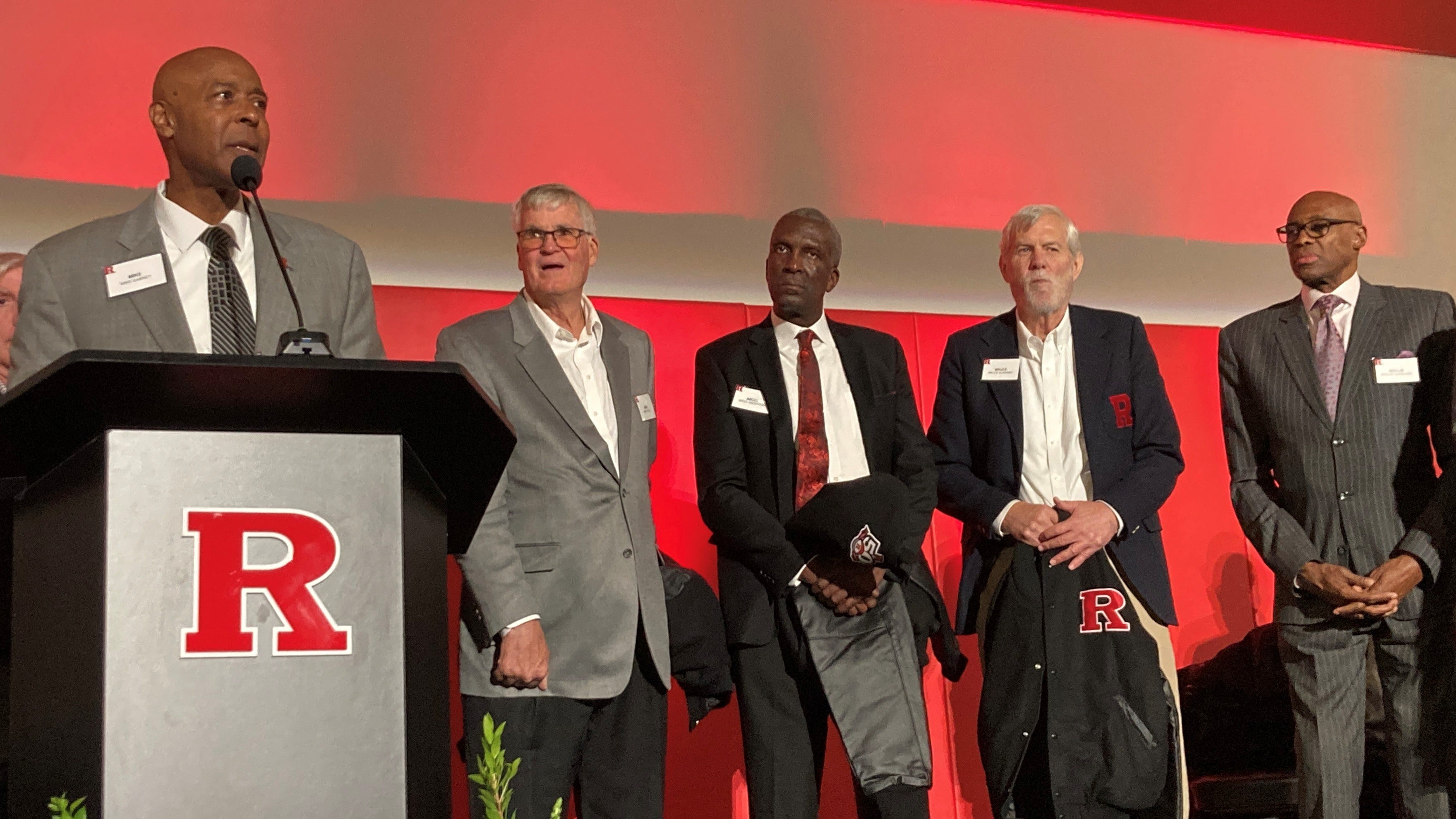

Watch: Rutgers’ 1976 Final Four team is honored, 50 years later
Watch: Rutgers’ 1976 Final Four team is honored, 50 years later
To fill positions on his Rutgers basketball staff, head coach Steve Pikiell typically has tapped into long-standing personal ties – people he already knew well, or who were closely connected to someone in his inner circle.
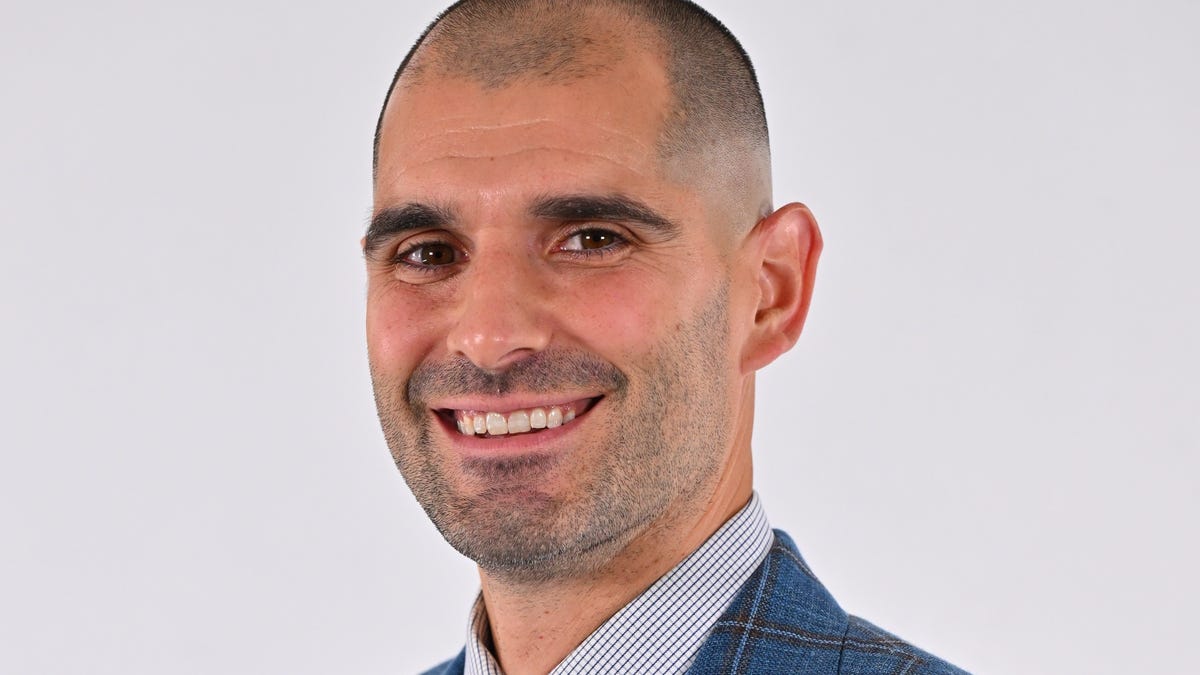
The most recent addition of Rob Sullivan as Rutgers’ first general manager for men’s and women’s basketball was a bit different. As the title implies, Pikiell didn’t have sole say on the hire. But beyond that, he did not know Sullivan previously.
The 41-year-old came up through the ranks at Saint Joseph’s University. He was a reserve guard on the celebrated 2003-04 Hawks squad that achieved a No. 1 national ranking and advanced to the NCAA Tournament’s Elite Eight. He later served as an operations staffer, associate athletic director and, last season, the men’s hoops general manager (before the title became formalized, he was essentially doing some of GM-type duties as associate AD). In between tours on Hawk Hill, he spent three years with Cornerstone Management sports agency.
When the Rutgers GM job opened, a couple of notable people reached out to Pikiell recommending Sullivan – former Hawks head coach Billy Lange (who is now an assistant with the New York Knicks), Players Era Festival CEO Seth Berger (a Philly guy who co-founded hoops apparel company AND1) and veteran NBA front-office executive and scout Steve Rosenberry.
In an exclusive Q&A, here is what Sullivan said about his past experiences and his vision as Rutgers’ general manager.
Q. What were your responsibilities as the general manager at St. Joes?
A. “Name image and likeness, fundraising, brand management, sports marketing contracts, game schedule, and roster management. I started with NIL and I ended with roster management. Those two worlds directly correlate.
“When we opted into the House settlement, it became a lot of fundraising, donor-centric, but I’m a basketball guy. I speak the language and that really helps.”
Q. What will your GM duties entail at Rutgers?
A. “Similar to what I was doing at St. Joes – revenue generation, NIL and roster construction. Cultivating relationships with businesses, donors, former players, Rutgers supporters. It’s just at a higher level now.”
Q. In terms of roster management, will your role be laying out, “OK here is the pie we have to spend, here is what each guy on the roster should be worth, here is what this guy in the portal that you’re interested in should be worth” – helping to make those valuations?
A. “That’s spot on. It does start with the vision for how the program wants to build their roster. What’s the identity? These jobs are becoming much more quasi-front office-esque, just like the NBA model. The NIL piece plays a role in recruiting but also retention and how the pieces fit. It’s about vision and identity and how Coach Pikiell and Coach (Coquese) Washington want to play.
“From there you take the funds from rev share and NIL and say, ‘How can we craft this roster to showcase results, but also build a model of long-term sustainability?’”
Q. Steve Pikiell’s biggest strength as a coach is player development, but that requires time. How central is player retention to what you’ll be doing?
A. “I came into the basketball business in a very traditional fashion. You get into this profession because you want to compete, win games and develop players on and off the court, in the classroom, in the community. That mentality hasn’t changed for me, but you have to be adaptable to what’s going on (in the college sports landscape).
“It was incredible to get into the business with Coach (Phil) Martelli as a 22-year-old director of ops. I learned the business from the ground up in a traditional and positive fashion. But now, with roles like mine, I want to help Coach Pikiell be able to do more player development – and to be able to focus his attention on coaching the team.”
Q. How much will analytics play a role in your roster management?
A. “We’ve used a lot of different analytics tools at St. Joes, but ultimately I’m a big believer in feel. You’re going to have metrics and data and analytics and comparative analysis and benchmarking. But ultimately it comes down to how comfortable you are as a program and how comfortable Coach Pikiell is paying the players (certain amounts) – and how much you have in our rev share and your NIL fund to compensate these guys. We will be competitive with that.”
“But a college basketball season is at most 40 games. You don’t have analytics like you do in the NBA where you’re playing 82 games and possibly more with the playoffs. I do think at times analytics, as it relates to the portal and market value and worth of a player, is a little bit embellished collegiately. The basketball feel, the eye test and institutional knowledge are as important as any analytics you would have when it comes to making an offer to a player.”
Q. What did you do at Cornerstone Management and how did that prepare you to be a college basketball GM?
A. “I was three for three years – a boutique agency outside of Philly. Jameer Nelson was a client. It really did prepare me for what I’m doing now. I was in the basketball division, and we were competing for players and getting big-time meetings, but we weren’t getting (potential clients) over the finish line. So we changed our model to where we started advising players at the grassroots level. We wanted to advise them and help them with their collegiate decisions, knowing we think they have incredibly bright futures in basketball.
“So that prepared me in terms of recruiting and contract negotiations and learning the business within the business.”
Q. It helped you understand the agent’s world?
A. “Yes, in terms of contracts, and also the networking piece. The same agents I was competing against, they’re also peers and friends. I have a lot of good relationships with really successful agents that are currently representing college athletes. If those athletes get into the transfer portal, I have an ability to get our foot in the door and pursue them.”
Q. How do you plan to juggle or balance the men’s and women’s sides of the jobs?
A. “At St. Joes there was definitely some crossover with our women’s program. We were pitching the same donors that supported both programs. So for women’s basketball, my role was to get them more additive contributions or a carve-out. If there was a big contribution to men’s basketball, it was, ‘Hey, how about a carve-out for women’s basketball?’ I’m willing to take that same approach with Coach Washington at Rutgers, but I’m not going in there with all the answers. My first question is, ‘How can I help you? What do you need from me?’”
“There are a lot of synergies with the men’s and women’s sides, especially when it comes to agents. The same agents are starting to represent men’s and women’s basketball players, so I can lean into those relationships on the women’s side as much as the men’s side.”
Q. What was Steve Pikiell’s main message to you during the hiring process?
A. “He needed somebody to take the lead from an NIL standpoint, fundraising, donor cultivation – having someone solely focused on the business side of basketball. He was very transparent about how for the last few seasons he felt the need for having somebody whose daily regimen was to focus on the business side of the program. I definitely think I can add value and check those boxes for Coach Pikes.”
Jerry Carino has covered the New Jersey sports scene since 1996 and the college basketball beat since 2003. Contact him at jcarino@gannettnj.com.