
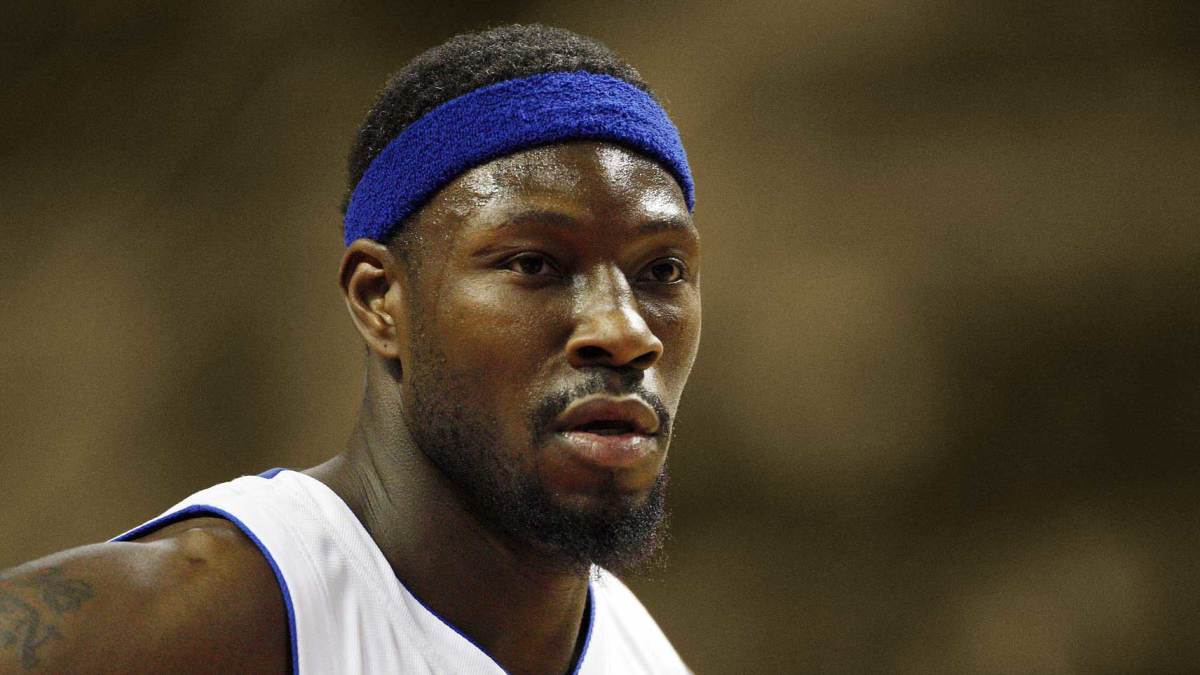
In the NBA, a player’s legacy often gets pushed aside when it comes time to talk contracts. No matter how much a guy has done for a team, it usually comes down to numbers — especially salary.
Ben Wallace experienced this after the 2005–06 NBA season. Just two years after leading the Detroit Pistons’ defense during their championship run, the future Hall of Famer found himself in a tough spot with the front office. The team wouldn’t meet his salary demands, and “Big Ben,” knowing his value and frustrated by their offer, decided to leave in free agency.
The “Big Ben” dilemma
Every contract negotiation in the NBA is shaped by the different perspectives of those involved. Wallace’s point of view was simple.
Advertisement
The former undrafted player wasn’t just another veteran hoping for a big payday. By the mid-2000s, Ben had built a reputation as one of the greatest defensive big men ever. He was a multiple-time All-Star, a two-time Defensive Player of the Year, and a league leader in rebounds and blocks. In essence, the 6’9″ center fit perfectly into the defense-minded team.
Even at age 32, when his contract ended, Wallace felt his value on the court — and his importance to the franchise — deserved a strong, long-term commitment.
The Pistons, in turn, wanted to keep their leader and reportedly offered “Big Ben” a four-year, $49.6 million deal. While it was technically the biggest contract on the roster, it still didn’t meet his expectations. In fact, the Alabama native simply couldn’t make sense of the offer.
“I just thought we had a pretty good run there (with the Pistons) and I thought the offer would have been a bit better,” he said in July 2006. “I didn’t think we had to really negotiate like that at this point. I just thought that initial offer wasn’t altogether fair.”
Advertisement
Detroit’s tough call
Although the offer felt like a slap in the face for Wallace, the Pistons’ decision not to go all-in on re-signing him wasn’t completely without reason.
First, it’s well known that players in their mid-30s almost always start to decline, especially big men whose bodies have taken a beating over the years. “Big Ben,” who would have been about 36 when his new contract ended, was no exception.
From a roster-building point of view, Detroit had to seriously weigh the risks of investing heavily in a player who might be past his best. At the same time, there were several solid big men available in free agency, like Nazr Mohammed and Chris Webber — both of whom the team from “Motor City” later signed — which made the decision even more complicated.
Advertisement
On top of that, tensions with head coach Flip Saunders may have sped up the split. During the 2006 Eastern Conference Finals, “Big Ben” was benched in a crucial part of Game 6, leading to a confrontation between him and Saunders. Internal conflicts like that can hurt team chemistry, and sometimes, the best solution is a clean break — either with the coach or, in this case, the player.
Whether Wallace misjudged his own market value or the Pistons’ front office failed to reward a franchise cornerstone is up for debate. What’s clear is that the Chicago Bulls were willing to meet his demands, ultimately signing the Pistons legend to a four-year, $60 million deal.