
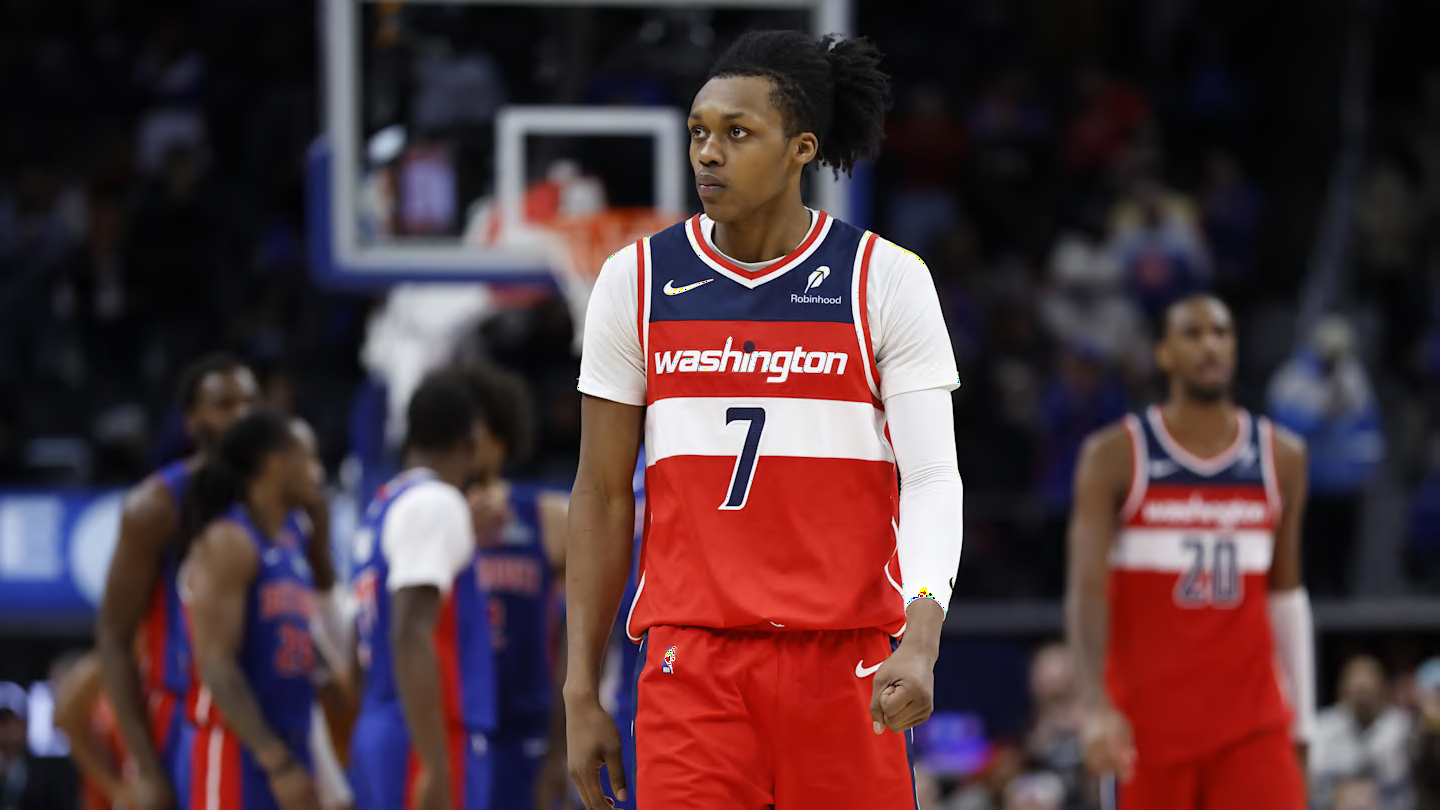
The Washington Wizards have committed to a long-term rebuild, but their handling of young talent suggests a troubling lack of direction. While rebuilding teams typically invest heavily in developing their future cornerstones, Washington appears to be drifting in the opposite direction. Their approach has reached a concerning point with the decreased minutes given to rookie guard Tre Johnson, the sixth overall pick in this year’s NBA Draft, and a player many view as an elite scoring prospect.
The Wizards Organization is Not Giving Young Players the Opportunity for Growth
Not only is Johnson considered an elite scoring prospect, but he was expected to be the future centerpiece of the franchise as well. Johnson is exactly the type of young talent rebuilding franchises are supposed to nurture. He is a gifted bucket-getter, capable of scoring from anywhere on the floor, using both athleticism and natural shot-making instincts to create offense. The man is a walking bucket because he has the ability to score by making shots or making free throws if and when he is fouled, as he shoots the ball well from the line as well. Players with that skill set are rare and often become engines of success for competitive teams.
However, rather than empowering him, the Wizards have limited his opportunities. His recent decline in minutes is not just puzzling: it’s potentially damaging. Young scorers need reps, mistakes, and the freedom to experiment in real time. Without consistent floor time, Johnson’s growth is being slowed at the very moment it should be accelerating.

Nov 19, 2025; Minneapolis, Minnesota, USA; Washington Wizards guard Tre Johnson (12) dribbles the ball against the Minnesota Timberwolves in the second half at Target Center. Mandatory Credit: Jesse Johnson-Imagn Images | Jesse Johnson-Imagn Images
The situation becomes even more concerning when paired with the regression of Bub Carrington. After an impressive season in which he looked poised to become a long-term contributor, Carrington now appears lost, resembling a rookie rather than a player building on early success. Whether it’s confidence, role confusion, or scheme-related issues, something has clearly disrupted his trajectory. That disruption points directly to the coaching staff and the broader instability within the organization.
Head coach Brian Keefe deserves a portion of the blame. His rotations, developmental priorities, and overall utilization of young players raise legitimate questions. But responsibility does not end there. Ownership and the front office have yet to establish a solid plan for the future of the franchise. Without a clear direction, whether stylistically, culturally, or competitively, player development becomes chaotic and unstable, and the product we’re seeing on the floor is agreeing with that.
The Wizards’ current approach risks undermining the very foundation of their rebuild. Johnson and Carrington should be central to their future, not afterthoughts in a losing season. Washington can no longer afford to treat development as optional. If the organization doesn’t correct course soon, it may end up wasting the potential of the very players who were supposed to lift it out of this cycle.