
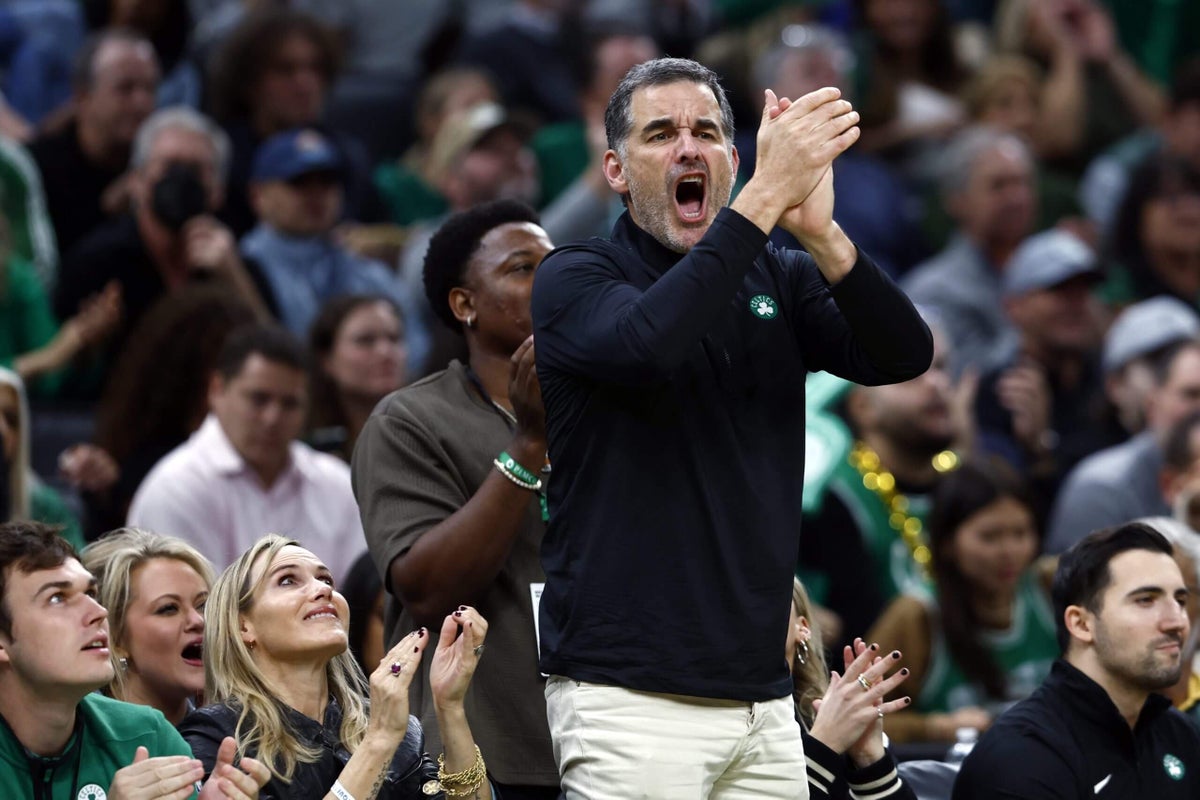
Bill Chisholm didn’t actually expect he would be able to buy the Boston Celtics. The lifelong fan who built his wealth running a private equity firm handicapped his chances at just one percent when he set out to do it more than a year ago.
But last March, eight months after Celtics’ controlling owner Wyc Grousbeck announced he would sell the team, Chisholm paced the conference room at his company’s Menlo Park, Calif., office, frenetically waiting to learn if his multi-billion dollar offer was enough to win ownership of his childhood team.
The Celtics’ sale was one of the most closely watched team transactions in professional sports. Not only did it put one of the marquee American teams on the market, but it came as the franchise was defending its latest title. Boston was also the first NBA team to hit the market after the league signed its 11-year, $76 billion media rights deal.
The sale also came with unique circumstances. Grousbeck wanted to stay on as lead governor, running operations, after the sale was finalized. The Celtics were reigning champions but also staring at a team roster payroll that could run to $500 million the first season a new owner took over. And even though any buyer would take control of the NBA’s winningest franchises, the Celtics did not own their own arena or have plans to build one, which industry sources believed could be a potential anchor on its price. The Athletic granted sources briefed on the sale anonymity so they could speak freely about the negotiations.
None of that discouraged Chisholm or a handful of other suitors. In mid-March, four groups placed their bids to buy the Celtics with the clear instructions that all that mattered was the highest number. Soon after, Chisholm found himself impatiently waiting.
He had been too nervous to sit. Symphony Technology Group, the private equity firm he ran, was in the middle of meetings. Chisholm went off on his own. His fever broke once Frank Ghali, the Jordan Park founder who ran the sale on behalf of the Grousbecks, finally called.
The Boston Celtics, his lifelong team, were finally his.
“It’s unlike any other investment or anything really,” Chisholm said. “Truly once in a lifetime thing.”
It was a victory that sent shockwaves across the sports and finance worlds. Chisholm and the group he led set a record price for a control purchase of an NBA team, then the most ever paid to buy a North American professional sports franchise. It suddenly sent Chisholm, then barely known, into the spotlight. The conclusion of the sale put the Celtics under new ownership for the first time in 23 years, and Chisholm took over this season, stewarding the franchise during this transitional period from its championship roster to whatever comes next.
But he almost didn’t win. Chisholm bought the Celtics at a $6.1 billion valuation but only outbid the second-place suitor by less than $100 million in the blind auction, two sources with knowledge of the bids said.
That gap is a relative pittance in such a high-priced transaction, but it was enough. For a Celtics fan who grew up in nearby Georgetown, Mass., it was barely believable.
“Anyone who’s had their boyhood team or girlhood team and have this happen — I want to say it’s like a dream come true but… I didn’t even know to dream this. What does it mean to be the owner of the Boston Celtics? I don’t know.”
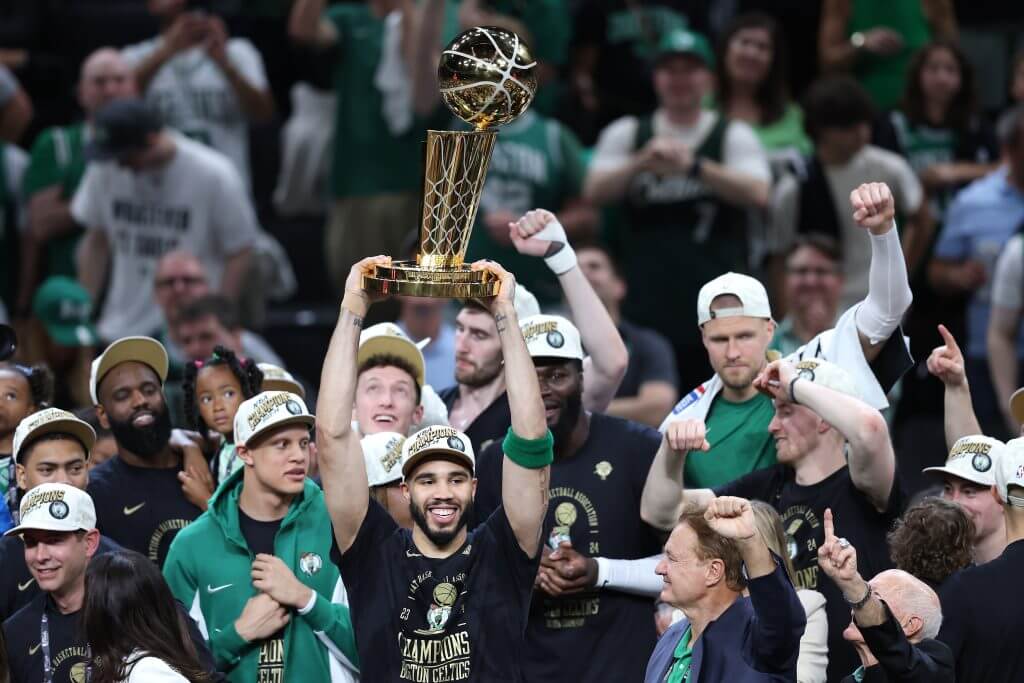
The Boston Celtics were less than a month removed from lifting the Larry O’Brien trophy when Celtics’ controlling owner Wyc Grousbeck announced he would sell the team. (Adam Glanzman / Getty Images)
The Celtics hit the open market on July 1, 2024, the first day of a new NBA year and just 14 days after the franchise won its 18th championship. Selling the team was an audacious decision, but it was a long time coming. While Grousbeck was the Celtics frontman, his father, Irv, was the team’s controlling stakeholder, and the elder Grousbeck made the decision to sell the team in the months before the public announcement.
Irv Grousbeck was nearly a nonagenarian and had decided it was time to start settling his affairs. The group he backed bought the Celtics for $360 million in 2002, and that investment had grown into the billions. He wanted his family to avoid a hefty estate tax and to get ahead of what could be a complex process. Initially, the Grousbecks disagreed on what to do — Wyc wanted to keep the team, and his siblings wanted to sell it, according to one source — but then coalesced around Irv Grousbeck’s choice. He hired Jordan Park, a financial advisory firm that worked with the family, and Ghali to lead the sale, and they then hired JPMorgan Chase and BDT & MSD Partners to advise them.
That is when Chisholm began to consider the possibility of buying the team, too. Yet, even he believed it would be a far-fetched play. The Celtics were expected to set a record for an NBA control sale — Grousbeck publicly spitballed it could be the most expensive American team transaction ever. Stephen Pagliuca, the team’s alternate governor, owned roughly 20 percent of the team and expressed his interest in buying the whole thing. Jeff Bezos was floated as a suitor, though erroneously — multiple sources briefed on the negotiations said he had not expressed interest.
Chisholm did. He was shocked when Grousbeck announced his intention to sell but saw an opening.
“It started that summer, just as daydreaming,” he said. “That’s really what it was. I didn’t have any sense that I’d ever prevail. But it’s whatever (Michael) Jordan says, you can’t make the shots you don’t take. I felt like, at the beginning, there was like a one percent chance it would actually work out. In ‘Dumb and Dumber,’ it’s when Jim Carrey says, ‘It’s one in a million, so you’re telling me I got a chance.’”
Wyc Grousbeck announced in July 2024 that he hoped the team would sell in early 2025, and by January of this year, his family was ready to take bids. No whale had materialized, and Pagliuca was considered a favorite to land the team.
The first round of bidding started Jan. 23. Suitors were asked to put in their offers, and six made substantive offers. Afterward, the bankers behind the sale called the bidders and let them know to resubmit their bids — telling them to reach a certain financial threshold or be at risk of missing an opportunity to advance to the second round, according to multiple sources — which some involved in the sales process believed was an attempt to increase the bids.
Chisholm felt he was in a much better position entering the second round of bids. He had gone from a long shot, in his estimate, to having a 50-50 shot. He had made it to the final round along with Pagliuca, Phillies minority owner Stan Middleman and the Friedkin Group, a Houston-based consortium that owns the Italian soccer team Roma and English soccer team Everton.
Finalists had a chance to meet with Celtics management ahead of their March bids. For Chisholm, it was the clarifying moment that made him believe his pursuit was right. The meeting with president of basketball operations Brad Stevens, team president Rich Gotham and head coach Joe Mazzulla was “inspiring,” he said.
There was just one decision left ahead of the March 14 deadline: how much to offer for the team. The final round would award the franchise to the highest bidder. The value of the Celtics, he said, mattered more to the sellers than to his group. By then, Chisholm felt he needed to win. His group bid $6.1 billion for the team for the first tranche of the sale, with a $7.4 billion valuation for the remainder of the shares.
“It was a calculated risk, making sure you put all your chips on the table,” he said. “That’s kind of where I got to: Do something you wouldn’t regret later if you lost.”
A day later, he learned the number was just high enough. The second-place bidder, believed to be Middleman, came in at more than $6 billion. Pagliuca, multiple sources briefed on the negotiations said, offered $5.5 billion.
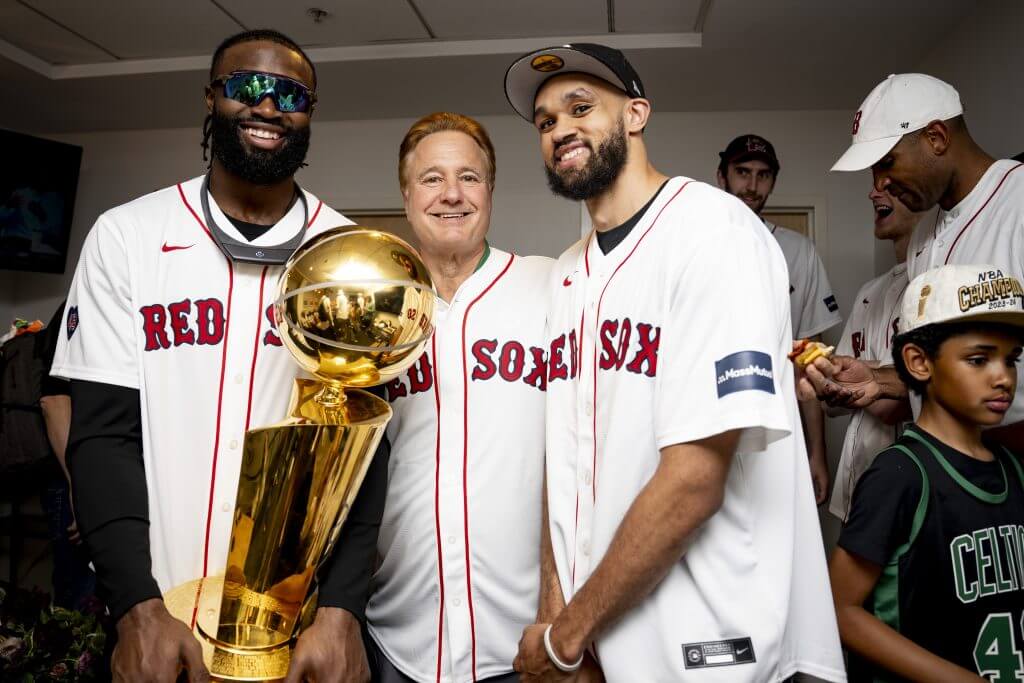
Stephen Pagliuca, shown here in 2024 with Jaylen Brown and Derrick White holding the Larry O’Brien trophy, owned roughly 20 percent of the Celtics when they were put on sale and was one of a handful of bidders who made the final round. (Maddie Malhotra / Boston Red Sox / Getty Images)
The mechanics behind the offer were not simple. The high valuation ensured that no one person could buy the Celtics on their own. They had to bring an investor group alongside them. While Chisholm had won, he had to continue to build out the team that would join him. Minority investors Rob Hale and Bruce Beal Jr. had already come on board early on. Others, including from competing groups, came on after Chisholm had won.
Sixth Street, a private equity firm, put in roughly $1 billion as a financial backstop for Chisholm as part of his bid, but with the intent that its investment would get whittled down if Chisholm won and brought new investors into the group. The firm had a relationship with Chisholm and had invested alongside him before.
When the deal was finalized this summer, Sixth Street was in for about $600 million, owning about 10 percent of the franchise but holding no governance rights. The firm also holds preferred equity in the team that guarantees an 8 percent return tied to the Celtics’ value appreciation.
Pagliuca felt he had a better offer, even if at a lighter valuation. His offer, he said in a March statement, was “fully guaranteed and financed” and had no debt or private equity financing.
It was one of the many criticisms Chisholm heard in the weeks after his victory. Others in the sports finance community did not believe he had the money to get the deal done.
“This was the way it was designed,” he said. “Pags didn’t have his money lined up either. None of it was binding. There’s a difference between having people giving you indications and actually having a binding, signed agreement with these other investors; that’s what I needed to go do.”
Chisholm said he had the money but just needed to round out his investor group. He had until the end of this year to finalize his capital structure but did it earlier; the NBA approved the deal in August. The way he formatted his purchase was not much different from how the Celtics were bought in 2002, one source with knowledge of the sale said.
He focused on having incumbent minority owners roll over their investors, and half did. Some peeled off from Pagliuca’s group to join. Other outside investors were interested in getting into his group but didn’t. Aditya Mittal, who comes from one of the wealthiest families in the world, is the alternate governor.
“They just wanted to be in the thing,” Chisholm said. “And I think everyone sort of assumed Pags was going to win, so they just aligned with Pags. But reality was, he didn’t, so they still wanted to be in it. There’s no malice, like at all, with me. People were passionate about the Celtics. They thought that was the best way to be involved. And if Pags won, they could, and if I won, I felt like I owed it to them to at least give him a shot as well to be part of the group. I’ve raised a lot of money, and this is the easiest.”
Wyc Grousbeck also maintained an ownership stake. He had hoped to remain governor until 2028, and Chisholm initially went along with the plan. Though Grousbeck staying on was not a condition of the sale, according to multiple sources briefed on the negotiations, the deal Chisholm was offered included Grousbeck as the incumbent governor.
But Grousbeck’s share of the franchise was diluted as Chisholm syndicated his investment group. Chisholm said he raised more money than expected, and Grousbeck’s ownership stake fell under 15 percent, the NBA’s minimum threshold to be the lead governor. He is instead an alternate governor.
“He’s done a great job, and coming in here, I have a lot to learn,” Chisholm said. “The new owner curse is a real thing, and avoiding some of that sort of thing … having someone who could be my partner and allow me to ease into it, versus jumping in headfirst, I felt like was a really good approach.”
Chisholm takes over the Celtics at an inflection point for the franchise. They lost Jayson Tatum last spring to an Achilles injury that will keep him out this season. The front office spent the offseason shedding salary to avoid expensive luxury tax payments for a rebuilding year. Chisholm’s first year in control may end up being the team’s worst in a decade — the last time the Celtics finished under .500 was the 2015-16 season — and it’s also a bridge campaign.
But Chisholm is elated. He is the control owner for the team he has rooted for since he was a kid.
When he first found out the franchise would soon be his, eight months ago in that California park conference room, he was overtaken with excitement. It was the phone call that changed his life.
“The adrenaline rush almost knocked me out,” Chisholm said. “I don’t even like to think of if I hadn’t won.”