
The Memphis Grizzlies suffered big losses at the beginning of the season with Ty Jerome and Scotty Pippen Jr. having preseason injuries sidelining them until the calendar year 2026. It was further amplified when Ja Morant and two-way guard Javon Small went down.
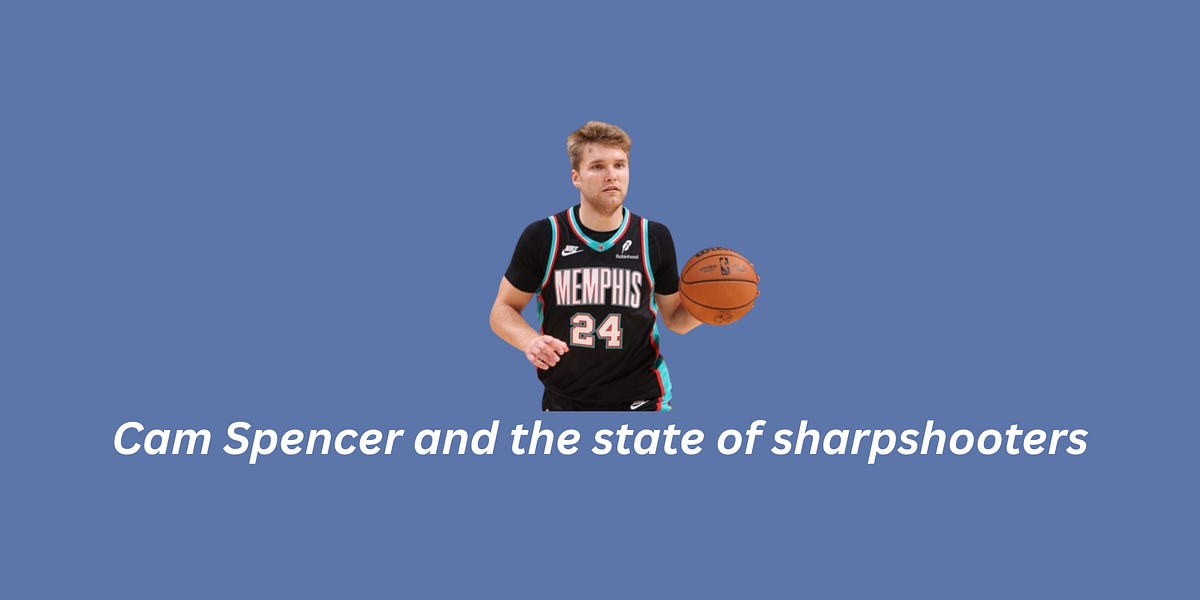
Vince Williams’ production as a passer has popped off the page. In the meantime, Cam Spencer has also solidified himself as an NBA rotation player in this early-season run.
So far this season, he’s averaging 10.8 points and 3.6 assists while shooting a blistering 47.1% from three on 4.7 attempts per game.
“Cam Spencer has established himself as one of the more dangerous shooters in the whole league and has ignited from our bench,” head coach Tuomas Iisalo said.
With Spencer, many developments align with his strong start and impression on the Memphis Grizzlies. His play is showing the importance of weaponizing an elite shot.
He’s not only shooting the three-ball incredibly accurate, but his volume has been encouraging and necessary. He’s shooting 11.0 three’s per 100 possessions, which ranks 5th in franchise history — trailing Troy Daniels (15.6, in 2016-17), then Desmond Bane (12.2), Luke Kennard (11.6), and GG Jackson (11.3) in 2023-24. Among those five, Spencer currently has the highest three-point percentage at 47.1, and only Kennard has shot 40% or higher from three in a season within this group.
“Coach has been on me since the summertime to shoot a higher volume and just be hunting the 3-ball, especially out of the pick-and-roll off the dribble,” Spencer said.
The catch-and-shoot element is obviously key. He’s shooting 43.9 percent on catch-and-shoot three-pointers on 57 attempts. The combination of volume and accuracy is encouraging, as he’s showing the willingness to let it fly in the midst of defensive pressure.
Spencer’s pull-up shooting has been even more lethal, as he’s shooting 50 percent on 48 total dribble jumper three-pointers.
“He has a tremendous weapon in the 3-point shot, and he’s learned to leverage that much better, whether it is in the ball screens or in the closeouts where he can drive them,” Iisalo said of Spencer. “He also has added this step-to-the-side 3 where he can get those off, and it makes the defense very difficult.”
The versatility of Spencer’s pull-up shooting has been encouraging with the emphasis on the pick-and-roll. Within the Flow offense, he can either let it fly from the side actions or the third action with the big. He’s also developed this fly-by three where he generates space with a side dribble after the shot fake.
Spencer’s versatile shooting allows him to weaponize his jumper in multiple settings:
Spot Up: 20/41 from three (48.8 percent)
Pick-and-Roll Ball-Handler: 11/24 from three (45.8 percent)
Transition: 9/17 from three (52.9 percent)
Off Screen: 6/12 from three (50 percent)
Within this, Spencer has been answering an important philosophical question when it comes to sharpshooters. When it comes to sharpshooters, what happens when they’re run off the line?
To intertwine with the pull-up shooting, Spencer is shooting 66.7 percent (14/21) on dribble jumper 2’s. His effective field goal percentage on dribble jumpers (72.5) is the highest among any player with at least 50 dribble jumper possessions, per Synergy Sports — the next closest is Steph Curry at 60.5. Spencer isn’t going to put much pressure on the rim due to his size and athletic limitations, as he’s in the 5th percentile in rim frequency (7 percent of shots coming at the rim, per Cleaning the Glass).
He’s not going to explode past his defenders. Instead, he leverages his basketball IQ with hostage dribbles to keep advantages intact, footwork to generate separation, and exquisite touch.
Within the Grizzlies’ point guard by committee, Spencer has shined in this role as well. He’s in the 87th percentile in assist percentage at 27.2, per dunksandthrees. Because of his three-point shooting, and the threat of it in multiple capacities, defenses have to play him differently at the three-point line, which has led to Spencer showcasing his playmaking abilities.
“I think I’ve always been a pretty good playmaker, stemming from being able to shoot. Somebody has to guard you from 27-28 feet, and that opens up the floor a lot. It just provides more space for closeouts, to get into the paint, and get to some 2-pointers, some mid-range shots, or even start the offense in a good position in an advantage situation. So just trying to make the right play at all times.”
“My shot is something that opens up the floor for closeouts and other things.”
Spencer can be a playmaker in multiple ways. His passing in the Flow offense has been nice in the side actions. Most important to the topic, he can make plays out of closeouts. Defenses have to respect his shot, and when he gets them to bite, it’s a power play for the offense. He’s developed this nasty “slow step and kick” combination to find open shooters.
The intersection of this skills has been fascinating. This season, Spencer is one of two players to possess an assist percentage of 20 or higher while shooting at least 40 percent from three and shooting at least 10 threes per 100 possessions — the other is Collin Gillespie.
Spencer is methodical when coming off actions and makes smart decisions, as he’s had a 3.20 assist-to-turnover ratio this season. The combination of driving, passing, and shooting can help create and exploit advantages. He makes timely drives and kicks, then re-spaces to an open pocket of space, then lets it fly when the ball works its way back to him.
It’s cool to see Spencer’s quick rise into the rotation less than 50 games into his career. He’s succeeding in the areas he thrived in during college, especially at his season at UConn.
In a senior year that ended with a national championship, Spencer shot 43.2 percent from three. The pull-up was there too, as he shot 46.7 percent on dribble jumper 3’s and 48.4 percent on dribble jumper 2’s. He also averaged 3.6 assists against one turnover per game.
Dan Hurley’s system feels synonymous with what is asked of Spencer’s role. They have a lot of motion and screen actions — whether it’s pick-and-rolls, pindowns, or staggers. In addition, it empowers all five players on the floor to be playmakers.
“Playing in his system, you were in ball screens, you were coming of pin-downs, you were in a lot of different actions,” Spencer said of Hurley’s system. “He taught me and taught the players that were there a lot about having a great IQ and feel for the game of basketball on both ends of the floor.”
This intersection of shooting and playmaking was always there, and it’s his ticket to being an NBA rotation player. It’s a rock-solid formula.
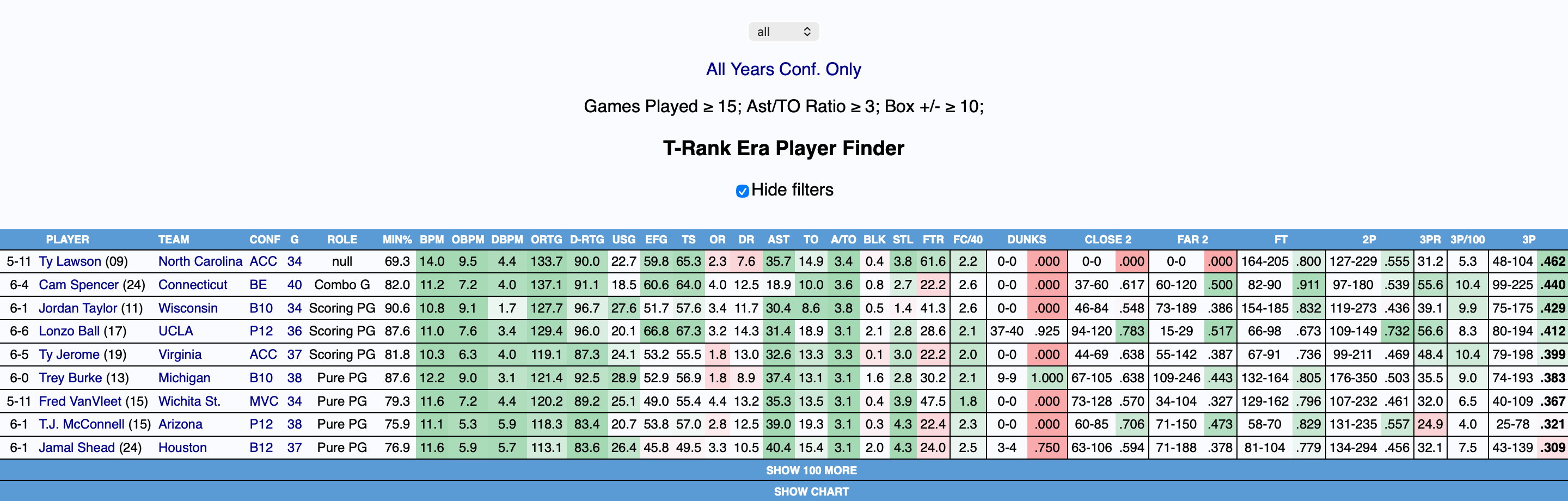
Cam Spencer is thriving within a key trend for shooters in today’s NBA. So long are the days where a player is a specialist just ready to shoot the ball when it comes their way. They have to fully weaponize their outside jumper. Not only should they shoot at an elite clip in terms of accuracy, but they need to let it fly with volume. In addition, when the shot isn’t there — whether defenses are running them off the line, or if it’s just not falling — how else will they add value to the game?
Spencer is answering these questions with his tremendous three-point accuracy and volume, his pull-up shooting on two’s to offset his low rim pressure, and his playmaking to string actions together. He’s also doing so with this ultra intensity that Zach Kleiman referred to as a “f’n grizzly bear.”
Spencer’s progression this season has been a bright spot in multiple ways. He’s stepped up off the bench in the absences of Ty Jerome and Scotty Pippen Jr., two combo guards who provide offensive spark off the bench. He’s provided the team with steady playmaking in their absences. In addition, Cam Spencer has emerged as an NBA rotation player who is entering the conversation among the best shooters in the world.
Every now and then, I want to intertwine some trends with the Memphis Grizzlies with some potential prospects that will face similar situations within their respective draft cycles.
To start this one, I’m focusing on players with different trends when it comes to outside shooting, their volume, accuracy, and their production outside of shooting. For the purposes of the exercise, I’m not focusing on consensus lottery picks.
Braylon Mullins, Connecticut. Returning from a six-week ankle injury this past weekend, Mullins is widely regarded as the best shooter in the class. His ability to stay in the lottery and/or one-and-done conversations will revolve around the potency of his jumper and his skill set. With his perimeter defense, I’m bullish on his projection as an all-around two-guard that can impact winning.
Isaiah Evans, Duke. Last year, Evans was an extremely high-volume shooter, as he made 41.6 percent of his threes while firing 18.1 threes per 100 possessions. Last season, he struggled playing with low rebounding and stock rates. This season, he’s amplified his production on the defensive end, highlighted by a 5-block performance against Florida. His combination of shooting prowess with volume, defensive activity, and decent height should bolster his draft prospects.
Milan Momcilovic, Iowa State. The Iowa State junior has come out scorching the nets this season, as he’s shooting 49.1 percent from three on 16.3 attempts per 100 possessions. The downside is his activity everywhere else is nonexistent. He hasn’t registered a single block or offensive rebound this year, despite being a 6’8” forward. He’s already not the most athletic or physical forward, so his inactivity will reduce his margin of error significantly for getting anything more than a cup of coffee at the NBA level.
Pryce Sandfort, Nebraska. Sandfort has impressed since his transfer to Nebraska, taking on more of a go-to role. In the process, he’s flashed nice playmaking (17.5 assist percentage). In addition, he’s a decisive driver that can get downhill and touch the paint — shooting 80 percent on half-court shots at the rim. As sample size builds, Sandfort can build a compelling two-way case for the next draft cycle.
Alex Karaban, Connecticut. Karaban hits a different element of this trend where he needs to be shooting the ball at a certain percentage to enhance his NBA viability. His processing is exquisite, which shines in his rebounding, shot-blocking, and playmaking — all at more of a “jack of all trades” level. While he’s a good all-around player, he’s labeled as a “shooter,” and his only full season shooting above 38 percent from three was his freshman year at 40.2. He’s off to a good start right now, as he’s making 45.9 percent from three on career-low 8.2 attempts per 100 possessions. If he holds as a 40-percent three-point shooter, while continuing these connective elements, NBA teams will find a “day one rotation player” in Karaban.
Lajae Jones, Florida State. Transferring from JUCO to St. Bonaventure to Florida State, Jones is a high-volume shooter with quick hands, connective playmaking, and steady rebounding. He’s a willing shooter, highlighted recently by a 10-21 performance from three-point range. The past two seasons, his block rate has been higher than 3, and his steal rate higher than 2. Jones should warrant two-way consideration in this cycle.
Paul McNeil, NC State. McNeil has had a lot of buzz in NBA Draft cycles, but I’m not quite there yet. He’s a high-volume shooter (13.1 attempts per 100 possessions) that can let it fly off the dribble. However, he’s more of an undersized wing than a combo guard, as he’s not much of a playmaker and doesn’t cause any chaos defensively. He’s a player worth monitoring in this trend.
Collin Chandler, Kentucky. Chandler is a real high-major sleeper, especially given the talent on this team. When looking at the players within the aforementioned query above, he fits in that mold while shooting 46.5 percent from three on 12.1 attempts per 100 possessions. He’s a great athlete that leverages it to make plays defensively and to finish at the rim. Even if he’s a guy that uses all of his eligibility instead of coming out in this draft, he’s an NBA player hiding in plain sight.
If you choose to support my Substack, SubTsakalidis — aka “SubTsak” — follow this link to my Allie’s Allies St. Jude fundraiser page. If you choose to subscribe, all proceeds will go towards St. Jude Children’s Research Hospital.
Follow me on X and Bluesky. Subscribe to my YouTube channel, SubTsakalidis Scouting.