
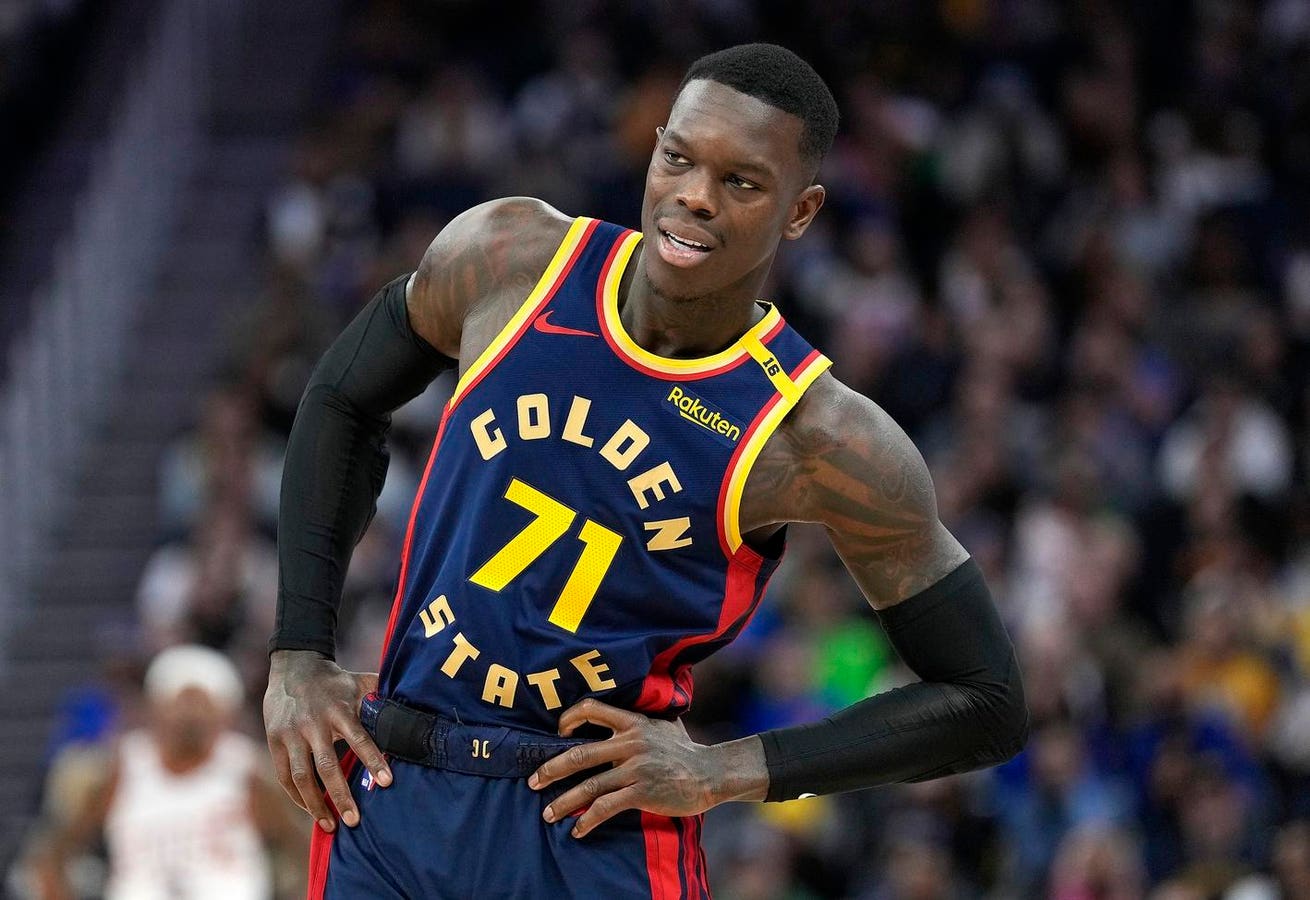
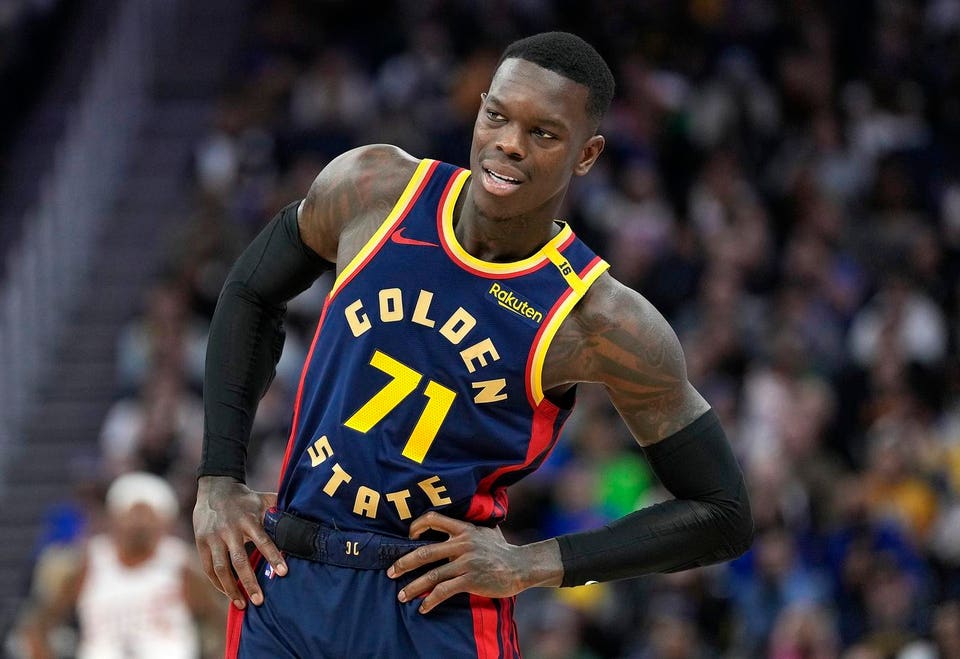
SAN FRANCISCO, CALIFORNIA – JANUARY 31: Dennis Schroder #71 of the Golden State Warriors looks on against the Phoenix Suns during the second half of an NBA basketball game at Chase Center on January 31, 2025 in San Francisco, California. NOTE TO USER: User expressly acknowledges and agrees that, by downloading and or using this photograph, User is consenting to the terms and conditions of the Getty Images License Agreement. (Photo by Thearon W. Henderson/Getty Images)
Getty Images
Christmas is on Dec. 25, but it comes 10 days early for NBA fans every year. That’s because Dec. 15 marks the unofficial start of trade season.
Up until now, players who signed new contracts as a free agent in the offseason have been ineligible to be traded. On Dec. 15, that changes for most players, which widens the scope of trade possibilities across the league.
A handful of players aren’t eligible to be traded until Jan. 15—Golden State Warriors forward Jonathan Kuminga is chief among them this year—because they re-signed with their previous team after said team was over the salary cap and they received a raise higher than 20%. Beyond Kuminga, that also applies to Chicago Bulls guard Josh Giddey, Miami Heat guard Davion Mitchell, Milwaukee Bucks guard Ryan Rollins and Philadelphia 76ers guard Quentin Grimes this year, among others.
While most trade activity typically takes place in the few days leading up to the trade deadline each year, a rule buried in the NBA’s latest collective bargaining agreement may spark some earlier-than-usual action.
The New Aggregation Rule Could Kick Off NBA Trade Season
Last year, the Golden State Warriors kicked off trade season right on Dec. 15 when they traded De’Anthony Melton (who was out for the year with a torn ACL) and three second-round picks for Dennis Schröder. Their timing was very much intentional.
Typically, when an over-the-cap team acquires a player via a trade exception, it can’t aggregate his contract with another player for 60 days. However, the new CBA allows teams to aggregate contracts of any player whom they acquire via trade exception by Dec. 16. The Warriors later used Schröder’s contract as salary filler in their five-team trade for Jimmy Butler.
“Various team executives” told Jake Fischer of The Stein Line that it’s “very feasible” that other teams may follow suit with a trade on Dec. 15 or Dec. 16 this year. He specifically mentioned Los Angeles Clippers guard Chris Paul, who is currently in exile from the team after they recently announced they were parting ways with him.
Since the Clippers are less than $1.3 million below the $195.9 million first apron and are hard-capped, they didn’t have the financial flexibility to waive Paul outright. They could either try to flip him for someone else on a minimum contract, or they could look to offload him into another team’s minimum exception, which would give them an extra $2.3 million in wiggle room under the hard cap.
According to Fischer, the Milwaukee Bucks, New York Knicks, Dallas Mavericks and Phoenix Suns all expressed interest in Paul this past offseason before he signed with the Clippers, but “he was determined to stay as near to his family as possible.” Could that give the Los Angeles Lakers a leg up over all other suitors? They do have one open roster spot, although they’re also hard-capped at the first apron, are only $1.1 million below it and don’t have anyone on a standard minimum contract.
Whether it’s Paul or someone on a bigger contract, the Warriors’ trade for Schröder last December gave other teams a blueprint to follow. Seeing them later flip Schröder’s contract for Butler could inspire imitators across the league as soon as Dec. 15.
When Is The NBA Trade Deadline?
The Warriors weren’t the only team to swing a deal on Dec. 15 last season. The Indiana Pacers also traded swap rights on their 2031 second-round pick to the Miami Heat in exchange for backup center Thomas Bryant after losing both Isaiah Jackson and James Wiseman to torn Achilles tendons. However, the Lakers’ acquisition of Dorian Finney-Smith was the only other deal that went down in December.
The Phoenix Suns pulled off a pair of trades in January, but the major fireworks didn’t commence until the beginning of February, when the Dallas Mavericks stunned the NBA by trading Luka Dončić to the Lakers for a package headlined by Anthony Davis. That out-of-nowhere blockbuster caused the floodgates to open around the NBA.
Could history repeat itself this year? Milwaukee Bucks forward Giannis Antetokounmpo could be the top prize on the trade market, although it’s often complicated to swing deals for superstars of that caliber in-season. The Bucks might prefer to trade him this offseason, when they’d know exactly which draft picks they were acquiring, although they might not be able to fetch as much for Antetokounmpo if they wait since he can become an unrestricted free agent in 2027.
Antetokounmpo is hardly the only big name who could find himself on a new team by the Feb. 5 trade deadline. There’s already been speculation about the futures of Atlanta Hawks point guard Trae Young, Memphis Grizzlies point guard Ja Morant and Charlotte Hornets point guard LaMelo Ball. The Sacramento Kings could be open to business on all of their veterans, while the Los Angeles Clippers might not be far away from the same. ESPN’s Shams Charania also reported that the Dallas Mavericks are “open to exploring the trade markets” for Davis, Daniel Gafford, Klay Thompson and D’Angelo Russell.
Teams typically prefer to wait on major moves until close to the deadline, when they have a better sense of whether to be buyers or sellers. The Oklahoma City Thunder’s machine-like rampage through the NBA might deter some teams from going all-in, but fireworks figure to fly one way or another. Fans might just have to wait until late January or early February for the biggest blockbuster deals.
In the meantime, keep an eye on who gets traded on Dec. 15 or 16 this year. Thanks to the new aggregation rule, there’s no guarantee they’ll end the season with their new teams.
Unless otherwise noted, all stats via NBA.com, PBPStats, Cleaning the Glass or Basketball Reference. All salary information via Spotrac and salary-cap information via RealGM. All odds via FanDuel Sportsbook.
Follow Bryan on Bluesky.