
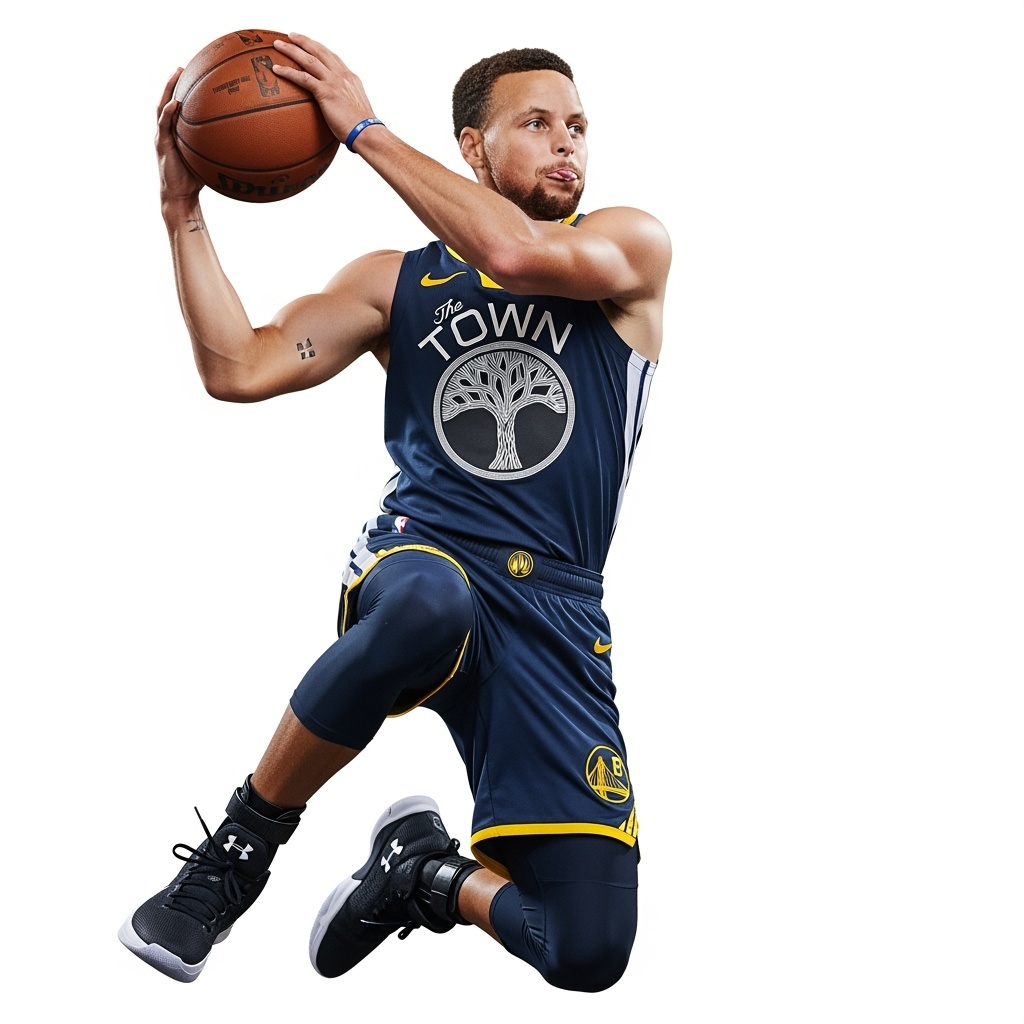
Curry needed only eight minutes to score 10 points in his first appearance after missing five games, but Golden State’s porous defense allowed the Timberwolves 39 fourth-quarter points at home.
Stephen Curry returned from a two-week absence caused by a quad injury and scored 39 points in just 32 minutes Friday night against the Minnesota Timberwolves, demonstrating that his recovery process had successfully restored his elite offensive capability. Yet his spectacular individual performance proved insufficient to prevent a 127-120 home loss that exemplified Golden State’s frustrating defensive inconsistency and interior vulnerability.
The Warriors fell to 13-13 with the defeat, dropping 3.5 games behind Minnesota for sixth-place positioning in the Western Conference playoff race. The loss carried particular sting because the Timberwolves played without Anthony Edwards their star scorer meaning the Warriors had faced a theoretically weakened opponent and still surrendered the game through defensive breakdowns rather than inability to compete offensively.
“Our defense let us down tonight,” Warriors coach Steve Kerr said simply, acknowledging that Golden State’s fourth-quarter collapse where they allowed 39 points represented the game’s determining factor rather than Curry’s offensive limitations.
When individual excellence cannot overcome team deficiencies
Curry’s return demonstrated immediate impact. In his first eight-minute stint of the first quarter, he scored 10 points on six quick shot attempts a pace suggesting his conditioning had recovered substantially during the treatment period. Warriors coaches and staff had deliberately left Curry at the facility during the three-game road trip, prioritizing treatment and conditioning over competition, allowing him to participate in Wednesday night’s scrimmage before Friday’s return.
“He looked great,” Kerr said. “Just the movement, the flow. I asked him how he was feeling after the first eight-minute run in the first quarter and he said, ‘I feel great.’”
Curry finished with 28 shot attempts in 32 minutes aggressive volume that reflected his determination to establish immediate rhythm upon return. After the Warriors fell behind by double-digits in the fourth quarter, Curry pulled them back with clutch shooting, hitting three three-pointers and scoring 14 fourth-quarter points.
“Started to feel normal again,” Curry said. “So individually it was a good first game back just to get my lungs back and feel like myself.”
When defensive lapses undermine championship potential
The Warriors’ defense, which had ranked third in the league and held four of their previous five opponents below 100 points, completely disintegrated against Minnesota. Rudy Gobert and Julius Randle combined for 51 points and 23 rebounds evidence that Golden State’s interior defense collapsed without their traditional defensive anchors.
Draymond Green remained away from the team this week for personal reasons, while Al Horford continued sidelined with sciatica. That absence of two integral defensive presences left the Warriors particularly vulnerable on the interior, forcing smaller lineups to defend championship-level scorers in traditional post-up situations where size and positioning matter critically.
“Draymond and Al understand how to make their impact, make their presence felt,” Curry said. “But we didn’t have them. We had to figure out a way to get it done. We just didn’t.”
When offensive efficiency remains systemic problem
Beyond the defensive failures, the Warriors continue struggling with offensive efficiency. Golden State ranks 22nd in the NBA in offensive rating a statistical reality that contradicts roster composition and individual player capability. That offensive inefficiency, combined with defensive vulnerability, creates a formula for losing basketball despite having Curry operating at championship-level individual performance.
The Warriors’ offensive problems represent systematic execution issues rather than personnel limitations. With Curry now healthy and available, the offensive ranking should theoretically improve. However, Friday night’s loss suggested that defensive breakdowns matter equally to offensive production in determining outcomes.
The playoff positioning context
A victory against the Timberwolves would have pulled the Warriors within 1.5 games of Minnesota at the sixth spot in the Western Conference. Instead, the loss pushed them to 3.5 games back, requiring substantial winning percentage over remaining season to generate legitimate playoff momentum.
The loss stung particularly because the Warriors faced a Timberwolves team missing their best player. Missing such opportunities to generate momentum against theoretically weakened opponents typically undermines championship aspirations during the compressed playoff race portions of seasons.
The individual excellence vs. team success dichotomy
Curry’s 39-point, 32-minute return performance represents the kind of elite individual output necessary for championship contention. Yet his individual excellence illuminated the Warriors‘ systemic problems rather than solving them. A superstar scoring 39 points and still losing suggests broader team issues transcend individual player performance.
For the Warriors to transform from 13-13 mediocrity into playoff contenders, Curry’s return must galvanize defensive intensity that matches his offensive excellence. Friday night demonstrated that his presence alone, while significant, remains insufficient without comprehensive team execution across both ends of the floor.