
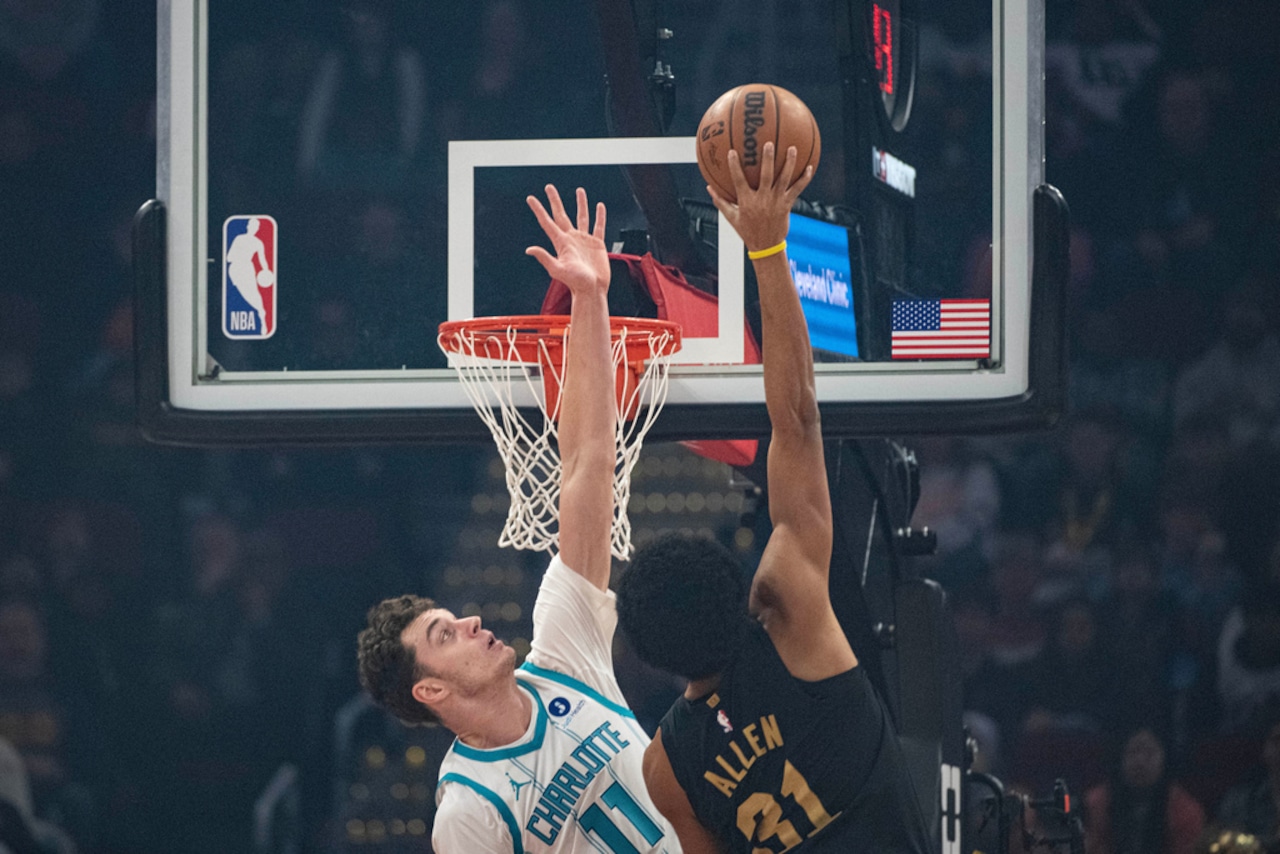
CLEVELAND, Ohio — Jarrett Allen is finally back on the court feeling closer to himself after more than a month of trying to play through pain that compromised the very basics of his job.
The frustration started early.
In the Cavs’ second game of the season — Allen’s annual return to the Barclays Center against the Brooklyn Nets, the franchise that drafted him — he sprained the middle finger on his right hand. He continued to play through it, only for misfortune to compound days later when he fractured the ring finger on his left hand during pregame warmups, caught off guard as a Dean Wade triple swished cleanly through the net.
For a center whose game is built on touch, timing and trust in his hands, trust in traffic, trust in finishing through contact, the injuries were more than an inconvenience. They struck at the foundation of how Allen operates within Cleveland’s offense and defense.
The 6-foot-9 big man sat out two games after the fracture, returned briefly, then was sidelined again when the pain became unmanageable. The Cavs, still early in the season and prioritizing the long view, opted to shut him down rather than allow a lingering issue to become something worse. Allen missed six games before making his return Sunday against the Charlotte Hornets.
“Catching the ball, shooting left hand and right hand,” Allen said about how the injuries affected him. “Literally, like it was my ring finger on my left hand, my middle [finger] on my right. Everything I do on the court, I couldn’t do. Even on the bench, trying to clap for teammates. I literally had to clap with my wrist to try to make it work. So I was struggling there for a while.”
Remember how central hands are to a modern NBA center’s daily role. Catching in traffic. Finishing lobs. Short-roll touch passes. Quick pocket catches in pick-and-roll. Even defensive rebounding becomes a challenge when both hands are compromised.
Allen could still move. He could still see the game. But he couldn’t reliably execute it.
There’s always a risk when a starter goes down that the mental connection loosens — that the game slows into something observed rather than lived. For Allen, that became an opportunity rather than a trap.
The knock on him has occasionally been engagement on both ends of the floor, particularly during stretches when the offense isn’t flowing through him or when he’s not directly involved in a possession. From the bench, with nothing to do but watch and feel, he leaned in instead of drifting away.
“I feel like I bought in more to the team, especially at that moment. Like, I know myself. It’s easy to check out. It’s easy [when] you’re not playing,” Allen said. “You don’t really have to worry about things, you’re not going to mess up. It’s not going to be in the film session. But I bought into the team more. There are some games I’m standing up more, trying to cheer for the team, be more encouraging and all that. So just like I said, just buying in to help the mental state stay locked in.
“This last game still felt the same energy that I was trying to bring that I was trying to bring while I was off the court. I feel like it just kept me more in tune and locked in.”
That may end up being the most meaningful takeaway from the absence. The Cavs don’t just need Allen healthy; they need him present and engaged possession to possession. The physical tools have never been the question. The consistency of focus has.
The same mental buy-in Allen found on the bench carried into the most punishing part of his recovery, the work required to get his body ready again.
“That is the worst part about being hurt, the conditioning. Literally every single day. I’m running four or five miles, doing sprints, doing — pushing my body harder than it would be on the court, to be honest with you. Being sore the next day, trying to fight through that. It was a challenge being out and that’s one of the hardest parts that people don’t understand. Things don’t stop behind the scenes. You push harder than you did before.
“Just like getting used to the pace of the game again. This is a fast-paced league. It’s hard to replicate what you’re going to get in the game like the speed, the pick and rolls, everything guarding certain players. So I just have to get in the swing of things again.”
It’s the part of injury rehab that rarely gets acknowledged. The paradox of resting the injury while taxing the body. The Cavs need Allen’s vertical presence, his rim protection, his screening and rebounding. But they also need him able to run, recover and survive in space when guards pull him into actions 25 feet from the basket.
Conditioning is currency in that environment. But engagement is the multiplier.
If the time on the sideline sharpened Allen’s awareness — of the game, of his teammates, of his own tendencies — Cleveland may get back more than a healed center. They may get a version of Allen whose impact doesn’t fade when the ball leaves his hands.