
With most of the nonconference schedule complete, it feels like a good moment to step back and evaluate the college basketball landscape. So we opened the mailbag this week, and you all more than responded, filling it with many thoughtful questions. Thanks for all of them, and we’ll try to do this more regularly in the new year once league play gets underway.
Enough prelude, though. Onto your questions, starting with a 30,000-foot look at why the start of this season has been so much fun:
Has this been the best two-month (November/December) start to the season the sport has ever seen? I can’t recall seeing so many entertaining, high-profile games before the new year. —Phil T.
It feels hyperbolic to say this, but yes?!
For all the “NIL has ruined college sports” takes, this is one of the best counters when it comes to college basketball: It has made the first two months of the season so much better, because many of these neutral-site blockbuster games are being scheduled for NIL purposes. The NCAA Tournament Selection Committee also deserves some credit for putting so much emphasis on strength of schedule. Coaches have learned that a quality loss isn’t such a bad thing on the resume, and they aren’t as afraid to take a pre-New Year’s loss as they may have been in the past.
I would love for someone crazy enough to scour the Sports Reference archives to see if this is the most pre-Christmas ranked vs. ranked games we’ve ever had. I would bet on that being the case. For a random sample, I compared the schedules of the current top 10 to the pre-Christmas schedules of the 1990-91 season.
Why that season? It’s the first season I remember as a child, and the sport was in its heyday with stars on the floor and on the sidelines. It featured Shaq, Larry Johnson, Laettner-Hurley-Hill Duke, Kenny Anderson and a Georgetown frontline of Dikembe Mutombo and Alonzo Mourning. Coach K met Tark in the Final Four, and KU faced Duke in the championship game. What an introduction to the sport. This was also a time when the preseason NIT was roaring, the Maui Invitational was getting good and the Great Alaskan Shootout (RIP) was thriving. So, a comparison …
That season, the final AP top 10 teams played 19 ranked opponents before Christmas. This season, the current top 10 will have played 37 ranked opponents by Christmas. Also, there’s a good chance we’ll someday talk about how many NBA stars the 2025-26 season produced. This freshman class is special. The international influx to college basketball has raised the talent level, and NIL is keeping some players around who would have definitely left earlier in another era. Yes, the roster turnover is not ideal, but the product is pretty damn good right now. — CJ Moore
Which men’s teams have been studs and which ones have been duds so far this season? — Ed H.
Plenty of options for both, but I’ll give you the three teams I’ve been most impressed and disappointed by so far. Starting with the studs:
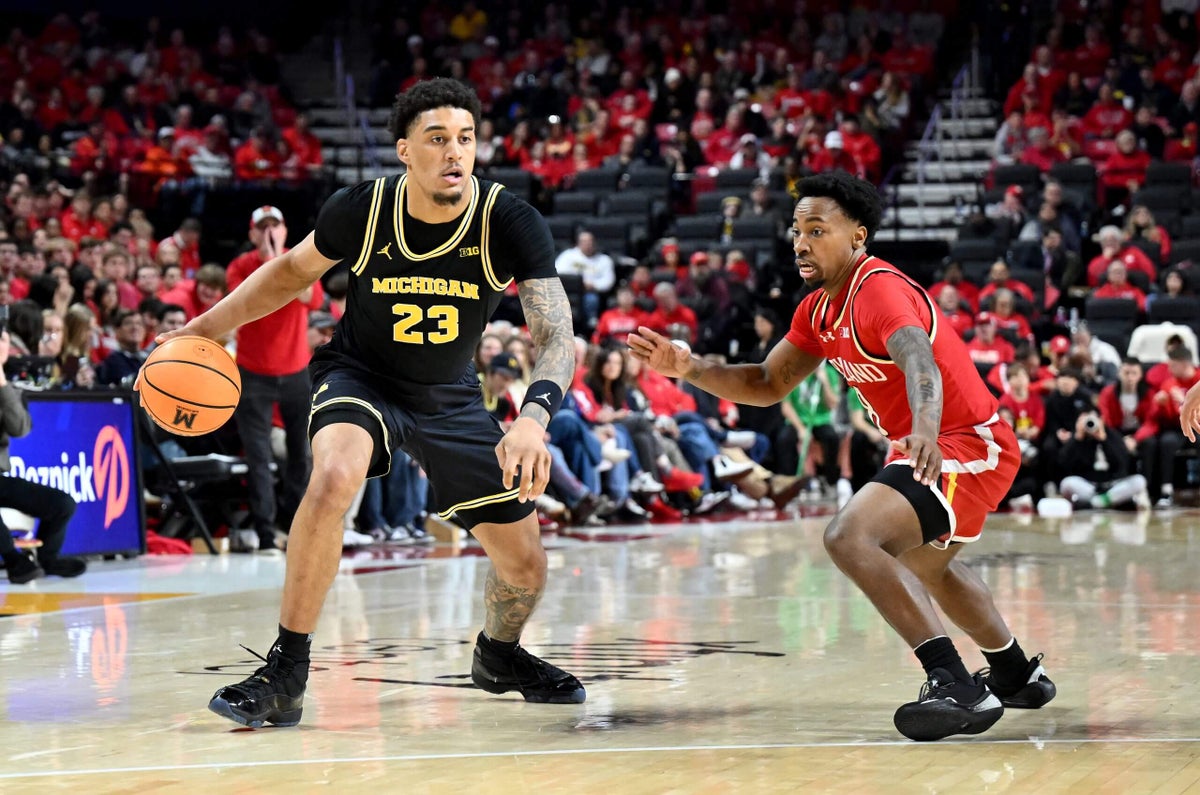
Michigan: The Wolverines, who have won their last six games by an average of 32.8 points, are a terrifying blend of size, shooting and experience. Their current net efficiency ranking surpasses both of last season’s national championship participants.
Iowa State: The Cyclones own one of the season’s most impressive wins — a 23-point beatdown of then-No. 1 Purdue at Mackey Arena — and are one of five teams with a top-12 adjusted offensive and defensive efficiency ranking.
Duke: Led by Wooden Award frontrunner Cam Boozer, the Blue Devils have accrued arguably the strongest early-season resume in the country, highlighted by wins over Michigan State, Kansas, Arkansas and Florida.
I’d also throw Arizona, Vanderbilt, Nebraska and Michigan State in that mix. As for the biggest duds …
Kentucky: The Wildcats’ issues go beyond their questionable roster construction, and while a win over Indiana last weekend was UK’s first against a high-major foe, Mark Pope still has plenty to figure out — including how to win with one of the worst shooting teams of his career.
Marquette: Shaka Smart’s “no portal” strategy has flopped miserably two months into the season, with the Golden Eagles still not having beaten a single top-200 opponent.
Creighton: Another Big East disappointment, and given how many of the Bluejays’ best transfer imports have struggled to adjust, a program that’s won at least one game in March each of the last five seasons looks on track to miss the NCAA Tournament.
I’d also hear arguments for Oregon, Ole Miss, NC State and UCLA. — Brendan Marks
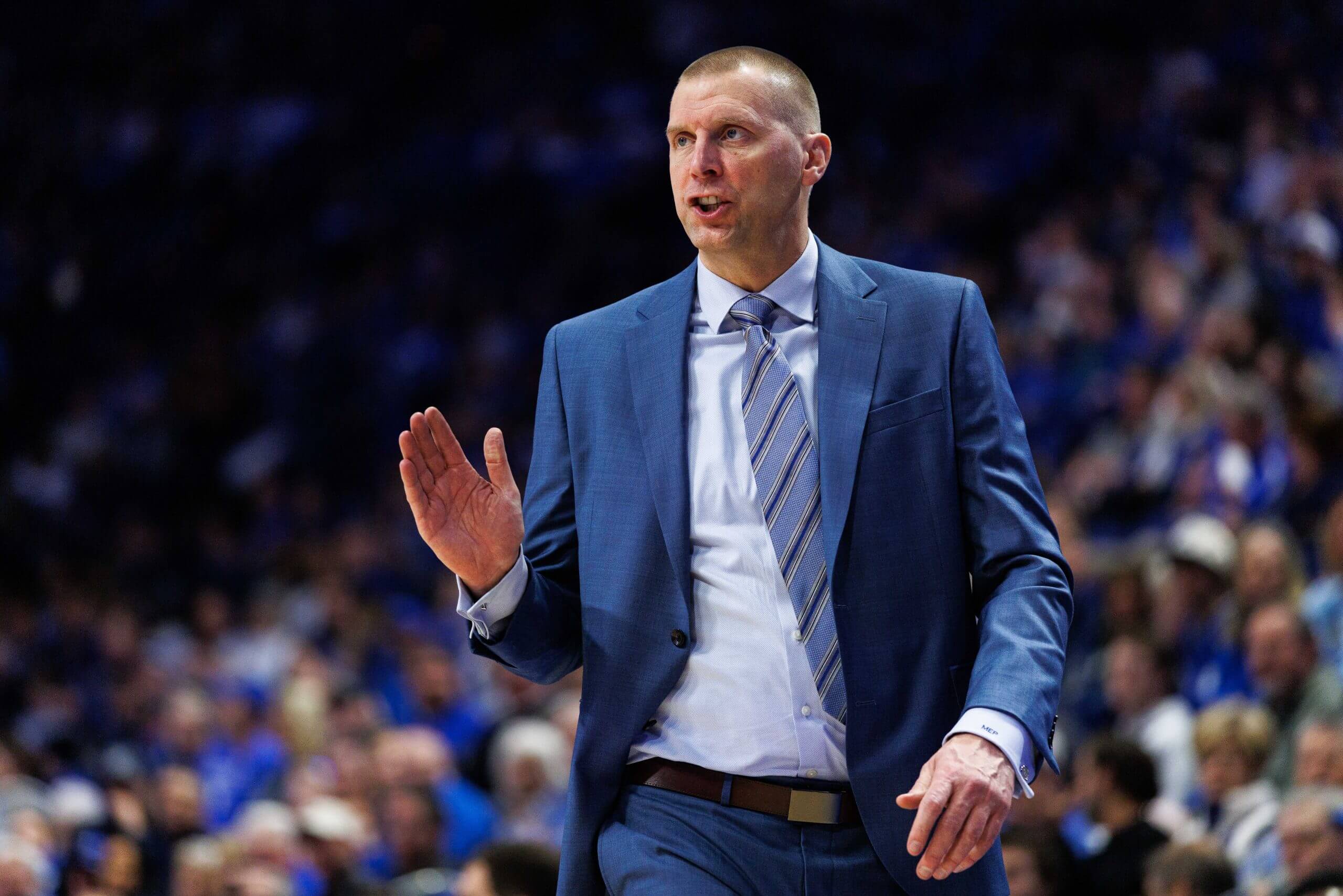
Kentucky’s poor shooting and roster build have contributed to a slow start. (Jordan Prather / Imagn Images)
The college basketball calendar slows down tremendously around the holidays. Is there a reason there aren’t any major MTEs between Christmas and New Year’s Day? It seems like a prime time for a quick three-day tournament. — Aaron M.
This is the one real break coaches usually give their players during the season, allowing them to return home for a few days over Christmas. When they return, because school is not in session and there are no practice limits, this is often a time when coaches lean into practice. That’s valuable time that coaches aren’t going to sacrifice. Plus, for most teams, it’s just before the start of the conference season. Ideally, you want to be entering conference play fresh. Playing three games in three days would not be ideal.
So, while I like where your head is at, Aaron, as someone who covers the sport, I appreciate the break! Coaches, my wife implores you not to take Aaron’s suggestion. No holiday MTEs! — Moore
Which Power 4 league has the best top 6 teams? — Greg T.
The Big 12 is the answer, and I think anyone who pays attention to the sport would agree, but I’d argue the Big Ten is deeper and isn’t far behind.
I’ll use my current rankings and take the averages to rank the four. For those outside my Top 25, I’ll use their KenPom ranking. (The ACC is the only one without six.)
1. Big 12: Arizona (2), Iowa State (3), BYU (8), Houston (10), Kansas (16), Texas Tech (21). Average: 10
2. Big Ten: Michigan (1), Purdue (6), Michigan State (9), Nebraska (13), Illinois (18), Iowa (23). Average: 11.7.
3. SEC: Vanderbilt (12), Arkansas (14), Alabama (17), Florida (19), Tennessee (20), Georgia (25). Average: 17.8.
4. ACC: Duke (5), Louisville (11), North Carolina (15), Virginia (22), NC State (28), Clemson (30). Average: 18.5.
While the SEC isn’t what it was a year ago, it still ranks as the top league at KenPom. Similar to the Big Ten, its depth sets it apart. Fourteen teams are in the top 60, and no team is outside the top 90. Maryland (100), Penn State (106) and Rutgers (147) drag down the Big Ten, and the Big 12 has a big drop after its seventh-best team (Baylor), and then Utah (130) also hurts its overall rating. — Moore
What are your thoughts on the ACC so far this year, with their chances in the tournament, and Virginia Tech’s start to the year specifically? — Nicholas P.
I touched on this a few weeks ago when the ACC-SEC Challenge took place, but especially compared to recent history, it’s undoubtedly been an encouraging first six weeks for the ACC. As of this writing, the league has five teams in the top 30 of the NET, nine in the top 50 and 12 in the top 75. Unlike last season, that means there are ample opportunities — both home and away — for teams to bolster their resumes ahead of Selection Sunday. I predicted at least five ACC teams in the Big Dance back in the preseason, but I’m cautiously optimistic about six or possibly even seven bids.
Even anecdotally, the league is clearly better than last season, when only Duke registered in the national consciousness. Both the Blue Devils and Louisville are legitimate Final Four contenders, while North Carolina — off to its best start of the Hubert Davis era — looks like a second weekend team, too. Virginia has been one of the best offensive teams in the country, while all of Miami, NC State and Clemson have shown flashes. The first four I mentioned I view as likely postseason teams, and then probably two of the next three.
As for Virginia Tech, I was flat wrong in ranking the Hokies 15th in the preseason. I was always a Neoklis Avdalas believer, and still am, but I grossly underestimated how effective the rest of VT’s perimeter — namely Jailen Bedford, Jaden Schutt and Tyler Johnson — would be. There isn’t a real marquee win on the resume yet — none of Providence, George Mason or Colorado State can be the defining win on a tournament team’s resume — but the Hokies have a staggering 11 games in ACC play against current top-50 KenPom teams. Mike Young’s club probably needs to win at least four or five of those to be in real bubble contention. That would be easier if Tobi Lawal didn’t appear to be out for the foreseeable future … but barring the floor falling out without him, VT should at least be in the mix through February. — Marks
Is Georgia a real SEC contender this year? — Will L.
SEC championship contender? No. NCAA Tournament contender? Yes. The Bulldogs have yet to beat a top-50 KenPom opponent — they’ve had just one chance, losing to Clemson in overtime — but they’re crushing mid-majors and also have blowout wins against Florida State and Cincinnati.
This is a throwback to Mike White’s Louisiana Tech teams. The Bulldogs press, go 11 deep and play extremely hard and fast. Defensively in the half court, it’s sometimes hard to tell if they’re in a matchup zone or no-middle defense, but they funnel the ball to the baseline from the side of the floor and get a lot of blocks, which sparks their fast break. They rank second nationally in block rate and are also forcing a lot of turnovers. It’s not a fun defense to go against.
Offensively, they are making an NCAA-best 65.1 percent of their twos. Their shot selection from beyond the arc can sometimes be questionable — and they’re shooting just 30 percent from deep — but they play with excellent spacing, and White puts a lot of guys on the floor who can drive, and he has lob threats lurking in the dunker spot. He’s chosen the ideal system for their talent.
It’ll get tougher to be so efficient inside the arc once they start SEC play, but they’re currently playing with a swagger and are much better than I expected. — Moore
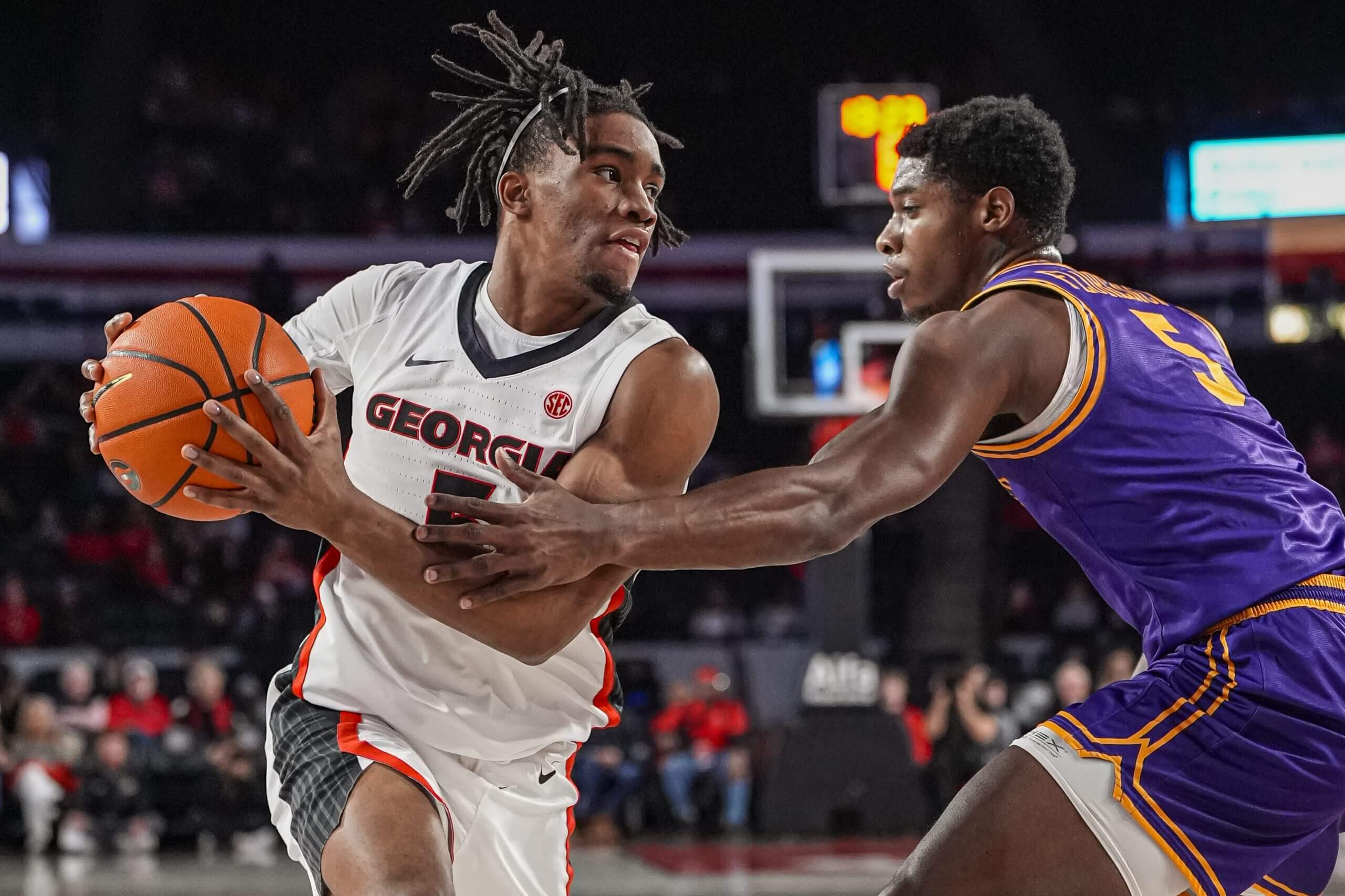
Georgia is off to a 9-1 start this season. (Dale Zanine / Imagn Images)
What’s your outlook on the A-10 race? Can the league get multiple at-large bids? — Jeremy K.
You’d hope so, although the league has only gotten one team in in two of the last three seasons, after previously being a multi-bid mainstay.
As of today, the Atlantic 10’s clear-cut best at-large case is Saint Louis. The 9-1 Billikens, led by Josh Schertz and Robbie Avila, already have three top-100 wins this season — over Santa Clara, Grand Canyon and San Francisco — and rank favorably with the computers: top-30 in the NET and top-45 in KenPom, while tying Saint Mary’s and Texas Tech in Wins Above Bubble (WAB). Saint Louis’ lone loss so far is a Quad-3 defeat to Stanford, but only by a point on a neutral court. That’s a workable NCAA Tournament resume, especially with seven remaining league games against top-100 KenPom foes.
Beyond that, Dayton and VCU both have paths, although neither has a Quad 1 win yet. Of the two, computers favor the Rams, while the Flyers already have two Big East wins over Marquette and Georgetown, the latter of which should age well.
The A-10’s best bet for multiple bids, then, is probably for Saint Louis to maintain its current trajectory but ultimately to fall in the conference championship game to someone like VCU, Dayton or George Mason. (A quick aside on the Patriots, who are sneaky good, fueled by a top-50 defense and a surprisingly stout 3-point attack, where both Presbyterian transfer Kory Mincy and Maryland transfer Jahari Long rank in the top-100 nationally in 3-point percentage.) Twenty years after the Patriots’ legendary Final Four run, Tony Skinn has a team that nobody will want to play come March — and I’d love to see Mason get in as the A-10’s second team. — Marks
UConn seems to have run through the nonconference competition without ever really kicking it into full gear. Is there another level this team can reach, and if so, what needs to improve the most if a third banner in four years is in the cards? — G.S.
Injuries to Tarris Reed and Braylon Mullins forced Dan Hurley to tinker with his rotation a ton in the nonconference, but with both of them back now, I’m expecting UConn to only keep getting better. (My kingdom for a full-strength, neutral-site rematch of Arizona vs. UConn, by the way.) I picked UConn to win the national title in the preseason, so I’m not shocked by how good Hurley’s team has been so far, but two things stand out as far as improvements that would make the Huskies even more bulletproof.
The first is Mullins’ impact on UConn’s 3-point shooting, which has been fine so far — 34.4 percent as a team — but probably needs to improve a tick for the Huskies to win six in a row. And the second (which is more concerning) is the team’s inability to defend without fouling, one of last season’s eternal issues. That is the thing Hurley really needs to iron out over the next two months, although I’d bet having Reed as a consistent rim protector will gradually help improve the habits of UConn’s perimeter guys.
TLDR: Yes, there’s another level to be reached — and that should be scary for everyone, since UConn is already one of the five or so best teams in America. — Marks