
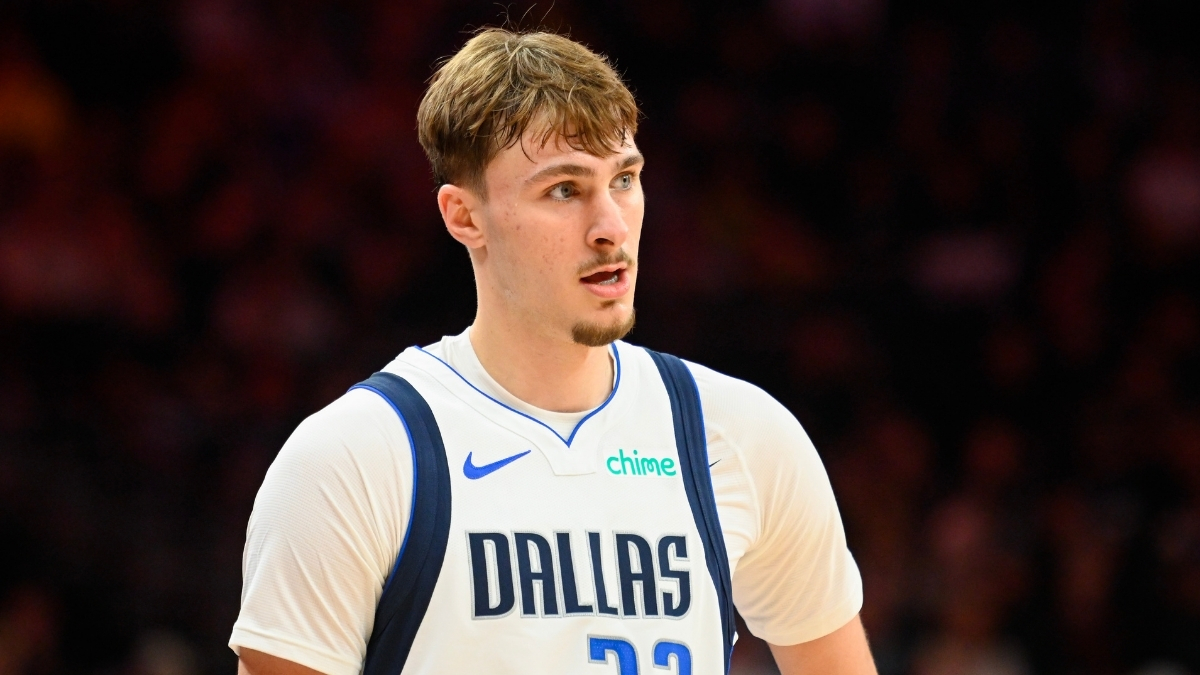
What transpired Monday night at the Delta Center was one of those games Dallas Mavericks rookie Cooper Flagg will remember for the rest of his NBA career — even if the result is not one he will celebrate.
Flagg delivered a historic performance, scoring a career-high 42 points in a 140–133 overtime loss to the Utah Jazz. At 18 years old, Flagg became the youngest player in NBA history to score at least 40 points in a game, matching Mark Aguirre’s franchise rookie record from the 1981–82 season.
Yet Flagg’s focus afterward never drifted toward the record books. Even after one of the most prolific scoring nights by a teenager the league has ever seen, his attention stayed fixed on the result and the process behind it.
“It’s cool, but it would have been great to get a win,” Flagg said. “That’s what I’m kind of more focused on. I want to look at it as wins and losses. Obviously, we didn’t win, so it’s tough for me to be happy or any of that. But obviously it’s success, and I want to keep trying to get better from here.”
Taken together, Flagg’s night was defined less by shot-making than by how consistently he applied pressure. From the opening minutes through overtime, he dictated the terms of his offense, forcing Utah to respond rather than allowing the game to come to him. That mindset — sustained, deliberate aggression — is increasingly becoming the baseline rather than the exception.
Attack Mode From the Opening Tip
From the opening possessions, Flagg played with a level of assertiveness that defined the night. He consistently looked to turn the corner, pressure the rim, and force Utah’s defense to react rather than dictate. That approach carried through the entire game, from a 24-point first half to another 18 points across the second half and overtime.
“I think it was just my teammates putting me in the right positions and letting me be myself out there and giving me that confidence,” Flagg said. “I just saw a lot of gaps out there tonight, and I wanted to take advantage of it. I’m not really focused on a lot of that stuff. I’m more just focused on being present day-to-day and trying to get better and get as many wins as we can.”
Flagg finished 13-of-27 from the field and 15-of-20 from the free-throw line, a stat line that reflected not only volume but sustained pressure. For a Mavericks team that leaned heavily on him throughout the night, his ability to keep attacking stood out internally.
Daniel Gafford, who returned to the lineup Monday after missing time, said what impressed him most was not just the scoring, but how Flagg handled the moment and the responsibility that came with it.
“That’s something that’s hard to do as a young guy in this league, especially with how much stuff is going on,” Gafford said. “He’s a first-round draft pick, everything is getting thrown at him, a bunch of media – all of the above. For him to have the composure that he has in such an early part of the season at a young age, what he is right now, that’s professional for sure.”
The aggressiveness has not been isolated to one night. Over his last eight games, Flagg has averaged 24.1 points, 6.0 rebounds, and 4.5 assists, a stretch that has coincided with him asserting himself earlier in games and sustaining that edge across longer stretches.
How Cooper Flagg’s Aggressiveness Is Translating
As Flagg’s role has expanded, scouts around the NBA have focused less on his scoring totals and more on how those points are being generated.
Against Utah, the Mavericks were deliberate about creating advantages early in the shot clock rather than asking Flagg to manufacture offense late. One of the most effective wrinkles came with Flagg operating as the screener in two-man actions with Ryan Nembhard. Utah frequently chose to switch those exchanges, a coverage that played directly into Dallas’ plan.
When the Jazz switched smaller defenders onto Flagg, the Mavericks flowed immediately into early attacks instead of resetting the possession, allowing Flagg to catch the ball with momentum and space. That two-man game was layered into a broader spacing framework, with Dallas repeatedly running wide staggers on the weak side to lift shooters and occupy help defenders.
With the weak side engaged and no easy tags available, Flagg often found himself attacking a single defender without early help — a scenario that consistently tilted in Dallas’ favor.
A Western Conference scout pointed to a noticeable change in Flagg’s approach off the dribble, particularly the difference between probing versus attacking with a plan.
“The biggest thing lately is his drives are just tighter,” the scout told DallasHoopsJournal.com. “Early on, he was attacking just to see what was there, feeling it out. He’s not overdoing it with the jab cross every time he wants to attack a closeout anymore. Now, when he puts it down, he’s getting to a spot. He’s staying on balance more — playing off two feet well. He’s getting there in terms of knowing where he wants to get to before he even leaves the perimeter, and that’s why the efficiency’s jumped.”
Another Western Conference scout emphasized that same intent once Flagg commits downhill, noting how quickly decisions are being made compared to earlier in the season.
“You can see it when he gets downhill now,” the scout explained to DallasHoopsJournal.com. “There’s less hesitation, fewer extra dribbles. He’s not getting to the rim and trying to figure it out in the air as much. It’s either a finish, a spin, or he takes the hit. For a young guy, that kind of self-awareness is big.”
That structure also explains why Flagg’s free throws have felt sustainable rather than manufactured. He’s averaged 4.3 free throw attempts per game on the season while converting at an 80.5% clip, but that volume has climbed to 7.6 attempts per game over his last seven outings.
“When you have a wing that big attacking off the dribble so aggressively, it puts the defense in a bind,” the second Western Conference scout emphasized to DallasHoopsJournal.com. “If you switch, you’re often putting a smaller defender in a compromised position. He’s getting fouled because help is late, and he’s getting the defender to react.”
Those sequences hint at something bigger than a scoring spike. At 18, Flagg is already creating leverage with the ball, forcing defenses to choose between compromised switches or late help. That ability to initiate and control outcomes — not just exploit them — is the foundation of a player who can dictate games.
What NBA Scouts Are Seeing As The Next Layers
While the structure allowed Flagg to get downhill early, Utah’s late-game adjustments highlighted the next step in his development. As the Jazz began sending early doubles and shrinking the floor, the Mavericks struggled to maintain the same flow, forcing Flagg to operate in tighter windows.
An Eastern Conference scout said those moments are less about ball-handling responsibility and more about Flagg’s evolution as a primary scorer who commands defensive attention late in games.
“The left hand’s a big separator for him right now,” the scout told DallasHoopsJournal.com. “It’s not an advantage to force him to his weak hand at all. He’s using it through contact, not just when it’s clean. He’s actually been much better getting to his left than to his right. That tells you he really trusts it, and you only get that after a lot of reps.”
As defenses begin to anticipate Flagg’s preferred counters, the next challenge becomes timing. Rather than allowing him to get fully into his drive package, teams are increasingly looking to meet him earlier in the possession — before he can establish his left hand or set up the spin. Those early cutoffs force Flagg to make decisions off balance and often before the offense has fully spaced the floor.
“The next step on drives is what he does when that right-hand finish isn’t there and he can’t spin back to his left,” the scout detailed to DallasHoopsJournal.com. “He’s had some nice possessions attacking right and playing off two by finishing over the top when the finish isn’t there. But when he’s cut off earlier on his drives, and the spin isn’t there, finding reliable options will be next for him.”
The first Western Conference scout framed those late-game possessions against Utah through the lens of Flagg’s season-long usage. Early in the year, Dallas emphasized his facilitation and decision-making, often asking him to organize offense rather than punish coverage as a scorer. That context shaped how — and when — defenses began treating him as a primary threat.
“If you establish him as a scorer earlier, teams are probably doubling him sooner,” the scout told DallasHoopsJournal.com. “When he was handling more and facilitating, it’s more focus on getting his teammates involved and making the right play. Now that he’s attacking to score, you’re seeing extra bodies. Those reps matter. The sooner teams show you that coverage, the sooner you learn how to play out of it — and that’s usually where the growth comes. Late in that game, you could see they’re still learning how to handle that pressure.”
Looking ahead, the same scout emphasized that Flagg’s offensive ceiling is tied less to any single skill jump and more to how his perimeter game blends into the rest of his attack. While defenses still prioritize taking away his drives and living with his jumper, the foundation of his off-ball scoring is already forming.
“There are already many ways Flagg can attack within the flow, but he’s got a lot of runway to get better,” the scout explained to DallasHoopsJournal.com. “First thing, he needs to hit catch-and-shoot threes at a better clip and let it fly more. Regardless, even though he doesn’t get respect as a catch-and-shoot guy yet, he’s made plays off the catch anyway with his size and speed. Imagine when you have to close out harder on him? It’s similar for when he’s playing pick-and-roll or handoffs. He’s taken some pull-up threes when the defender goes under, and that’ll be important that those go down. But really, he has to become more fluid with his footwork and balance when he’s playing out on the perimeter in actions — sometimes, he’s getting a handoff, and he awkwardly has a foot on the line, or he’s forward too much and doesn’t want to shoot it. Once all of that comes together, he’s going to be incredibly tough to stop.”
Many have also begun to zero in on how quickly Flagg is developing as a scorer closer to the basket. What appeared only in brief preseason flashes has started to stabilize, with Flagg now showing comfort scoring on the block through face-up jumpers, turnarounds, and controlled post footwork.
“He doesn’t get these plays a lot, but he looks ahead of schedule in the post. That’s a part of his game that we’re seeing get better since the preseason,” the Eastern Conference scout explained to DallasHoopsJournal.com. “He had some stretches hitting face-up jumpers in preseason, and teams started showing help early. Sometimes it caused him to rush, or it deterred him from looking to score. Now, when you watch him, you see him doing stuff like walking a defender down and flowing into a turnaround, or facing up on the baseline and shooting over the top. That’s stuff you just don’t see from someone this young.”
For the Mavericks, Flagg’s night in Utah was more than a milestone. It was a revealing snapshot of how his game is taking shape at the NBA level — built on intent, decisiveness, and an evolving sense of control. As those traits continue to sharpen, nights like this begin to feel less exceptional and more predictive of the player he’s becoming.
Dallas Mavericks’ Spacing and Cooper Flagg’s Attack Mode
Flagg’s 42-point performance also came in a different lineup context, with Anthony Davis sidelined due to a left calf contusion. That absence changed both the spacing and the reads available to Flagg, something scouts noted immediately.
“From a spacing standpoint, it’s just cleaner for him when Davis doesn’t play,” the second Western Conference scout told DallasHoopsJournal.com. “There’s a lot of space to attack, the reads are simpler, and the game plan is clearly catered to Cooper being aggressive. Against Utah, those staggers with shooters on the floor mattered because help couldn’t load up early. There are actions they have started running that are effective with Flagg and Davis, like using them as a double-drag screeners, but they need to keep his aggression up with Davis, too.”
From the Mavericks’ perspective, Flagg’s assertiveness has been something the coaching staff has actively encouraged as he adjusts to the NBA game. Head coach Jason Kidd said the progression he’s seeing aligns with what the team believed it was drafting.
“I think that’s one thing we said when we drafted him,” Kidd said. “The more times he’s on the floor, the more that he sees, the better he gets, and he displayed that tonight.”
Flagg’s breakout in Utah was not his first indication of how quickly his scoring responsibility can scale. His previous career high came Nov. 29 against the Clippers, when he scored 35 points with Davis and Kyrie Irving sidelined and P.J. Washington unavailable after being injured during warmups. In both cases, the circumstances required Flagg to shoulder a heavier offensive load, and the response has been consistent: early pressure, intentional drives, and sustained aggression.
Kidd added that Flagg’s willingness to defer earlier in the season was never a question of confidence, but a reflection of his approach and awareness as a rookie stepping into a veteran-led locker room.
“This all started against the Clippers. Being aggressive early and not waiting,” Kidd said. “I think sometimes he defers to AD or to others because they’re vets and they can score, too. I think he tries to do the right thing first, but for him, when guys are out he looks to be aggressive.”
Inside the locker room, Flagg’s night was viewed as an extension of what teammates have seen coming.
“It doesn’t surprise me at all,” Washington said. “I know exactly what he’s capable of. He’s a special player, so it’ll be lot more to come, and we know that.”
While lineup context has helped unlock Flagg’s aggression, the takeaway reaches beyond personnel. The challenge for Dallas is carrying that same assertiveness into tighter spacing and more conventional rotations. The foundation is already visible; maintaining that scoring mindset across different configurations is what will determine how quickly Flagg moves from reacting to dictating.
Still Just The Beginning for Cooper Flagg
Flagg added seven rebounds, six assists, and two blocks, reinforcing that the scoring did not come at the expense of his overall impact or engagement on both ends of the floor.
“I think I’m just settling in,” Flagg said. “It’s a new game, it’s a different spacing, different people out there. I’m getting more and more comfortable with my teammates. I’m playing alongside them and figuring that out. I’m just being myself and letting the game come to me, and I think it’s worked out for me.”
The long-term view of Flagg’s offensive game is being shaped not just by the production itself, but by how quickly his game is clarifying. At 18, he is already forcing defenses to treat him like a primary scoring threat, drawing early help, switches, and doubles typically reserved for established wings.
“You gotta remember, he’s still 18,” the Eastern Conference scout told DallasHoopsJournal.com. “The game’s only gonna keep slowing down for him. The jumper’s not close to where it needs to be yet — especially from three — and he’s already producing this well. This is probably the roughest version of him we’re going to see, and he’s been playing like an All-Star for the past few weeks. Imagine how he’s going to look in February, March, [and] April?”
For the Mavericks, Flagg’s night in Utah offered more than a milestone or a reminder of his ceiling. It provided a clearer picture of how his game is beginning to take shape at the NBA level. The scoring came not from improvisation or hot shooting alone, but from intent — decisive drives, early pressure, and a growing comfort attacking with a plan.
As the season unfolds, that blend of aggressiveness and clarity is becoming less situational and more foundational, signaling that performances like this may soon be viewed not as exceptions, but as part of Flagg’s baseline.
Latest Dallas Mavericks News & NBA Rumors