
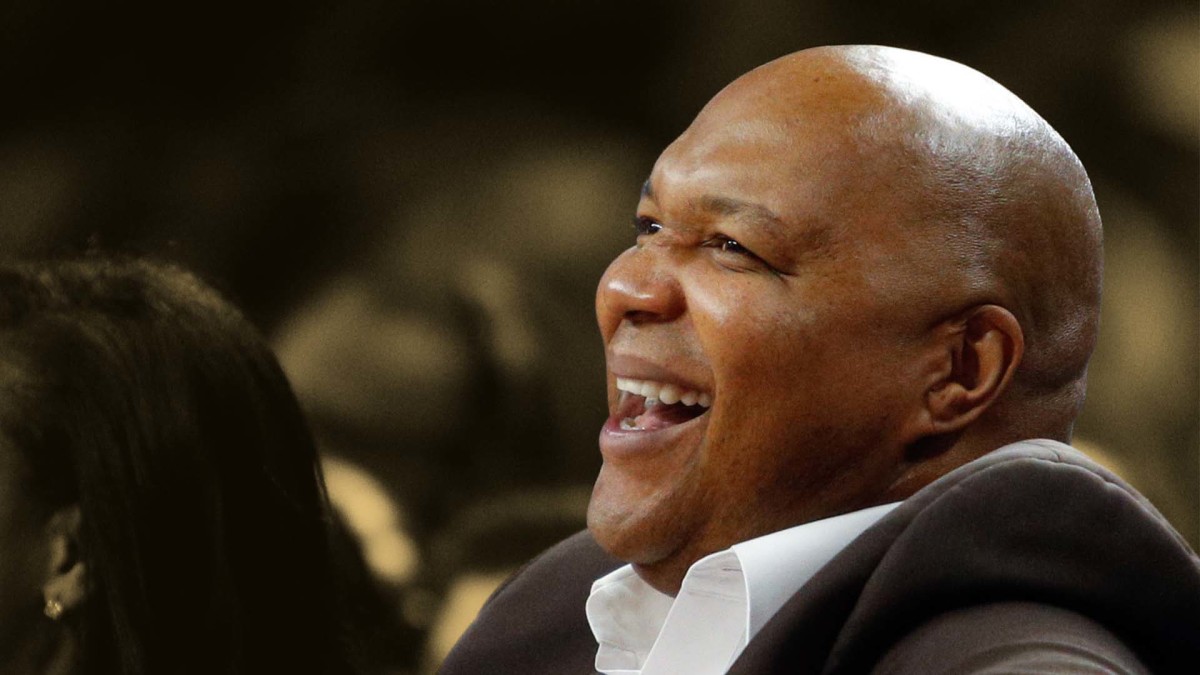
Former number one overall pick of the 1990 Draft, Derrick Coleman earned at least $91.3 million in salary during his NBA career.
But by the time 2010 came around, when he had been retired for about six years, Coleman ended up bankrupt after it was reported that he had $4.7 million in debts with only about $1 million in assets. His financial problems stemmed from his failed investment attempts around the city of Detroit, at least according to his bankruptcy attorney Mark B. Berke.
“Mr. Coleman was focused on investing in various communities throughout the city of Detroit by developing real estate, creating jobs and revitalizing business opportunities,” Berke said. “Due to the state of the economy, including the decline in the real estate market, Mr. Coleman’s investments could not be sustained.”
Coleman’s story tracks with a lot of former NBA players’ take on why a ton of them end up bankrupt after their playing years. It has a lot to do with the fact that they can’t sustain their lavish lifestyles, especially when they’re no longer getting one big check after another.
In Coleman’s case, that was a problem as well and it didn’t help that his investments — which he had hoped would be where most of his profits would come from — didn’t end up panning out. Perhaps Coleman overdid it by attempting to fund and rebuild an unnamed struggling neighborhood in Detroit, which he called Coleman’s Corner. The expenses ended up costing more than he could provide.
Derrick also had ownership stakes in the Hilton Garden Suites hotel in downtown Detroit, a Tim Hortons Inc. doughnut shop franchise and Hungry Howie’s Pizza store, but those obviously weren’t enough for him to pay off his debts.
When Coleman filed for Chapter 7 bankruptcy protection, it was found that his largest debts included a $1.3 million lawsuit, which he owed to Comerica Bank and $1 million loan on a property in Michigan from Thornburg Mortgage Home Loans. On top of all of this, the former New Jersey Net also owed Detroit mayor and fellow Syracuse icon Dave Bing $50,000 from another granted loan.
Coleman had no choice but to attempt to liquidate his assets to his creditors. Those assets included a roster of classic automobiles such as a 1957 Buick convertible worth $20,000, a 1970 Chevrolet Nova worth $5,000 and a 1997 Bentley convertible, at $50,000. Included in this were also his two Seadoo watercraft, his $90,000 NBA pension and two chinchilla fur coats.
This is just another example of how NBA players turn broke after retiring from the game. It’s just unfortunate that in Coleman’s case, because he wanted to do a good thing in Detroit, he failed to see on time how much money he was losing and he didn’t cut other expenses because of it.
Sometimes, an investment can make or break a person and it certainly cost Coleman a lot of his savings, which he’ll likely never get back since he earned all that during his playing years.
But despite his bankruptcy being a significant story of his post-retirement life, at least Coleman continues to be remembered in different positive ways.
His efforts and contributions to his community and the way he returned to school to secure a degree in order to reinvent his life are some examples of that.
This story was originally published by Basketball Network on Dec 20, 2025, where it first appeared in the Off The Court section. Add Basketball Network as a Preferred Source by clicking here.