
Admittedly, I am a relatively young Suns fan. By the time I was consuming basketball, Robert Horry was already the most hated man in Phoenix. But when I was a kid, I loved Steve Nash. While all the other kids were obsessed with Kobe’s “aura”, I had already found the best show on hardwood. It felt like every time I watched Nash play, he would make a pass that didn’t make sense to my brain.
As I had been raised in a household where Bill Laimbeer and the Bad Boys Pistons were spoken of as “perfect basketball”, the pace and space that the Suns played with blew my mind.
Because Nash was my formative memory of the Phoenix Suns, I have always associated this team with speed, flash, and polish.
The Seven Seconds or Less Suns have not been reincarnated in 2026. Their star player is still a midrange hunter who has struggled more from three this year than normal. The Suns didn’t go into the season thinking they had a starting point guard on this team, let alone a Steve Nash. And you might as well forget Amare Stoudemire, this team doesn’t have any rotational power forwards on it at all!
No, the Suns aren’t flashy this year. They’re gritty. They scrap and claw for wins and when they lose they go down kicking and screaming. There are no days off against this team. All season long we have been treated to a team unlike any other I have gotten to enjoy as a Suns fan.
During the first of the two recent games against the Golden State Warriors, I jokingly thought “these aren’t your father’s Suns”, then promptly opened my laptop to write an article about how unique this team is in franchise history. But they aren’t. We’ve been here before. These are your father’s Suns.

NBAE via Getty Images
The NBA began tracking steals in the 1973-1974 season. That year, the Suns averaged 8 steals to the NBA average of 8.7. The most notable names you may know from that team are Dick Van Arsdale and Connie Hawkins. They won 30 games. For a few years thereafter they hovered below or around .500.
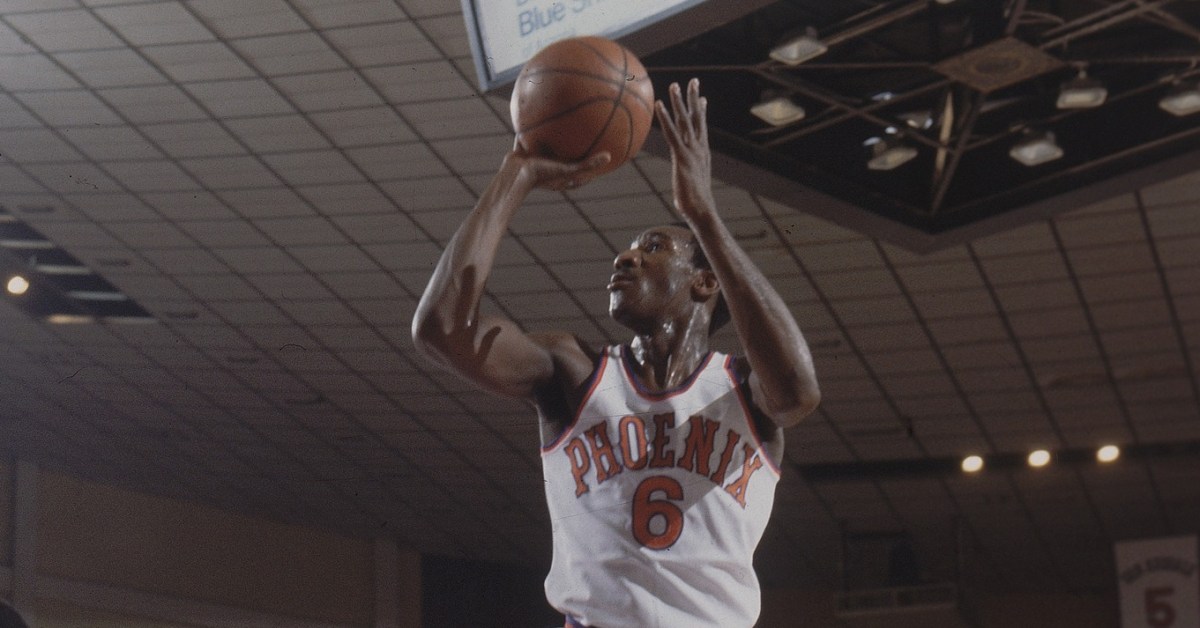
That was until, in 1978, the Phoenix Suns rattled off 49 wins, a 15 win improvement from the year before. This team had names on it the average Suns fan still knows well today. Paul Westphal, Gar Heard, Walter Davis, Dennis Awtrey, and a 23-year-old future Phoenix legend: Alvan Adams.
That 1978 team still holds the record for most steals per game in a season by any team in NBA history at 12.9. That was 3.3 steals higher than the league average of 9.6. Over the next few years through 1981 they maintained a high steal per game rate at 11.2, 11.1, and 10.7. Over this four year stretch, the Suns won 49, 50, 55, and 57 games.
Then… that was it. For a long time the Suns weren’t known for their active hands There was a brief jump above the average steals line in the post-Barkley era, before a crater in the 7SOL era as the team found its new identity. From then, however, the Phoenix Suns lost all sense of any identity until the 2019-2022 Suns which peaked with a trip to the 2021 NBA Finals, yet culminated in the disastrous 2023 Kevin Durant trade.

All of that leads us to today. In the wake of the Kevin Durant departure, Dillon Brooks has stepped in and played himself into a career year. The entire team has followed in his footsteps, behind the leadership of Jordan Ott. The Suns have become a torrent of deflections on defense.
Are steals everything? No, of course not. For a long time the basketball world has known that high steal and block numbers do not define a good defense. But it is notable that the Suns, as of December 22nd, are leading the NBA in steals per game at 11.1.
It is also notable that the Suns have struggled to rebound and block shots, sitting at 0.7 blocks under the NBA average and 2 full rebounds under the NBA average. The 1978 Suns had a similar problem, averaging 0.6 blocks and 1.4 rebounds under the league-wide average.
This Phoenix team is looking to carve out its new identity. But, in doing so, they are recreating aspects of their past. In the ‘70s and ‘80s, the Suns were never able to fit together the team that would take them quite to the top. Perhaps, fifty years later in the ‘20’s and ‘30s, that could change.