
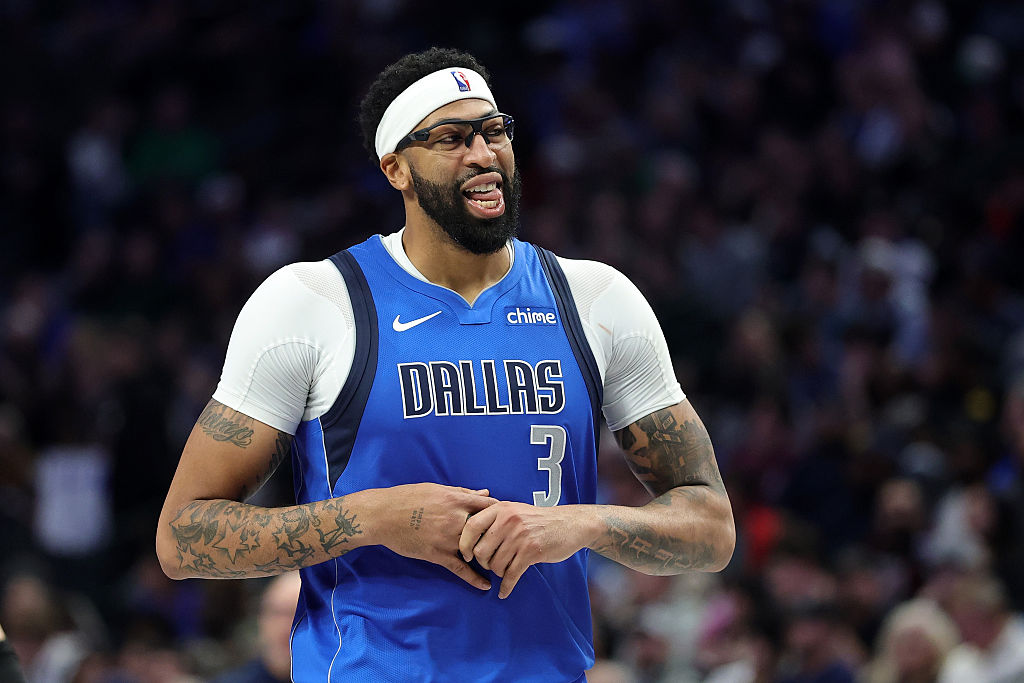
The Dallas Mavericks are nearing a point where direction matters more than patience. Injuries, cap pressure, and a disappointing NBA season have forced the front office to weigh whether Anthony Davis truly fits the franchise’s next competitive window.
While Davis remains one of the league’s most impactful two-way players when available, his contract size and durability concerns have naturally fueled trade speculation.
Among the limited group of teams capable of engaging in a realistic conversation, the Toronto Raptors stand out. Toronto has the salary structure, the incentive to consolidate, and a roster context that makes a Davis acquisition defensible under the current CBA.
NBA Trade Proposal: Anthony Davis to Toronto Raptors
Dallas Mavericks Receive:
Toronto Raptors Receive:
This framework is designed to be executed after Jan. 7, 2026, when Poeltl becomes trade-eligible. With only a minor procedural adjustment required to remain within 100 percent salary-matching rules once apron restrictions apply, the structure is clean, legal, and repeatable.
Why the Toronto Raptors Would Make the Move
For Toronto, this is a consolidation swing aimed at ceiling-raising rather than marginal improvement. The Raptors have committed significant resources to Scottie Barnes, Brandon Ingram, and Immanuel Quickley, but incremental roster tweaks only elevate the floor. Acquiring Davis is about altering the team’s competitive profile.
A Davis–Barnes frontcourt would immediately give Toronto one of the league’s strongest defensive foundations. Davis’ rim protection, rebounding, and positional versatility allow the Raptors to play more aggressively on the perimeter, while Barnes continues to function as a do-it-all connector. Offensively, Davis would not be asked to carry a primary scoring burden.
With Ingram and Quickley handling creation, Toronto could deploy Davis as a finisher, screener, and defensive anchor — a role that maximizes impact while managing workload.
From a financial perspective, Toronto converts multiple long-term contracts into a single max slot without sacrificing its core. Barrett and Poeltl are productive starters, but Davis still represents a higher tier of influence when healthy.
Why the Dallas Mavericks Would Listen
For Dallas, the appeal is rooted in diversification and timeline alignment. Davis turns 33 in March and is owed escalating money through at least the 2027–28 season, including a $62.8 million player option. Anchoring the franchise to that contract becomes increasingly risky if availability remains inconsistent.
This deal allows the Mavericks to spread that risk across several assets while reshaping the roster around Cooper Flagg, the No. 1 pick in the 2025 draft and the centerpiece of Dallas’ next phase. Barrett gives the Mavericks a younger scoring wing under contract through his prime. Poeltl stabilizes the center position with a reliable, starting-caliber presence. Dick adds cost-controlled shooting upside, and the two future first-round picks restore flexibility for future trades or roster-building decisions.
Rather than tying the organization to a single max contract with mounting uncertainty, Dallas gains optionality across multiple seasons.
How the NBA Trade Market Shapes the Value
The return reflects the realities of Davis’ trade market. His production remains strong — 20.5 points, 10.9 rebounds, 1.3 steals, and 1.6 blocks per game in limited action this season — but age, durability concerns, and contract size naturally narrow the pool of teams willing and able to meet a high asking price.
In that context, a package built around two legitimate starters, a young rotation piece, and multiple first-round picks represents a fair exchange. It balances Dallas’ need for immediate contributors with assets that preserve long-term flexibility, while giving Toronto access to a star capable of reshaping its competitive ceiling.
If Davis is ultimately moved to Toronto, this is what a serious, executable deal looks like. It works within the CBA, respects apron restrictions, and aligns with where both franchises are headed competitively. More than anything, it reflects how front offices actually value elite talent that still carries game-changing upside alongside real financial and health risk.
Latest NBA News & Trade Rumors