
Opening night in 2024 is one James Wiseman will never forget. He joined the Indiana Pacers in search of a fresh start and the chance to prove himself. Unfortunately, in his first opportunity to do so with his new team, the former second overall pick in the 2020 NBA Draft ruptured his Achilles tendon.
Wiseman’s career has faced its share of challenges. With the Golden State Warriors, he was once viewed as a key piece of the young core expected to receive the baton from Stephen Curry, Draymond Green, and Klay Thompson. That never came to fruition.
However, this was a different type of obstacle. Perhaps the most devastating injury an athlete can suffer. At 23, his NBA career was at a crossroads.
In a testament to the work Wiseman put in and his mental fortitude, a year later, almost to the date, back with the Pacers, he logged nearly 20 minutes. It was a statement that his injury did not defeat him. If anything, it has made him stronger.
The mental side of the journey back from a torn Achilles
As explained by Dr. Kevin R. Stone, an orthopedic surgeon at The Stone Clinic and a leading expert in Achilles tendon repair, there have been significant advancements in treating this fear-striking injury.
“Now, in almost every one of these injuries, in every ankle sprain, almost every soft tissue injury that we see, in order to help the athlete come back faster and stronger, we add these growth factors to these injuries,” shared Dr. Stone. “And so his Achilles tendon, assuming it was treated that way, is different than the Achilles tendons that ruptured a few years ago, where they didn’t receive that treatment.”
What that means is that “when you add these recruitment factors, you can increase their migration to the site of [the] injury and speed up their repair.”
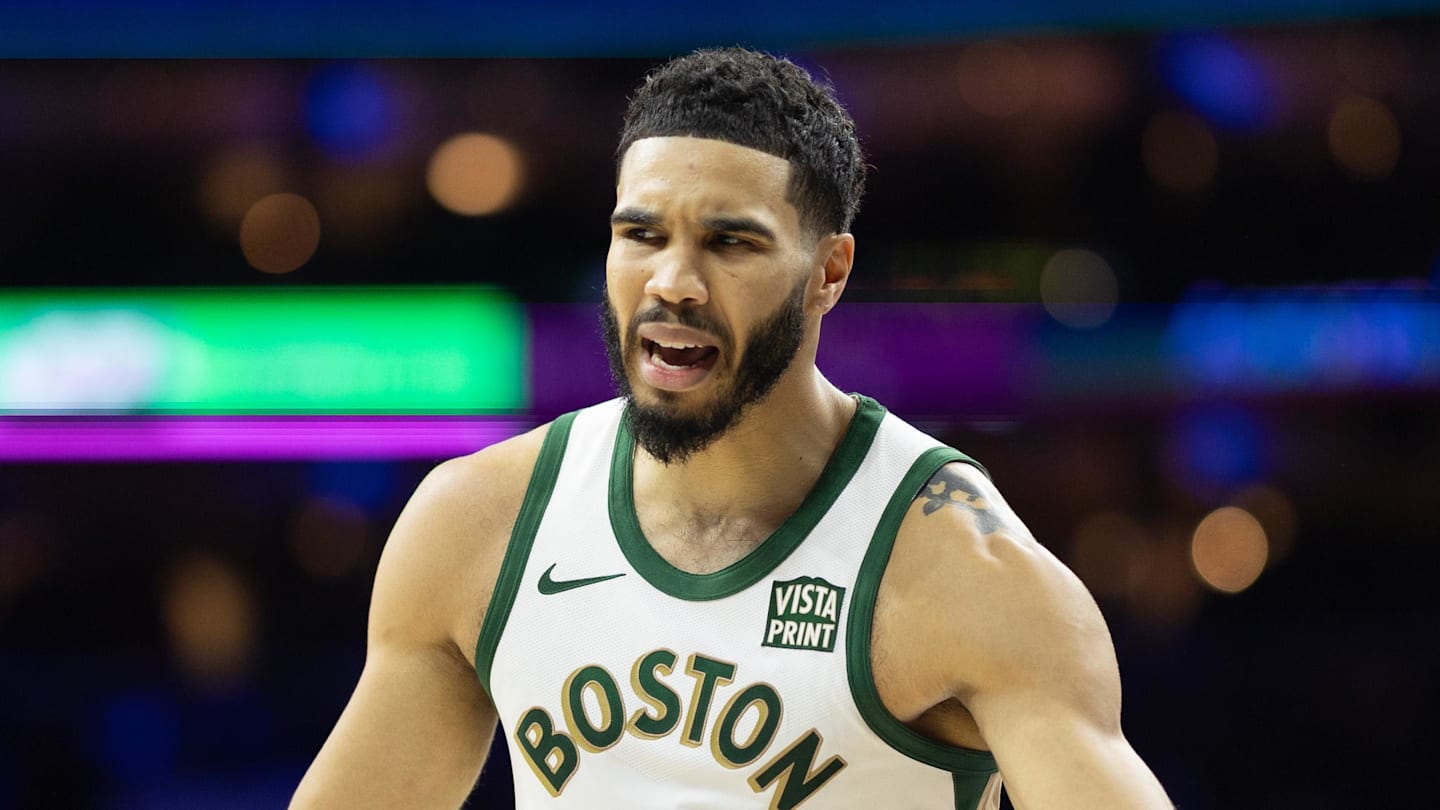
That allows players like Wiseman and Boston Celtics star Jayson Tatum to return faster than even the athletes who suffered an Achilles tear only a few years ago.
And when they do come back, as Dr. Stone stated, “There’s nothing about an Achilles rupture that should prevent him from coming back better than he was before.”
What it also speaks to is that this injury challenges one mentally, perhaps even more than it does physically.
“It’s all like a mental game,” said Wiseman while discussing his road to recovery before the Celtics’ 103-95 win over the Pacers. “I feel like the rehab process is more mental than physical. So, just being able to keep my mental up. And just being able to find different hobbies, as you’re doing it, and try not to be an idle mind. I feel like that kind of helped me out a lot in my recovery.”

Layne Murdoch Jr./GettyImages
James Wiseman’s advice to Jayson Tatum
During that pregame conversation before tip-off against the Celtics, Wiseman shared his advice to Tatum about a journey that can be slow and arduous.
“Really, just to keep working and that the rehab process is all mental and that as long as you keep your mental healthy, and as long as you take care of your mind, then you’re good.”
To achieve that, the 24-year-old from Tennessee turned to literature. He explored books like “The Creative Act: A Way of Being” by Rick Rubin and “Think and Grow Rich” by Napoleon Hill to sharpen his mind. He also utilizes meditation as a way to take care of his mental health.
Those practices are paramount during a process that requires patience.
The unshakable reality of rehabbing from a torn Achilles
Before the Celtics beat the Heat, 129-116, at TD Garden, guard Dru Smith discussed his ability to rejoin Miami’s lineup nine months after he ruptured his Achilles tendon.
It’s an encouraging example for Tatum. Interestingly, he emphasized that patience was key to his ability to return quickly.
“Just putting in the time every day with the rehab, and then also not taking it too fast,” said Smith, per CLNS Media. “I was able to get back fast, but it was really, probably because of the patience on the front end. Like, we took everything really slowly. We walked slowly, ran slowly. We were probably behind on a lot of those early milestones just to make sure that everything was safe, and then we can kind of ramp it up from there.”
It’s a sentiment Wiseman echoed.
“That’s the only thing you got is patience, but being able to endure mentally, up here, is what makes it different,” he conveyed. “So, just being able to know that you got it is what’s important, and not trying to overdo it, but kind of like take your time with the process.”
It’s one that Smith described as “Slow. It’s tough. It’s boring some days, but you know, it’s just a process. You’ve got to kind of take it day by day, and then just kind of always see how your body is responding.”
Getting over the fear factor
One of the most challenging parts of the return from a significant injury is truly feeling like yourself again. To be comfortable in a physically demanding environment. Shaking that fear factor is commonly seen as the final hurdle.
When asked about his experience with that, Wiseman shared, “At first it was tough, like, just getting back used to the comfortability of playing and everything, but over time it started to come back.”
Admittedly, that “took a while. Just going through a lot of ups and downs. It took a while, but just sticking to it and having that endurance mentally and spiritually as well is what matters.”
Around training camp, being healthy and active, Wiseman felt like himself again. However, “In terms of the game part, it takes time.”
Again, that’s where patience comes into play.
Just as Wiseman has books and meditation, Tatum can lean on his family and whatever practices he has picked up or explored further to help him navigate his recovery.

Boston Globe/GettyImages
Brad Stevens addresses Tatum’s return
Speaking recently at the Auerbach Center, the Celtics’ president of basketball operations outlined the steps the six-time All-Star must take to get cleared by the organization.
“There’s strength thresholds he has to meet. And then after that, several weeks of progressions, right?” Said Stevens. “From the standpoints of scripted against small groups, scripted against bigger groups, scripted in five-on-five, unscripted, random, all the way up through those.
“But it’s a long progression, and it’s almost like once you hit the strength, then you do your thresholds of a progression of play, and then you’re also reconditioning to play real minutes. You know, whatever that looks like. He’s obviously made great strides right now. We’re still focused on the full strength game.”
It’s a reminder that whether Tatum reaches the light at the end of the tunnel within the next several months or his return occurs at the start of the 2026-27 season, he must remain patient and not just protect himself physically but mentally.
The advancements in treating an Achilles tear, and the fact that this happened to him at 27, validate his belief that this injury will not define him. Balancing pushing himself physically with maintaining a healthy frame of mind through a process that moves slowly, even for Dru Smith, who made a speedy recovery, is at the root of his ability to fulfill his vow.