
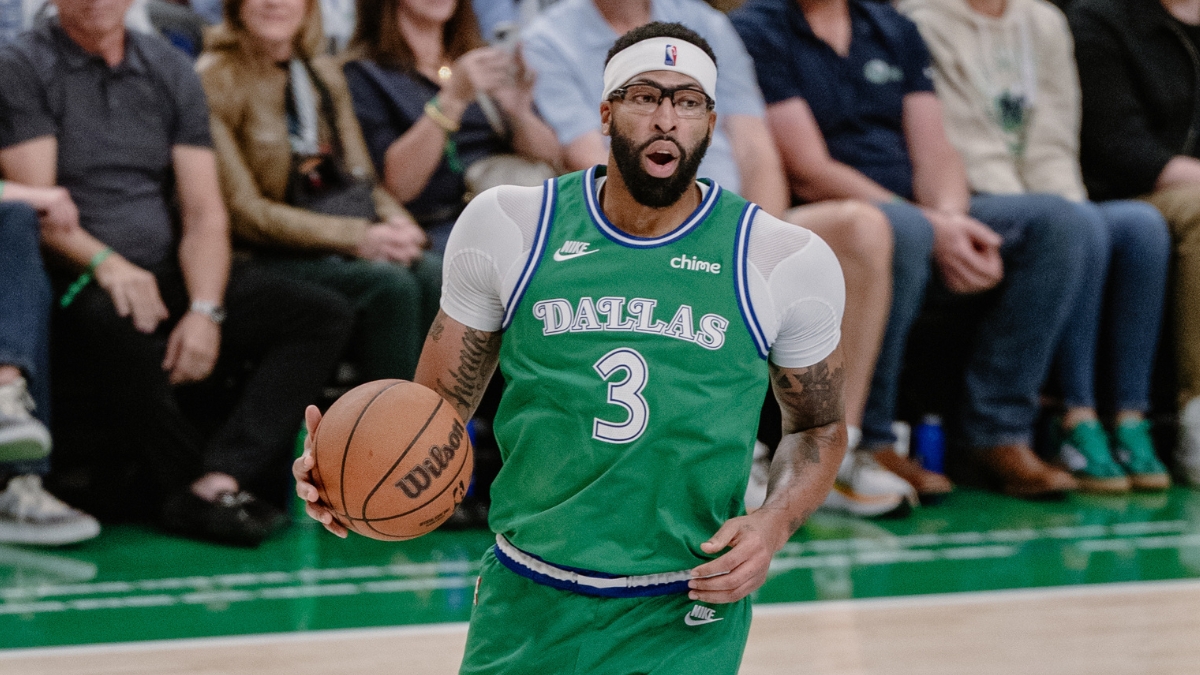
The Atlanta Hawks have emerged as one of the few teams capable of assembling a clean, high-end trade offer for Anthony Davis without requiring a third team, according to league observers monitoring the market.
As December has progressed, Atlanta’s uneven results have increased outside belief that the organization may need to consider a significant move to stabilize its season and clarify its long-term direction. Multiple league sources continue to point to the Hawks as a viable — and potentially dangerous — suitor should Dallas decide to engage seriously on a Davis trade.
Atlanta has not reached this point abruptly. Earlier stretches without Trae Young did not force immediate action, as the Hawks remained competitive enough to justify patience. December’s slide, however, has narrowed that margin. Atlanta is 2–9 this month, tied for the league’s worst record in that span, a stretch that has intensified scrutiny around roster construction and internal timelines.
That pressure was reinforced in a 126–111 loss to the Miami Heat, when defensive breakdowns and 21 turnovers again undercut otherwise productive nights from Young and Jalen Johnson, one of the team’s most consistent bright spots this season.
NBA Trade Proposal: Atlanta Hawks Land Anthony Davis
Atlanta Hawks Receive:
Anthony Davis
Danté Exum
Dallas Mavericks Receive:
Leaguewide framing around these discussions has remained consistent: Young is not expected to be part of any package, while Dallas would require Risacher as the centerpiece of a serious Hawks offer.
Why the Atlanta Hawks’ Assets Are Under Review
Availability has become central to how rival teams evaluate Atlanta’s direction. Porzingis has appeared in just 13 games while managing POTS, limiting the Hawks’ ability to properly assess their ceiling. That lack of clarity has sharpened conversations around whether continuity alone is sufficient.
Developmental uncertainty has also followed Risacher into his second season. Through 29 games, he is averaging 10.9 points, 2.9 rebounds, and 1.6 assists, a statistical dip from his rookie-year production. Instead of a clear step forward, the plateau has become part of how opposing front offices frame Atlanta’s short-term volatility.
Luke Kennard’s situation further reflects that flexibility. Signed to a one-year, $11 million deal, Kennard is averaging 6.8 points while shooting 42.4 percent from three. His contract provides clean matching value and optionality without long-term commitment.
Why the Atlanta Hawks Stay Central in Anthony Davis Talks
Atlanta’s appeal in this market is driven less by intent than by mechanics. By combining Porzingis’ $30.7 million salary, Kennard’s $11.0 million deal, and Risacher’s $13.2 million rookie-scale figure, the Hawks can reach roughly $54.9 million in outgoing salary — nearly identical to Davis’ $54.1 million number.
Few teams can match that level of precision without additional partners, a reality that has kept Atlanta prominent in league discussions even as talks remain largely theoretical.
From Dallas’ side, Davis has averaged 20.5 points, 10.9 rebounds, and 2.8 assists in 16 games this season. Availability, however, continues to shape league perception. The Mavericks are 4–12 in games Davis has missed this year and 11–29 without him since acquiring him, compared to 15–12 when he plays, including the play-in tournament.
Contract and Availability Considerations
Davis is earning $54.1 million this season, with salaries of $58.5 million in 2026–27 and a $62.8 million player option in 2027–28. He will also be eligible for a four-year, $275 million maximum extension in August, a factor that continues to temper the market.
He is currently questionable with right adductor soreness after exiting the Christmas Day loss to Golden State in the second quarter, though the injury is not believed to carry long-term concern, sources tell DallasHoopsJournal.com. Even so, durability remains a central variable in any serious evaluation.
Those factors have positioned Davis below the league’s true “all-assets” tier, with rival executives viewing his value closer to a structure involving one unprotected first, a protected additional pick, a swap, and meaningful player value.
Why the Dallas Mavericks Would Consider This Structure
For Dallas, the framework converts a high-risk, escalating contract into diversification. Porzingis provides offensive versatility and lineup flexibility when available. Risacher offers long-term upside on a cost-controlled deal. Kennard adds movement shooting around the core.
The Mavericks would also add an unprotected 2027 first, a protected 2029 first, and a 2028 swap, while trimming roughly $2–2.5 million in salary and avoiding carrying Danté Exum’s guaranteed money. That marginal flexibility matters under the new CBA as teams navigate second-apron constraints.
League sources continue to point to Dallas’ long-term planning around Cooper Flagg as a stabilizing factor in these discussions, reinforcing why any Davis move is being weighed against flexibility rather than urgency.
Outlook
As December winds down, Atlanta remains one of the few teams capable of presenting a clean, executable Anthony Davis offer without dismantling its core. Whether the Hawks are willing to assume the financial and durability risk remains the unanswered question.
For now, leaguewide attention continues to center on whether patience remains viable — or whether mounting pressure forces a defining decision.
Latest NBA News & Trade Rumors