
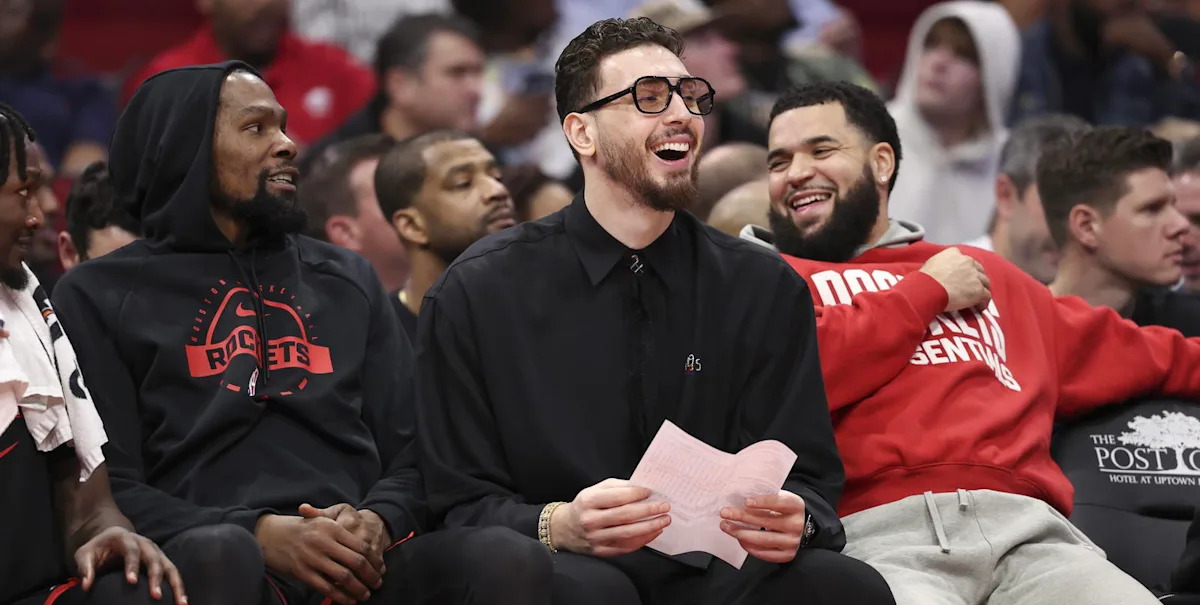
Playing without Alperen Şengün should change the math for the Houston Rockets. On Saturday night, it only changed the look- and not in a way Cleveland was ready for.
With Şengün sidelined by a calf issue, Houston didn’t try to replace his production possession by possession. They redistributed responsibility. The offense flattened out, the pace stayed controlled, and the hierarchy became simple: defend first, move the ball early, and let Kevin Durant dictate when scoring was needed.
Advertisement
Without Houston’s usual post hub on the floor, Durant became both the pressure point and the release valve. He scored early, drew attention without forcing shots, and punished Cleveland for never fully committing to a double. He didn’t play hero ball, but he did ensure structure was maintained and embraced his role within it.
Steven Adams anchored the paint, controlled the glass, and kept Cleveland from getting second chances. Tari Eason brought disruption and energy in the gaps. Reed Sheppard spaced the floor and punished late rotations. Everyone stayed in their lane.
Defensively, the Rockets looked even more locked in. Without Şengün’s playmaking responsibilities to manage, Houston simplified reads, stayed connected, and turned stops into rhythm without rushing. And Cleveland never found a clean way to speed the game up.
Advertisement
Saturday night proved that not only can Houston survive without Şengün- they can toggle styles when needed by leaning on defense, rebounding, and discipline, instead of flow. That kind of adaptability is the difference between a good team and a serious one.