
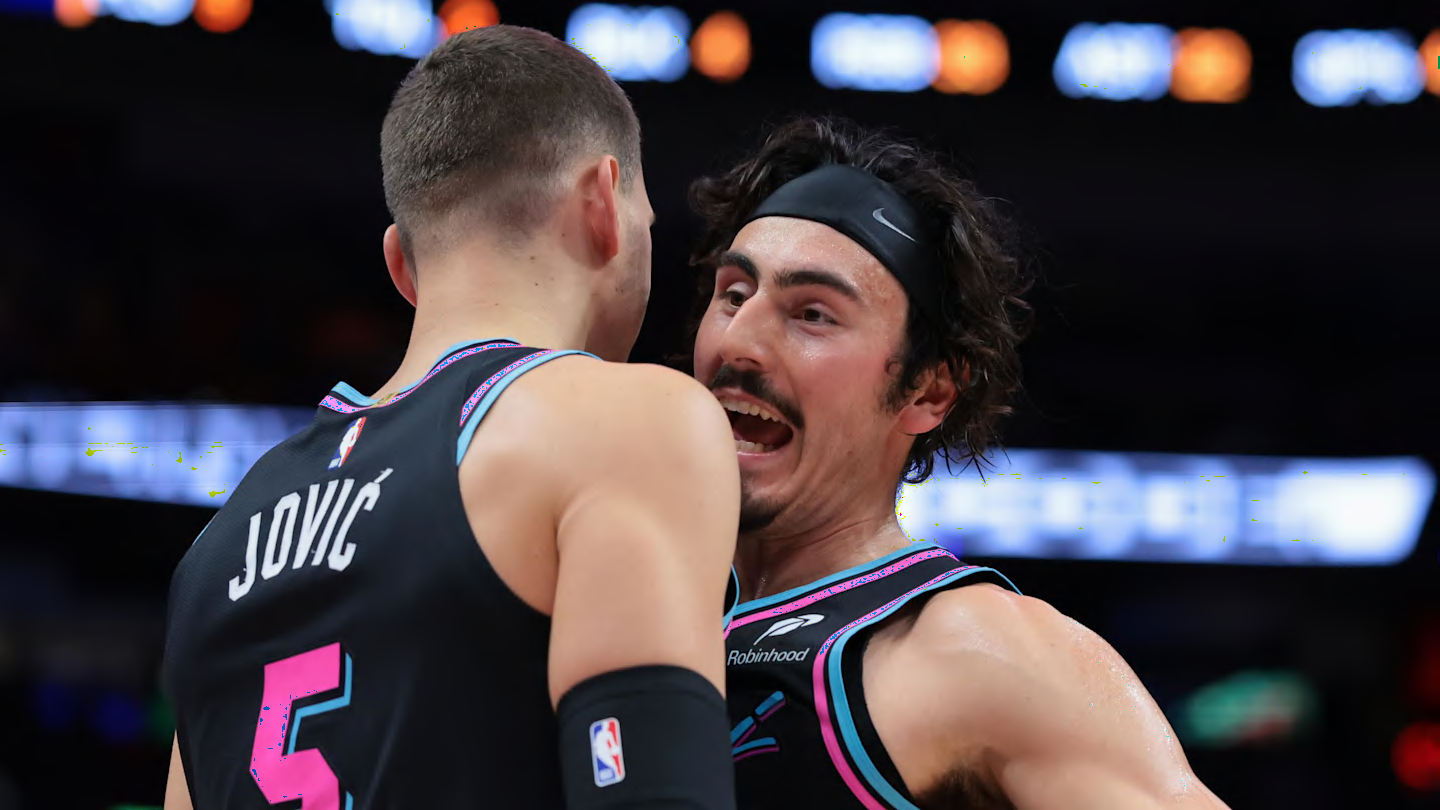
The quote came easily, which made it revealing. After the Miami Heat dismantled the Indiana Pacers with a franchise-best second half, Jaime Jaquez Jr. didn’t talk about shooting nights or matchups. He talked about recognition.
“Collectively we’re really just buying in to the principles we’ve been working on since training camp,” the third-year Heat player said. “We kind of got away from it and we realized what works, works. For us, that’s cutting, being disruptive, reckless, playing fast. We got back to what wins for us and just embracing that identity and bringing that every single night.”
For a team that has spent nearly the entire past month searching for consistency, it sounded less like a breakthrough and more like a reminder. The Heat didn’t uncover a new formula. They returned to one they already knew.
Early in the season, the Miami Heat looked like a team building real momentum in the Eastern Conference. After a dominant home win over the Los Angeles Clippers on December 2, Miami improved to 14-7. Tyler Herro had returned from offseason foot surgery, rotations were stabilizing, and the Heat were playing with a clarity that showed up on both ends of the floor. They were fast, aggressive, and connected, the type of group that looked capable of competing for homecourt advantage in the first round of the playoffs.
The numbers supported the eye test. From opening night through that Clippers win, Miami led the league in pace at 106.09. They ranked fourth in defensive rating, sixth in net rating, and third in turnover percentage. Those metrics weren’t abstract achievements. They reflected a team that cut decisively, pressured the ball, and played with the kind of organized chaos that has defined the franchise at its best.
Then it slipped.
Over the next nine games, the Heat lost eight times. Their lone win came against a lottery-bound Brooklyn Nets team. They dropped three games at home: against Sacramento and lost twice to Toronto, performances that felt flat and disconnected. Injuries again played a role as Herro remained sidelined with a toe issue, but the problems ran deeper than availability. The pace slowed. The assertiveness disappeared. The group that had looked fast and disruptive early in the season began to resemble last year’s version, the one that stumbled through the regular season and was overwhelmed by Cleveland in the playoffs.
The statistical drop-off was stark. During the losing skid, Miami’s pace fell to 100.22, good for 14th in the league. Their defensive rating slid to 20th. Their net rating cratered to minus-9.2, ranking 29th. Turnover percentage technically improved, but in context it reflected a team playing cautiously rather than collectively. The Heat weren’t forcing action anymore. They were reacting.
The past two games have offered a sharp contrast. Wins against Atlanta and Indiana did not come against elite competition, but they came with a familiar rhythm. The ball moved. Cuts were made with purpose. Defenders flew around the floor. Miami looked engaged again, and the margins that had plagued them during the skid began to tilt back in their favor.
Another great sequence of plays for Pelle
Spo diagrams an attack for him off a time-out after Indiana cuts the lead to 11. He scores against tough D.
Then gets the ball exactly for Ware to finish the lob the next play.
Dude just sparks runs and Heat-type of basketball. pic.twitter.com/WBLFKHPdR9
— Naveen Ganglani (@naveenganglani) December 28, 2025
After the Pacers win, head coach Erik Spoelstra described it less as a tactical adjustment and more as a mental reset. “It was a great spirit,” he said. “Really the last 48 hours, guys just getting lost into the team, into the game, into the process of what was needed to win these games. They’re not thinking about anything else, there was a great clarity of mind.”
That clarity has coincided with personnel changes that reinforce the style Miami wants to play. With Bam Adebayo out, Pelle Larsson returned from an ankle injury and was inserted into the starting lineup. The impact was immediate. Miami is now 13-6 in games Larsson starts, a record that reflects how well his energy and defensive pressure fit the Heat’s preferred tempo. He’s becoming what Spoelstra likes to call a “winning player.” Nikola Jović’s return has also mattered. Against Indiana, he posted 19 points, seven rebounds, seven assists, and two steals off the bench, serving as a connective piece who kept the offense flowing.
Starting to feel more like early season Heat ball. Quick Wiggins 3 off a made Pacers shot. Heat get the turnover, run immediately, and get the easy 2.
I swear, Larsson brings a spark/energy Miami badly needs. He’s become truly valuable to winning. pic.twitter.com/hhtD9Uupay
— Naveen Ganglani (@naveenganglani) December 28, 2025
Jaquez, meanwhile, continues to thrive in that environment. His 28-point performance against the Pacers was efficient and controlled, a product of movement and decisiveness rather than over contemplation. As Miami leans back into its early-season identity, Jaquez’s case as a Sixth Man of the Year candidate only strengthens. He is not just producing. He is also embodying the style the Heat want to sustain.
The challenge now is whether Miami can carry that identity forward. The schedule ahead offers little room for error, with games against Denver, Detroit, Minnesota, New Orleans, and another matchup with Minnesota looming. Those opponents will test the Heat’s discipline and stamina in ways the past two games did not.
The Heat don’t need to reinvent themselves to survive that stretch. They need to commit. As Jaquez pointed out, what works has already been established. Playing fast, cutting hard, and being disruptive isn’t a temporary adjustment. It’s the foundation. Whether Miami continues its climb will depend on how consistently it chooses to honor it.