
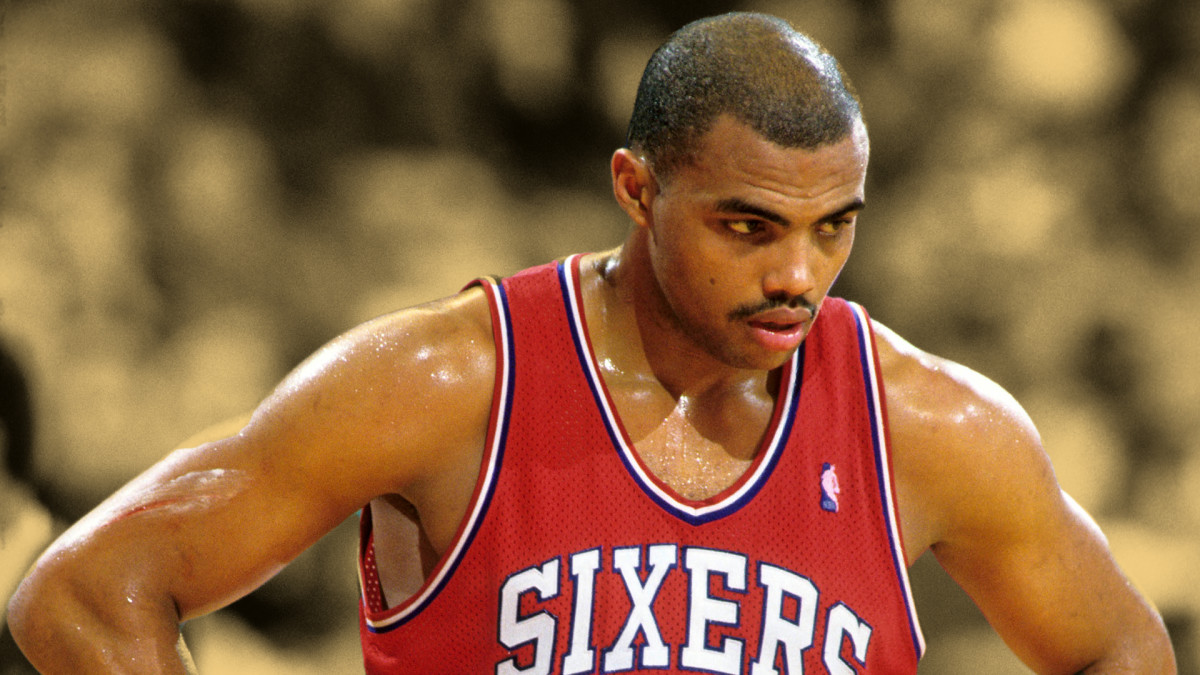
Back in November 1984, the Boston Celtics and the Philadelphia 76ers clashed in a regular-season game that played out with playoff-level tension. The two titans of the Eastern Conference were no strangers to hostility.
And that night at The Spectrum in Philly, emotions boiled over in a blink.
Advertisement
The night was billed as another chapter in their classic rivalry, but what unfolded would be remembered more for fists than for finesse.
The chaos
After an altercation involving two future Hall of Famers, Larry Bird and Julius Erving, punches were thrown. Arms flailed. Benches cleared.
They went at it like bitter rivals instead of All-Star teammates from just months earlier on the 1984 Olympic selection tour. But amid the chaos stood a young Charles Barkley, barely into his rookie season.
He wasn’t trying to join the brawl. In his own telling, he was trying to stop it.
“I was so mad that they fined me in that situation,” Barkley said, still with repugnance in his voice many decades later. “Every time I see that clip, I’m so pissed because, first of all, I would never hold anybody. When a fight breaks out, you grab somebody, trying to break it up. But nobody grabbed Doc.”
That game had all the ingredients: pride, legacy, and a score to settle.
Advertisement
Bird was already deep into one of his trademark scoring outbursts; he would finish the game with 42 points. And his mouth was working just as hard as his jump shot. Erving, who had been limited to just six points, became the target of Bird’s verbal barbs.
Bird, never shy about elucidating his legendary confidence, reportedly told Erving it was “time to retire.” The comment lit the fuse. Barkley, like many others, had stepped onto the court with the instincts of a peacemaker, but the NBA’s office didn’t see it that way. Fines were dished out, and Barkley, just weeks into his professional career, found himself caught in the middle.
Barkley’s pain
The NBA’s punishment was swift and broad. Both benches were fined, but the headliners took the largest hits. Bird and Erving were each fined $7,500 — a huge penalty at the time and one of the largest fines in league history for player misconduct up to that point.
Advertisement
It was a statement from the league that brawls between its biggest stars wouldn’t be tolerated, regardless of how many points one had scored or how much history was involved. But Chuck got fined, too. For what he claims was simply an attempt to break it all up.
“When they called me to the commissioner’s office,” Barkley recalled. “I requested a meeting because I got fined.
That meeting didn’t sway the league. The fine stood. And for Barkley, the whole thing has remained a sore spot, not just because of the money, but because of the principle.
At the time, Charles was only 21 years old, a rising rookie still finding his place among seasoned vets like Erving, who was winding down an iconic career. Barkley had grown up viewing Erving as his boyhood hero, and now he was sharing the court and locker room with him. That made the brawl even more bizarre for Barkley, who would later become one of the most outspoken and entertaining voices in NBA history.
Advertisement
The Bird-Erving fight would go down as one of the most infamous on-court altercations in NBA history.
It happened in an era when the league still had one foot in the rugged, roughhouse culture of the ’70s and was just beginning to polish its image under the leadership of commissioner David Stern, who had only taken the helm earlier that same year.