
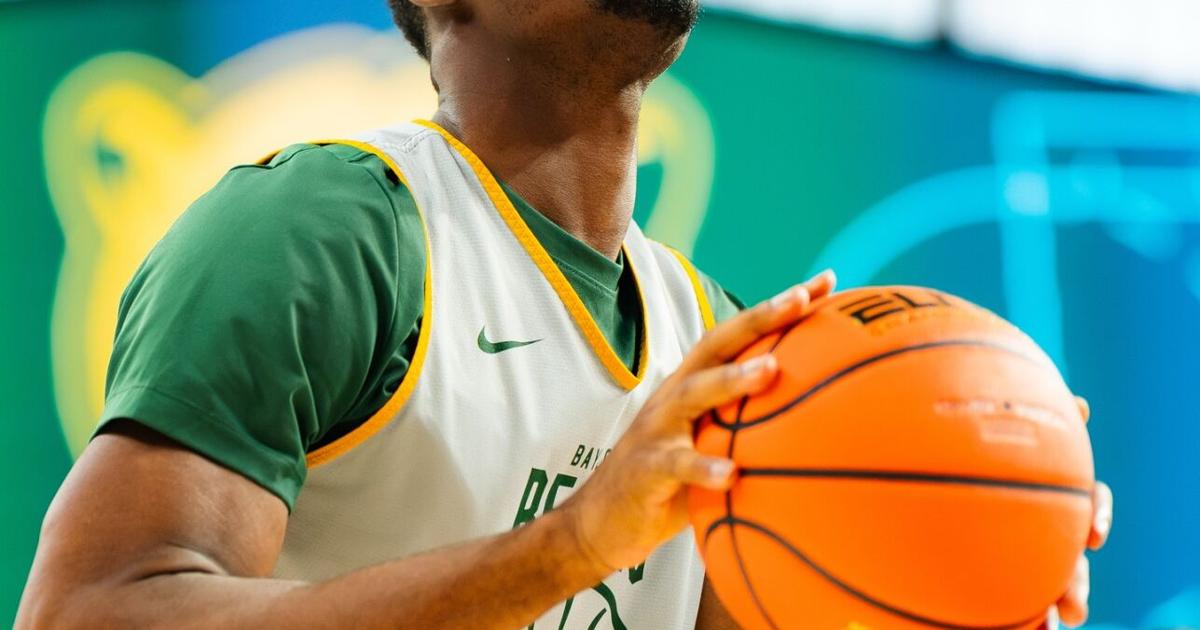
Last month, former NBA draft pick James Nnaji received a waiver from the NCAA granting him immediate four-year eligibility to play basketball for the Baylor Bears. While Nnaji is just one of a plethora of Division I men’s basketball players to get cleared for the 2025-26 season, his case stands apart. The decision to let Nnaji play is not a routine eligibility ruling — it is a monumental decision for the future of college basketball and the NCAA itself.
Nnaji, a 7-foot Nigerian center, entered the 2023 NBA Draft after playing professionally in Spain. He was selected by Detroit with the 31st pick in the draft before being traded to Charlotte. He was then acquired by New York as a part of the Karl Anthony-Towns trade, but he never signed an NBA contract. Despite appearing in the NBA Summer League, Nnaji has not played in an official NBA game or an NBA G League game, and he spent the 2024-25 season playing overseas in Turkey.
Under longstanding historical precedent, Nnaji’s career path would have disqualified him from playing college basketball. Historically, under the NCAA’s “amateurism” model, once a player signs with a sports agent and enters the NBA Draft, they forfeit their amateur status and remaining college eligibility unless they withdraw before the early deadline. Granting eligibility to a player who was selected in the draft directly contradicts this precedent, and it cements the direction in which college basketball is headed — inching closer and closer to that of a professional league.
“It’s no longer college basketball,” St. John’s head coach Rick Pitino shared on X. “It’s professional basketball with budgets that rival the Euroleague … Unfortunately, the game I’ve been in for over 40 years no longer exists.”
Pitino is not the only high-profile coach to sound off on the NCAA for the Nnaji decision. Arkansas’ John Calipari, UConn’s Dan Hurley and several others have expressed their displeasure with the situation at hand.
“Who, other than dumb people like me, are gonna recruit high school kids … if you can get NBA players, G League players, guys that are 28 years old?” Calipari said. “Why did [the NCAA] let that kid play? Tell us all, ‘Here’s the reason,’ then we’ll all go get pros.”
NCAA President Charlie Baker declared on X that the NCAA “has not and will not” grant eligibility to players who have signed an NBA contract or a two-way deal with an NBA franchise. Yet even that clarification leaves significant gray areas unresolved, and the entire situation raises a much broader question — how did the NCAA, once the most respected sports association in the United States, arrive at such chaos and uncertainty?
Think of the NCAA as a rulebook. In the past, this rulebook was rigid and unforgiving, usually receiving adherence from schools across the country. The association held significant leverage over national championships and competition, it controlled television deals and it had the ability to impose severe penalties under the amateurism model, such as when it banned the Kentucky basketball team for the entire 1952-53 season following a point-shaving scandal. The message was simple: follow the rules or get banned.
In recent years, however, schools and conferences have started to question the association and the legal basis for its rules. That shift rapidly accelerated in 2015, when former UCLA player Ed O’Bannon won a class action lawsuit against the NCAA regarding name, image and likeness deals.
Since the O’Bannon case, schools have realized that the NCAA’s ruling means very little if it does not hold up in court. Now, when the association issues a ruling, the response is, “We’ll see you in court.”
Power conferences have now secured their own multibillion-dollar television deals, and the vast majority of NIL, transfer portal and eligibility rules that have been adapted in the past decade have come as a result of a federal court’s ruling. Even when the NCAA does act independently, its decisions are drastically skewed by the looming threat of litigation.
“[They’re] just letting it go because they’re afraid they’re going to get sued,” Michigan State head coach Tom Izzo said.
Izzo is right. It’s hard to believe that the NCAA wanted Nnaji to play. More likely, the association chose to act preemptively, making the decision itself in order to save face. While choosing this route might allow the NCAA to maintain the illusion of control and authority, it raises an even graver issue — if the NCAA governs out of fear of losing in court, what power does it really have?
At that point, the association is nothing more than a glorified rulebook with no ability to enforce its own regulations.
“A lack of leadership is really shown and now it’s probably time to get some help from Congress, but they’re more screwed up than the NCAA is,” Gonzaga University head coach Mark Few said.
While Few may be joking about the current state of the U.S. government, his suggestion is nonetheless valid. Codification of NCAA rules into federal law could restore stability, as schools would think twice about suing the association and federal oversight ensures national uniformity, as well as checks and balances which the NCAA currently lacks.
Still, in my opinion, the Nnaji decision perfectly represents the dejected state of the NCAA — a pathetic attempt to reclaim some of the power it once held, even if it compromises the integrity of the college game. The NCAA is fading from relevance, and if it doesn’t come up with a solution soon, I think its days as a governing body are numbered.