

Welcome to my midseason 2026 NHL Draft ranking.
This January top 64 (which also includes 32 honorable mentions) is my fourth ranking of the 2026 class and first without preseason front-runner Gavin McKenna at No. 1. It follows April’s way-too-early top 26, August’s preseason top 32 and November’s preliminary top 64, and will be followed by a March top 64, a post-U18 worlds top 64 and then my final top 100 in June.
Usurping McKenna in a shared tier atop my board is Swedish winger Ivar Stenberg. They’re followed by North Dakota defenseman Keaton Verhoeff, Soo Greyhounds defenseman Chase Reid and Boston University newcomer Tynan Lawrence, the top center in this class.
As always, the ranking is packaged in our sortable user interface and broken down into tiers. My board currently has six tiers: 1-2, 3-12, 13-17, 18-29, 30-56, 57-64+.
Note that while I consult scouts, coaches, general managers, team staff and those around these players (their agents, skills coaches, strength and conditioning coaches, etc.) throughout the year, the following evaluations and rankings are strictly my own.
Here are my full reports on the top 64 (honorable mentions are sorted alphabetically).
Pos. C G LHD LW RHD RW
Natl. 🇨🇦 🇨🇭 🇨🇿 🇫🇮 🇰🇾 🇱🇹 🇱🇻 🇳🇴 🇷🇺 🇸🇪 🇸🇰 🇺🇸
Tier Tier 1 Tier 2 Tier 3 Tier 4 Tier 5 Tier 6 Tier Honorable Mention
League J20 KHL Liiga Liiga U20 MHL NCAA NL NTDP OHL QMJHL SHL Slovakia USHL WHL

Loading
Try changing or resetting your filters to see more.
Tier 1
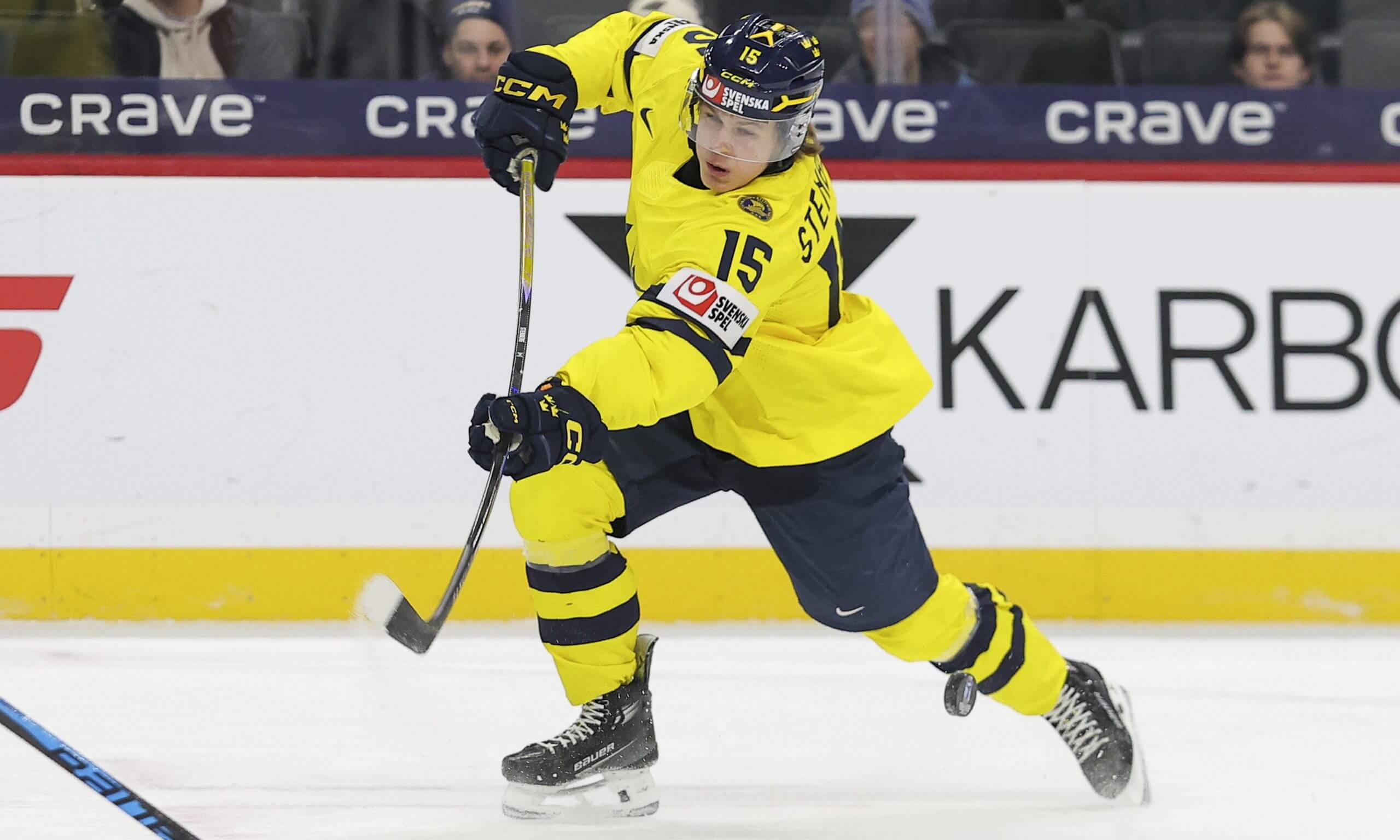
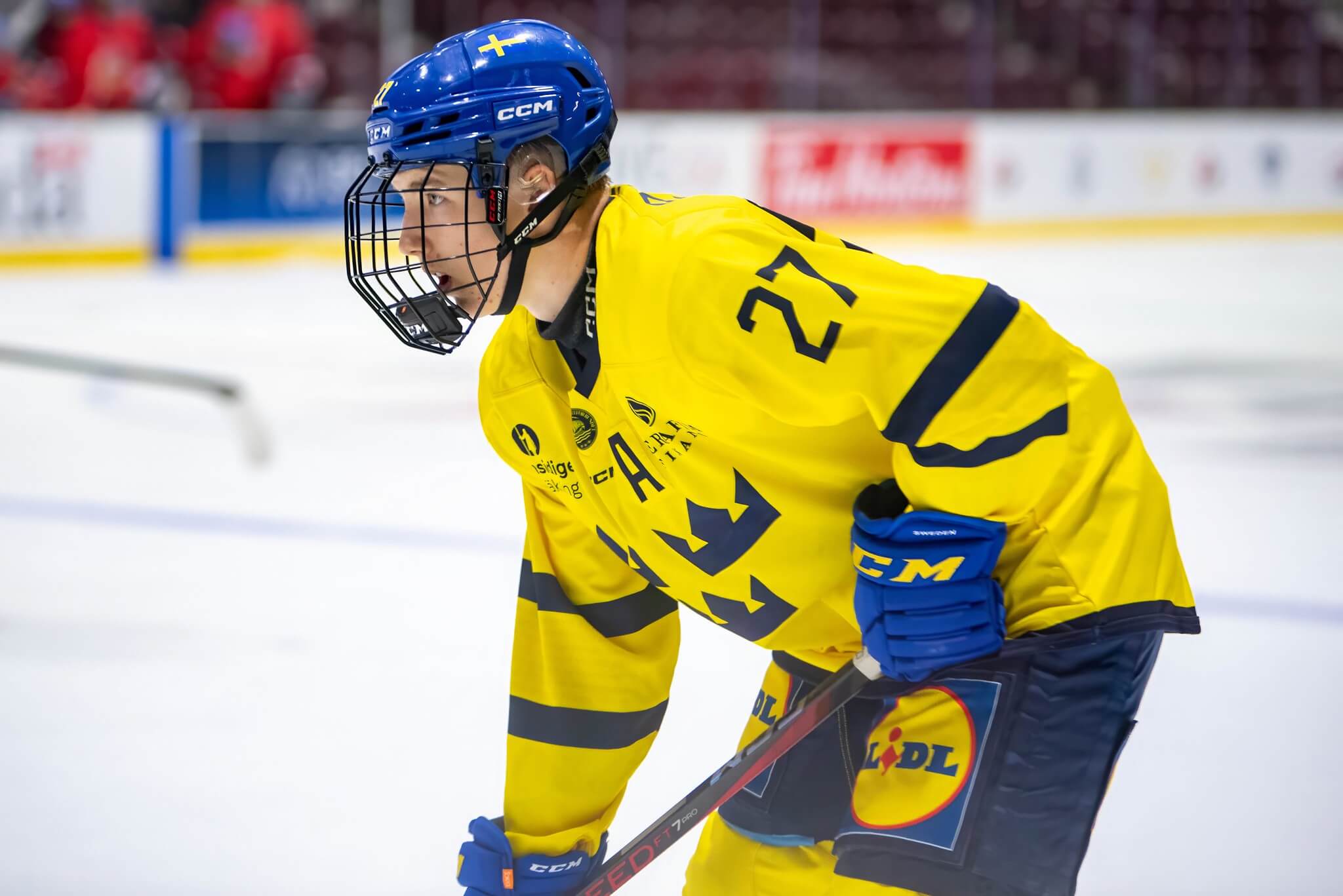
Stenberg is a dynamic left-shot winger who’s comfortable playing both wings and whose statistical track record, skill set and play across levels have made him my No. 1 prospect in the draft. He outproduced recent top Swedes like Lucas Raymond at the J20 level in his draft-minus-one season, has dominated internationally at U17s, the Hlinka Gretzky, the World Jr. A Challenge, the World Junior Summer Showcase and now the World Juniors, where he took over in the medal round. He has also produced at a historic level in the SHL this season, putting together one of its all-time under-19 seasons (better than the Sedins and Peter Forsberg, and more recently top-three picks like Leo Carlsson and Anton Frondell), playing to around a point per game. He also had a really strong SHL playoffs last year, becoming just the third player ever to score in the SHL postseason in their draft-minus-one season (after Rasmus Dahlin and Victor Hedman), and registering six points in 12 games (tied for the most ever by a U18 skater).
The younger brother of St. Louis Blues first-rounder Otto, Ivar’s puck skill, offensive instincts, hockey IQ, scoring and playmaking package are all high-end. He makes guys miss with the puck on his stick, beats goalies one-on-one with his handles regularly and has both a lethal wrister release and a confident one-timer that give him quick-strike ability and power-play pop. He’s not an explosive skater, but he’s a good one who beats guys wide with speed, escapes pressure and is agile on cuts and changes of direction, building through his crossovers or forward strides to play a direct, straight-line game. He’s also a heady passer and facilitator who sees the ice at a very advanced level, is creative, puts pucks into space and can pick teams apart on the power play when they focus too much on him. Off the puck, he’s got good offensive and defensive instincts to get open or cut off passes. He’ll also make effort plays and hustle, and has worked to do both more consistently.
Stenberg’s most standout tool for me, though, has repeatedly been his wall play and strength on his stick. He’s not big, but he’s very, very strong in hockey terms. He stays over pucks, wins a ton of battles along the boards with strong stick lifts and just finds pucks along the wall with his blade. He’s first to a lot of pucks and has an uncanny ability to just find pucks, win them, and then hold and protect them against and through contact. That ability also helps him draw a lot of penalties. He’s also fearlessly poised under pressure and makes plays under tight coverage in difficult spots (including one-on-one as the last man back at the offensive zone blue line). He’ll turn over the odd puck playing that game, but can also create something out of nothing, and because of his ability in protection, usually finds a way to delay until something opens up. He can take play to the inside or pick coverage apart on the perimeter, too. He always seems to handle bad passes into his first touch. He projects as a first-line winger, and I think he’s the real deal.
Read more in our feature here.
Photo:
Michael Miller / Getty Images

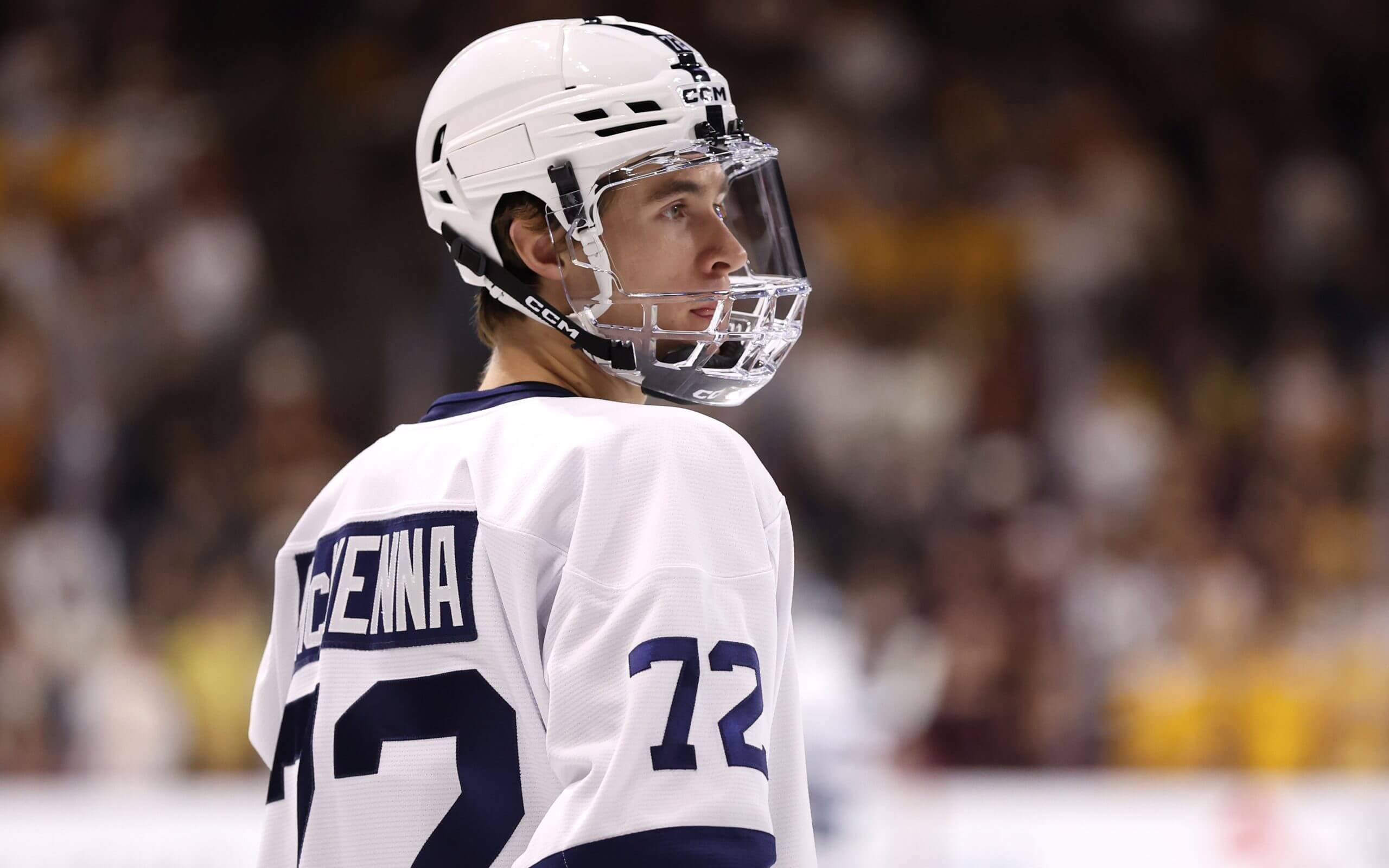
McKenna is a captivating and supremely gifted winger who had one of the most productive age-adjusted seasons in modern CHL history last season. The college game has been a bit of an adjustment, though, particularly at five-on-five, highlighting his lean build and some bad habits (notably, a need to be more physically engaged and show more effort off-puck). The talent and upside are undeniable, but he’s imperfect and increasingly has frustrated evaluators.
McKenna is a flowing skater with corner speed more than straight line speed, great edges and an ability to make plays at whatever pace is required (though he does slow it down too much at times). He’s impressive at carrying and dodging sticks through neutral ice to create entries. He has a first touch like glue where the puck just lands and sticks to his blade when he’s catching it, even when it’s coming in hot or into compromising positions. He’s an excellent puck transporter and get-out-of-jail-free card who routinely skates pucks out of the zone himself and relieves pressure. McKenna is extremely shifty with the puck, blending shoulder fakes into his playmaking. He has impressive maneuverability and adjustability from his hips down. He plays pucks into space and leads guys at an advanced level. He shields pucks well from defenders’ sticks when he can play in open ice and they try to close on him. He’s constantly changing directions and keeping defenders off him. He pre-scans and sees and reads the game at an elite level.
Though he’s a natural playmaker first, he’s also got scoring elements, has tons of pre-shot deception in his movements, and can attack the middle, though more as a passer than himself, as he can stray to the perimeter against tougher competition. (Though I’d like to see him do it with more authority in college, he was one of the WHL’s leaders in shots on goal from the time he entered the league.) And while he’s going to have to fill out and get stronger and more engaged in battles and in working harder on the backcheck and in races to pucks in the D-zone, he does have a really good stick defensively when he uses it (again, the problem is that he too often doesn’t pick up assignments and can puck watch/drive-by instead of stopping on pucks). Notably, his listed height has also been moved from 6-feet to 5-foot-11 by NHL Central Scouting. Despite some of the noise surrounding his good but not great start and good but not great World Juniors, McKenna projects as a first-line star winger and dynamic power play tactician. Improvement in his five-on-five play and the consistency of his competitiveness will determine his ultimate upside. He has been better since returning from the World Juniors in some of those aspects.
Photo:
Chris Coduto / Getty Images
Tier 2
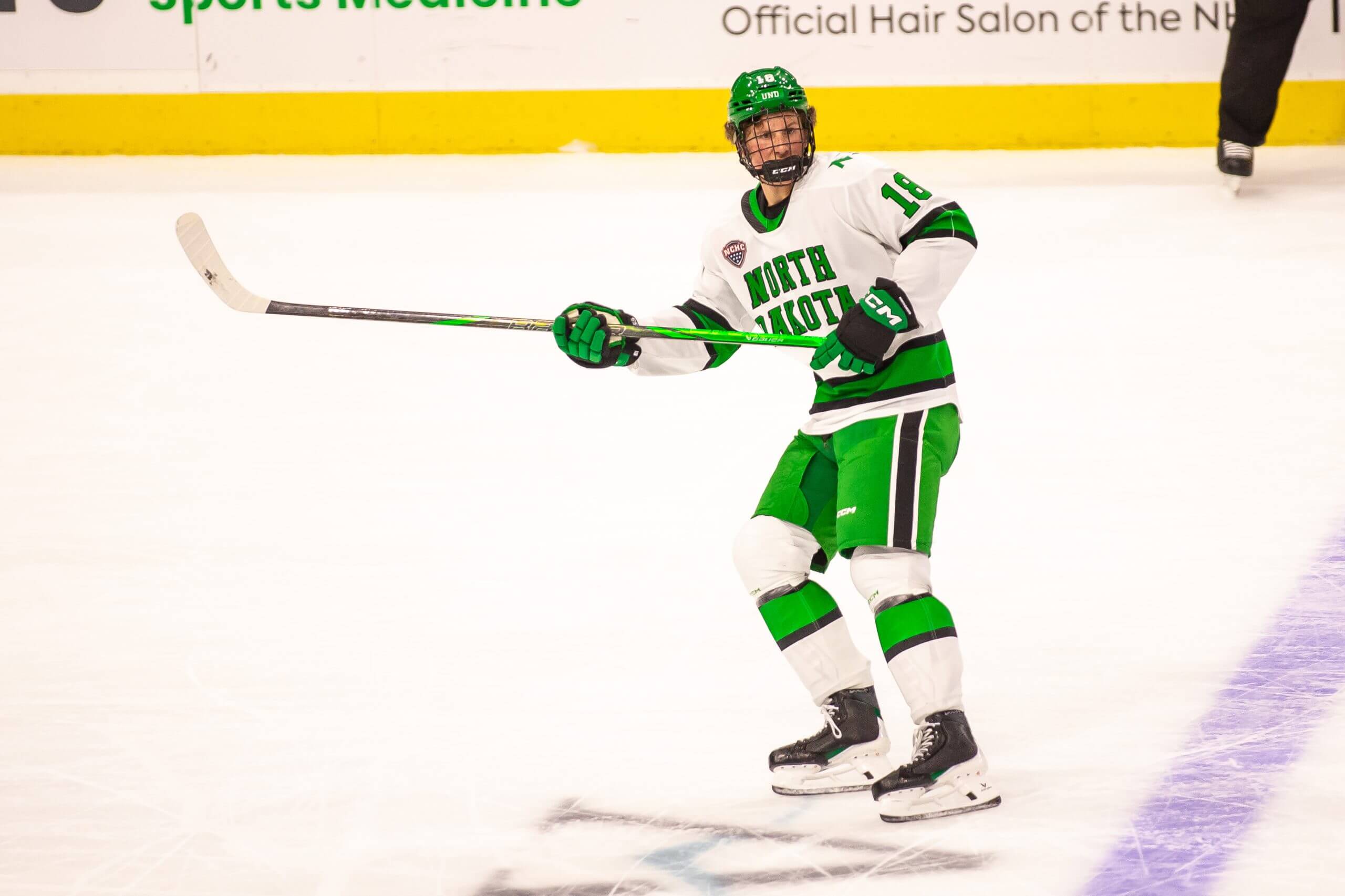
Verhoeff is a big, talented right-shot defenseman who played 25 minutes per game for the Victoria Royals last year, captained Team Canada White to gold at U17s, was a go-to player as an underager at U18 Worlds in Texas in the spring and then captained the Hlinka team in the summer before joining North Dakota for his freshman year. He also played a depth role for Canada at the World Juniors, where he made some plays in the O-zone and tried to involve himself in five-on-five set pieces by creeping off the point and holding onto pucks, but also showed his age defensively at times. At North Dakota, he has averaged 19-20 minutes per game (third-most on the blue line) and is running the first power-play unit with spot usage on the PK. He has looked the part of a top-of-the-draft D prospect, though I don’t see him as first-overall caliber.
Verhoeff has good vision and comfort on the puck (though he can occasionally bobble or over-skate it, and is prone to hanging onto it too long because he wants to make something happen), and a big, hard shot. He’s competitive. He’s just an average skater, though, and I’ve seen him struggle with pace — he’s smooth but can look a half step slow out of the blocks/pivots — which has left me lower on him than most. But he can make plays, he can run a power play, and he has an NHL shot. He likes holding onto pucks (though they’re working to get him to move it quicker at times), attacking down the wall and swinging around the offensive zone. He’s got a good stick and an NHL body, and he shows poise under pressure to make the little plays needed to move the puck out of his zone (under sticks, etc.). Plus, he’s a June birthday who has time to continue to build and elevate his game. Teams are excited about his combination of size, strength, work ethic, leadership, poise, shot and skill. He has serious upside, and if his skating from a standstill can improve, the sky’s the limit. He’s going to be a stud, and his status atop the draft is well-earned. I’m just not quite as excited about him as some have been at times, and I debated ranking him a few spots lower here.
Read more in our feature here.
Photo:
North Dakota Athletics
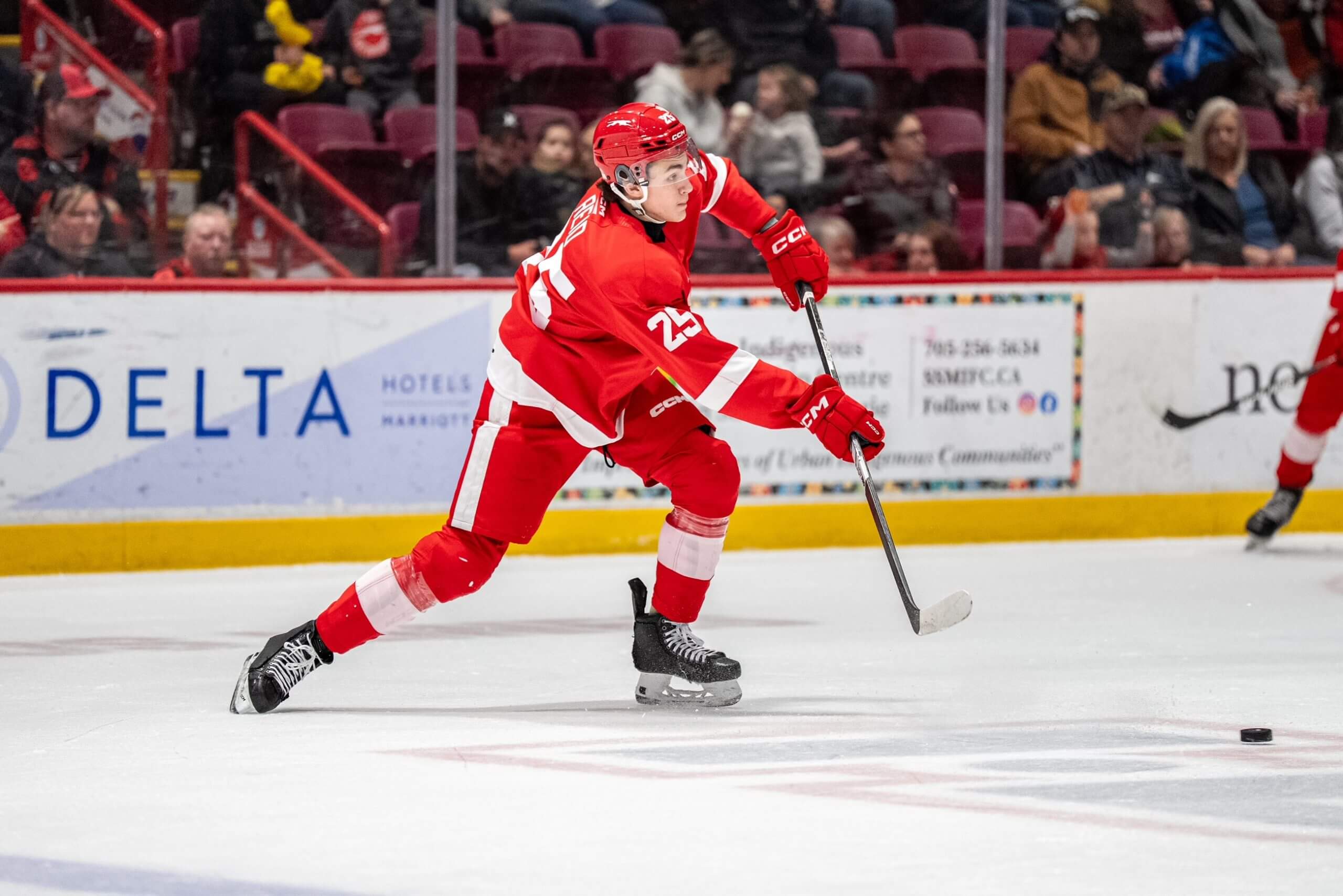
Reid was an amazing story last season. He started the year as a No. 4 defenseman on an NAHL team and finished it as a point-per-game D playing 25-30 minutes per game with the Soo Greyhounds. He grew from sub-6-feet to 6-2 while he did it, too. This year, that play has continued with the Greyhounds, where he has driven offense for them (including early on when their top forward, Brady Martin, was in the NHL to start the season). I didn’t love his game at the CHL USA Prospects Challenge but he was a standout at the World Juniors for a Team USA that didn’t have many and his stock has been steadily on the rise, to the point where he’s in the top-five conversation for some.
Reid is a righty with poise beyond his years. He escapes pressure well. He’s got a great shot and is deadly in transition, with an impressive offensive sense and good vision. His defensive play has taken strides after needing to adjust in the OHL at first, though there are still times when he needs to button up and play a little firmer on both sides of the puck. And while he’s not explosive, he’s fundamentally a good skater and has impressive mobility/footwork: he goes from his heels to his toes really comfortably, etc. He and his game are still developing, too, and he has room to add muscle and continue to take steps, despite being on the older side of the draft. A subtle but underrated quality in D that he has in spades, too: His passes on the power play to his flanks are always in his shooters’ sweet spots, and he always connects on target with one-touch shots (which he also does a great job jumping off the line to find for himself).
A Michigan State commit, I know the Greyhounds and Spartans are both very high on him. He has really taken off down a steep development curve. He’s one of the OHL’s top D now, and one of the draft’s.
Photo:
Soo Greyhounds / OHL Images
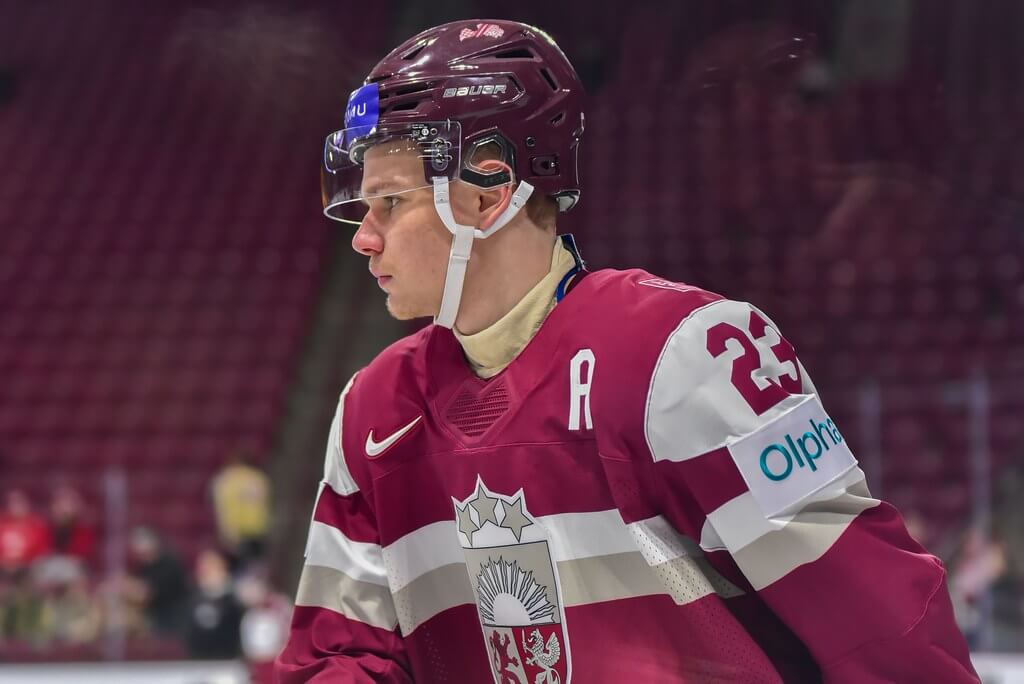
Smits is a pro-sized late-’07 D from Latvia who has played 20 minutes per game in Liiga this year and, quite literally, skated circles around the opposition when he played at Finland’s junior level in September. With Jukurit’s junior team, he made highlight-reel plays with the puck on his stick in all of my viewings, showcasing high-end puck skill for a defender his size and playing keep-away inside the offensive zone whenever he decided to. He has scored at an impressive clip with the pro club, too, was a top player for Latvia at the World Juniors, and has been named to their Olympic team. He has excellent hands, both pulling pucks laterally and protecting them out wide, often with one hand on his stick. He’s got good size/a strong frame, and is a good skater. He’s playing with a ton of confidence on the attack right now and has played with similar boldness even against men, while still defending to positive results. He plays hard and is competitive. He has a good stick. He can sometimes rush into the wrong read/decision (on both sides of the puck), playing too much on instinct at times, but the tools are definitely there, and they have come together quickly over the last year.
Photo:
Steven Ellis / Daily Faceoff
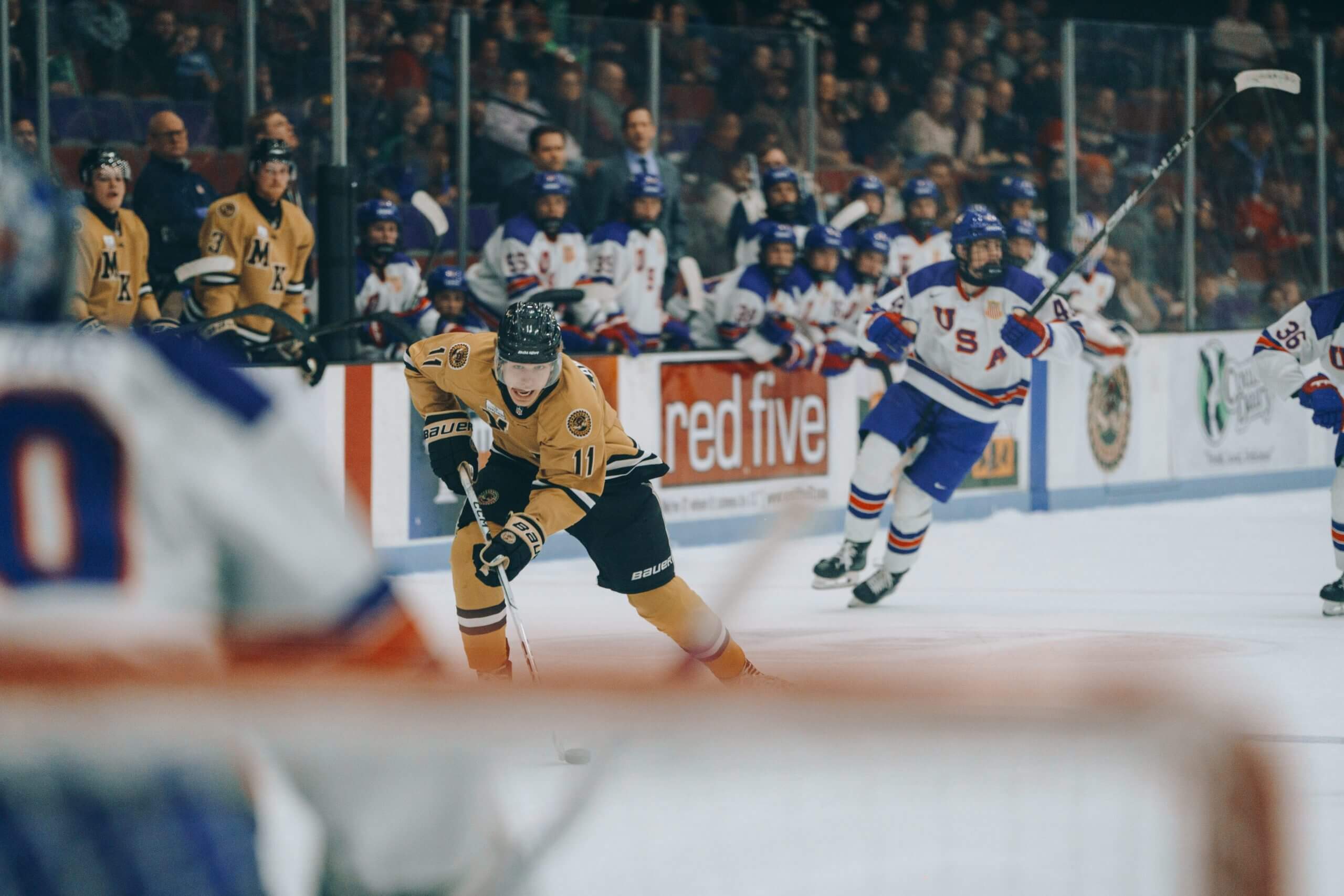
The top young player in the USHL last season, Lawrence played to nearly a point per game as a 16-year-old rookie with Muskegon, averaging 19-20 minutes for the Lumberjacks and elevating even further in their run to a championship as Clark Cup MVP after he registered 18 points in 14 playoff games. He was also a good penalty killer as one of the youngest full-time players in the USHL last year, playing a pro-style game at an early age. That’s not easy to do in the USHL, which is a hard league to succeed in at that age, especially as a center — and even more so because of his August birthday. He has also had early success internationally, impressing at both U17s and the Youth Olympics. He wasn’t as productive at Hlinka, but was still a go-to player for Canada in terms of usage, was more impactful than his numbers indicated, and saved his best game of the tournament for the semifinal. After starting this season with an injury he sustained in preseason, Lawrence eventually returned (a couple of times) and registered 17 points in 13 games with Muskegon before deciding to join BU for the second semester and accelerate into college. At BU, he has fit in but not out early on and hasn’t yet been productive. Lawrence is a Fredericton, N.B., native and the younger brother of Josh, a two-time QMJHL 100-point player and Memorial Cup champion who is now playing in Europe.
Lawrence has a natural release, getting pucks off his stick quickly after an intentional move to the inside or a pass into his catch-and-release. He’s a very good, strong skater who plays with pace and can make plays off the rush as well as inside the offensive zone. He plays pucks into space well and wants to take the play to the slot. He moves into the middle of the ice and stays around the action. He works off the puck to track and is committed to playing defense and winning races and battles. He’s got quick hands and plus-level feel for the game offensively. He protects it really well out wide to his body and can drive the net. He’s strong on pucks. He just plays the right way, is smart and talented, supports pucks and teammates well, has great instincts on both sides of the puck, and drives play as a center with pro attributes in all areas. He’s an excellent young player. He doesn’t have the pure skill level that Stenberg and McKenna do and there are questions about his ultimate offence, but he’s a more well-rounded and complete two-way player, plus he plays a premium position.
Photo:
Courtesy Muskegon Lumberjacks
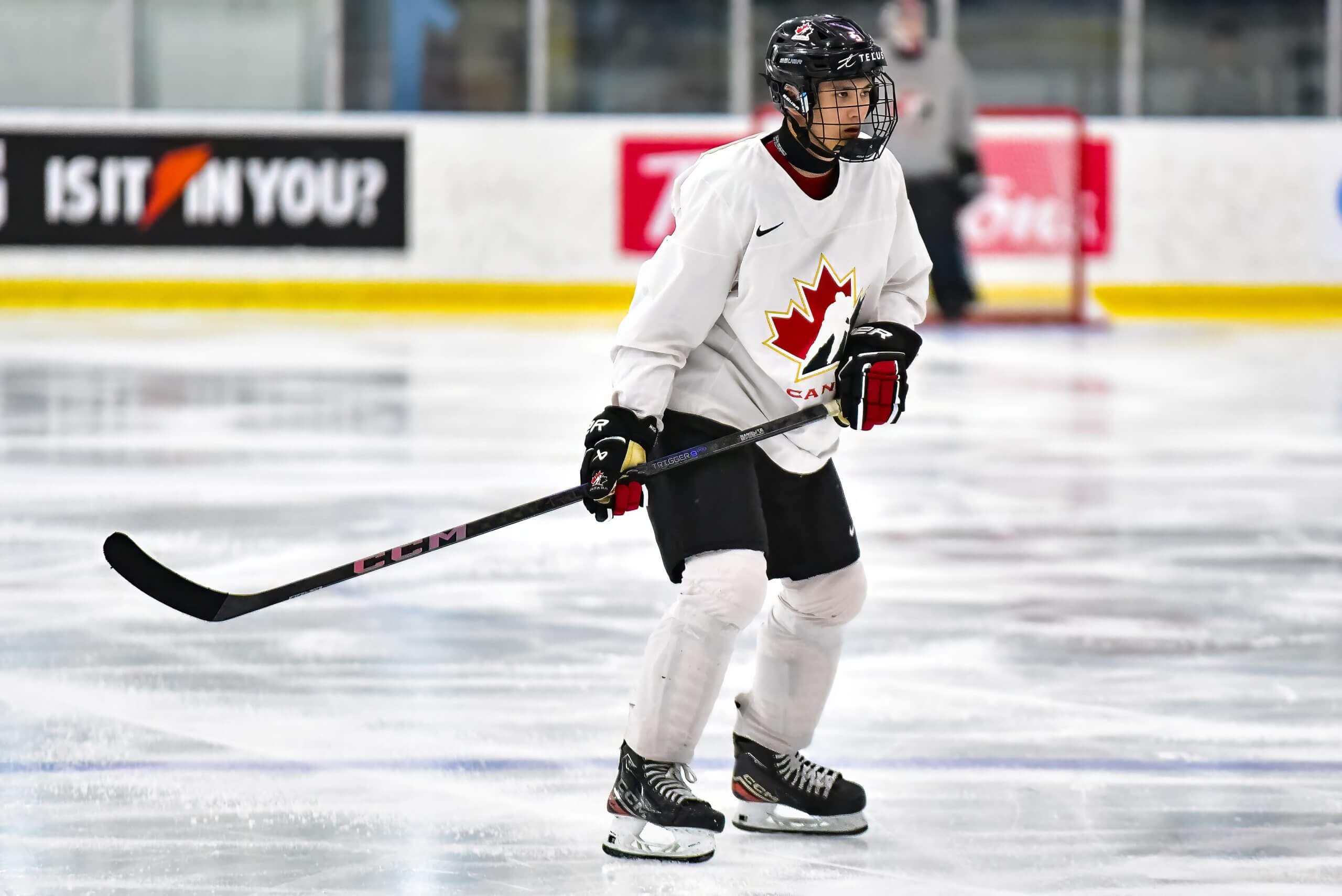
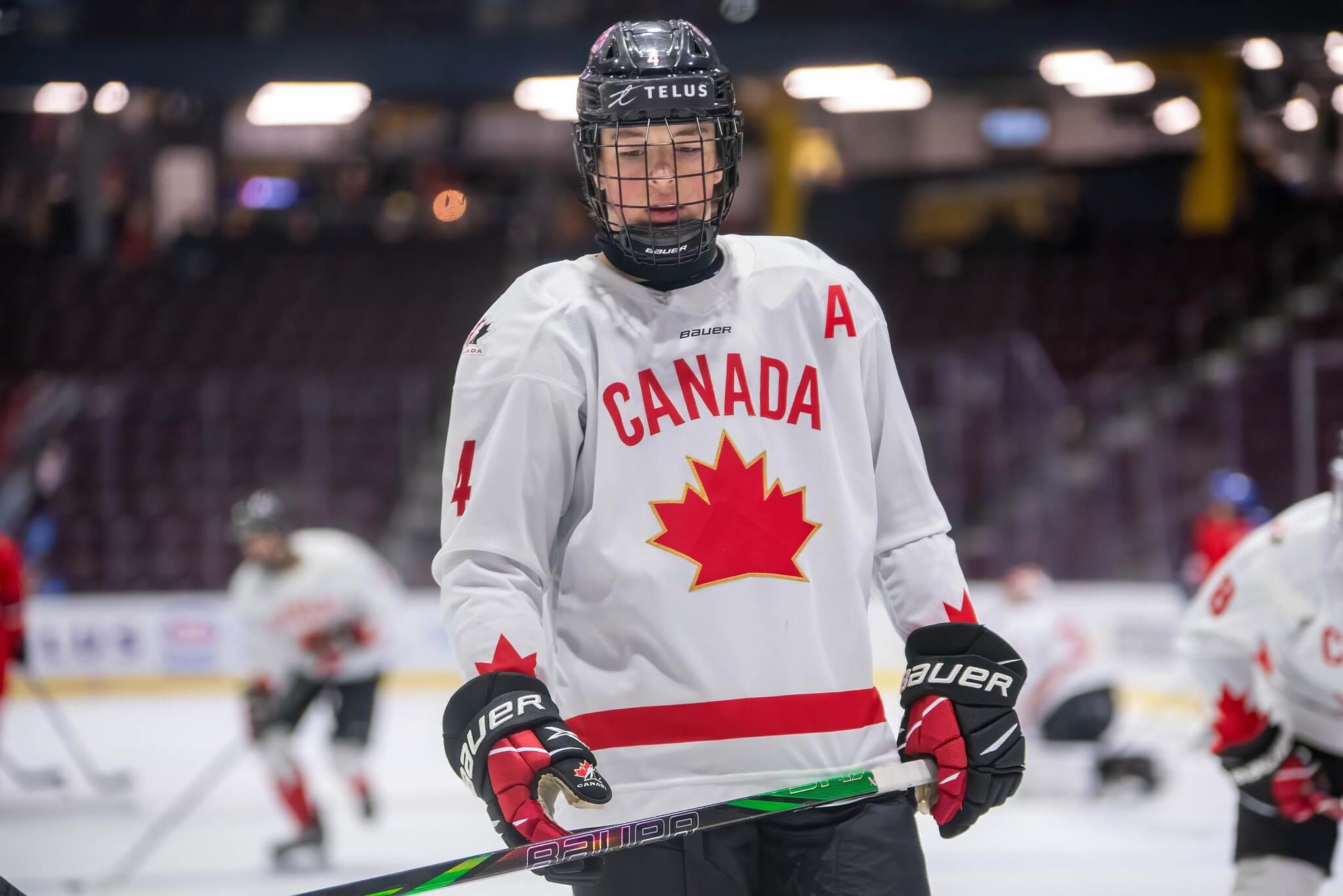
Lin is the smartest defenseman in this draft class and, for me, the most well-rounded. He led the Giants in ice time last season, playing more than 25 minutes per game as a 16-year-old, and blew me away with how he influenced play to guide (literally in the way he guides play) Team Canada White to gold at U17s. He was also impressive again for Hockey Canada on a deep Hlinka team, standing out at their selection camp and in stretches of the tournament. This season, he’s playing well above a point per game and has expanded his game offensively while still playing 26 minutes per game. I also thought he was better than some of his more highly-ranked peers at the CHL USA Prospects Challenge, showing his smarts, competitiveness and effectiveness.
Lin does everything at a high level, executes the small things extremely well and plays the game with a rare quality, maturity and detail for a D his age. He steers play with his quiet efficiency, feel for the game, puck-moving, elite hockey IQ, good skating (he could use another gear in straight lines, but his footwork, pivots, edges, surfing, etc., are all high-end), great stick and defensive reads. He’s comfortable in any situation and playing with anyone, and excels on both special teams. He adjusts well to his teammates and coverage. He has a great first touch. His head is always up, and he moves pucks crisply on the breakout but can also read right through the first layer of pressure into the next play. He can carry pucks and make plays, but he can also find space off pucks. He never seems to have to overdo it or overextend to create his offense, knowing when to move it and when to try to make something happen. He picks his spots to jump smartly and is starting to do it more and more often to impose himself on games more. He takes pucks off the wall really well and navigates play out of the defensive zone with incredible poise, making a lot of little plays under triangles or off the wall to find his way out of trouble. He anticipates at an extremely high level. He closes out nicely, is disruptive and heady defensively and defends with polish and consistent reads and habits. And, importantly for a 5-11 D, he battles and competes for pucks and into contact along the wall.
Lin isn’t a big, strong, powerful D, but he’s just an excellent all-around modern defenseman who gets it, and I think there’s some Adam Fox in him. I think he’s a phenomenal hockey player who plays the game the way it’s meant to be played, and he might be my favorite prospect in the draft. I thought about ranking him fifth here and wouldn’t slot him any lower than 10.
Read more in our feature here.
Photo:
Steven Ellis / Daily Faceoff
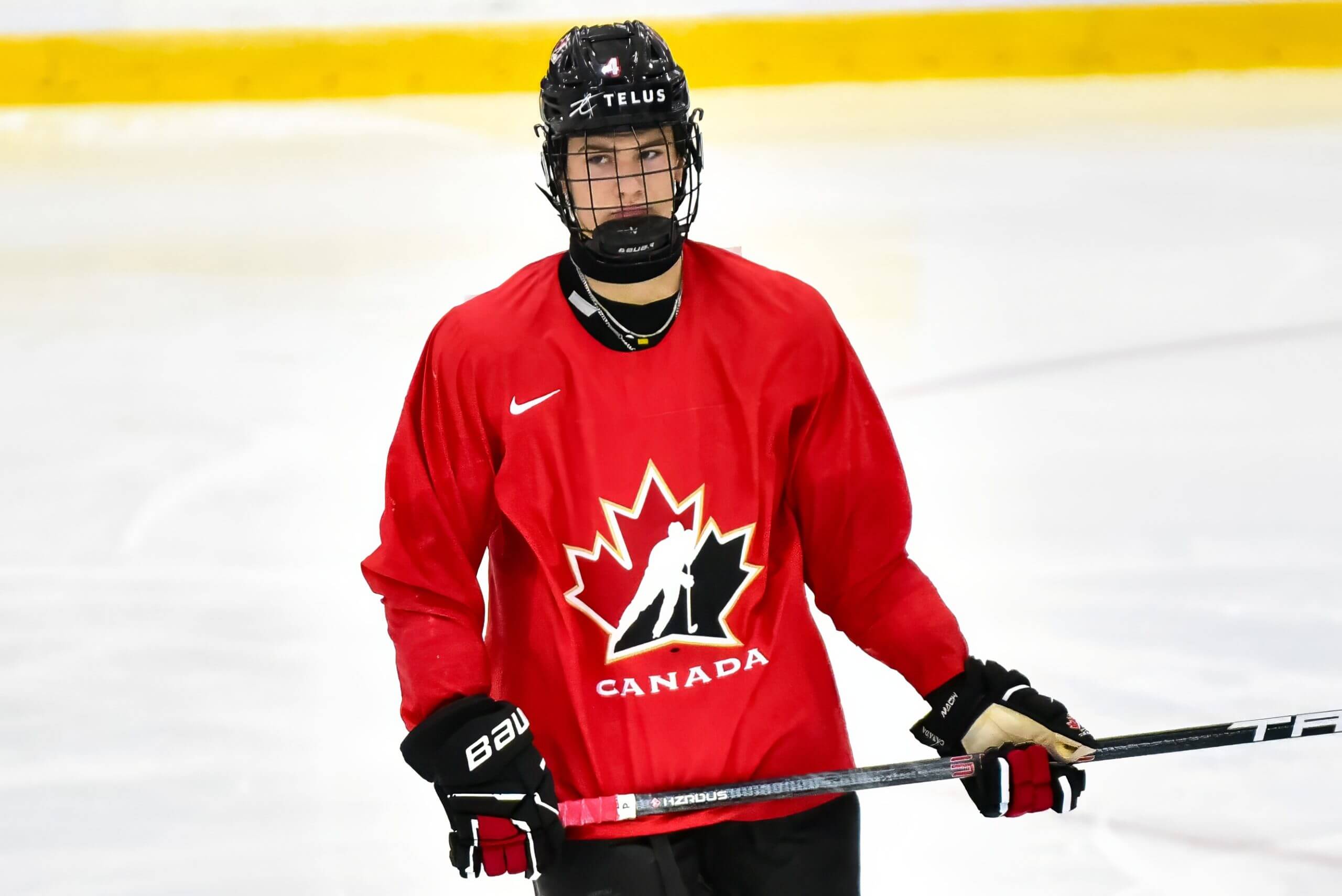
Carels is a summer birthday who played 24 minutes per game as a 16-year-old in Prince George last season and is now averaging 28 this year, driving play at five-on-five and contributing on both the power play and penalty kill. He also ran PP2 for Canada Red at U17s behind Landon DuPont and killed penalties for Canada at the Hlinka. His play in the fall in the WHL and at the CHL USA Prospects Challenge (where I thought he and Lin were Team CHL’s strongest D) earned him an invite to play for Canada at the World Juniors as an underager. After a strong camp with Canada, he became a depth guy in the tournament but was fine on the whole (it wasn’t positive, but I didn’t think it was negative either). Though he’s not going to be a PP1 guy at the next level, his production has seen an uptick this season, and he has played to just above a point per game.
Carels is an all-around defenseman who plays the game firmly and directly in all three zones and on both sides of the puck. His game is more about instinct than being super cerebral, and he can be a little sloppy at times with his stick placement/closeouts/decisions on the puck, but he’s quite toolsy and looks like a pro in a lot of ways. He’s got a big, hard slap shot that makes him a threat to score. He sees the play well as a passer and can break it out. He’s a strong skater who can push pucks down ice and also open up and use his edges. He can defend physically (there’s a meanness to his game, even) and cuts off a lot of plays with his timing early when he’s at his best. He’s firm, with a wide gait, though he’ll occasionally get beaten one-on-one laterally. He’s not a dynamic individual playmaker, but he can move and carry pucks down ice, has skill and skating, walks the line well, can beat the first layer and can hammer it. His development will be more about cleaning things up (stick play, keeping his feet moving offensively) than his actual tools. He’s solid, and NHL scouts are high on him as a future top-four D who plays winning hockey. He’ll be a big part of Team Canada at next year’s World Juniors and will be a top-10 pick.
Read more in our feature here.
Photo:
Steven Ellis / Daily Faceoff
Bjorck is a highly talented, intelligent and competitive playmaking center who made headlines for breaking the J18 scoring record as a 15-year-old two years ago and the J20 scoring record as a 16-year-old last year. He also did the latter while playing with his older brother Wilson (drafted by the Canucks as an overager) and scoring in his HockeyAllsvenskan debut. This year, he made Djurgarden out of camp after their promotion to the SHL and has stuck with the team as well. He was also one of the best forwards at the World Juniors, leading Team Sweden to their first gold since 2012 and performing in all seven of their games (he took the most draws, registered nine points and was a go-to player for them in all situations). Earlier in the season, some scouts viewed him as a late-first/early-second because of his 5-9 NHL Central Scouting listing (Sweden notably listed him at 5-10, so we’ll see if that gets updated), but I look at guys like Zach Benson, Ben Kindel and Marco Rossi (who all went in this range) and I view him as a similar caliber of prospect — if not a better one.
Bjorck is certainly on the smaller side for a center at the moment but he excels in the faceoff circle, he played the penalty kill with Djurgarden’s junior team last year, he battles, and everyone talks about how strong he is on pucks. Wilson is also over 6-feet now and their dad is 6-2, so an inch or two might not be out of the question.
Bjorck can play with the puck on a string and make plays as a natural facilitator who has a ton of poise and vision, but he also plays in and out of give-and-gos, will go to the net and finish off plays and has great overall sense on and off the puck. He’s also a quick and fast skater who can play at different paces and challenge both in straight lines and on cuts and turnbacks, even if he’s not a true burner for his size. I like his craft on the puck, and he’s got an impressive knack for spinning and shaking away from coverage and drawing penalties. He will go outside to attack back inside with his agility and ability to carve into defenders’ hands. He’s quick to attack and makes defenders and sticks miss. He runs the half wall/flank on the power play with poise and comfort. He has a quick release, a rapid first three steps and can accelerate around D from a standstill. He’s sturdy on his skates and will take pucks to the blue paint on D or play through contact along the wall. And while he’ll occasionally turn over some pucks trying to be too cute, he wins them back well with stick lifts and his surprising strength. He processes the play faster than his peers and often makes quick reads with the puck before it has even landed on his stick. I’m confident that because of his hockey sense and compete that he projects as a center up levels, too. He’s a slippery, clever, crafty offensive player, but he’s also really smart and just reads the play at an advanced level on both sides of the puck. He might not go this high, but I know I’m not alone in viewing him as a very reasonable top-10 pick.
Read more in our feature here.
Photo:
Steven Ellis / Daily Faceoff
A BU commit and the son of Abbotsford Canucks head coach and former NHLer Manny Malhotra, Caleb is a well-rounded center (like his dad) who impressed scouts and folks around the OHL alike with the immediate impact he made on a deep Bulldogs team, contributing at five-on-five on their “third” line to start the year and slotting into their top power play with forwards Adam Benak, Marek Vanacker and Jake O’Brien right away. He’s also PKing as a rookie for them, has gotten better and better as the year has gone on, and stood out and wore the “C” at the CHL USA Prospects Challenge.
Malhotra is already a very mature player, with good stick detail and sound and reliable habits at an early age. He plays with pace, puts himself in good spots and has an advanced feel for the game. He plays the game with a ton of poise, holding onto pucks and finding his way out of trouble with smart decisions over it. He has shown more and more individual skill and has a real knack for making little plays with possession. He’ll go to the front of the net, and he competes every shift. He’s also a summer birthday. He has become a top-10 prospect in this class for a lot of people, plus he’s a true center in a class with few. He needs to fill out his frame, and his shot doesn’t come off hard, but those things should come, and he has the rest of the tools needed to become a winning second-line center in the league.
Read more in our feature here.
Photo:
Brandon Taylor / OHL Images

Belchetz is an extremely physically advanced winger who was the No. 1 pick in the 2024 OHL draft and was 6-5 and over 220 pounds as a 16-year-old last season. He got people talking when he got off to a hot start to his rookie season with the Spitfires last year, picking up two points in his debut before a four-goal, six-point night in his third OHL game. He also had a solid tournament for gold medal-winning Canada White at U17s, though I did think he was less impactful in the higher-pace semifinal and final. He played well on a disappointing team at Hlinka, too, really imposing himself and making plays with the puck. After some dominant stretches to start this season, though, his production has now leveled off as the year has gone on in two consecutive seasons. In my live viewings in the early fall, I thought he looked better than Flyers first-rounder Jack Nesbitt on Windsor’s top line. He had NHL clubs drooling over his hulking frame, legit skill/scoring and developing playmaking and pace then, too. But after a quiet CHL USA Prospects Challenge, he hasn’t imposed himself as much of late.
The continued development of his wall game, so that he’s more focused on bumping players off the puck and making a quick play off the boards, will be critical in him realizing his potential. His feet can be a little heavy out of the blocks, and his stride can look a little clunky, but he can really get around the ice and drive the middle once he gets moving. And while some of his impact is driven by his sheer size and his ability to stay over pucks and drive into spots, he’s also got strong offensive tools, he handles well into congested areas, he’s comfortable going to his backhand and he can really shoot the puck. When he’s at his best, he looks like a force out there. Think Matthew Knies with more skill if it all comes together. Someone is going to make that bet early, even if most have softened on where they were on him in October/November.
Photo:
Natalie Shaver / OHL Images

Rudolph was the No. 1 pick in the 2023 WHL bantam draft and after a good but not standout start to his 16-year-old season in Prince Albert and as an alternate captain with Canada White at U17s, he really elevated in the second half of last year to look more like the player who was the CSSHL’s top defenseman at the U15 level and MVP at the U18 level. He played his best hockey into a point-per-game playoff run from the Raiders’ blue line, too. Rudolph didn’t play the kind of minutes for Prince Albert in the regular season (about 19 per game) that Lin, Carels and Verhoeff did, but he became an impact player for the Raiders after the calendar flipped to 2025 and averaged 24 minutes per game in the playoffs. He was also good for Team Canada at the Hlinka after he was their No. 8 at U18s (where Carels featured prominently), playing with Verhoeff in high-leverage situations. This season, he’s averaging 25-26 minutes per game, and the production from last year’s playoffs has carried over. He’s also going to sail past 20 goals, which is a big marker for top D in the CHL.
Rudolph is a good skater whose skating patterns, flow and edges are easy. He can manipulate coverage or jump off the line. He sees the ice well and can beat the first layer and then find the back door through a second layer. He defends the rush well and has a good stick. Rudolph is a heady player who thinks the game well. He has good size. He’s willing to jump and has a great catch-and-release shot that I expected him to score with a little more entering this season, and even through the first month or so when they weren’t falling quite like they were popping. He doesn’t have the dynamic quality of Xavier Villeneuve or the directness of Carels, but he’s just a very good player who projects to have a long NHL career as a top-four defenseman.
Photo:
Steven Ellis / Daily Faceoff
Tier 3
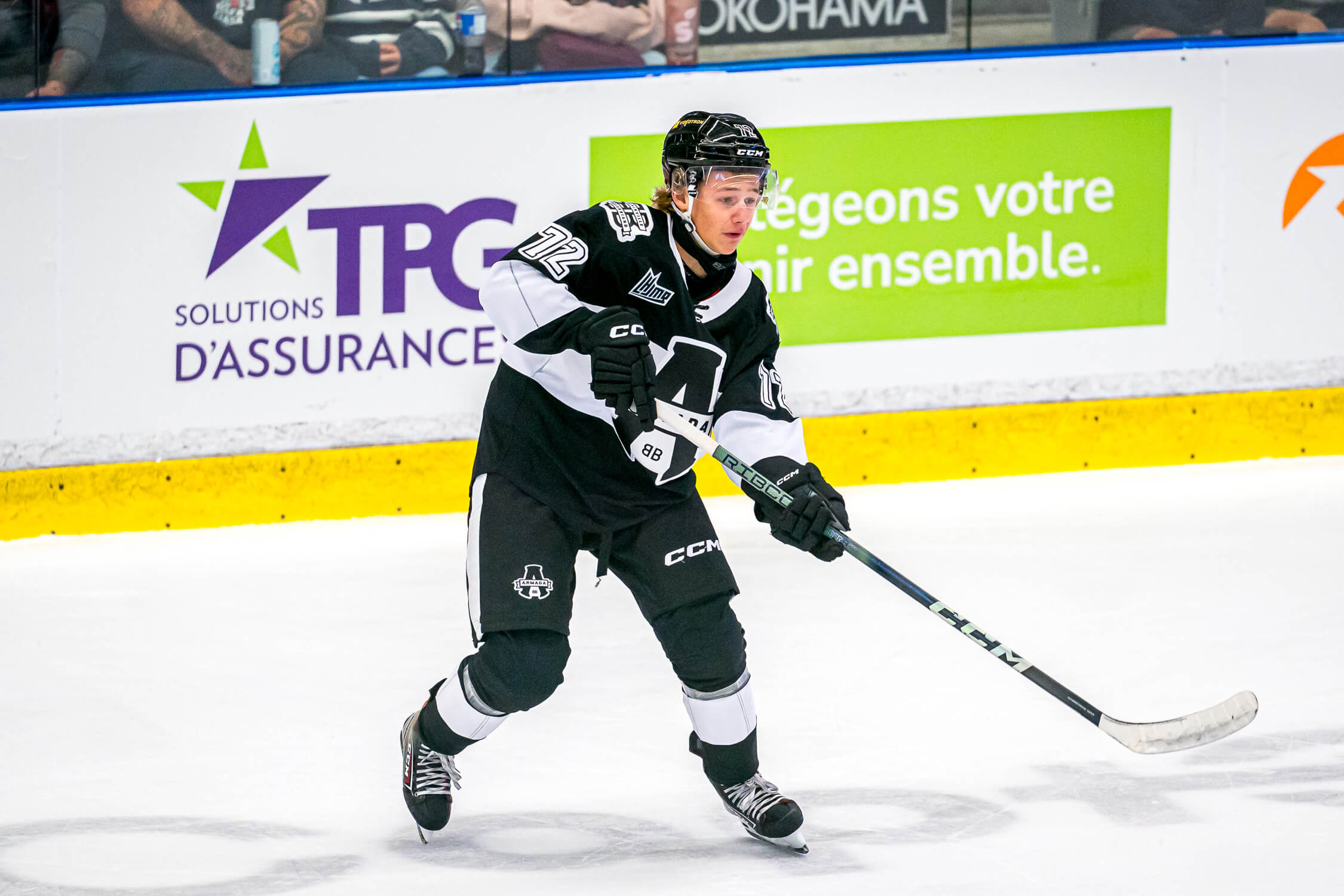
Villeneuve is a September 2007 who was a couple of weeks away from being eligible for the 2025 draft and is playing his third season in the QMJHL pre-draft. He was the QMJHL’s Defensive Rookie of the Year at 16 and the QMJHL Defenseman of the Year and CHL Third Team All-Star at 17, finishing first among Q defensemen in assists (50) and second in points (62) on top of playing to above a point per game and logging 20 minutes per game. He was also a top playmaker in the league, period. He looked dynamic on the puck at U18 worlds as well, running Canada’s top power play (including double duty on both units at times) and creating with his feet off the line to score four goals, most in the tournament by a D (though he was deployed in a purely offensive role). This season, he has continued to make plays at a high rate, leads all D in shots on goal, and has again played to above a point per game (though his production has regressed a little after a hot start). I also thought his QMJHL top prospects game and CHL USA Prospects Challenge performances were a bit of a mixed bag. He was busy and noticeable on the puck in both, and played with a chip on his shoulder when targeted physically, showing that he wasn’t going to back down, but was also scrambly and careless at times.
And though he’s small and still a little physically immature (actually a good sign), his dad is a big guy, and there is some hope that Villeneuve is going to grow. He has already moved his listing from 5-10 to 5-11, which, fairly or unfairly, is important. His skill level, offensive hockey sense and puck play are all legitimately elite. He’s constantly making plays and finding openings. And while he’s more shifty than fast (he has mastered using his head, shoulders and eyes to be deceptive and shake past opponents), his speed has improved, he opens up a lot of space for himself on the ice and he defends smartly for his size, using his edges and a combination of IQ and instincts. It’s his shimmies over his breezy feet that really grab you, though. He beats and loses players effortlessly and plays the game with incredible poise and dimension. He has phenomenal edges, a quick release and a good stick. He’s a special talent, and a year after no sub-6-feet D were drafted, I’ll be fascinated to see where he lands on draft day because there are teams that will steer clear high in the draft and discount his size and the Q, but he also has some backers and a unique skill set. I did expect him to have a bigger year than the one he has had, though, and I did think about moving him into Tier 3 here, but I still believe in his ability.
Photo:
Blainville-Boisbriand Armada / QMJHL
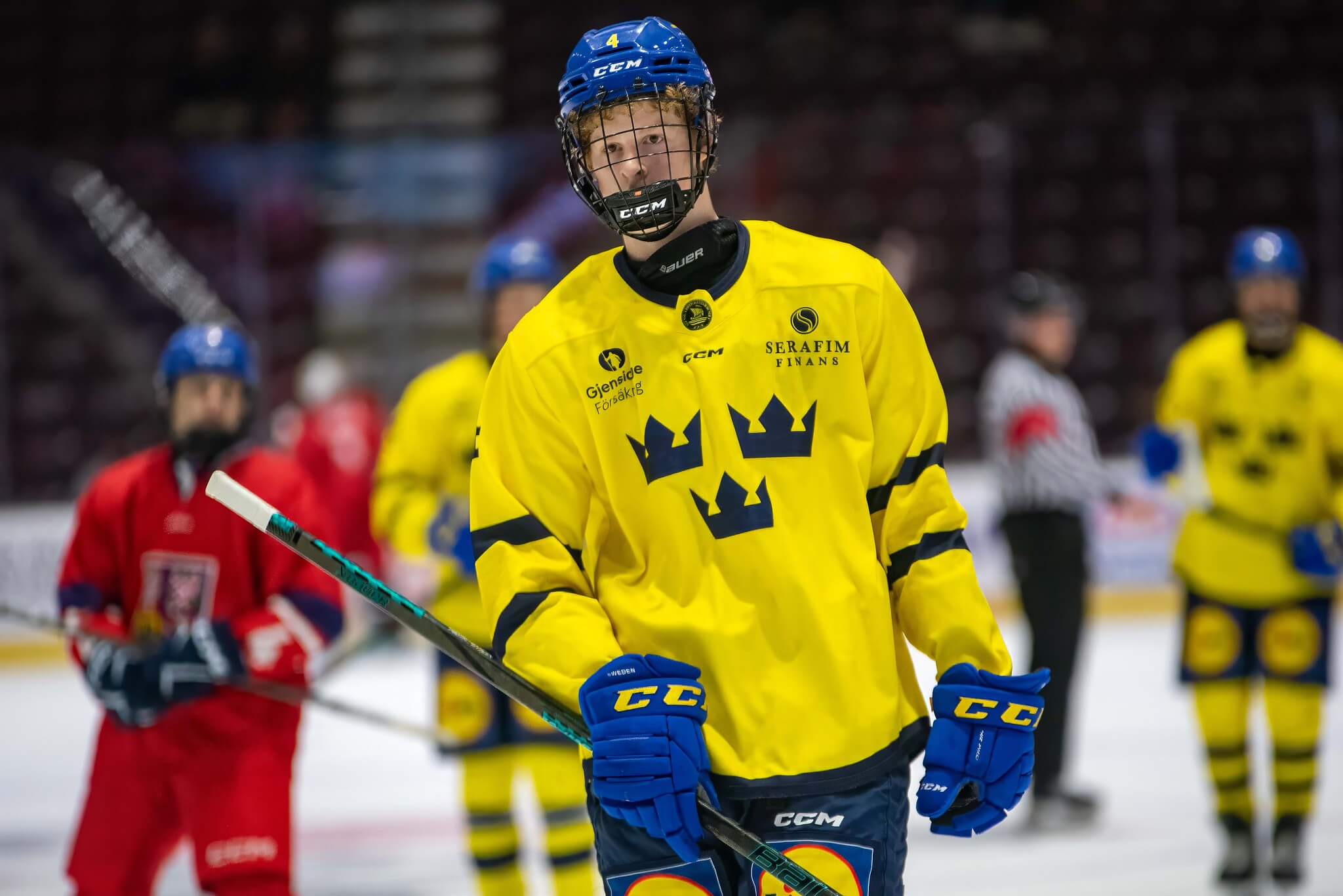
Nordmark led a talented Swedish team in scoring at U17 worlds and the Hlinka, and was very productive through their entire international schedule last season and into this fall, making a ton of plays against the ’08 age group. He was the star of Hlinka for me, and sent the Swedes to the gold medal game with a beautiful overtime winner in the semi to complete a hat trick after helping them mount a third-period comeback. And while he spent much of his domestic season at the J18 level last, he played to more than a point per game with Djurgården’s J20 team and has continued to make a ton of plays with them this year, regularly flashing legit skill. He’s a highly talented, shifty forward who has played all three forward positions at different points and has great (!) hands and instincts offensively. He can play in open space or in puck protection/traffic. He also has decent size and a hard, dangerous snap shot (one of the better ones I’ve seen in the age group) that he can blow past goalies. He passes it well and is willing to go to the middle third in possession, but can also play out wide. Djurgården has a crowded program at forward, but he has pretty clear first-round traits and can excite. He’s one of my favorite players to watch in this class with the puck.
Of note, Nordmark is the son of former NHL defenseman Robert Nordmark and an import selection of the London Knights.
Hurlbert, a Michigan commit, left the NTDP (where he finished third on the team in scoring last year) for Kamloops this season, where he has popped offensively, producing at the top of the WHL as a draft-eligible and playing center after he bounced between the middle and the wing at the program. He wasn’t viewed as a first-rounder coming into the season, but he has made a ton of plays and certainly has everyone’s attention now. He has work to do in the faceoff circle, and that, combined with his sub-6-foot size, results in him being viewed as more of a winger by some, but he has chipped in on the PK with the Blazers, is already wearing a letter and has some quiet competitiveness to go with his skill. And while his feet can kick a little through his stride, he plays with pace and has made plays with the puck all over the ice. He also has an NHL shot and one-on-one skill, both of which have created multiple highlight-reel goals this year (including one short-handed). He has clear junior talent, and now NHL clubs have to decide whether they think there’s a true top-six NHLer there. The longer he has kept up his production, the greater the belief around him as a 10-20 pick in this draft has become. He has been consistently good when people have shown up to watch him play this year, and I think the teens is the appropriate spot for him.
Photo:
Rena Laverty / USA Hockey’s NTDP

Stenberg and Bjorck have deservedly held the spotlight for the Swedes in this class, but Hermansson is one of a number of other legit prospects for Tre Kronor this year and has impressed at U17 worlds and Hlinka. He also played up at the February Five Nations with the U18 team last year, was productive with them again in the fall and was productive on a deep-at-forward Örebro junior team last year and now with their second-tier HockeyAllsvenskan (which has been really positive after a slowish start in J20). He’s a right shot, but he has played a lot of both wings, and he impresses with his individual stick skill. He’s not the most well-rounded or defensively responsible winger, but he’s talented with the puck in his hands and a threat inside the offensive zone. He wants to go out there and make plays and score goals, and he can beat guys one-on-one with his hands. He’s also a threatening shooter off the flank, both into his curl-and-drag wrister or getting open for his strong one-timer. He’s got a bit of an awkward/upright skating posture that bends at the ankles, but he’s got some speed, and he’s a 6-1 winger with legit handling, finishing and good passing who has clear first-round talent. His play against men this season and internationally is hard to ignore with his skill set.
Photo:
Steven Ellis / Daily Faceoff

Novotny was the No. 9 pick in the 2024 CHL Import Draft to the Peterborough Petes, and after struggling to generate early on a Petes team that doesn’t have a ton of talent around him, he has really started to produce and break through over a long stretch now (he’s Peterborough’s leading scorer and shot generator, and was Team East’s captain and player of the game at the OHL Top Prospects Game, where he scored twice and registered a game-high seven shots). He played the entirety of last season at Czechia’s top pro level with Mountfield before lighting up Czechia’s U20 level playoffs and then returning to the pro club’s postseason run, where he scored a couple of nice goals. He also impressed at the 2024 Hlinka, the 2025 U18 Worlds and for Czechia’s bronze medal-winning team at last year’s World Juniors a month and a half after his 17th birthday. He was one of the top players in Czechia’s 3 Nations and 5 Nations U20 exhibitions in the summer as well. And while he didn’t score in the CHL USA Prospects Challenge or the World Juniors, he was solid in both and led the entire tournament in shots on goal in Minnesota (winning a silver medal in a relied-upon role). He was also named captain of Team East in the OHL Top Prospects Game, a nice nod from the league for an import player.
Novotny is a 6-1, pro-built winger with a short but very powerful skating stride and legit speed. He’s also highly skilled offensively and plays the game with confidence as a shooter. He’s already strong, sturdy and stocky, with a thick lower half. He has a feel for the game and enough smarts on and off the puck, with a good sense of where to be and go. He can drive the net and make plays to the interior for himself, but also functions well off his linemates as a catch-and-release, push-and-pop type. He has a pro curl-and-drag wrister and good hands in tight to his body. He can make plays off his backhand. He breaks up plays and works. He’s committed to playing the right way and supporting the play in the right spots. He’s just a very good player. And he plays a competitive game for a young player. There’s a lot to like about his combination of tools, and he’s going to have a long pro career. He’s a player and his shot generation has been really strong across levels.
I thought about ranking Novotny at the front of Tier 3 here.
Read more in our feature here.
Photo:
Steven Ellis / Daily Faceoff

Tier 4
Gustafsson has been a big part of Sweden’s ’08 age group dating back to U17s, logging first-pairing minutes at five-on-five and on the PK, and often running one of their two power plays (which included six points in five games wearing an “A” at Hlinka). He has been productive at the J20 level with a poor HV71 this year as well, despite missing some time due to injury, and has played a regular shift with their SHL club since Christmas.
Gustafsson’s game isn’t about his offense despite having some elements (above-average skating and handling for a big man). Gustafsson is a big, rangy, strong, sturdy defender who plays a physical, competitive brand and moves well. He projects as a solid two-way NHL D, and his profile is the coveted one in the NHL these days. He’s also a summer birthday and has developed quickly when healthy, becoming more consistent at both ends and learning in real time how to use his tools to kill plays and transition pucks. This is the range Kaiden Guhle and Braden Schneider went in, and he fits that mold. It’ll be about him putting it all together and really developing his identity (there are times when he can look a little unsure of what he should really be leaning into).
Photo:
Steven Ellis / Daily Faceoff
Klepov, a Michigan State commit, is a highly skilled playmaker who flashed his skill level in the USHL last year and really shone early on in the OHL this season with the Saginaw Spirit before regressing and levelling out a little of late (though he shone again at the OHL Top Prospects Game, registering three points and being named Team West’s player of the game). He sees the ice at a very high level as a passer and has legit power-play skill, blending little fakes and hesitations into his handles to throw defenders off his scent. He also skates well and creates a ton of entries and high-danger looks with his craft on the puck. It can be hard for average-sized wingers to go in the first round, and they usually really have to produce, but he has, and he has some real believers in his talent and upside. He’s also a summer birthday who has followed a steep upward progression, and it has been really positive to see him go to scoring areas and finish more plays for himself at five-on-five this season (he’s among the OHL’s leaders in shot and chance creation) instead of defaulting to out-wide playmaking. And while he’s not the most physical player and there are times when I’d like to see him reach in a little less, he doesn’t give up on plays when there’s a puck to be won, he does compete and he has good sense defensively. But the talent and the ability for his game to continue to expand are what put him in this range for me. The craft is pretty obvious when you watch him play.
Photo:
Briana May Photography
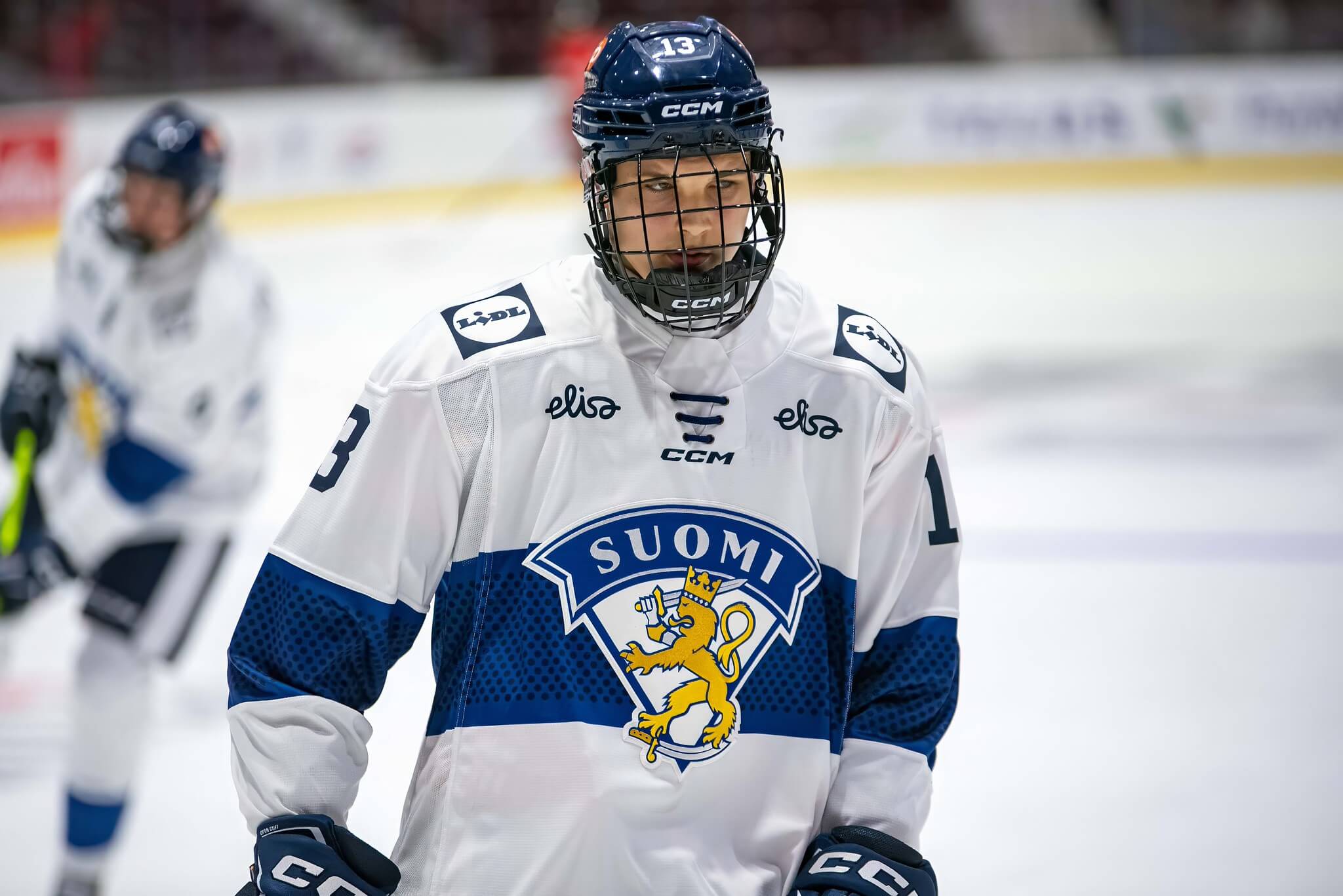
Suvanto impressed centering Finland’s top line at the Hlinka Gretzky Cup and has looked like he belongs in his pro games with Liiga titan Tappara. He was also named one of Finland’s top three players at the World Juniors despite playing just 14:29 per game and scoring two goals in seven games. He’s a big, strong, driven forward who plays in the middle third and goes to the net. He’s willing to play through and into contact. He skates well enough; once he builds, he can play with power, though he could stand to get a little quicker (in his feet and mind at times). He doesn’t wow you but he has played well game-to-game across an extended period at this point. He’s strong on cycle. He can shoot it. He’s going to be an NHLer. He has good instincts and he just looks like a pro. He’s also one of the youngest players in this class and has developed very quickly, basically leapfrogging Finland’s U20 level to go from playing on Tappara’s U18 team last year to the pro club this year.
Photo:
Steven Ellis / Daily Faceoff
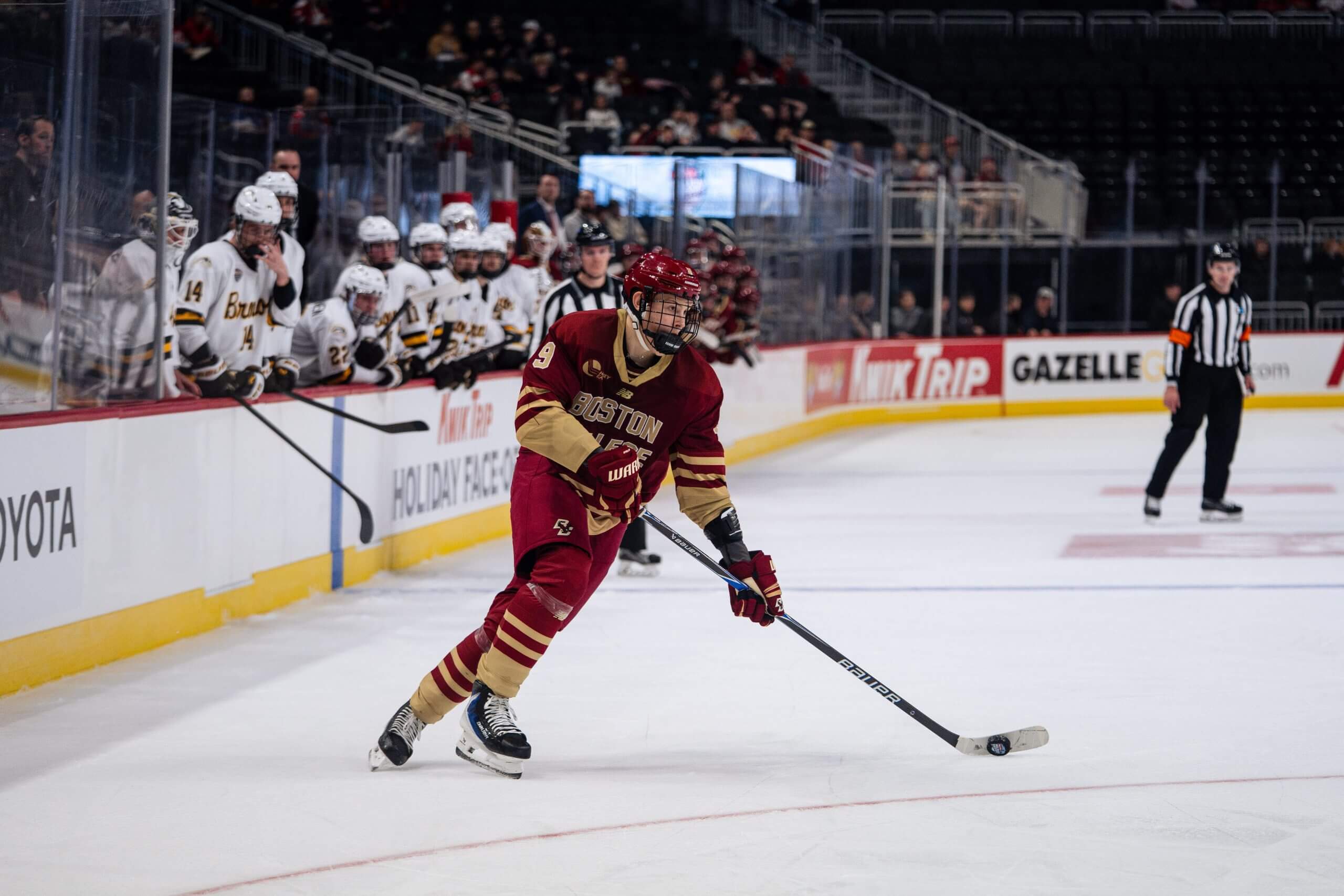
Hemming is a 6-4 winger who impressed on Finland’s first line at the Hlinka Gretzky Cup. His draft year has been a messy one, though. After getting drafted by the Kitchener Rangers in the CHL Import Draft, the team announced at the end of August that he’d signed with them. He wasn’t able to play a game for them, though, because his club team, Kiekko-Espoo, wouldn’t release him from his contract despite requests from his parents and representatives. He then chose to play for Sherwood Park in the BCHL, who aren’t governed by Hockey Canada’s transfer rules, before ultimately not going there either, landing instead at Boston College for the second semester. That stalemate has complicated slotting him more than it would others because he’s also a late August birthday who’s one the youngest players in the class, and his sample was small even entering this season after he played just 18 games at Finland’s U20 junior level last season. He’s a big, strong player who stays around the puck, goes to the net and has some pro attributes (including a pro release and decent skating). He has generated shots at a good clip early on in the NCAA. From what I’ve seen, he looks like a first-rounder. But there is still the caveat, for me and others, as to how little we’ve seen of him. Continuing to impress over the remainder of the season will be important.
Photo:
Boston College Athletics
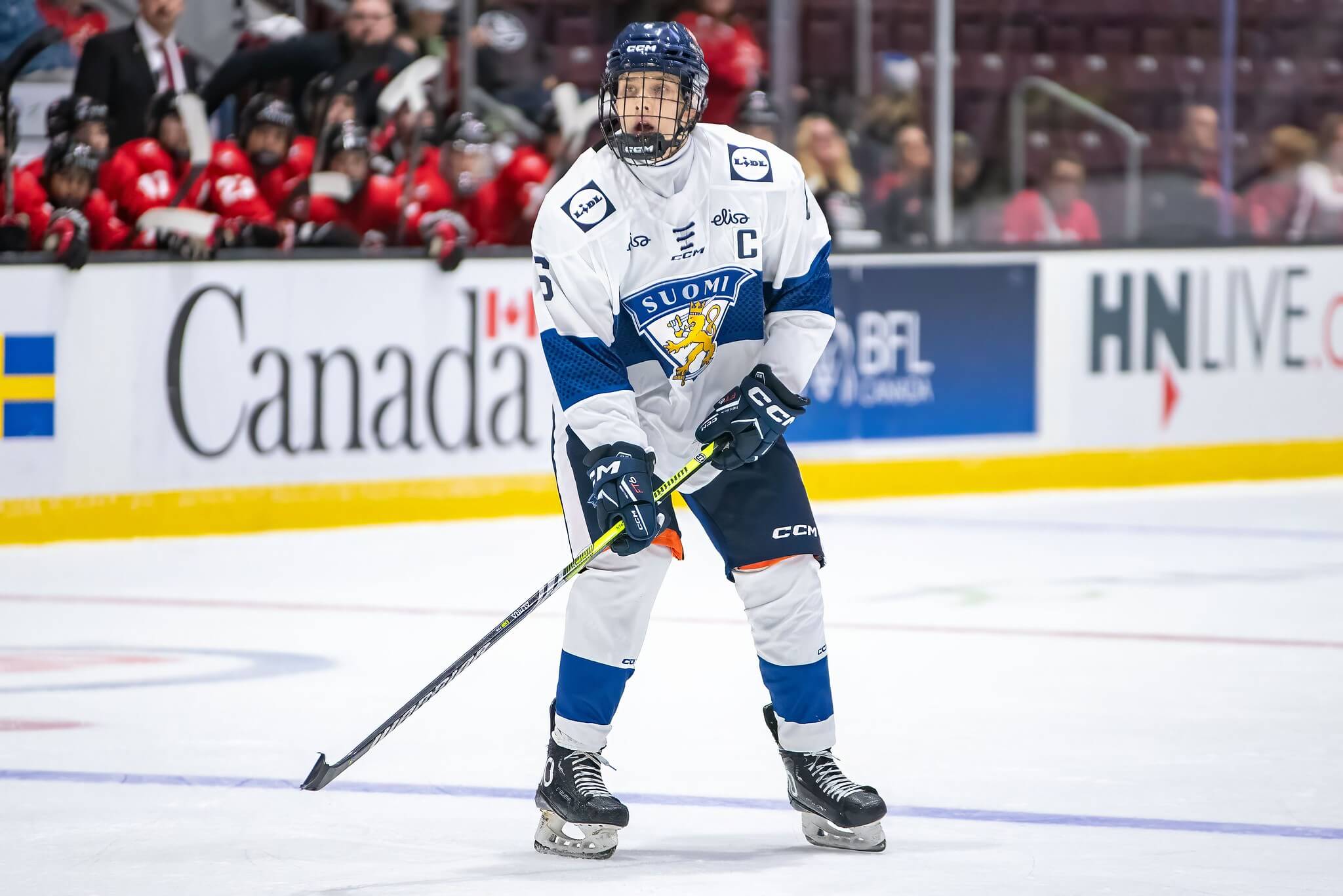
Piiparinen really impressed scouts with the maturity and roundedness of his game at the Hlinka Gretzky Cup in the summer summer, putting him firmly into the first round for some after he was viewed as more of a second-round type coming out of U18 worlds and his season in Finland’s junior league last year. This season, he has split time between Tappara’s pro team (which is a perennial contender, has multiple legit 2026 prospects in the organization and doesn’t give out ice time to young D easily) and the junior level as well, playing to positive results against men — though only in 11-12 minutes per game. He came in and out of the lineup as an underager at the World Juniors as well, playing to a plus-6 rating (tied for second on the team) and one assist in just 13:27 average ice time across four of their seven games.
Piiparinen’s game doesn’t grab you with dynamic skill or elite skating, but he’s an August birthday who’s already very polished. Effectiveness is the name of his game. He gaps and defends well. He moves well. He has a pro frame and game. His puck movement is clean and efficient. His reads are consistently sound. He projects as a really solid two-way D who should continue to develop and add more dimension to the strong foundation he has already established.
Photo:
Steven Ellis / Daily Faceoff
RHD
🇫🇮
Tier 4
Liiga U20
Hakansson is a big, strong left-shot defenseman who played 20-22 minutes per game at the J20 level last season, didn’t look out of place playing 10-14 in three SHL games last year, and is now playing full-time in the SHL in his draft year (again in that 10-14 minute range to decent results). He was also a part of Sweden’s gold medal-winning World Juniors team in Minnesota, where he played 14:20 per game on their third pairing and registered two points and a plus-3 rating in seven games. He’ll be an important cog on next year’s team.
He’s decently athletic and plays a hard and physical style. He skates well, falling back onto his heels and his edges comfortably for a player his age and size. I like his pivots. He can occasionally get a little jumpy on both sides of the puck, but he can shoot it and pass it and walk the line. He’ll also carry pucks and beat the first layer of pressure, though his execution isn’t always there. I like his instrincts and he defends hard, boxes out well and looks like a pro. He’s never going to provide a ton of offense but he has a lot of the attributes teams are looking for in a top-six everyday defenseman these days, and he profiles as a late-first for me.
Photo:
Steven Ellis / Daily Faceoff
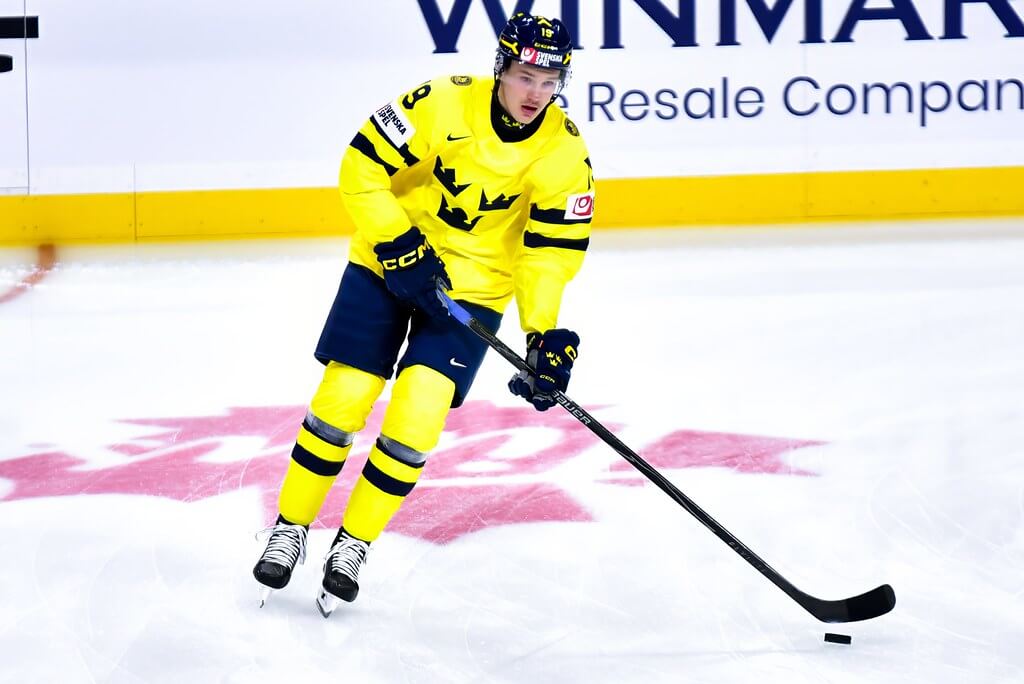
Preston is a threatening creator with good offensive instincts who had played to just under a point per game in the WHL prior to this season. He has been one of the top individual creators in the league this year as well, despite his point totals not taking a leap. He has also won gold with Canada White at U17s, leading the tournament in goals with six in five games and coming up big in some big moments (including a hat trick in the semifinal and a goal in the gold medal game), made plays in bunches at the Hlinka, was noticeable in spurts at the CHL USA Prospects Challenge, and has a way of striking at some point over the course of a game. Prior to his junior career, he also registered four goals and six points in four games at the Youth Olympics and was the CSSHL U15 MVP, so he has a lot of pedigree within this age group. I did want him to produce more this season than he has though and he may now be a second-rounder.
Preston is a shifty skater who attacks inside ice laterally but can also play out wide. He has slick handles on the puck and can attack off the rush or inside the offensive zone, challenging defenders one-on-one. He has a dangerous shot and quick release. He’s lethal in space but can also play in traffic and put pucks into space. He’s just slick and confident. He has also played both wings and been dangerous on either side. Plus, he’s a late July birthday who has still been a top offensive player all the way up with the ’08s. There are times when he can play to the perimeter, and he’s more offense-first, but the talent and the ability to attack are real.
I did consider ranking him in the early 30s.
Photo:
Steven Ellis / Daily Faceoff
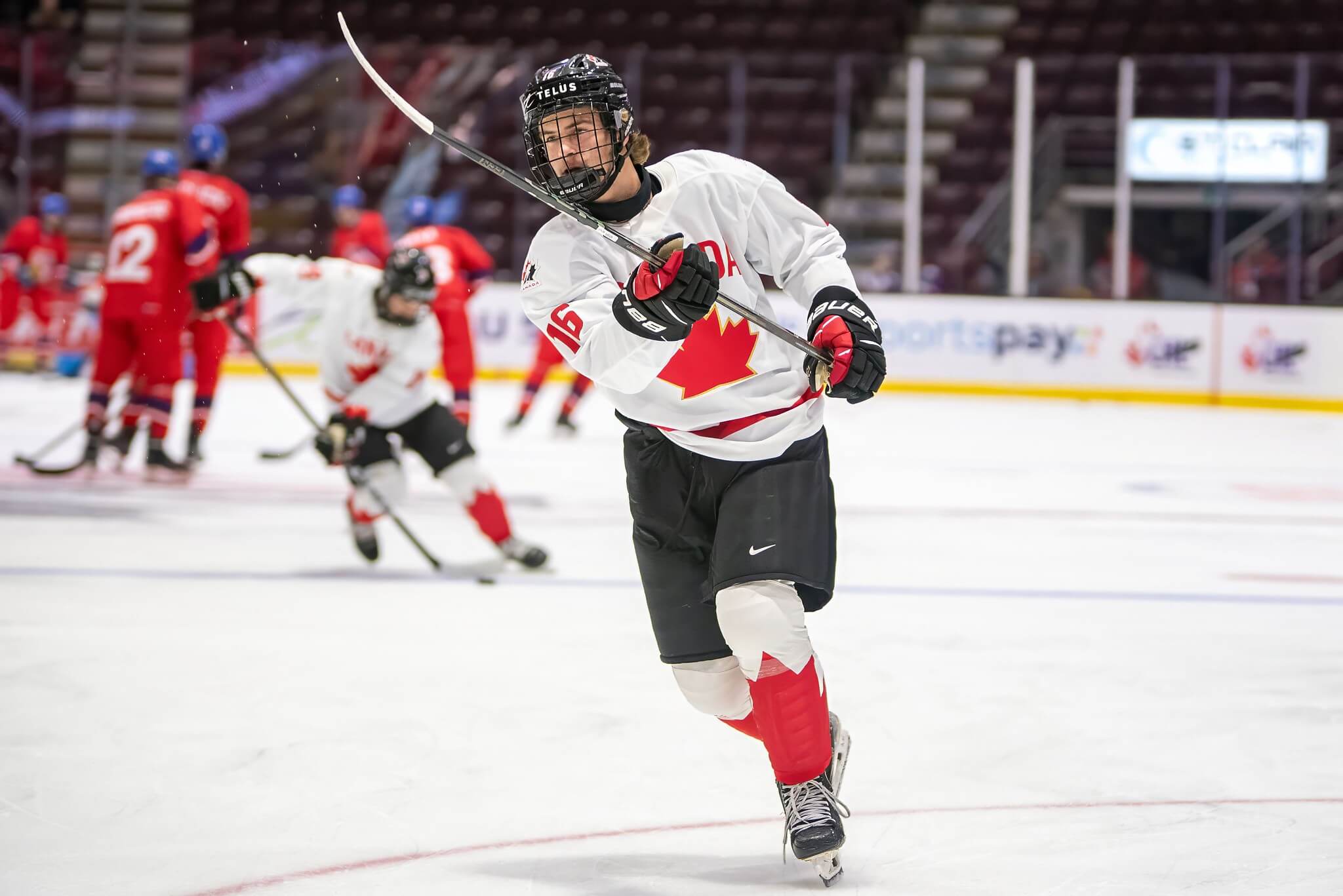
Chrenko first caught my eye when he looked confident on the puck inside the offensive zone two U18 worlds ago in Finland as a double underager (though I suppose, as a late 2007, he was close to a single underager). He then followed it up by playing to above two points per game in Slovakia’s junior level, scoring his first couple of goals with Nitra’s top-flight team at the pro level, and leading the Slovaks in scoring with five goals and eight points in five games in Texas at his second U18s. This season, he has become a regular contributor with Nitra, dominated in a short junior stint, and was a standout for the Slovaks at his first of two World Juniors, where I thought he was their best forward (he the team in goals with five, points with eight and shots with 19 in their five games). He has an NHL shot/release and is dangerous on the flank on the PP. He competes well and has some jam. He can play at different paces. He has some deception on the puck in both his handling and his quick release. He’s smart and gets open, but can also use his good hands to play through holes and get pucks to open linemates. He can play all three forward positions, plays in the center of the ice and will take or make a hit to make a play. He can be a bit of a pest. You’d like him to be a little bigger for this range, but there’s a lot to like in his talent and craft. He has made some pretty plays in the guts of the offensive zone this season with Nitra, too, though his production hasn’t popped. Late first/early second feels like the appropriate range for me with his makeup.
Photo:
Steven Ellis / Daily Faceoff
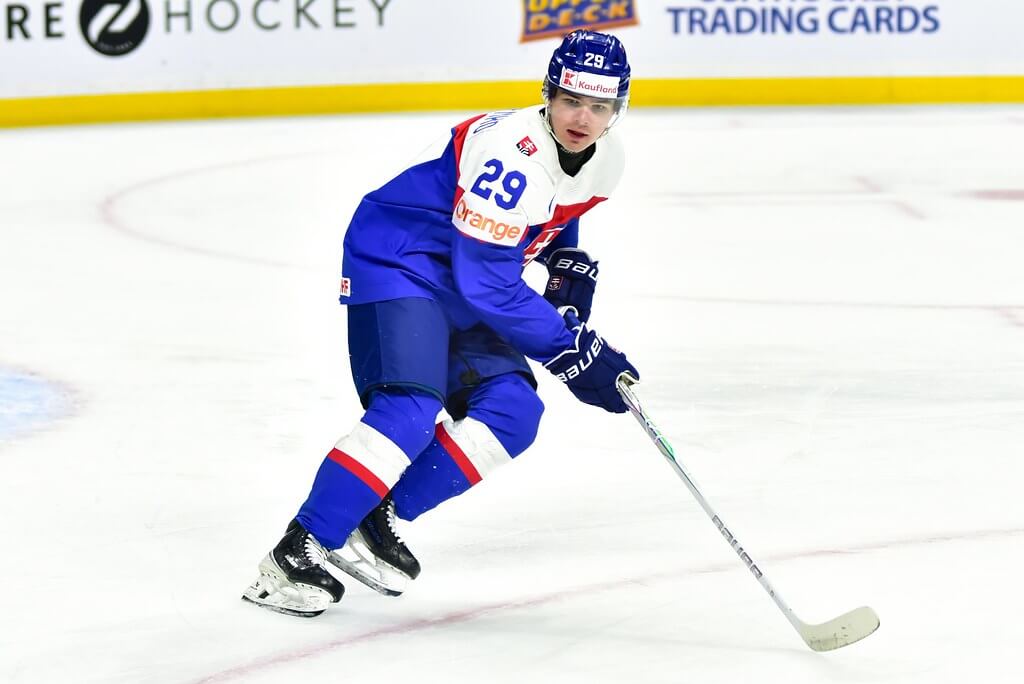
Aaram-Olsen is a talented Norwegian winger who played to a point per game with Örebro’s J20 team last year and has twice led Norway in scoring at the Division 1A World Juniors, first as a 16-year-old with six points in five games, and then as a 17-year-old with 10 points in five games to help them get promoted into the top flight for next year’s tournament. This season, he has also done a lot of damage at the J20 level and has pretty regularly found his way into the SHL club (though he’s still waiting on his first goal).
He’s a dangerous scorer and shooter who picks corners and beats goalies from mid-range with his heavy snapper or curl-and-drag wrister. He can threaten as a shooter from the bumper or the flank on the power play because he’s also got a hard one-touch shot and one-timer (a go-to weapon for him). He’s a good skater who gets up and down the ice well and is willing to track back on pucks, with room to add strength and smooth out his stride (which does kick a little). He takes pucks off the wall and isn’t complacent on the outside. I’d like to see him involve himself more off the puck defensively, drive play more at five-on-five and play with a little more physicality, but his scoring package is legit and I don’t think he’s a one-way winger either — it’s more just about development priorities.
Shilov made the jump from Russia to the USHL last season and after a successful few months with the Green Bay Gamblers, made the jump to the QMJHL with Victoriaville, where he leads the team in scoring and is top 10 in league scoring. (Though I thought he was quiet in the QMJHL Prospects Game, his poise and creativity flashed a little more at the CHL USA Prospects Challenge.) A Boston University commit, Shilov is a playmaker with first-round talent. He has work to do to round out his game defensively, but his instincts on both sides of the puck are there, and Victoriaville has used him in all situations, including on the penalty kill. He’s highly skilled, with a great shot off balance (he really whips it) and a nasty release off the middle of his blade. He has a superb first touch, even in traffic, and can place pucks up under the bar from in tight with a little chip shot he loves to use around the slot. His skating can look a little unconventional, and he has work to do on his fitness, but someone is going to swing on the offensive-zone gifts he has. He’s also decent in the faceoff circle. Late first/early second is my range for him.
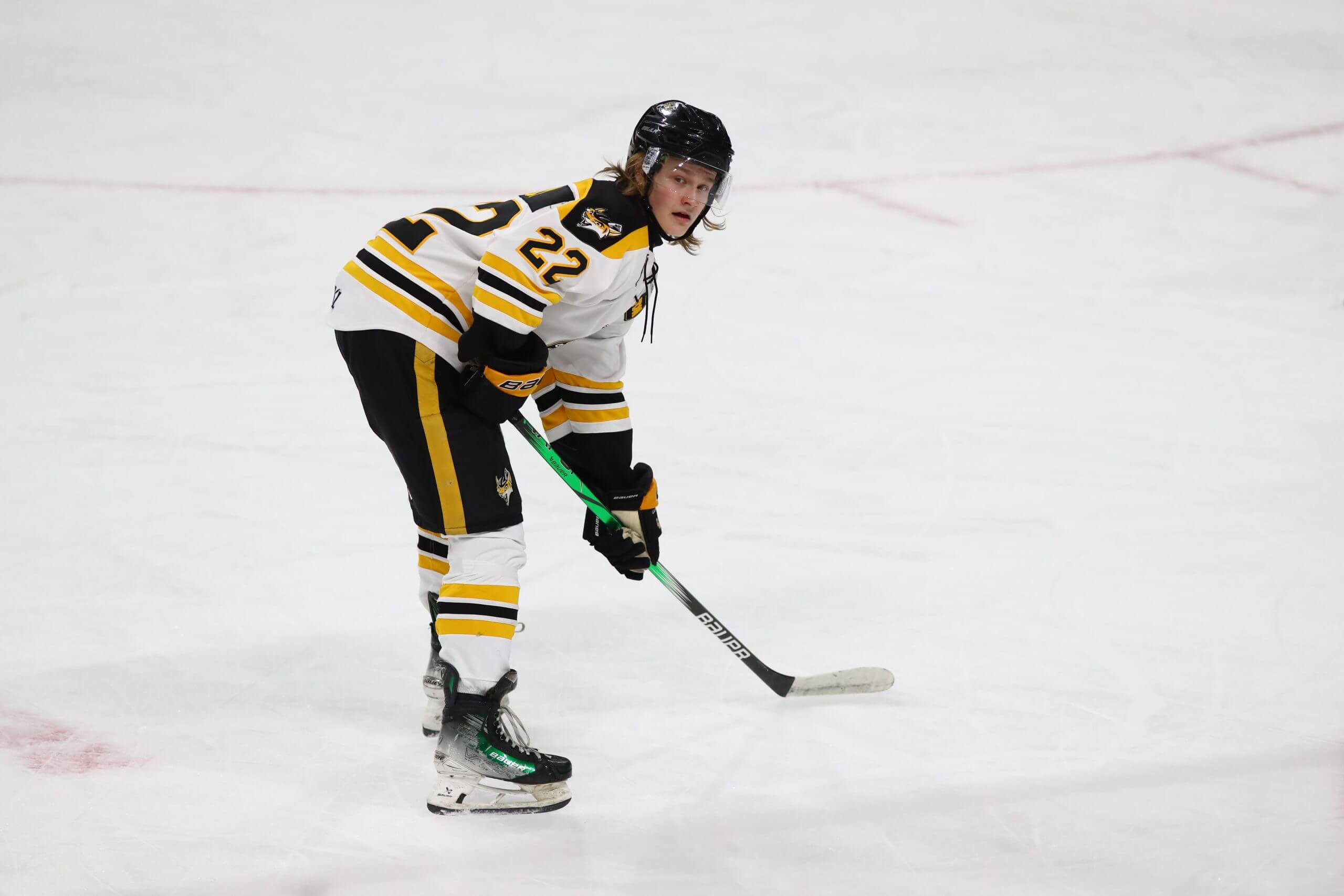
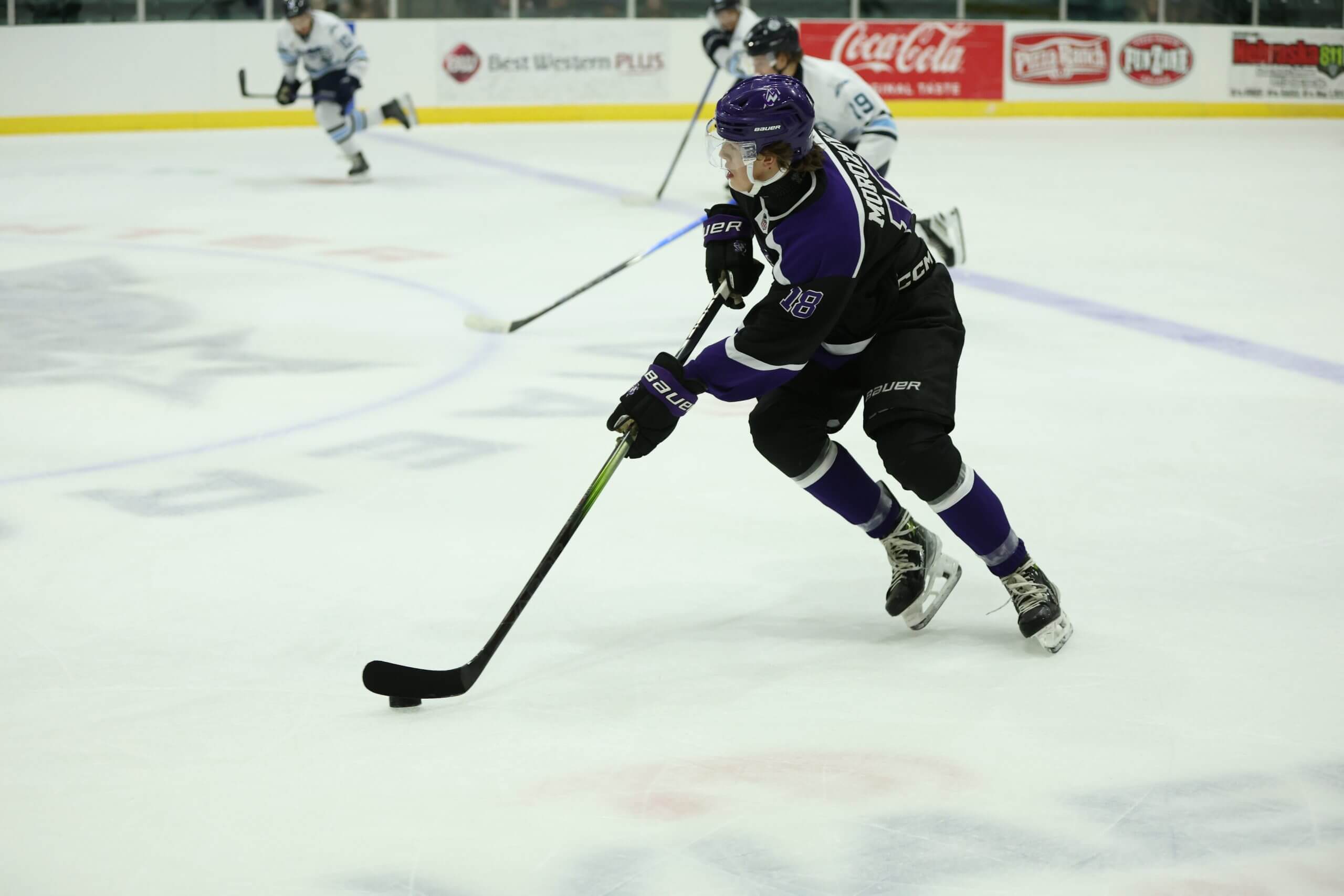
Morozov is the youngest player in college hockey and has spent most of his freshman year centering Miami’s top line, producing immediately and playing on both special teams (he has averaged 19-20 minutes per game), all of which are a tall task and impressed scouts (though he has come back down to earth a little), earning an early NCHC Forward of the Week nod. His development from where he left off last year in Tri-City as a 16-year-old has been steep (though it should be noted, he was also the youngest player on Tri-City’s roster to start last season).
Morozov is a good-sized, pro-built center who has a great feel on the puck and problem-solving skills in and out of space. He’s a natural catch-and-release shooter off the rush as well. Morozov’s stride is a little upright, but he moves well enough for his size, is a willing forechecker and sees the ice well on both sides of the puck to anticipate defensively and find his teammates offensively. He has work to do in the faceoff circle, but he has quickly become a real prospect. He usually has a positive impact on games because of how well-rounded his is. He has development room ahead of him still, too.
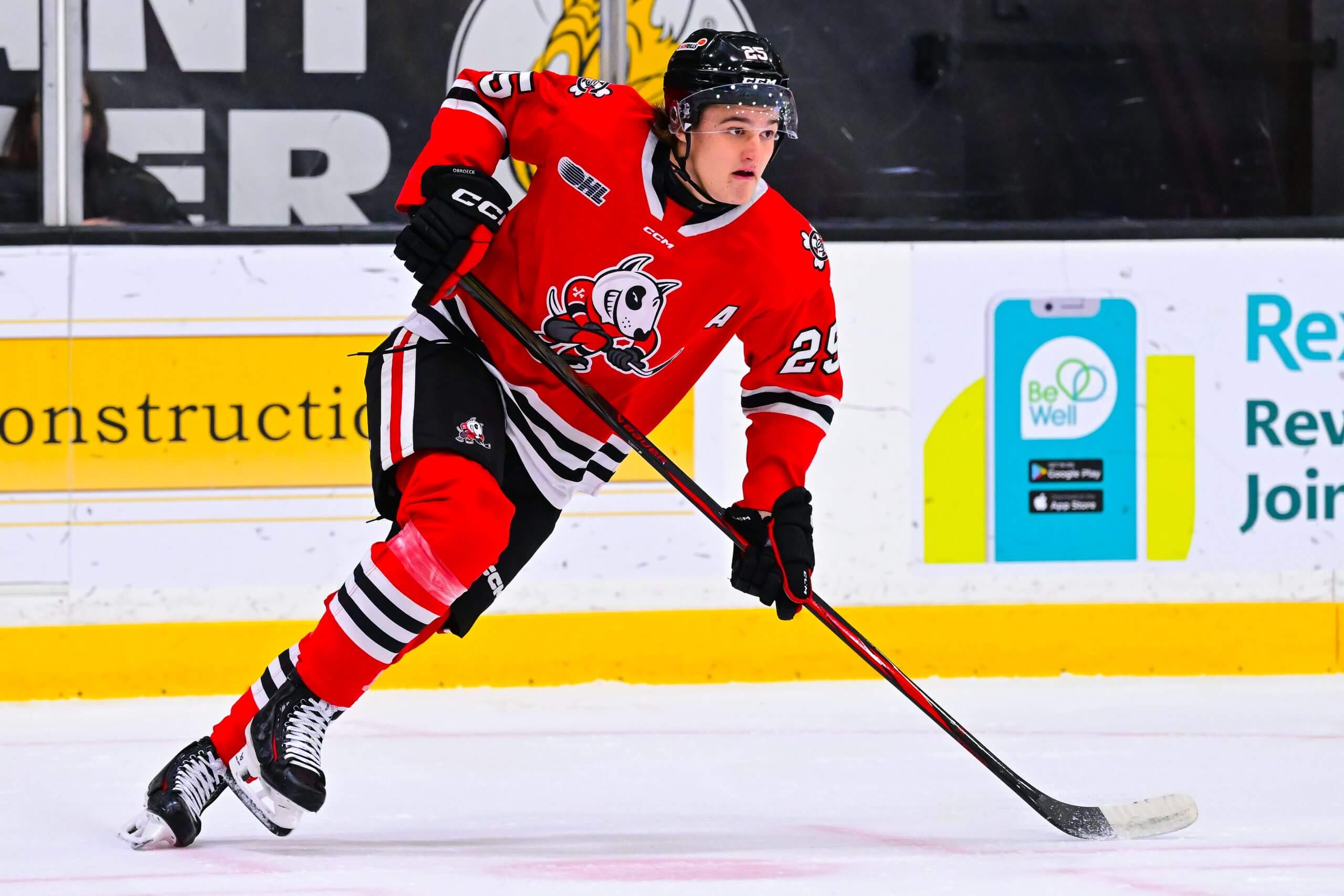
Roobroeck is a big, tall forward born in late September who came up as a center but has played the wing in junior and for Hockey Canada. He applied for exceptional status in the OHL and didn’t get it; had he been granted exceptional status, he could have been one of the rare players to play four seasons in the OHL before the NHL Draft. Instead, he went back to U16 AAA for a second season, went No. 2 to Niagara in the 2023 OHL draft, and then scored 28 goals and 51 points in 63 games as a 16-year-old who was named to the OHL First All-Rookie Team two years ago. Last year, his second in the OHL, he was Niagara’s leading scorer, out-producing drafted NHL prospects like Kevin He (Jets) and Andrei Loshko (Kraken) to score 44 goals and 93 points in 69 combined regular-season and playoff games. He also wore an “A” for them last season, played more than 20 minutes per game, was an important part of both their power play and their penalty kill, and regularly generated 6-10 shots per game. He had some quiet games at U18 worlds for Canada but still finished with nine points in seven games as their fourth-leading scorer. This season has been a huge disappointment, though, and he has frustrated scouts with his lack of competitivenss and come-and-go involvement.
Roobroeck doesn’t play a physical or imposing game for a player his size, and needs to move his feet and engage more. He’s got real skill and feel on the puck and an NHL-grade shot that regularly beats goalies from mid-range, and at his size that makes him relevant. But there are others who think you can’t win with guys who play like he does. Because of his unique skill set, he has played the flank on the power play instead of the net-front. He’s also a fairly balanced skater who can get out in transition and score off the rush (though after adding some weight in the offseason, he has lost a little of that this year to my eye). I like his stick defensively, but I want to see him impose/apply himself more off the puck. If he played with more presence, power and/or physicality, it would really elevate his projection. But people won’t wait forever. I’ll be fascinated to see where he goes, because he’s talented but mercurial and those guys are always tricky to slot.
Photo:
Brandon Taylor / OHL Images
Tier 5
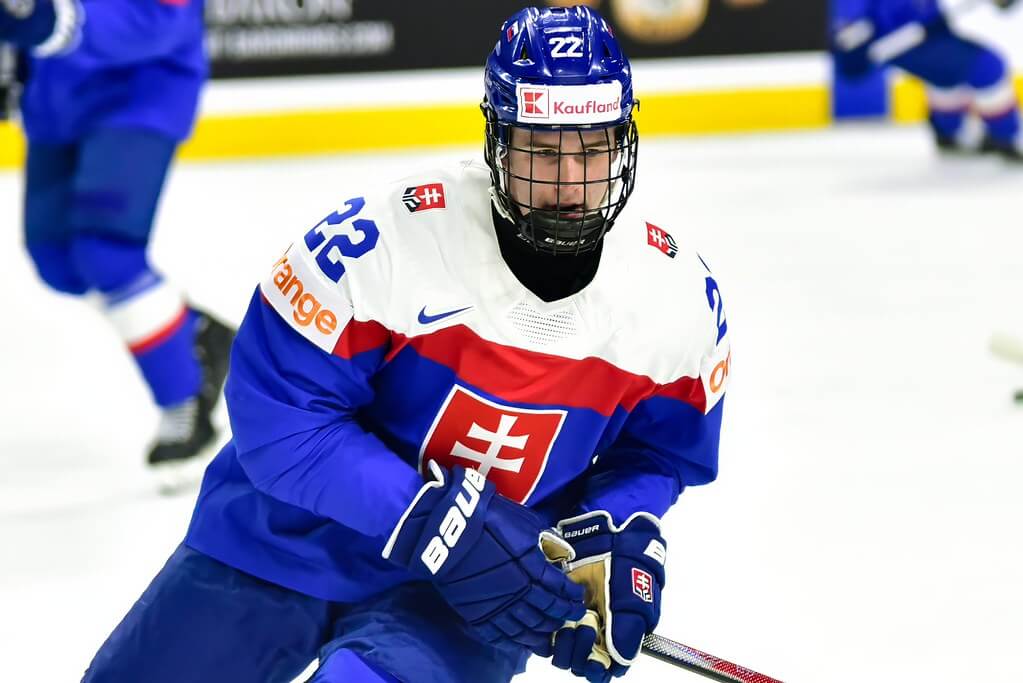
Goljer wore the “C” for Slovakia at Hlinka, has been a top D for their ’08 age group, has been a regular contributor for Trencin’s pro club, and played at the World Juniors as a summer birthday underager this year (though he averaged just 13 minutes per game, he’ll be a big part of next year’s team). He’s also a pro-sized right-shot D with standout skating. He moves really well, he takes good routes defensively and he’ll jump into the attack in transition. His execution isn’t always there but he’s got a lot of attributes and fits as a second-round pick in this class.
Photo:
Steven Ellis / Daily Faceoff
RHD
🇸🇰
Tier 5
Slovakia
Di Iorio, the No. 2 pick in the 2024 OHL draft after Belchetz, is a talented and intelligent center who has good hands and soft skill. He has played at four separate events for Hockey Canada already, leading them in scoring at the Youth Olympics, wearing a letter at U17s and Hlinka, and joining the U18 worlds team as an underager, where he made some plays in a limited role and hit a crossbar in the gold medal game. He has quick crossovers and room to add muscle. He can play out wide, and I’ve seen him pick corners from mid-range with his curl-and-drag wrister (he has a shooter’s shot and I expect him to score more this year) and facilitate with his good feel as a passer, but he’s also sneaky strong on stick lifts and willing to go to inside ice. His combination of smarts and skill, I think, had him poised for a step in his draft year with Sarnia, but it was delayed after he hurt his elbow prior to the season and he hasn’t been as productive since (after a two-goal return).
Photo:
Natalie Shaver / OHL Images
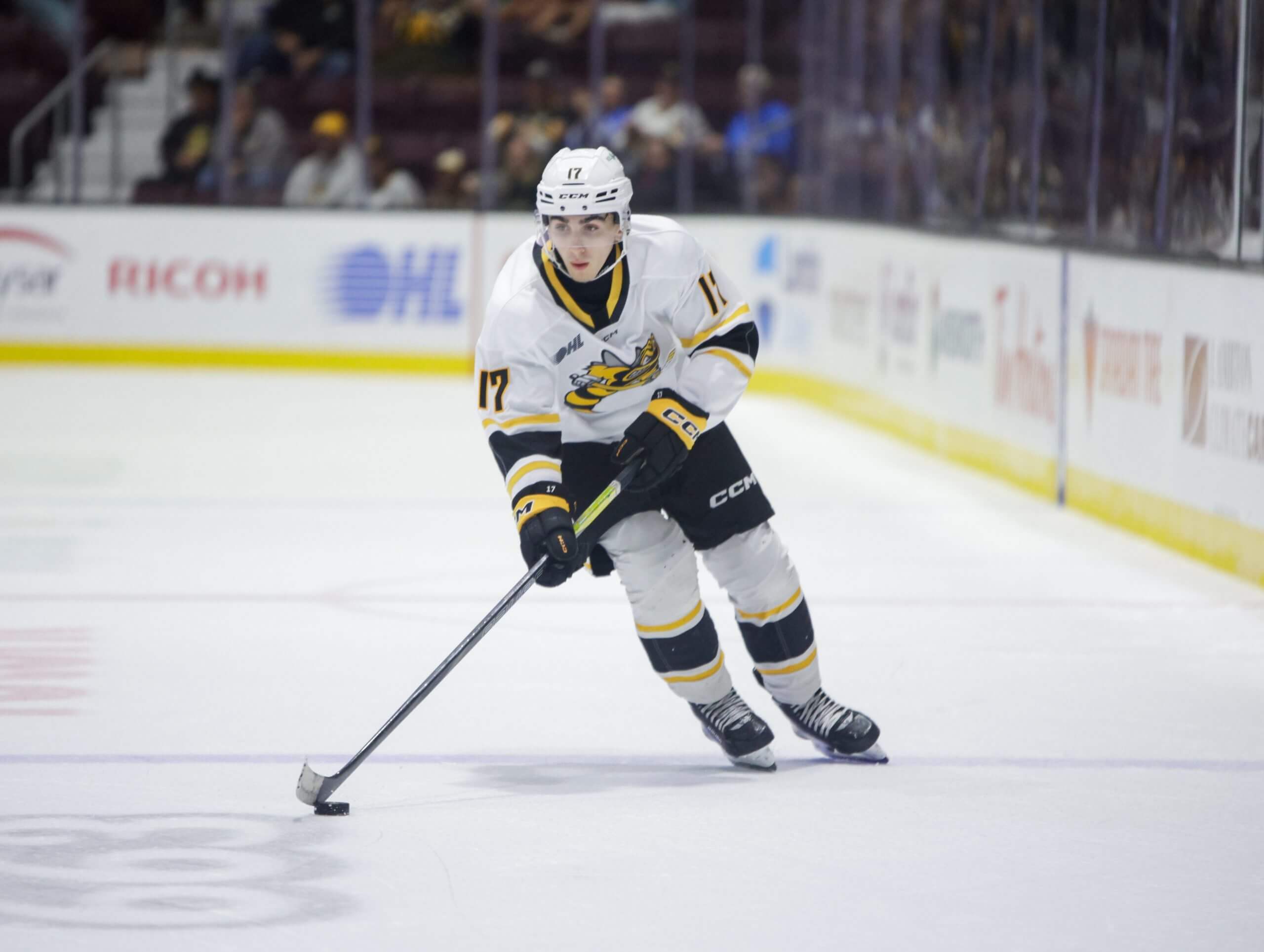
Hextall, a Michigan State commit, looked like a pro even as a 16-year-old in the USHL last year and was owed more on the scoresheet for how consistently good he was. His production hasn’t popped this year (just below a point per game), either, but he just looks like a pro prospect when I watch him.
Hextall is a very smart player who does a lot of things well. He already protects the puck and stays over it like a pro, coming out of scrums with possession. He’s strong on his skates. He plays in all three zones and is committed defensively as a center. He has blown opponents up with hits. He likes to shoot it but also sees the ice really well, and will go to the net but can also find the second or third layer. He’s a complete player. I also thought he was owed more than his counting stats at the Hlinka (where he was USA’s No. 1 center), and while eventually he just needs to produce like a first-rounder, I think the 30s is the right range for him on my list. I did debate back of Tier 4 versus front of Tier 5, though.
Photo:
Scott Galvin / USHL
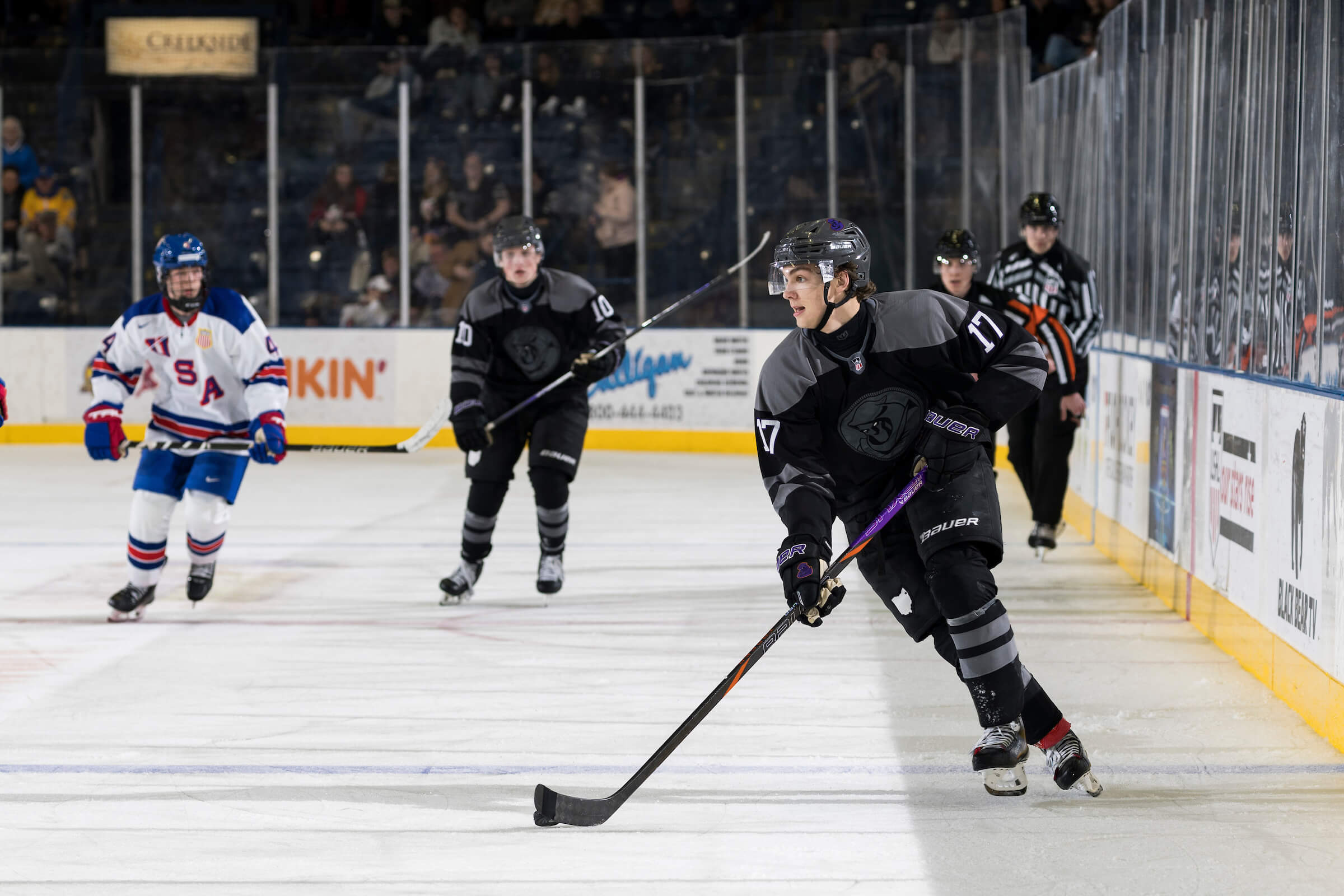
Command, who wasn’t part of Sweden’s Hlinka Gretzky Cup team, has been a steady riser since a strong showing at the World Junior A Challenge and Sweden’s U18 5 Nations tournament in November, producing in line with some of the top Swedes at the J20 level and getting into his first few SHL games. He was listed as a “W” by NHL Central Scouting on their preliminary players to watch list, which “indicates a 6th/7th round candidate,” but there’s now top 50 chatter around him.
Command is a good, balanced skater (though I wouldn’t say it’s a standout attribute). He has a quick release (both in stride and in catch-and-release) and has picked corners from some bad angles this year. He’s not a super physical player, but he’ll track pucks and knows where to be on both sides of the puck, arriving with good timing offensively. He protects the puck well and handles it quite comfortably under pressure. He’s smart. I’ve enjoyed getting to know his game this year.
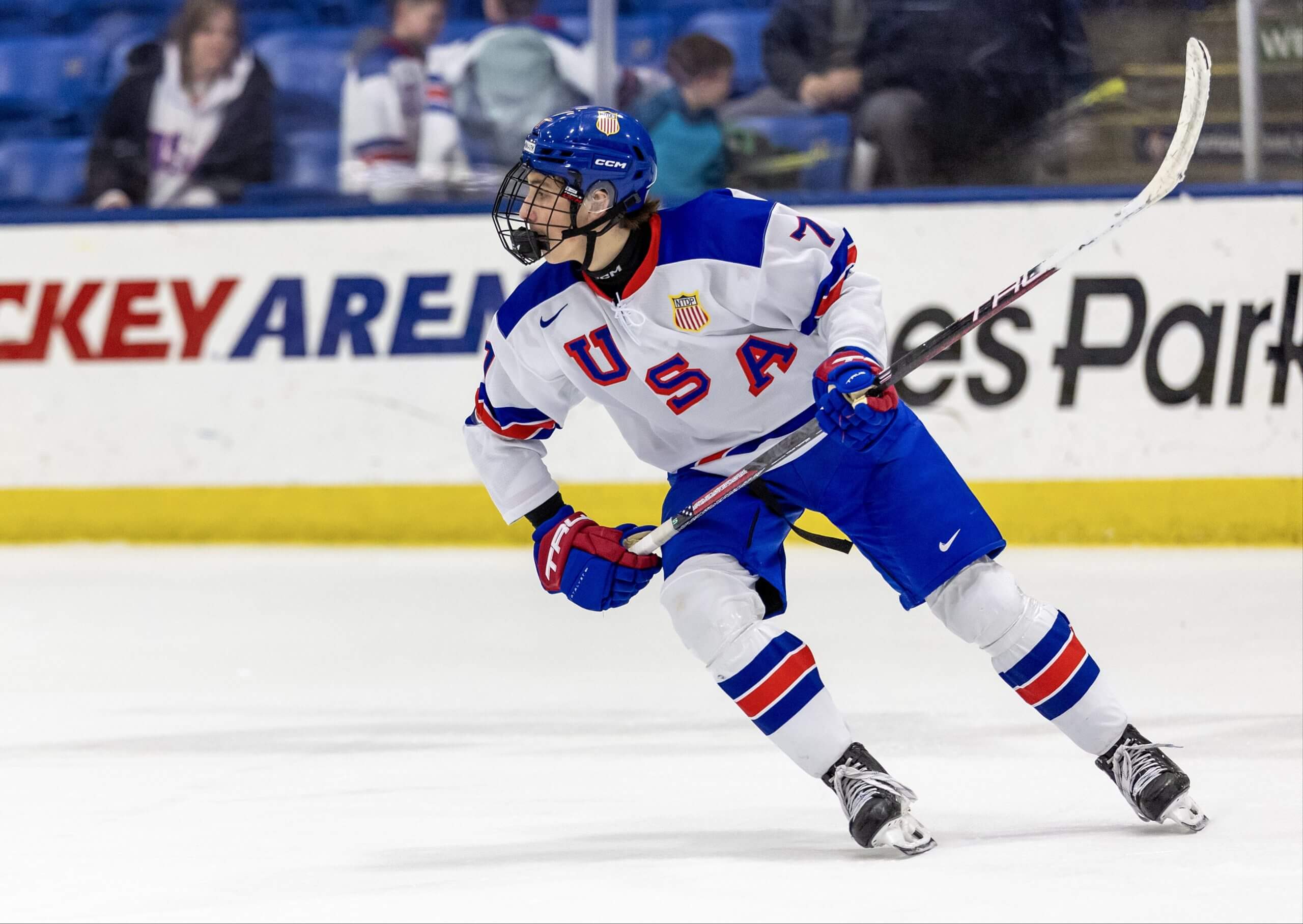
Cullen has a fascinating development story. The son of former NHLer Matt Cullen, he was tiny when he showed up to the national program, including in his U17 year. But he was also one of the youngest players in the class and now the growth has come, he’s up above 6-feet last I heard, and he still has a lot of the little guy elements to his game. Though he has battled injuries throughout his draft year, he has — when healthy — been a bright spot on an NTDP U18 team that doesn’t have many. He was also one of the standouts at this year’ Chipotle All-American Game, where he had a goal and two assists. He’s a shifty on-puck handler who blends shoulder fakes into agile cuts and very noticeable lateral mobility. He’s a good skater and offensive thinker. He was clearly more talented than his production last year indicated and has caught my eye dating back to U17 worlds in Sarnia when he was really small. I think he’s a solid second-round target. He’ll follow his family lineage to the University of Minnesota.
Photo:
Rena Laverty / USA Hockey’s NTDP
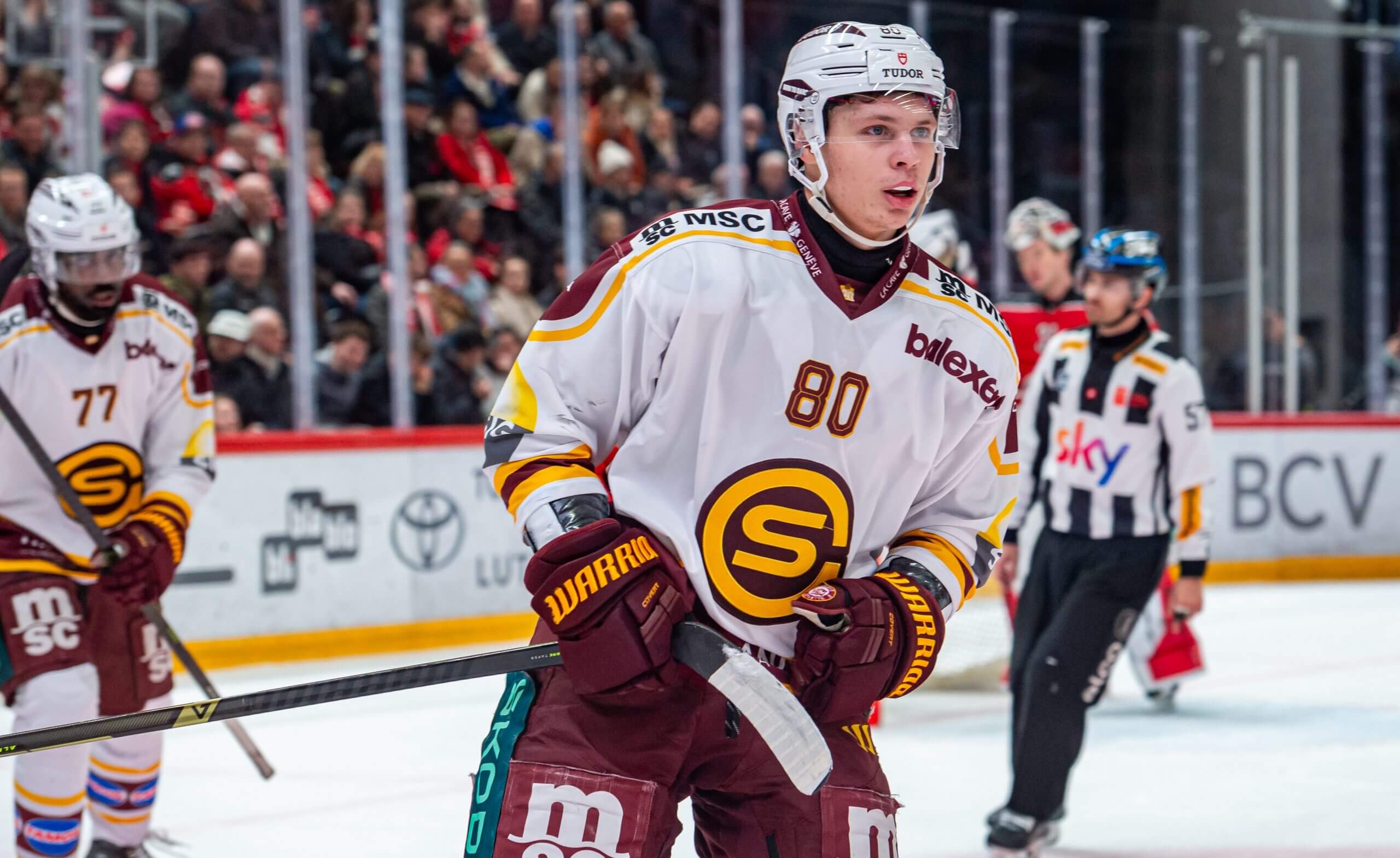
Ignatavicius is a fascinating story. He was born in Memphis, is from Lithuania, and has played his junior and pro hockey in Switzerland. He’s one of the youngest regulars in Switzerland’s top flight NL (which is a good league that competes financially with the best in Europe) and has been solid for Genève-Servette this season. He also led Lithuania to World Juniors promotion from Division 2A to Division 1B with a team-high 14 points in five games, bullying the weaker competition (which featured Romania, Croatia, Great Britain, China and Netherlands) at times. He drives with the puck and works without it. He protects the puck well off his hip and continues to learn how to best use his size. He skates well. He can play center and wing. He competes. He’s a tricky eval given his path but I think he becomes interesting in the second or third round. He hasn’t looked out of place against men in my viewings.
Photo:
Monika Majer / Getty Images
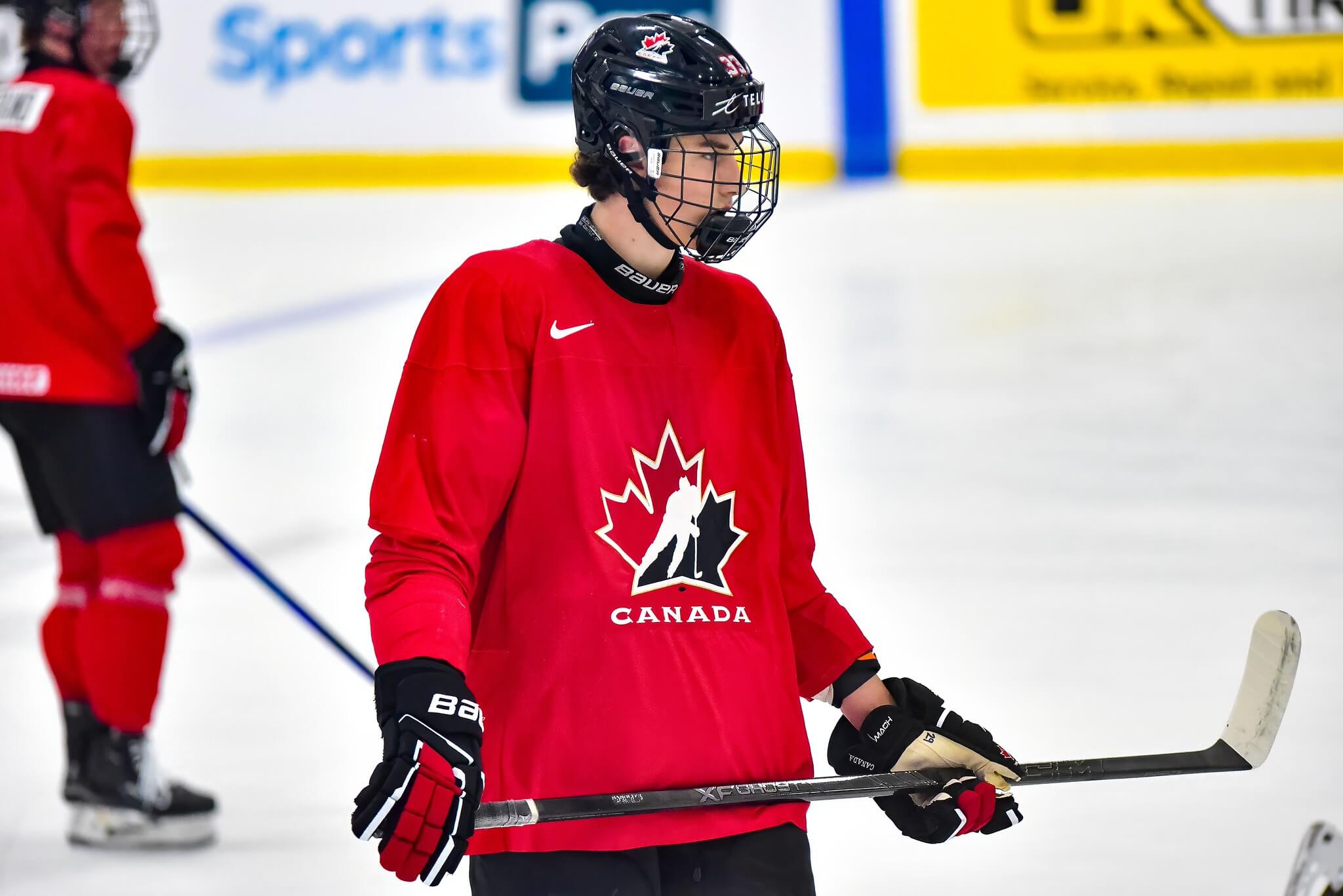
Gashilov got off to a torrid pace to start the season in the MHL, and when you watch his games back it, it doesn’t look like a fluke. Even as it has leveled out a little, he has remained one of the league’s most productive players and is having one of the more productive draft-age seasons of recent memory in the league. He has great hands and one-on-one skill and has scored some highlight-reel goals this season dancing around guys. He also has a dangerous release and accurate wrister off the flank on the power play. His game really tilts offense, and he’s going to have to work to round it out, but he’s decent in the faceoff circle and has the playmaking and size to potentially stick as a center. As a late September birthday who is one of the oldest first-year eligibles in the class, scouts will want to see him create offense at the pro level a little this year, but he’s one of the most dangerous players in the MHL, and his talent puts him in this range for me. Whether he goes there is still to be determined, however: NHL Central Scouting notably gave him a “C” rating, which “indicates a 4th/5th round candidate” for them.
Shcherbakov is a big left-shot D who moves fairly well and has made the jump from the MHL to pro this year in the VHL and KHL. This isn’t Radim Mrtka, Dimitri Simashev or Maveric Lamoureux levels of mobility for a big man, but he’s not heavy and clunky either, with good feet walking the line and an ability to get back to pucks while also joining the rush as a trailer. His game is still pretty raw and he has development ahead of him on both sides of the puck, but I’ve seen him carry pucks into the offensive zone and stop up and find the trailer, and his comfort over his feet at his size makes him intriguing for NHL clubs. He’s going to be watched closely this year as teams try to decide what level of prospect he is. Is he a project you work toward becoming a third-pairing NHL D, or can he be something more? I’m still not sure they know, either, and the season in Russia ends earliest. He has looked promising in a regular shift in the VHL (15 minutes per game) and in the junior level MHL (where he has been productive and even run the power play) but has struggled a little in limited minutes in the KHL.
Dagenais was the No. 1 pick in the 2024 QMJHL draft and made headlines when he started his junior career with six goals, nine points and 23 shots in his first five games with the Remparts as a 16-year-old, getting scouts excited about this 6-foot-3 center with skill and scoring upside. But his development hasn’t lived up to the early excitement since, clouded by multiple concussions, stagnant production and wonder about his pace (he’s a decent skater but needs to play with more tempo at times). He was also one of the final cuts for Canada’s Hlinka Gretzky Cup team this summer (which, in hindsight, I think was a mistake). I thought he had a solid QMJHL Prospects Game (which included a game-high eight shots, a goal and the shootout winner) as well. And he was one of the standouts for Team CHL at the CHL USA Prospects Challenge for me.
He remains a solid and relevant prospect even if he’s not viewed as a true top-end guy anymore, and I think he’s a better prospect than his numbers this year show. I wonder if he could have a resurgence similar to the one Joshua Roy had after he went from No. 1 pick into the Q to fifth-round NHL Draft pick.
Dagenais is a strong center who, at his best, stays around and on the puck and shows confidence holding and shooting it. When he’s engaged, going to the net, winning board battles and stacking positive shifts, he looks like a future NHL player. He can also protect pucks well and has skill. He’s a volume shooter and has been owed more in the goal column this season for his efforts. He can impose himself physically when he’s ramped up. He has work to do in the faceoff circle and to round out his game: for example, teams will likely want him to become a potential penalty killer, which he doesn’t do right now. But he goes to high-danger areas, he has a quick release, he protects the puck well along the wall and makes some low-to-high plays from below the goal line, and he has pro attributes. I’ve liked the way he has played through contact this season after that was a bit of a question a year ago, as well, and he’s seeing the results in a ton of drawn penalties and making himself more imposing out there. I think he’s starting to figure it out.
Photo:
Steven Ellis / Daily Faceoff
Steiner had a strong season last year as a rookie in the QMJHL with Rouyn-Noranda, where he registered 60 points in 57 games. He played well at his first of two World Juniors for Switzerland despite going scoreless in four games. Then he got off to a good start in the Q this year as well before suffering an upper-body injury (shoulder) that came with a six-to-12 week timeline for recovery. His production has cooled a little since returning on the early side of that, but he again played well at his second World Juniors, leading the team with 17 shots on goal in five games.
Steiner is a short but strong and stocky winger who plays a physical, competitive, almost power-forward game, while also having the skill and finesse of a smaller player. He moves his feet. He’s sturdy for his age over pucks. He can play the flank or the bumper on the power play and has a heavy wrister and one-touch shot. He wants the puck. He’s a strong skater through his compact crossovers. He looks like a player already. He’s a Day 2 pick as a shorter winger but I’ve liked watching him over the last couple of years and he’s more than meets the eye as a player.
Photo:
Steven Ellis / Daily Faceoff
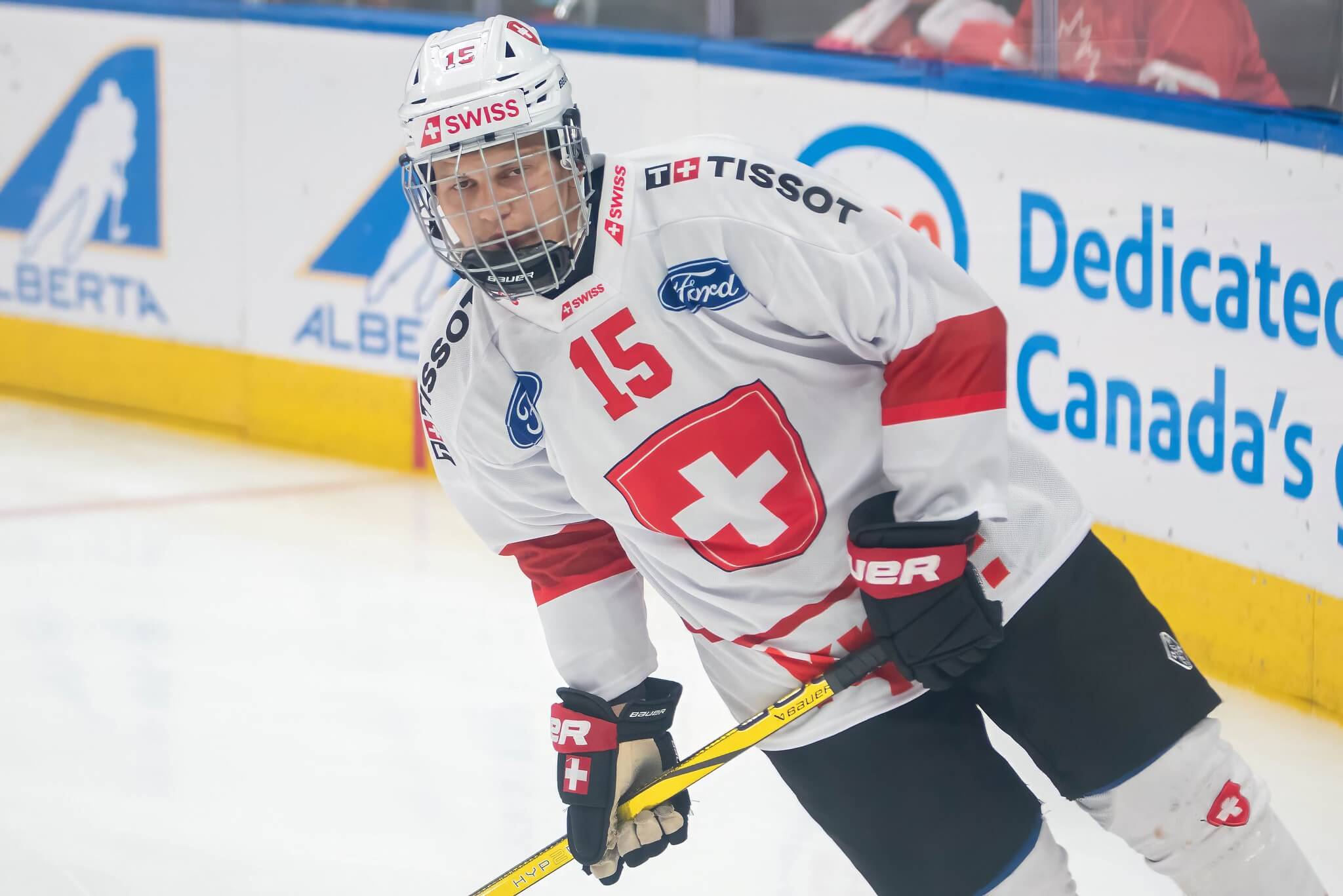
Nemec, the younger brother of 2022 Devils No. 2 pick Simon, followed a similar path in his early years, making his debut at Slovakia’s top pro level with HK Nitra at 16 and then playing and contributing more regularly at 17 and 18. He has now made the decision his big brother never did, though, leaving Nitra after the World Juniors (where he had five in five and was good but not a standout) to make the move to the Sudbury Wolves in the OHL. He’s a decently skilled and opportunistic winger who isn’t dynamic but can make plays for himself when opportunities present. He also just does a really nice job getting open and finding his way onto pucks around the slot area, and reads the game at an advanced level. His game has some mature details to it at a young age, despite still needing to physically mature. He has great instincts on and off the puck, plus a quick release and good hands to finish off plays. His skating has looked average to me dating back to my first live viewings two U18s Worlds ago, but he works, competes, engages himself and finishes his checks, which produces positive results. He has already produced against men at an early age (though his usage didn’t go up this year, and he played less for Nitra than Chrenko). I thought he made some plays at his second U18s in Texas in the spring as well: he finished with four points in seven games while playing with 2025 draft eligibles. I like him, but I’m not sure he has an obvious NHL role/projection at the moment, which makes him more of a mid-round pick despite a decent track record/career arc to this point. I just want to see him developing more of a defining quality to his game. He needs to fill out, too.
Photo:
Steven Ellis / Daily Faceoff
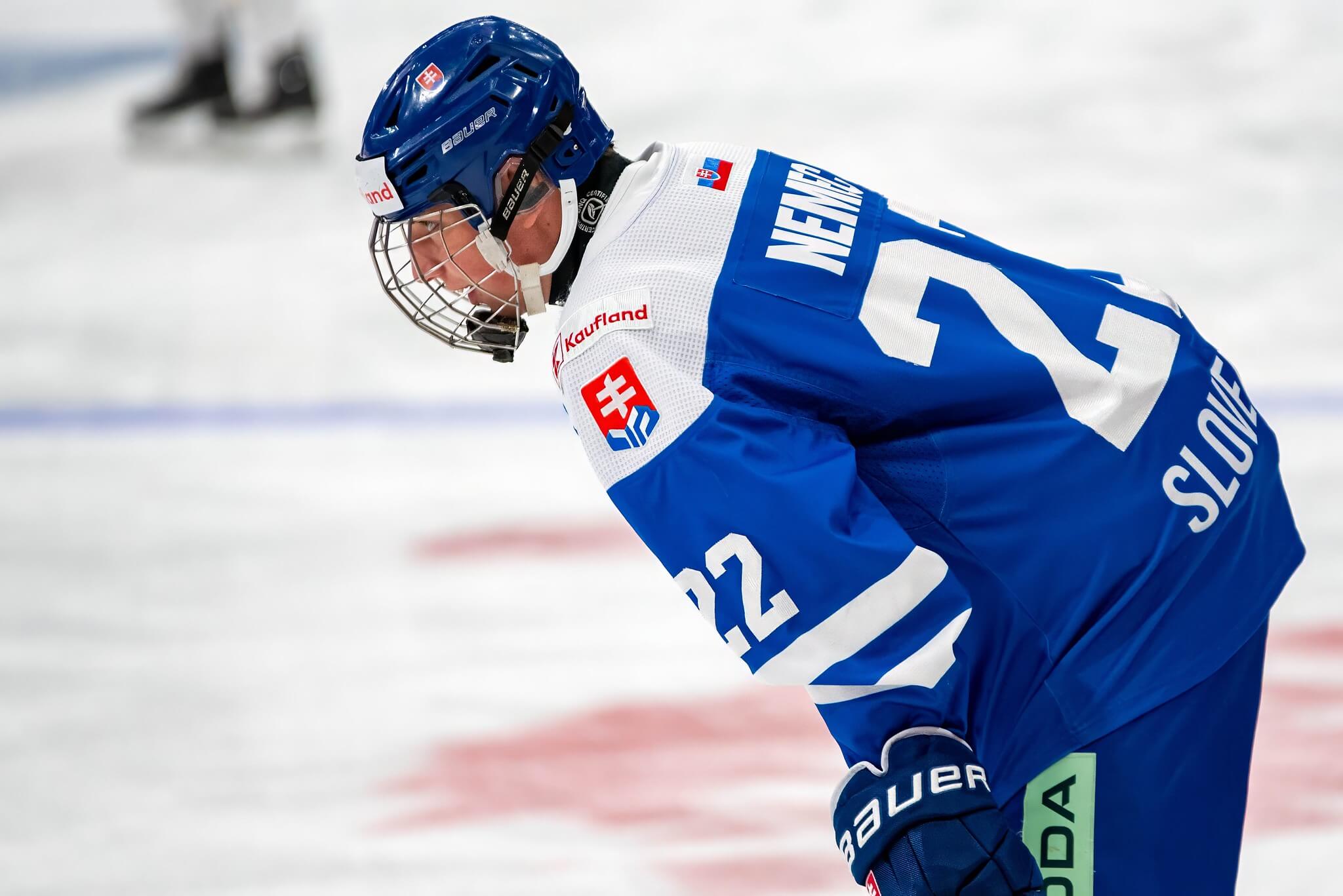
Edwards is a sneaky-strong, hard-shooting forward who finished second in U17 scoring in the OHL last year, hitting the 25-goal mark as a 16-year-old and leading the Sting in goals. He drove the bus for them early on this season as well, leading the Sting in scoring out of the gate and driving his own line with fellow 2026 prospect Alessandro Di Iorio out injured. Since Di Iorio’s return, though, his performance hasn’t been quite as consistent.
Edwards is strong on pucks and can drive to the net in control; he looks heavier than his current listing. He has good dexterity catching and handling bad passes into his pocket. He has some power to his game. And he also knows how to go to the inside and use the space he has left behind to involve his linemates, which has added layers to his game offensively as it comes along. I thought he had a positive Hlinka, too, and he has shown he can play all three forward positions effectively. Edwards is committed to the University of Notre Dame and projects as a middle-six scorer at the next level if all goes well, but I did have higher expectations for him this season.
Photo:
Natalie Shaver / OHL Images
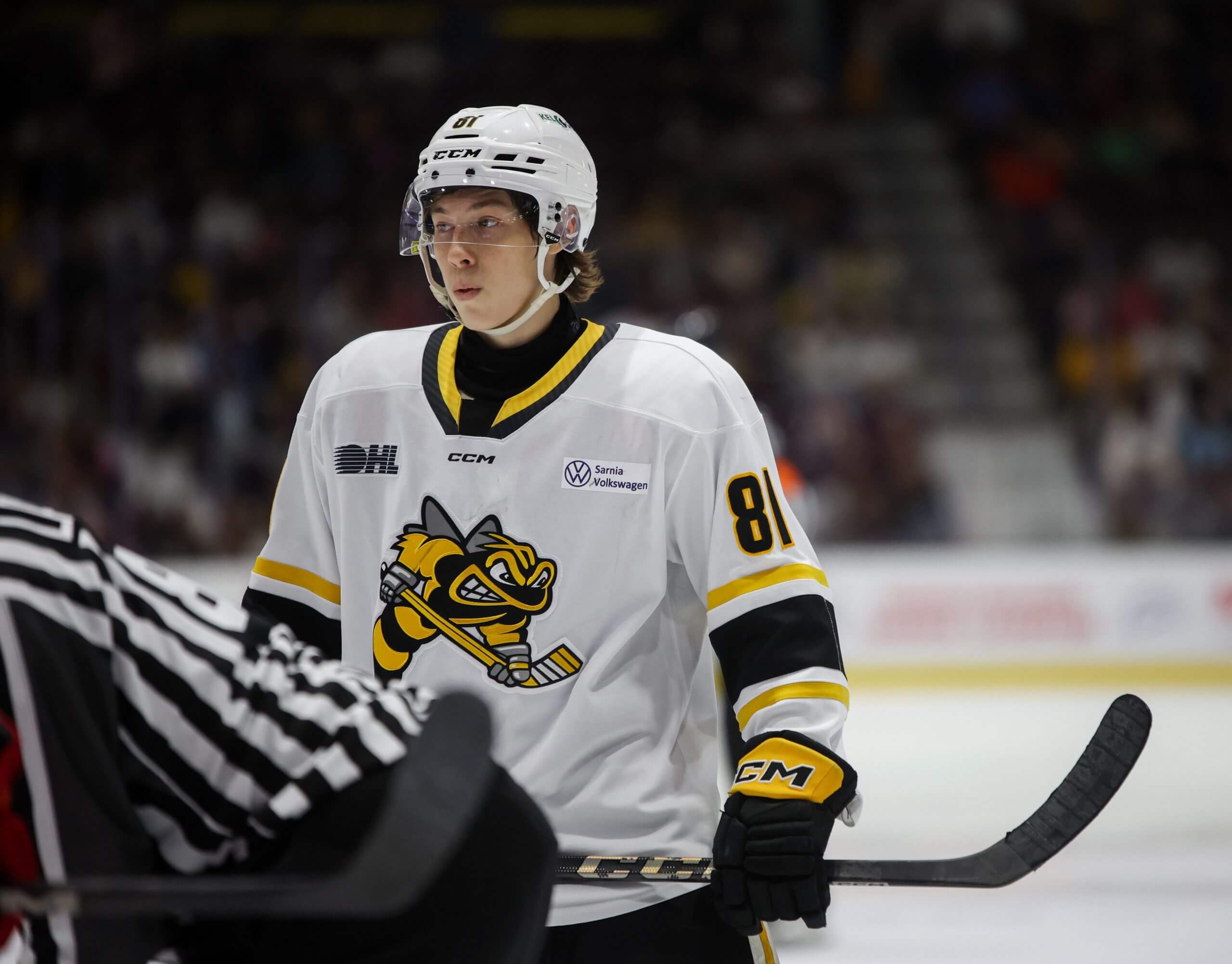
Valentini was a top prospect through minor hockey who decided to take the tried-and-true Chicago Steel to Michigan Wolverines path before CHL eligibility opened up. He was briefly signed with the Kitchener Rangers for his draft year before accelerating to play it in the NCAA, a decision which surprised some observers who thought he could benefit from a season in the OHL but has been quieted by his solid contributions on a top team in the country. He has worn a letter and been an important player for Hockey Canada at U17s and the Hlinka, too. I would like to see him get to scoring areas and score a little more but he stays around it.
Valentini is a 5-foot-11 center but he’s strong, plays with pace and intention, and has good habits off of the puck, supporting play effectively defensively. His stride can look a little short and compact, but he buzzes around the ice with quick feet and strong crossovers. He also protects pucks well on his forehand and backhand. On offense, Valentini has good hands and great sense, finding his teammates quickly and putting pucks into good spots for them. He’s a smart, well-rounded offensive player who’s a legit player in the ’08 age group and has some pro attributes. Teams are trying to figure out what role he’ll play in the NHL at his size. His work rate should help him, though. He involves himself. I think the second round somewhere is the right spot for him but he could be more of a third or fourth.
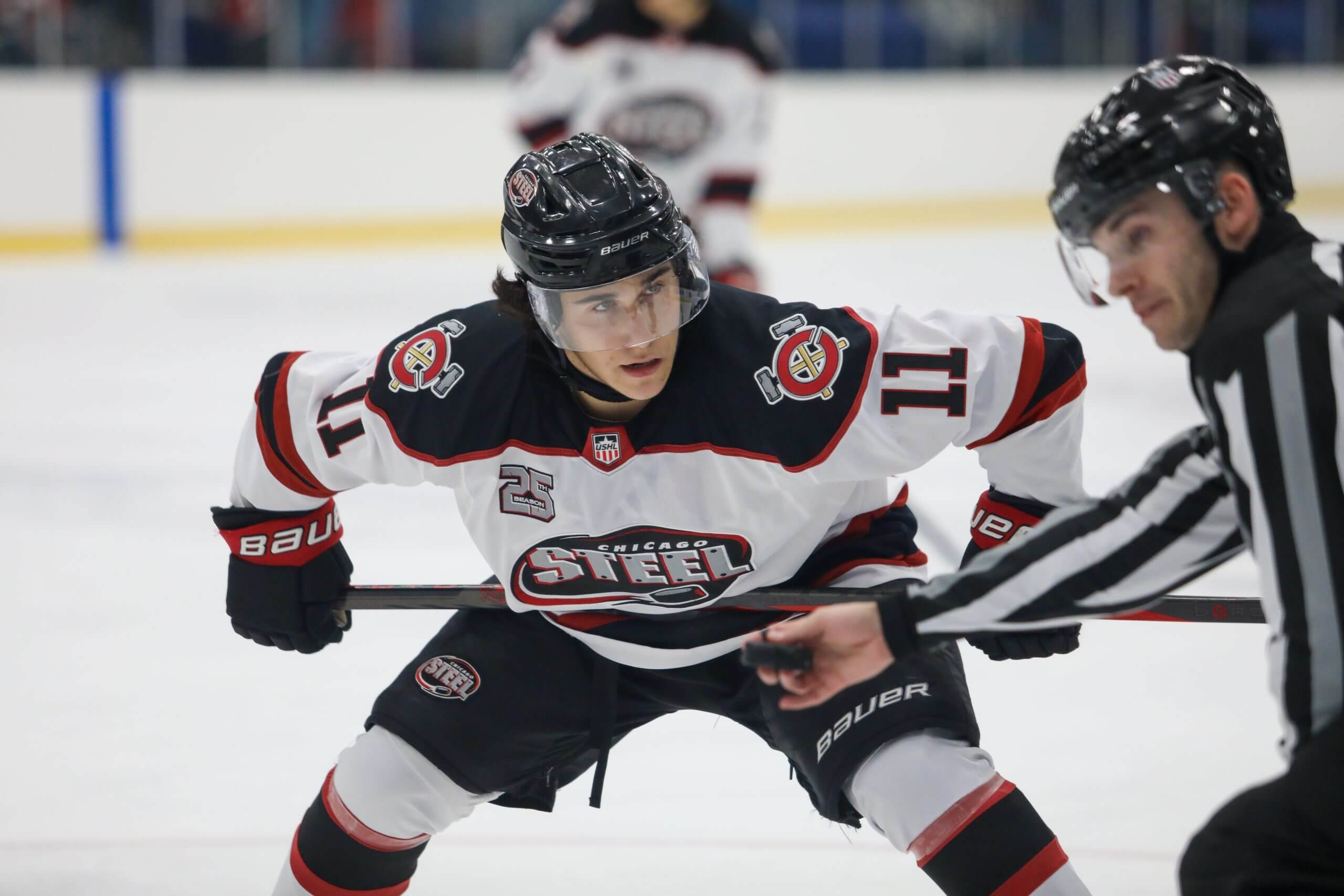
Elofsson, with Lin and Villeneuve, is one of three high-end sub-6-foot defensemen in the 2026 class, a year after none were taken in the 2025 draft at all. He led the Hlinka in assists in the summer and finished tied for second in tournament scoring with 11 points in five games, and has been extremely productive at the J20 level the last two seasons. This year, he has produced like a top forward domestically and internationally, and has earned some SHL time in the process.
Elofsson is very skilled on the puck, with great hands and a real evasiveness shaking past opponents. He makes a lot of plays inside the offensive zone and off the rush, breaks pucks out with poise under pressure, and is an impressive talent. He’s going to have to prove he can defend against pros, as all D his size have to, but he can play, and his feet help me feel OK about this slotting (I actually debated ranking him in the 30s). I’ll be fascinated to see where he goes because he grabs your attention out there. There’s enough offense there that I think he’ll be a mid-round pick, and I wouldn’t be surprised if a team doesn’t take Villeneuve because they think Elofsson is close and they can get him later. The skill level is legit.
Photo:
Steven Ellis / Daily Faceoff
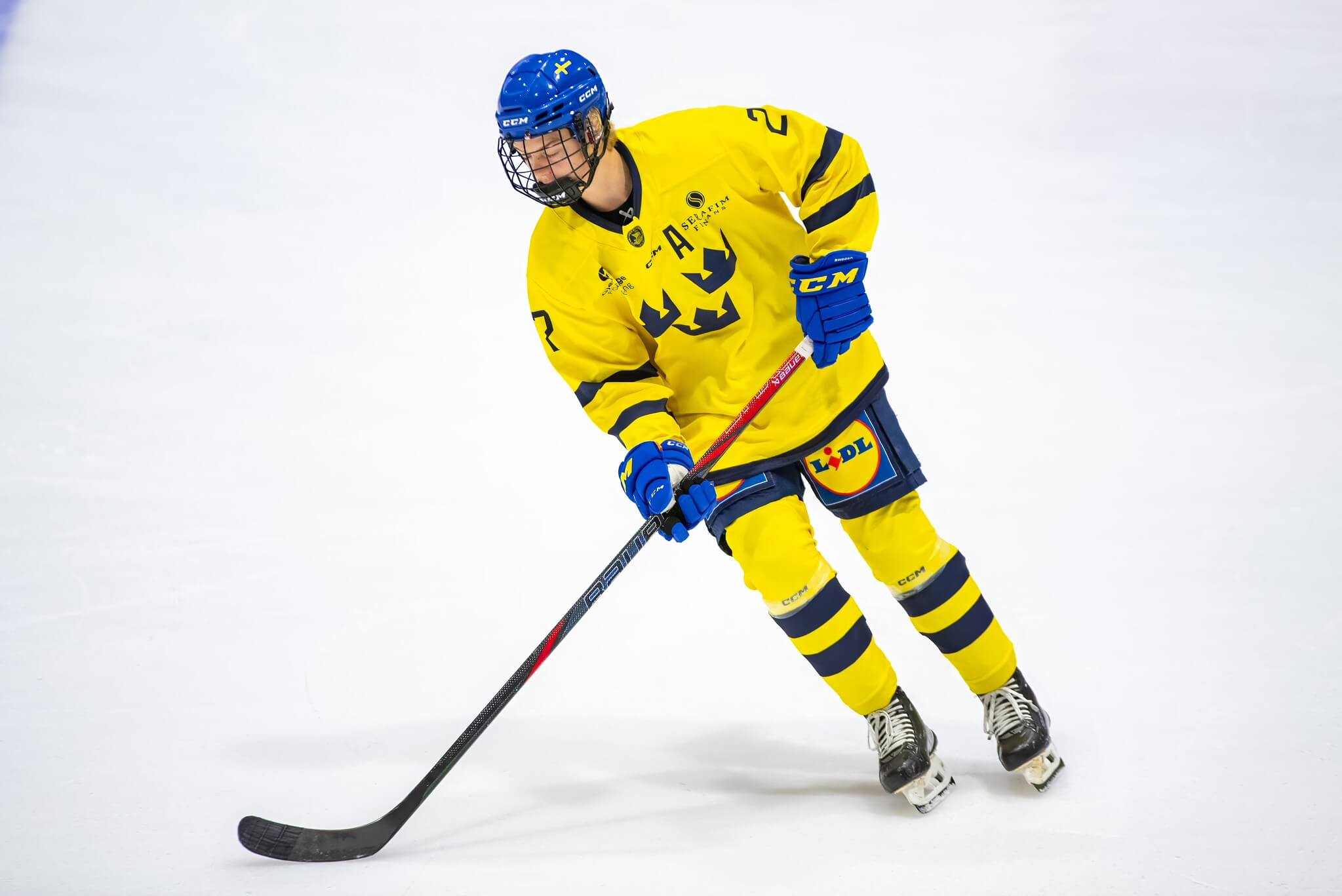
Holmertz really caught my eye at U17 worlds and hovered around a point per game at the J20 level last season with Linköping while playing center as a 16-year-old. He hasn’t grabbed me as much this year, though the skill is still evident in flashes.
Holmertz is a standout skater through his edges and in and out of cuts, but also has natural pull-away speed. He’s not explosive in the powerful skater way, but he makes guys miss. He’s more of a playmaker than a play finisher, but he’s talented and very noticeable on the puck for how smooth he is as both a skater and stickhandler. He can shoot it, too, and boasts a quick release when he wants to. He makes a lot of crafty little plays inside the offensive zone to put pucks into space for his linemates, too, and also has quick hands to create for himself in space or traffic. He’s not the most intense competitor and can kind of play within the flow of the game at times, but he has offensive talent, skating, skill and feel for the game, and I’ve been drawn when I’ve watched him play at times. He’ll be one of the more talented Day 2 picks but needed to actually score more to prove it.
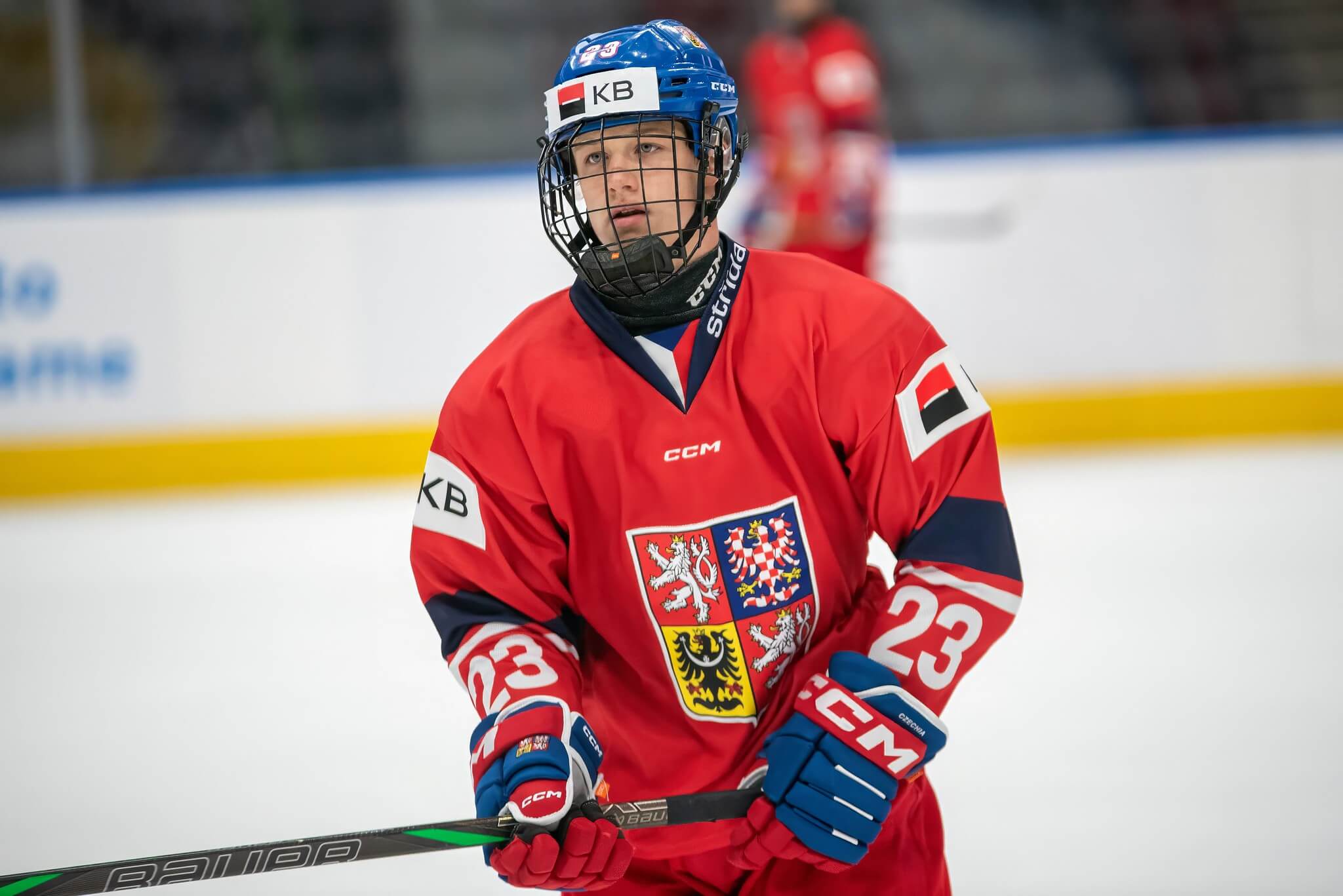
Fedoseyev is a talented offensive defenseman who has been very productive for his age in the MHL for the last two years, is wearing a letter this season and has begun to get reps in the VHL and KHL, looking good in his opportunities in both and playing to positive results. He has an NHL shot with a hard, dangerous wrister and a comfortable one-timer. He has good feet, moves across the umbrella on the power play really smoothly and often manipulates around the first layer or down the wall in the offensive zone. He moves and distributes the puck cleanly, but can also carry it out of trouble or down ice. He’s comfortable falling back onto his heels with the puck or pulling pucks laterally to beat guys one-on-one. And he has defended well in my viewings, using his feet and a good stick to angle guys (he’s willing to battle, too). He has piqued my interest throughout this year, and I think he’s flying under the radar a little.
Dravecky was a top player for Rögle’s J20 team and the Czech national U18 team last year across multiple events, playing big minutes (often 20-25 per game) and adding penalty killing to his power-play role with Rögle as the season went on. He even got a taste of the SHL. He looked good with Czechia’s U20 team in their exhibitions against Finland and Switzerland in the summer as well. This season, he made the move from Rogle to the OHL with the title-chasing Bulldogs, where he played in all situations early on and has run both of their power-play units in stretches but has naturally seen his role reduced as they’ve added to their stacked blue line. He didn’t play much in his first World Juniors but projects to run one of their power plays next year.
Dravecky is talented and confident on the puck, absorbing pressure well and completely unafraid to try things. His game comes with some risk and some turnovers, but he has the tools to attack and make things happen, and is already drawing interest from college programs. He can set up the next play with the puck in his hands or make plays for himself. He’s sturdy and a strong skater going forward with a hard shot and an athletic build. He likes to attack and challenge, and has scored some beautiful goals in each of the last two seasons, though there are times when I want to see him move it quicker and he can try to force the issue. He looks like a pro in a lot of important ways, though, and passes and moves it crisply. He also walks the line well and can jump into the play with his feet, though he does need to work on his rush defense and his decision-making on and off the puck. He gaps up quickly on his heels and likes to close and take away time in the neutral zone, but can lack polish defensively. He also plays within a really wide base that has some advantages in battles but disadvantages against speed, though he is a strong skater himself. He’s not for everybody but looks like a typical second-rounder to me.
He has the bloodline too, as his dad, Vladimir Sr., is a legend in Czechia and still playing at 40. Those who know him credit Sr. for his son’s talent and work ethic.
Photo:
Steven Ellis / Daily Faceoff
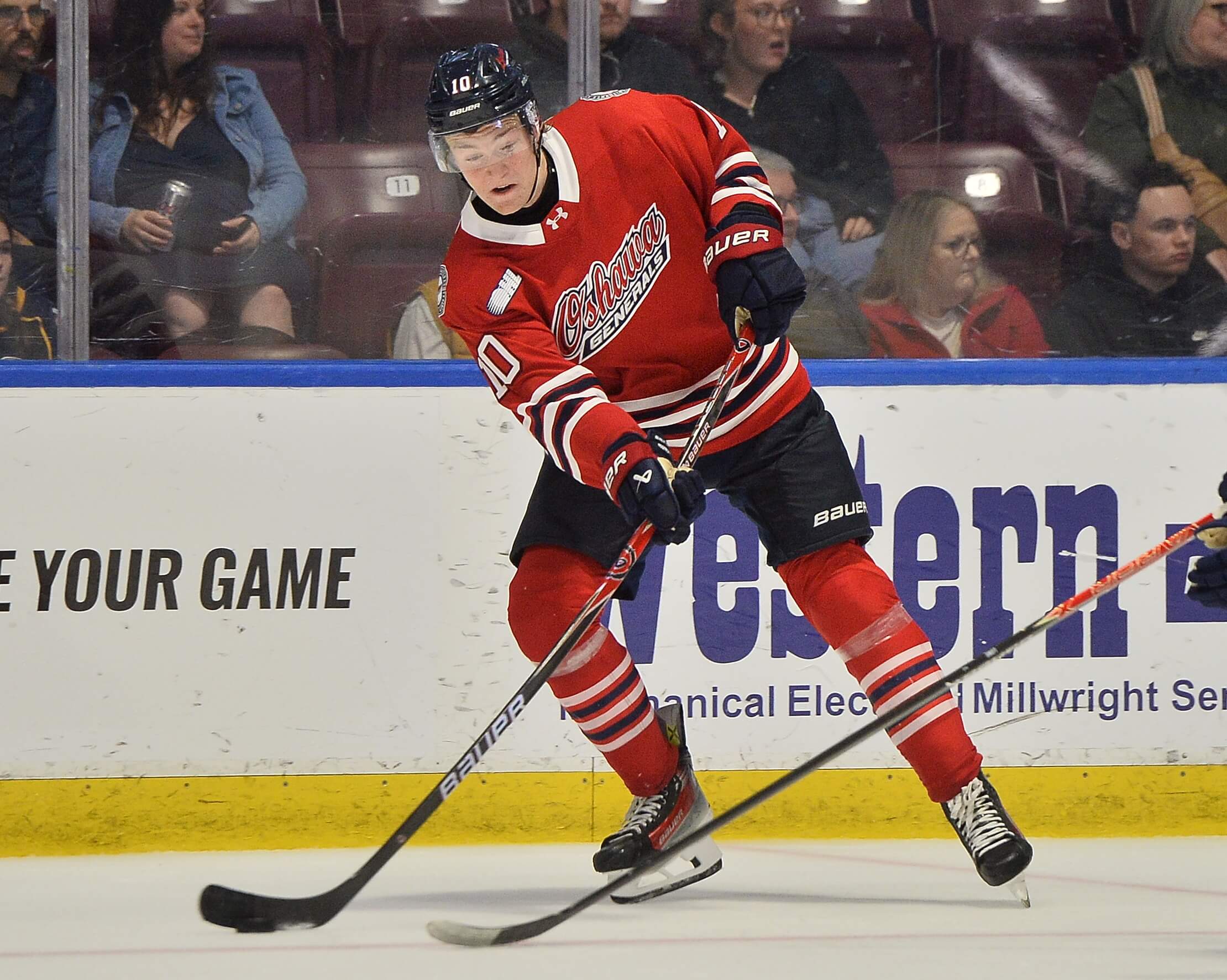
I have mixed feelings about Rogowski — an MSU commit who got an “A” rating from NHL Central Scouting in their preliminary players to watch list — and I’m not the only one. Some see a 6-foot-7 center with good hands and skating who is playing big minutes for the Gens as a go-to player this season on both their power play (where he has the dexterity and soft skill to play the net-front and get sticks on tips and rebounds) and their penalty kill. Others see a big player who doesn’t involve himself or impose himself nearly enough for their liking and are turned off by his lack of intensity — a concern many also had with Bruins first-rounder Dean Letourneau, and I think Letourneau had even more skill/finesse/athleticism at the same age. I’ve seen him play a lot, and I fit more into the latter camp, though the tools obviously make him interesting. We’re also exiting out of a couple of drafts where big OHLers Kieron Walton and Ilya Protas have become top prospects for their organizations, though I think Rogowski is more in the Walton tier than the Protas tier. Development will be key for Rogowski, and he’ll be in good hands at Michigan State, which helps. He’s a good prospect. I just don’t think he’s a first-round one.
Photo:
Terry Wilson / OHL Images
Mbuyi, a Penn State commit, is the reigning OHL Rookie of the Year. He was a star with the Toronto Marlboros in minor hockey, and then scored 29 goals and 52 points in 63 games with Owen Sound last year (both second on the Attack). This year, he has worn a letter and currently leads the Attack in scoring, creating a lot of his own offense. But he started the Hlinka as a scratch for Canada, and the crux lies in that question about where he fits in a lineup up levels given his size. He plays with drive, intensity and work rate when he’s at his best, though, buzzing around the ice to make things happen and will plays into existence. He can be scrappy. He’s a standout skater, shooter and handler who can attack off the rush, wind around the offensive zone and strike with his release. But how effective will he be, or can he be, as an NHLer? That’s what teams will ask themselves on draft day, and he’ll have to answer it over and over again with his play. Cameron Schmidt went at the end of the third round in 2025 to the Stars, and he had more international pedigree (though Mbuyi is also a more well-rounded player and a little taller). He’s a fun player to watch in the OHL, for sure.
Photo:
Terry Wilson / OHL Images
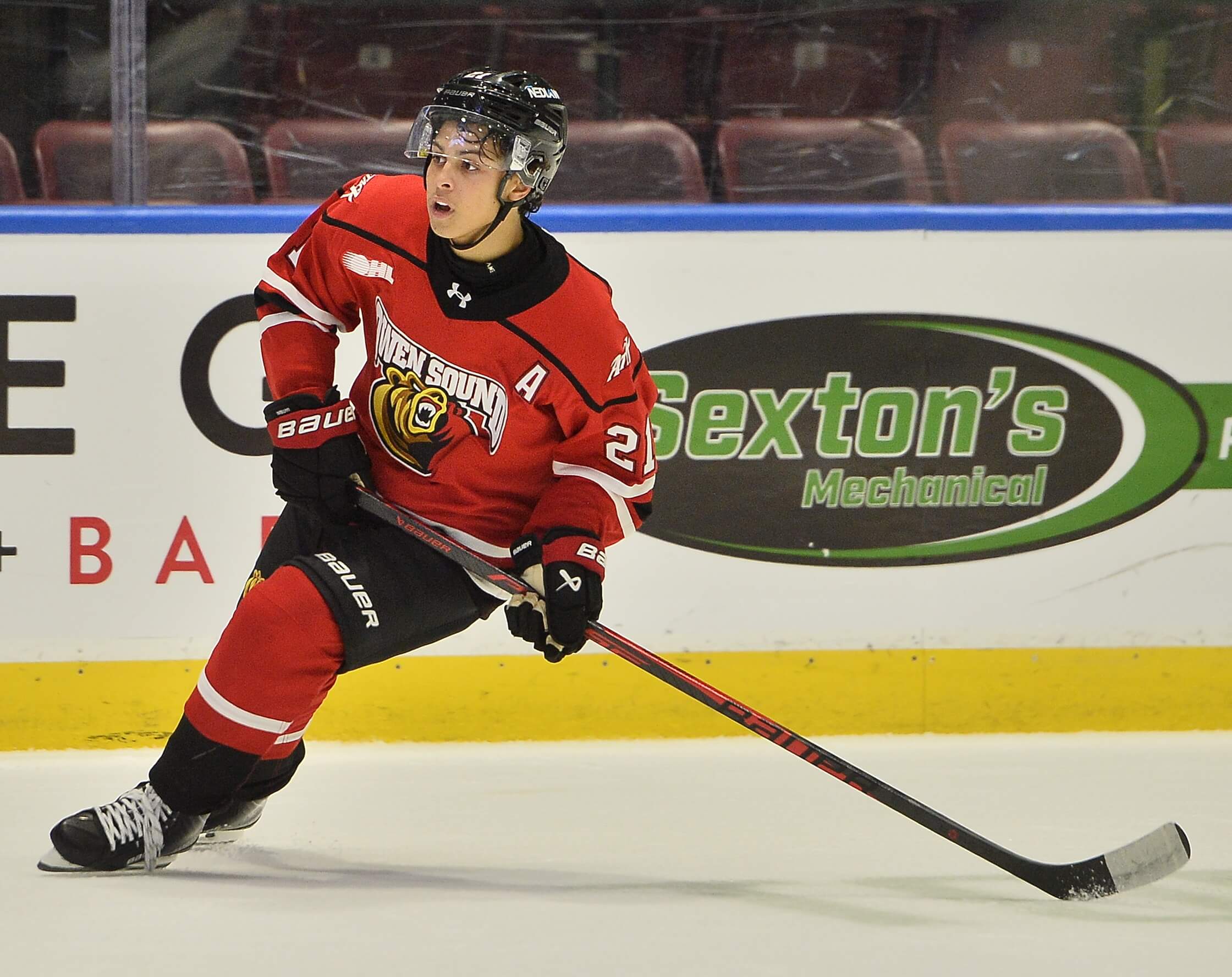
Wassilyn, a BU commit, started the year with a minor injury, missing the first three weeks of the season with Niagara in the OHL. He has played well in my viewings since, though, both to start with Niagara and following a trade to London. The No. 4 pick in his OHL draft year, Wassilyn had a respectable season a year ago and was one of the last cuts for Canada’s Hlinka team. He’s a good skater who can turn opposing D off the rush. He has a good feel around the ice for where to be and how to use spacing, but will also go to the dirty areas and plays a pesky, competitive game for a 5-11 forward, standing up for himself and playing hard. He’s also stocky. He has a strong one-timer and is a better shooter than his goal totals (which have started to come a little more with the Knights) indicate, though his game tilts toward passing. He has good stick skills. Though he’s listed as a center, he has played the wing in both Niagara and London. I’ve thought of Matias Maccelli and Max Domi a little when I’ve watched him. A Vincent Trocheck/Conor Garland type would be the best-case scenario.
Photo:
Steven Ellis / Daily Faceoff
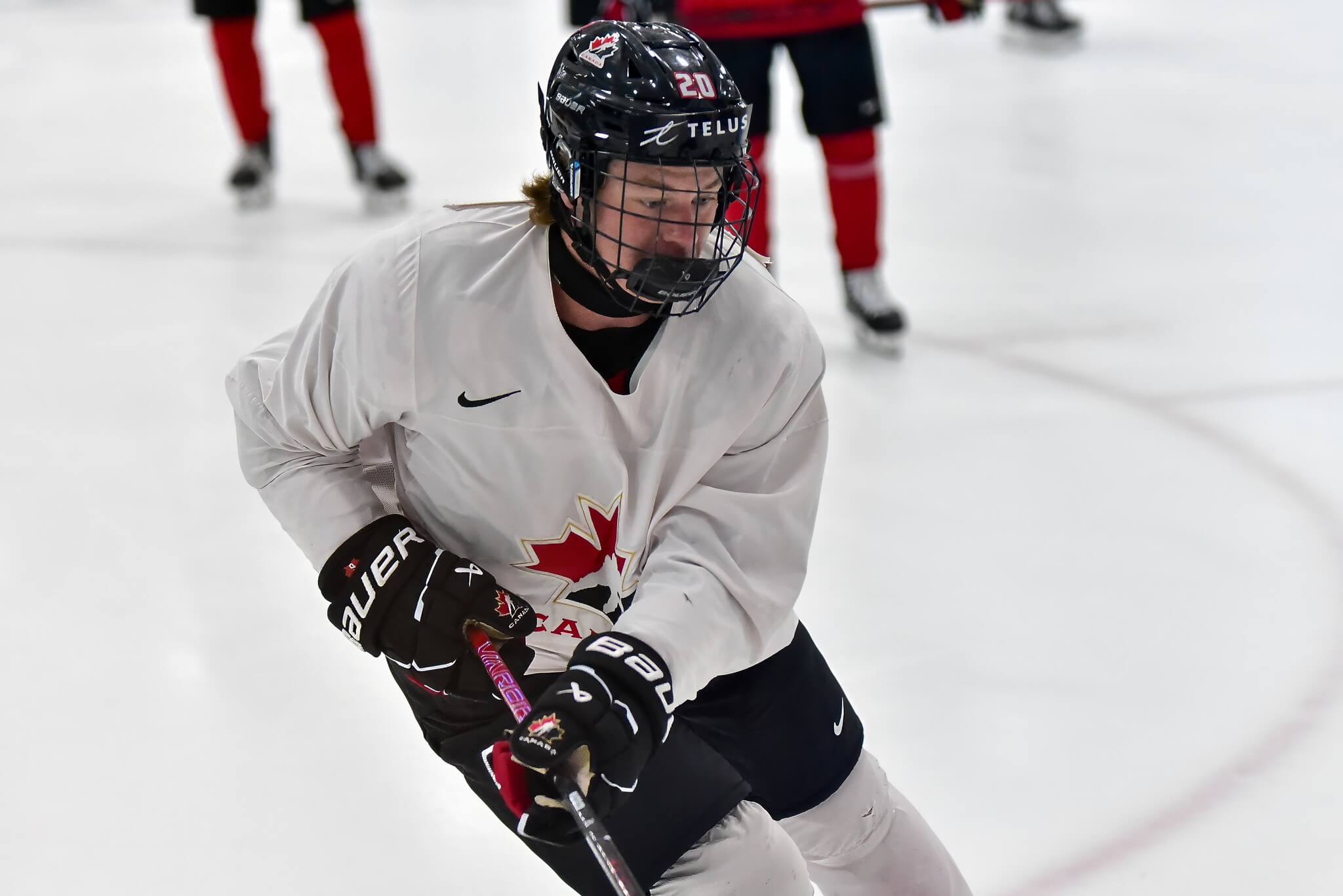
One of the Ruck twins, a top duo all the way up in minor hockey and with Hockey Canada, Liam plays the more direct, scoring game to his brother’s pass-first style. He’s viewed as the better NHL prospect and has had an excellent season with Medicine Hat, helping to keep the Tigers a contender a year after they won a WHL title and graduated much of their core. He’s a right-shot winger who has good touch, a quick release, likes to go short side and can pick his spots in the net — with an eagerness to try as a volume shooter. He skates well. He finds ways to take pucks to scoring areas but can also work and score closer to the boards. He keeps his feet moving off the puck and plays with an energy on both offense and defense, relying on his effort and instincts to consistently make things happen or get open for them. With continued development, he’s got a chance to be a middle-six shooter who plays with tempo. I thought about ranking him closer to the front of Tier 5.
Photo:
Cherie Morgan / WHL

Cover is a fascinating story. He grew up in the Cayman Islands, where there are no rinks, and became a roller hockey star who played professional inline hockey in the United States. He still spends his summers on Grand Cayman and didn’t start playing ice hockey full-time until a few years ago. After enroling at St. Andrew’s College and playing prep school hockey, he played three games for the London Knights last season and has made the full-time jump to the OHL for his draft year. It still very much looks like he’s learning the game at times, too. Those who’ve worked with him describe him as “very raw.” He has great puck skills in traffic, with a slippery and elusive quality from his roller hockey background. He’s also highly creative on the ice, with a willingness to put pucks into spaces and try things one-on-one. There are times when he needs to get his teammates more involved and simplify, but it’s not because he doesn’t process it quickly. There are also times when he can overhandle it and try to do too much, but I think that’s just habitual for him. He looks a little like a roller skater in his stride too, skating from the knees more than the hips, though he’s a great athlete and continued improvements to his mechanics should make him an interetsing skater. He has also come along quickly, he has talent and size He has been one of the more productive players for a different-looking London team this year, even if his numbers don’t pop. NHL teams are watching him closely, and while I’m not yet buying into some of the late-first chatter that has been out there at times, the longer runway he should have definitely makes him appealing and I thought about ranking him higher here.
Photo:
Luke Durda / OHL Images
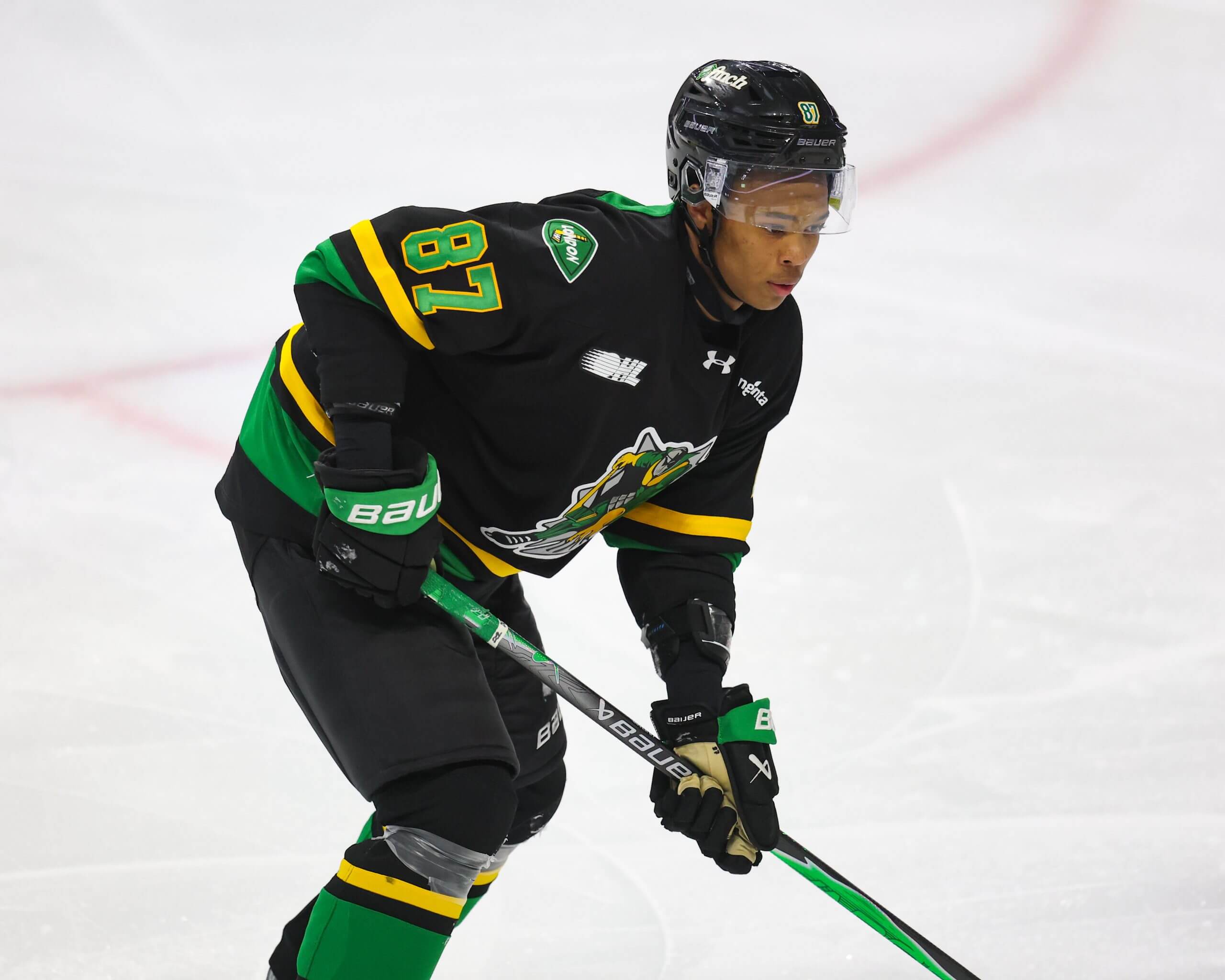
Alalauri has been a staple of Finland’s ’08 age group from the Youth Olympics into U17s, U18 worlds (one of two underagers on the team), Hlinka and more recently the December 5 Nations. A UMass commit, he has played big minutes in all situations and driven play for the Pelicans’ U20 team this season. He played 22-23 minutes per game at the Hlinka, registering four points in five games (tops among D and second on the team), and has played 22-23 minutes per game domestically and internationally this season as well. His game has lacked the consistency of a player like Piiparainen in my viewings, though. He skates quite well (a theme among the trio of Finnish D who I have ranked or mentioned here), and he has pro size and tools. There are games where he impacts play at both ends and games where he creates a lot of offense. But there are others where he looks off, makes mistakes, and doesn’t play hard enough. I don’t quite know what to make of him, despite a strong track record of production and plenty of pro tools, and wonder if I’ve maybe just caught a mixed bag of his games in my viewings. He has reminded me a little of 2025’s Logan Hensler, who has always been a tough eval. He should be picked in the first three rounds, though, because of his attributes and pedigree. I would like to see him at the pro level.
Photo:
Steven Ellis / Daily Faceoff
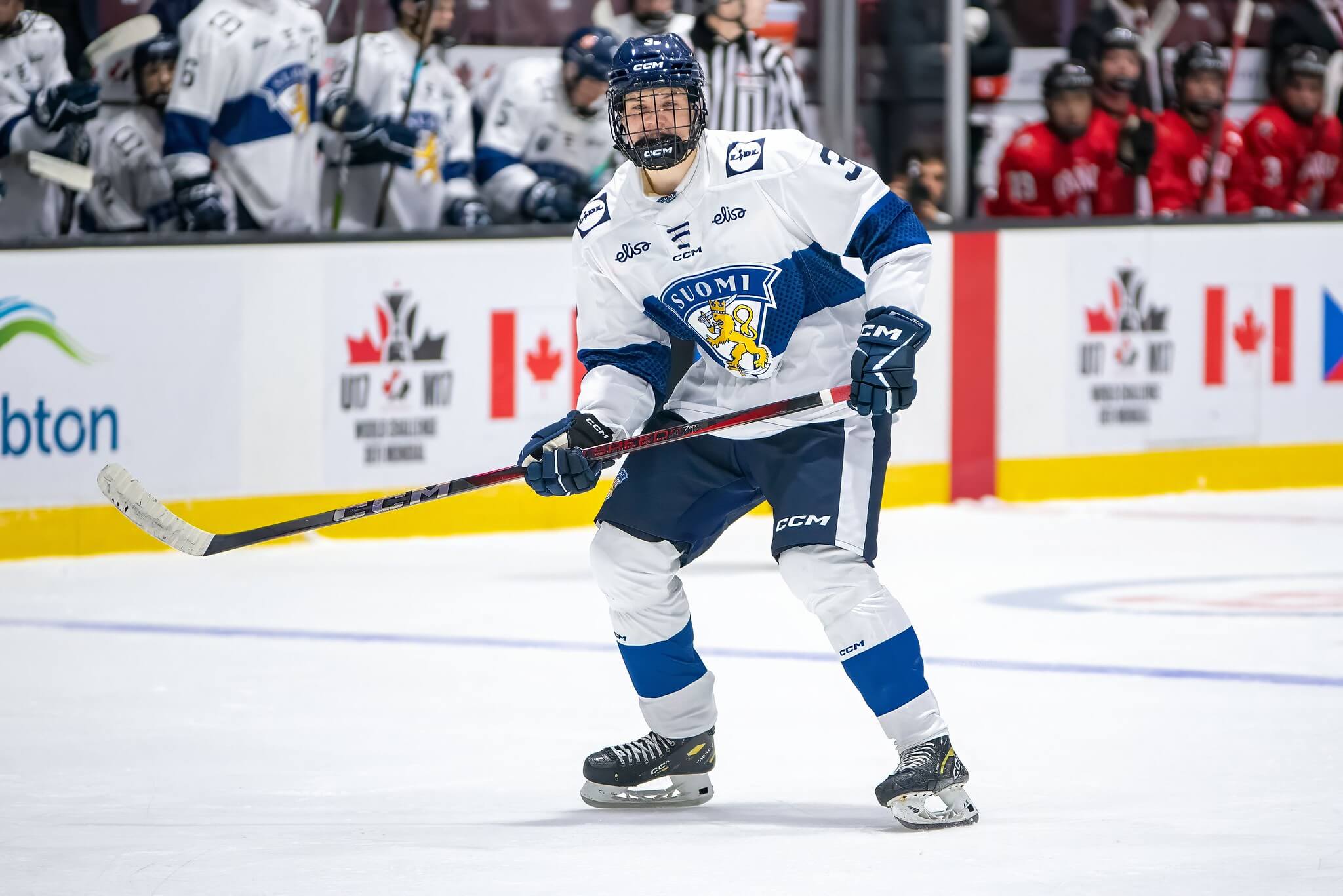
RHD
🇫🇮
Tier 5
Liiga U20
Bleyl, a Michigan State commit, is a buttery skater whose believers compare to Seamus Casey and Brian Rafalski. He started the season as a “C” rated prospect by NHL Central Scouting, which indicates a “4th/5th round candidate,” and with a 5-foot-10.75, 165-pound listing, but he has grown since then and has taken off in the QMJHL over the last couple of months in particular, performing at a high level for Moncton and looking like one of the top rookies in the Q. He now leads all QMJHL D in scoring, outproducing Villeneuve. He was a positive at the QMJHL Top Prospects Game, too.
His game is defined by his effortless mobility. He can influence a lot of what happens on the ice because of his skating. Defensively, he uses it to gap up, surf, get back to pucks, and then shake pressure and either carry the puck out of the zone or quickly move it. Offensively, he uses it to bend and shape coverage, walk the line, and maneuver out of pressure. I’ve heard there’s some size in his family, too, so there should be more growth and development in front of him. The challenge he faces is that he’s the fourth of a strong group of smaller D in this class. As with Elofsson, though, I wonder if a team can’t convince their GM to take Lin or a Villeneuve higher, whether they try on Bleyl a little later.
Photo:
Moncton Wildcats / QMJHL

Berchild, who wore the “C” at times for USA’s U17s last year and was productive playing up with the U18s (including a strong 8-in-7 showing at U18 worlds), is a short but stocky and skilled scoring forward — he has played more wing than center but can play both. He also rose the the level of the CHL USA Prospects Challenge and the Chipotle All-American Game. He reminds me a little of NTDP alum Ike Howard. He got off to a slow start this season while dealing with injury, though, and at his size, you have to continue to produce.
Berchild has legit one-on-one puck skill and handles and has scored some pretty goals beating D over the last couple of years, though. He finds his way out of trouble and has some real creativity on the puck and an ability to play under triangles. He’s strong for a 5-9/10 winger. He plays to the interior and has a nose for the net. On the puck, he’s confident and plays to challenge and threaten inside the offensive zone and off the rush. He has a lethal shot that comes off his blade hard. He’s really comfortable going backhand. Off the puck, he has some hustle and some hardness, regularly winning battles against bigger players through body positioning, hard stick lifts and work ethic. He’s a good skater. His strong one-timer and scorer’s instincts give him power-play pop. There are times when he can try to do too much, but he’s a gamer who stays around it. He has also penalty killed for the program this year.
If he can grow a couple of inches, he’s a second-round talent. He may well end up as a mid-round pick, though. I trust that he’ll be well-developed at Denver after the NTDP.
Photo:
Rena Laverty / USA Hockey’s NTDP

Pugachyov is a pro-sized forward who plays a pro style, has pro attributes and can be relied upon in all areas. While the production doesn’t pop, he has been one of Nizhny Novgorod’s best players when I’ve watched him this year, has now scored in the KHL, and scouts tend to like the player/profile. Pugachyov skates well, protects pucks well and can make plays off the wall to his linemates. He has shown some creativity/handling elements off the rush, and competes within a very physically involved game. He’s not a premium prospect, but he looks like a potential bottom-sixer in the NHL with proper development and has been a top player in Russia’s ’08 age group.
Cali, who played last year at the Jr. A level with the OJHL’s Milton Menace, is one of the bigger risers in the class. He’s also one of its youngest players and was just a little more than a week away from being eligible for 2027. He’s big and strong and was a first-round pick in the OHL draft, whose rights North Bay acquired from the Soo. He missed a chunk of the fall to injury, but when he has been healthy, he has been consistently good for the Battalion. He has pro attributes, including an NHL release, NHL size, good puck protection skills along the wall, and a general sticktoitiveness and interior focus. He’ll go to the net, and he works to put himself in good spots on both sides of the puck. He has been a solid penalty killer. I wouldn’t say he’s a natural playmaker, but a lot of the makings of a solid third-line NHL player are there, and he has runway.
Photo:
Terry Wilson / OHL Images
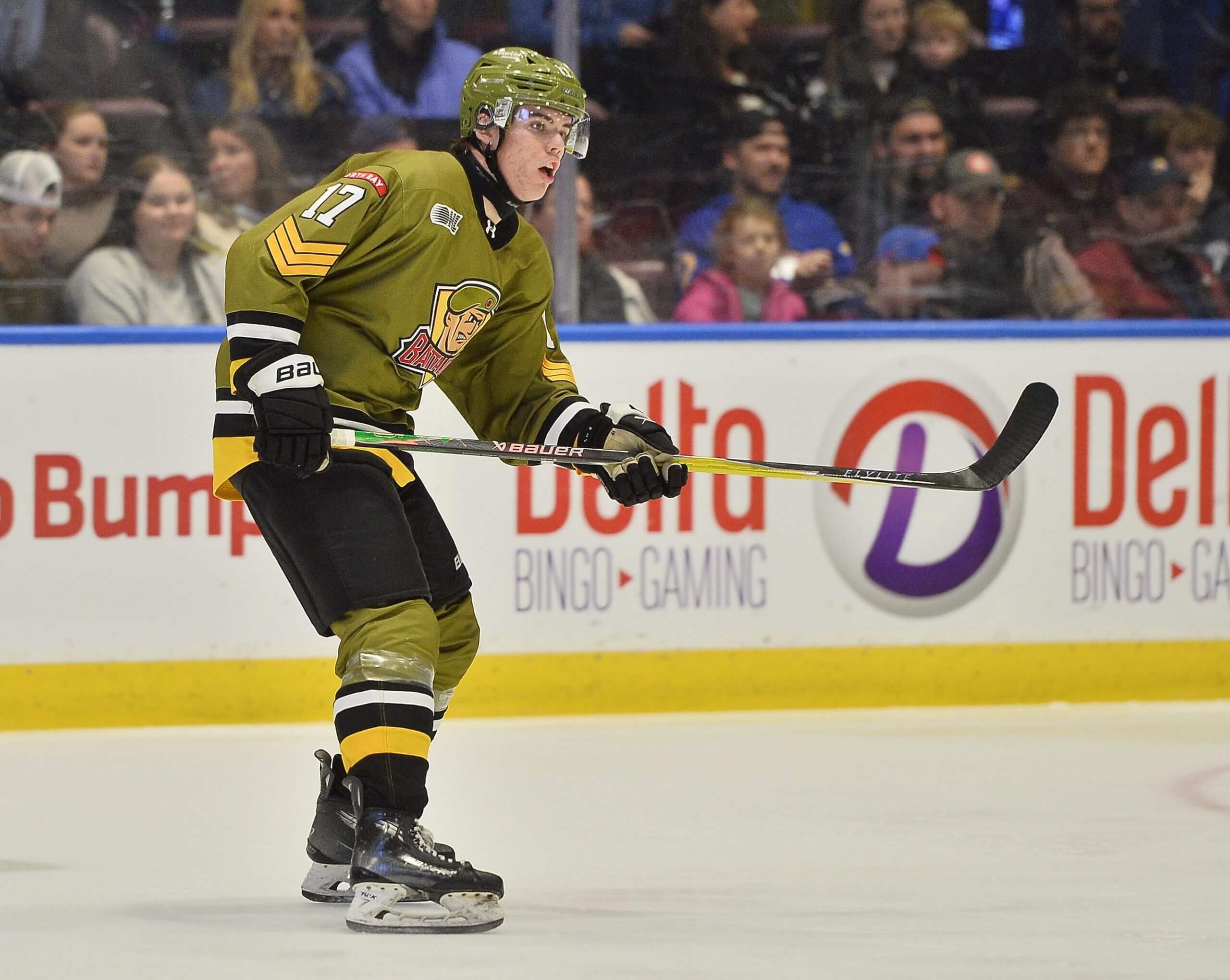
Tier 6
My only note in my notebook on Pantelas coming out of U17s in Sarnia last fall was “good player,” and that has held up in most (I’ll get to that) viewings since, both with Brandon and at the Hlinka, where I thought he played well in his role as the No. 7 on a deep blue line and warranted being there. He really struggled at the CHL USA Prospects Challenge, though, both moving and handling pucks (a litany of turnovers and bobbles) and defending. His production early on this season, which showed promise and came as a surprise to some, myself included, has also since come back down to earth. The Wheat Kings are playing him 23 minutes per game, and it has been nice to see him contribute there and show some poise on the puck at times, on top of his defensive responsibilities (which he did establish last year, struggles in Calgary and Lethbridge aside). He’s a pro-sized D who skates well, defends hard, has an active and disruptive stick, and does a decent job gapping up and angling opposing players. His puck play is definitely vanilla, but he’ll get shots through. There was some late first/early second chatter in the fall, but I think he belongs lower than that. He projects as a depth defenseman.
Photo:
Steven Ellis / Daily Faceoff
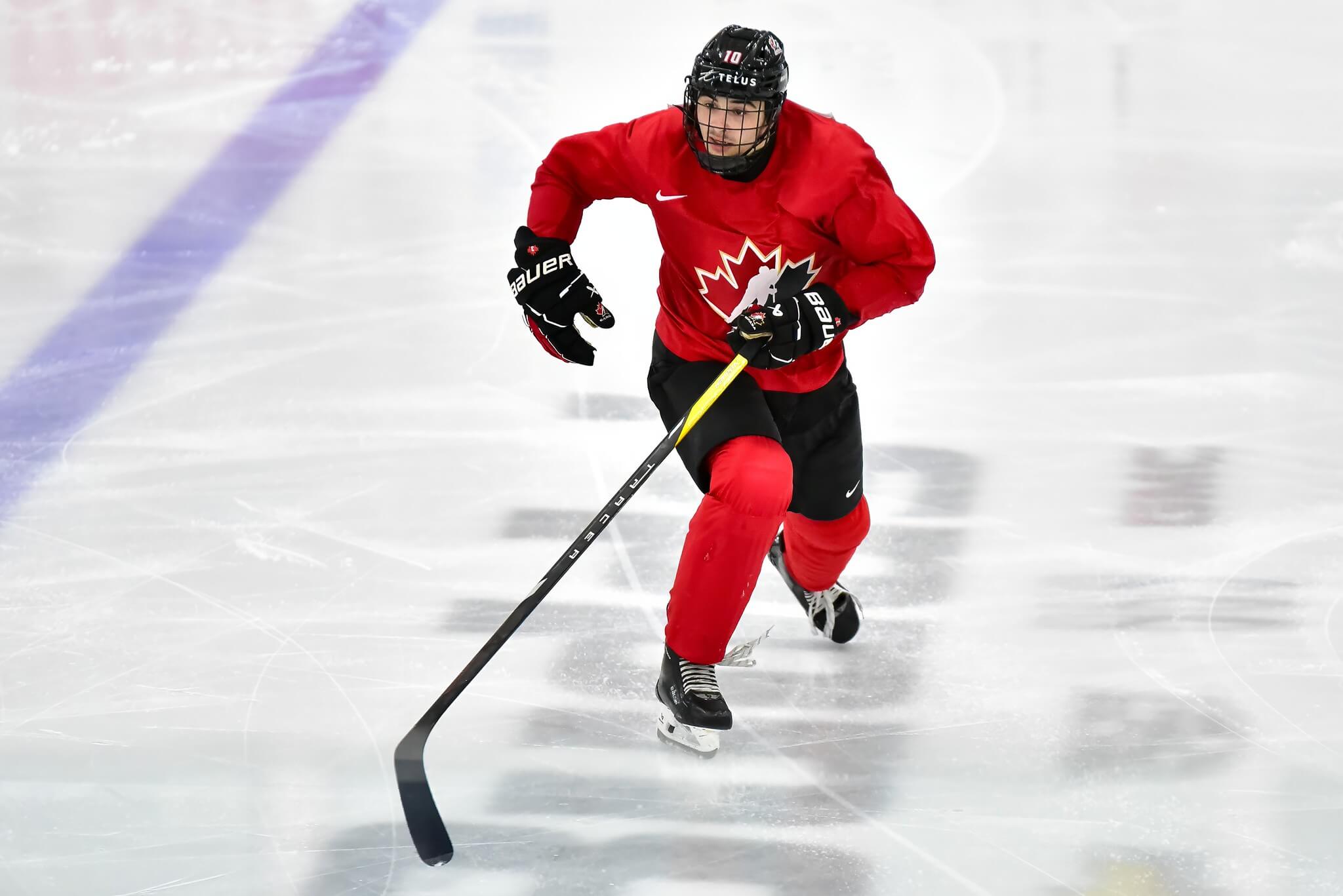
Schairer, a BU commit, is an athletic right-shot defenseman who impressed scouts in international play with the U17s last year at all three of the U17 worlds, the December 5 Nations and the February 5 Nations, making plays and playing with confidence (and a bit of brashness) against his peers. I think that, particularly the U17s in Sarnia last fall, has buoyed him a little, though, and I’ve been less convinced in my viewings since that he’s actually one of the top D prospects in this class (though another strong showing at a big event at the CHL USA Prospects Challenge does again work against my case). I was admittedly a little surprised that NHL Central Scouting gave him an “A” rating to start the year. He has often shown me that he and his game have some growing to do. He has the frame and skating, he’s clearly capable, but I’m not entirely sure what his identity is or his role is at the next level because he’s probably not an offensive type or a defensive type, and I’m not sure he fully knows how to be the two-way type quite yet. I’ve seen him make plays (he scored a beautiful overtime winner against Czechia at U17s, but again, that was a long time ago), but I’ve also waited for him to separate from a weak NTDP age group, and he hasn’t done that for me. He loves to force the issue and isn’t shy to drive play down ice himself, but he often skates himself into trouble in the process, and the results just aren’t there. The tools are there, though, and I do think there’s a possibility they reveal themselves more in college as he gets more coaching and time to work out the kinks.
Photo:
Rena Laverty / USA Hockey’s NTDP
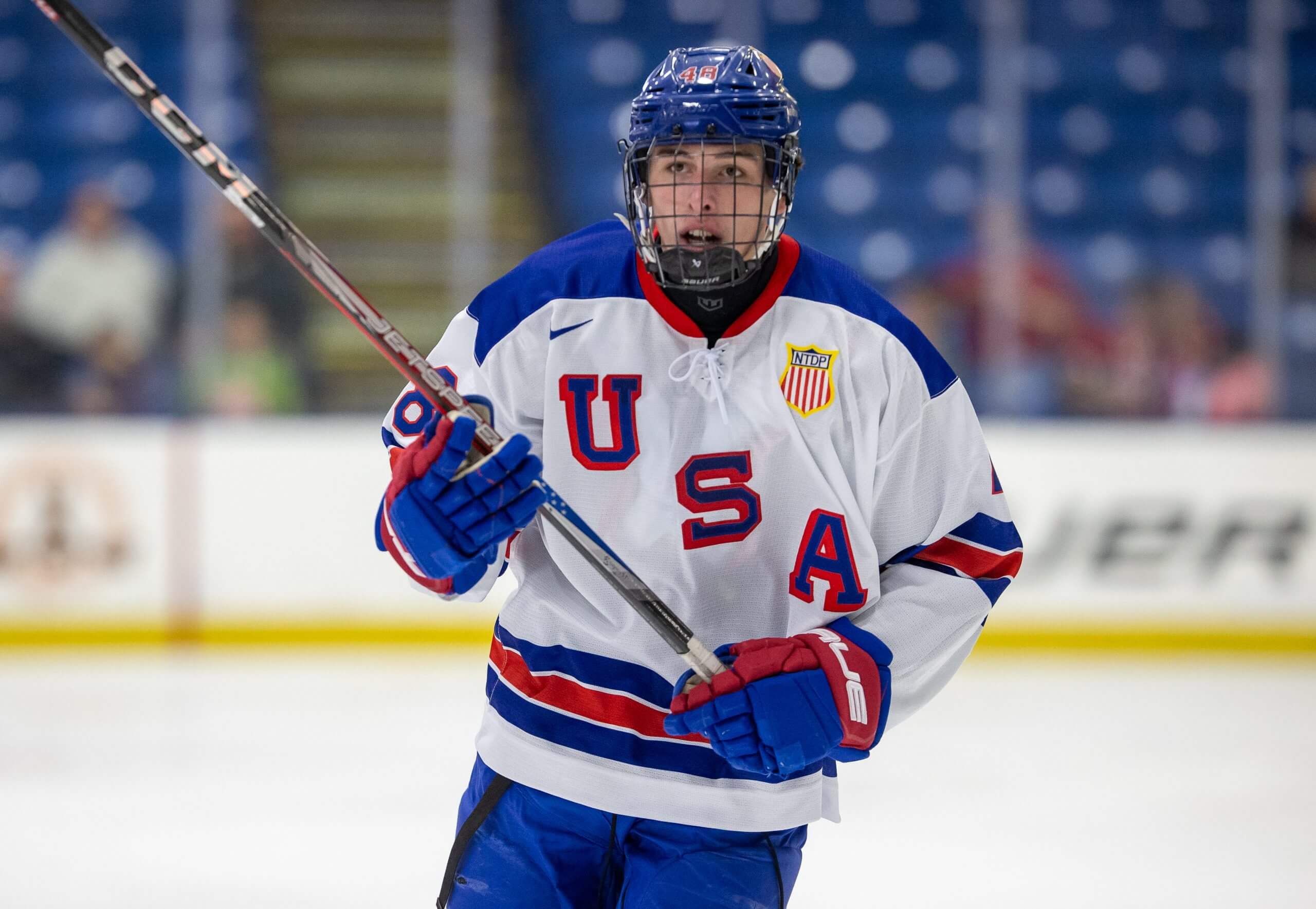
Nycz is one of the youngest defenseman in college hockey this season, playing his freshman year for a UMass program that has a track record of developing pro D. His calling card is that he’s mature on and off the ice, and he’s a 6-foot-2/3 D with excellent feet. He’s a really balanced skater with legit four-way mobility. His game offensively lacks dimension, but with his skating and trigger-happy approach at the line, he puts a lot of pucks on net and does a good job keeping them low. I’d like to see him show a little more poise/vision at times instead of firing pucks back to the crease, but he has some pro tools and looks like a second-round pick to me. He can gap up and defend the rush back the other way and has a good stick, too. He also has good instincts on both sides of the puck, even if the execution isn’t always there. He has also started to play a more prominent role for them over the last couple of weekends (up around 21 minutes after hovering in the 12-16 range for much of the fall).
Photo:
Eryka Ingram / UMass Athletics
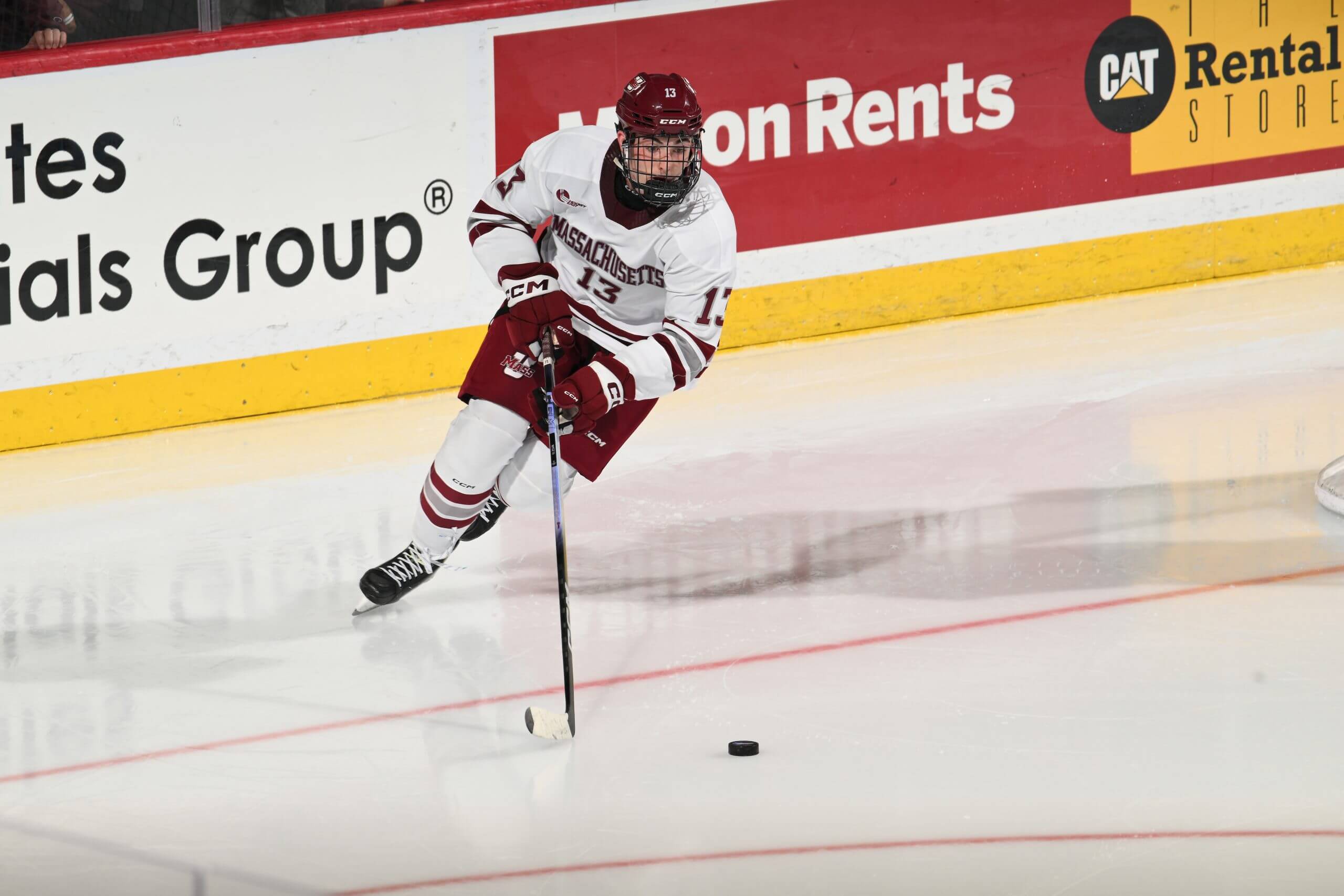
Svensk is an excellent skater who played for Finland at U18 worlds in Texas and has gotten reps with the U20 national team and now his pro club team. He’s not the biggest defender, but he battles and competes and can have a bit of a chip on his shoulder at times. His game really revolves around his mobility, though. He plays tight gaps, closes early and often, can go back and get pucks, can skate pucks out of trouble, joins the rush in transition and walks the line effortlessly. He also has good hands and feel on the puck, with an ability to make plays at pace and in and out of traffic. He’s on the older side of the draft, he needs to get stronger and he may end up as more of a late-round pick (NHL Central Scouting gave him a “W” rating in their preliminary players to watch list, which “indicates a 6th/7th round candidate”), but this is two straight lists I’ve felt he belonged at the back of my top 64.
LHD
🇫🇮
Tier 6
Liiga U20
Murnieks is a heavy-set center who was productive as a pro in Latvia and at U18 worlds for the national team at 15, had a very respectable 16-year-old season as a rookie for Sioux City in the USHL last year and centered Latvia’s first line as one of the youngest players at the 2025 World Juniors. He didn’t look the least bit out of place in that role (which included leading them in goal differential at plus-4) either, an impressive feat playing on any Latvian team and even more so as a double underager with a July 31 birthday. This season, after a move to Saint John with the Q’s Sea Dogs, he hasn’t been able to find that next level, and while he had another fine World Juniors in a relied-upon role again as a returnee, he wasn’t as impactful there either, and I wonder a little bit about his confidence level right now. They played him a lot, and he was good in the bumper on the PP, but it has just been an OK draft year, and he has gone from a second-round candidate to more of a mid-to-late round guy for me.
Murnieks is a pro-built, pro-style center who plays a well-rounded, complete game. He’s strong in the faceoff circle. He’s a two-way player and penalty killer who tracks and wins pucks and plays with detail for a player his age. His skating is just average, and his skill level isn’t dynamic, though. He profiles as a potential bottom-six center someday, but he does need to start to produce more.
Photo:
Michael Hawkins / QMJHL
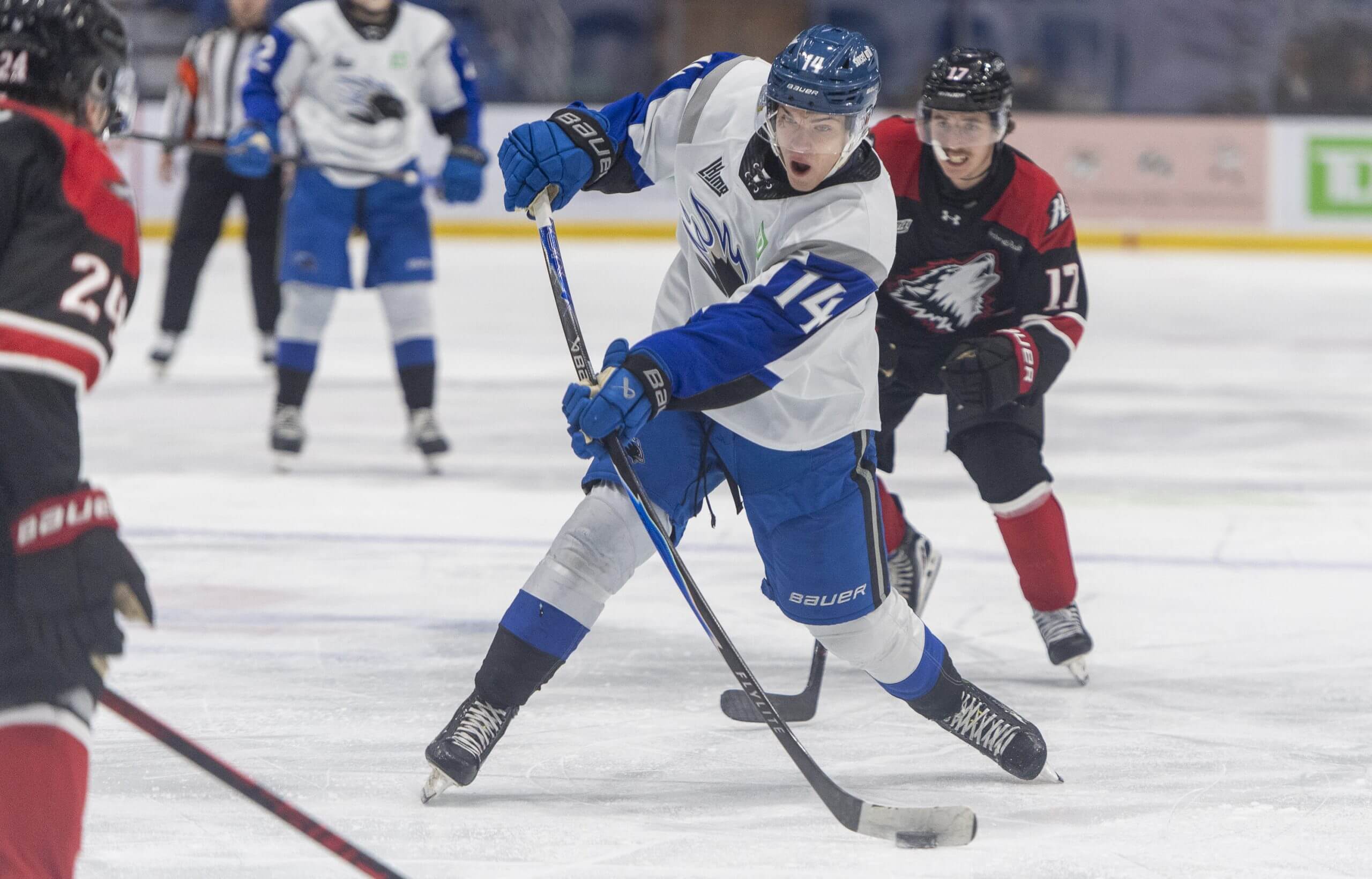
Fitzgerald is a heavy, competitive and physical pro-style center who was a top pick in the OHL and had a strong rookie season on a weak Petes team. His production didn’t take a step there this season, though. After a trade to the Soo, he has played better. Fitzgerald tops out as a bottom-sixer but he has the makeup to get there if he can put it all together.
He has a hard shot, he hits hard and he can be a lot to handle when he gets going because he’s a strong north-south skater who can be fast when he has time to build a head of steam, whether that’s chasing a puck down the ice or pushing through the neutral zone/toward the net. He hasn’t been productive in more of a bottom-six role with Hockey Canada at U17s and the Hlinka, though, either, and eventually you have to start to score. With proper development, he has the makings of a depth power forward type, but the ceiling is limited.
Photo:
Natalie Shaver / OHL Images
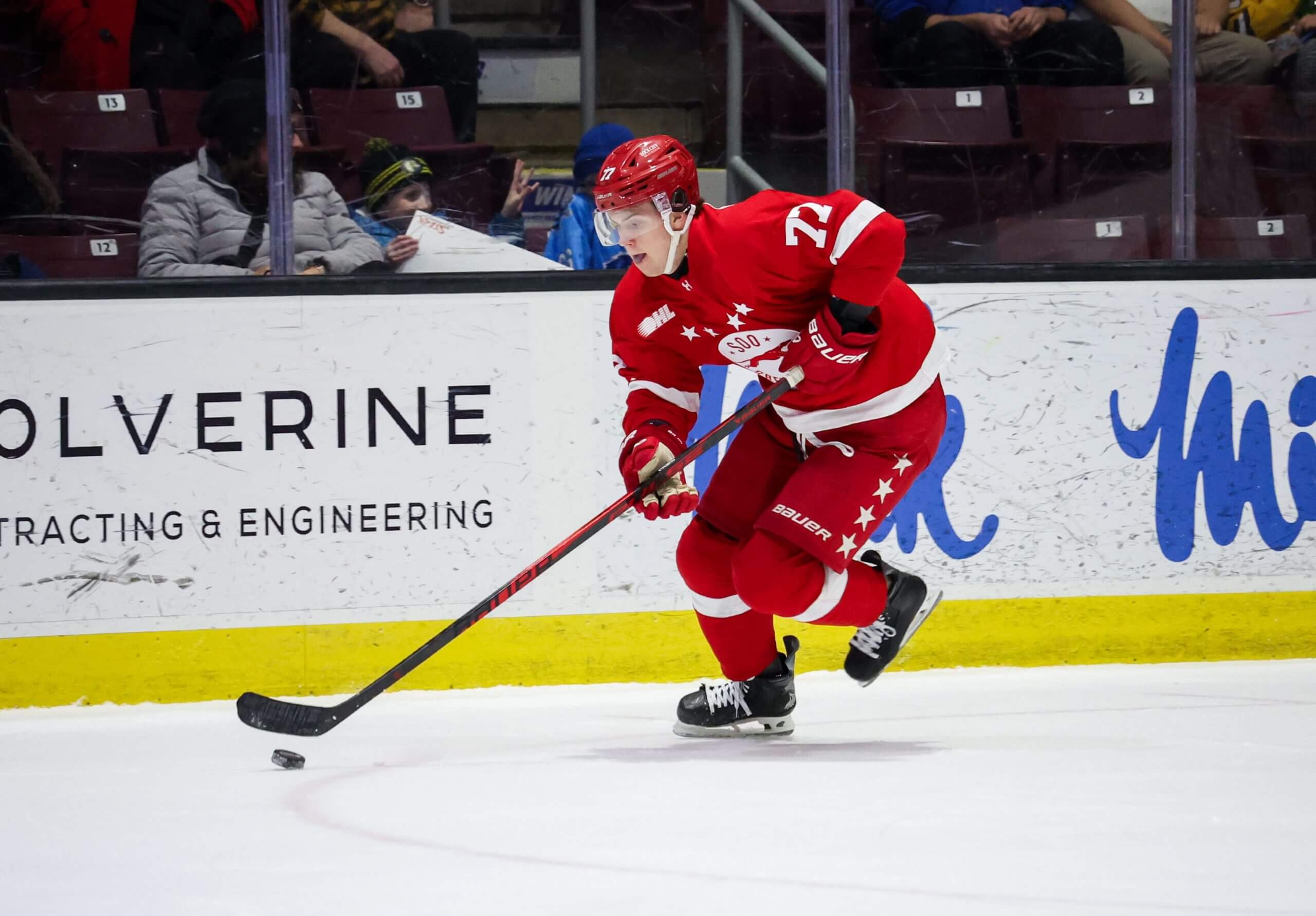
Isaksson is a playmaking two-way forward who wore the “C” for Sweden at the Hlinka Gretzky Cup. He’s not a penalty killer or checker, per se, but he plays a well-rounded game, can be relied upon, knows how to support his linemates offensively and defensively, and can play both center (which is his listing with NHL Central Scouting, and he has played for Sweden) and the wing (which he has played in J20 this year). He’s also an agile skater who uses quick feet to build speed and cross over. He also has great hands laterally on D and one-on-one with goalies, regularly beating guys with the puck and navigating through traffic. He has a nasty release from mid-range. He has made some pretty plays at the J20 level this year inside the offensive zone, rounding corners and attacking into the slot (though the production doesn’t quite match the eye test). And he’s a thinker of the game who knows where to be and go. I think he’s flying under the radar a little. I have liked watching him, and could see him being a guy who takes a step post-draft.
Photo:
Steven Ellis / Daily Faceoff
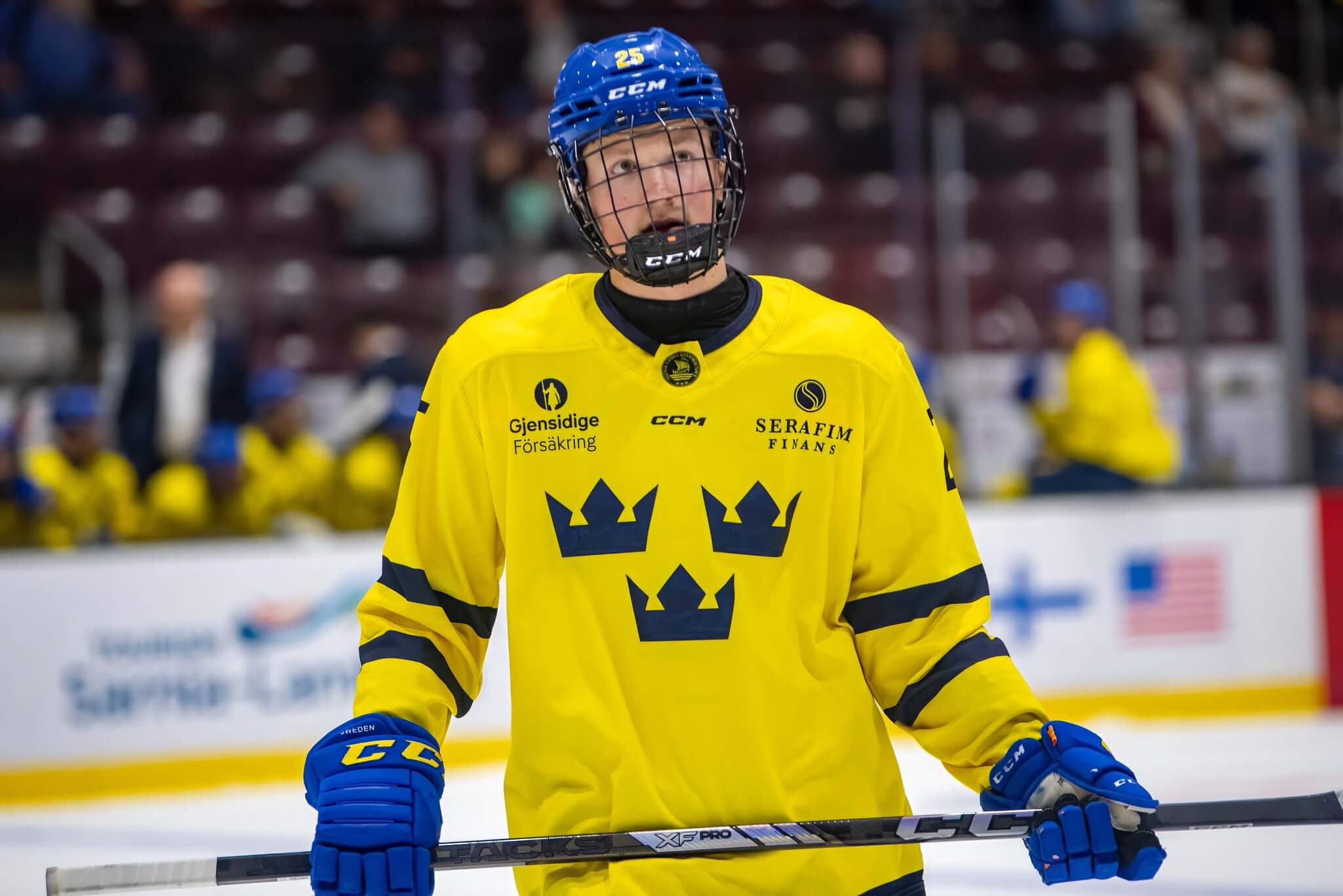
Hafele, an ASU commit, never played a prominent role in his two years at the NTDP, but I was always struck by his excellent skating. It has been on display in his draft year in the USHL with Green Bay as well. They’re playing him 18-20 minutes per game as a forward, and on top of the offense he creates for them at five-on-five and on the power play, he has also been a top penalty killer for the Gamblers (a transferable skill up levels with his feet). He gets in and out of his edges quickly and can both challenge in direct lines or in and out of breaks. He has a competitive side and is strong for his size. And he has good instincts both offensively and defensively. The skill level isn’t high-end for an average-sized player, but there’s a path for him because of the utility of his skating.
Photo:
Rena Laverty / USA Hockey’s NTDP
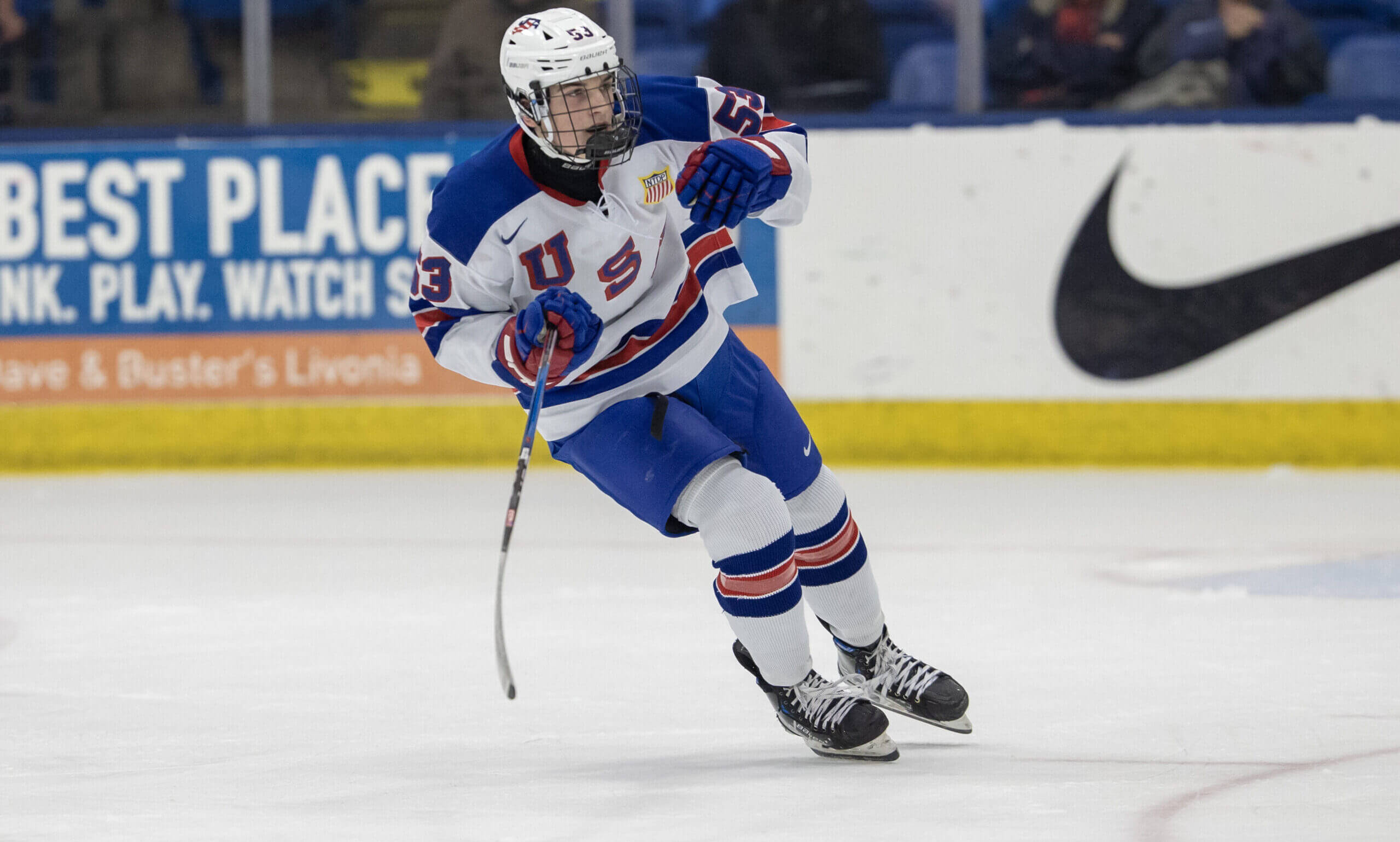
Tier Honorable Mention
C
🇷🇺
Tier Honorable Mention
OHL
RW
🇸🇪
Tier Honorable Mention
J20
C
🇺🇸
Tier Honorable Mention
NTDP
G
🇷🇺
Tier Honorable Mention
MHL
LHD
🇸🇪
Tier Honorable Mention
J20
RHD
🇨🇦
Tier Honorable Mention
QMJHL
RW
🇺🇸
Tier Honorable Mention
QMJHL
LHD
🇨🇦
Tier Honorable Mention
OHL
C
🇷🇺
Tier Honorable Mention
MHL
LW
🇨🇦
Tier Honorable Mention
WHL
C
🇺🇸
Tier Honorable Mention
USHL
RW
🇨🇿
Tier Honorable Mention
Liiga U20
RW
🇸🇪
Tier Honorable Mention
J20
LW
🇨🇦
Tier Honorable Mention
OHL
LHD
🇨🇦
Tier Honorable Mention
WHL
LHD
🇨🇦
Tier Honorable Mention
WHL
LHD
🇨🇦
Tier Honorable Mention
QMJHL
C
🇺🇸
Tier Honorable Mention
NTDP
LW
🇺🇸
Tier Honorable Mention
NTDP
LW
🇨🇦
Tier Honorable Mention
QMJHL
C
🇨🇦
Tier Honorable Mention
WHL
RW
🇷🇺
Tier Honorable Mention
MHL
RW
🇨🇦
Tier Honorable Mention
OHL
LW
🇸🇰
Tier Honorable Mention
WHL
LHD
🇫🇮
Tier Honorable Mention
Liiga U20
C
🇨🇦
Tier Honorable Mention
OHL
LHD
🇨🇿
Tier Honorable Mention
WHL
RW
🇫🇮
Tier Honorable Mention
Liiga U20
RW
🇨🇦
Tier Honorable Mention
OHL
C
🇨🇦
Tier Honorable Mention
WHL
RW
🇺🇸
Tier Honorable Mention
USHL
RW
🇨🇦
Tier Honorable Mention
OHL