
The Minnesota Timberwolves continue to stack wins and look the part of a playoff team. At 27–16, they sit fourth in the Western Conference and control their position in the standings. Still, the record doesn’t tell the whole story.
*Prediction*
Minnesota swings wildly from game to game. One night they overwhelm teams, the next they lose focus. Those lapses show up most on defense, especially when Rudy Gobert heads to the bench. Without him, rim protection slips, communication breaks down, and opponents find easy looks. That drop-off isn’t a small flaw. It’s the kind of weakness that can swing a playoff series.
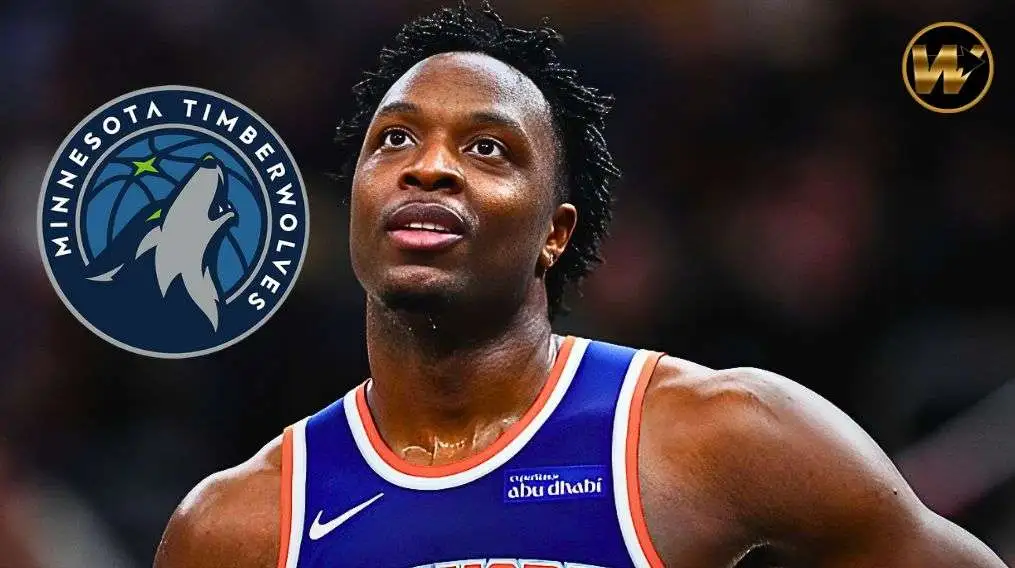
If the Timberwolves want to clean up those issues and push their ceiling higher, they need another elite defender in the mix. That’s where OG Anunoby enters the conversation.
More NBA Content from TWSN:
Zion Williamson Traded to the Chicago Bulls: Blockbuster NBA Trade Idea
Golden State Warriors Land De’Andre Hunter to Replace Jimmy Butler: Trade Idea
DeMar DeRozan Traded to Los Angeles Clippers in Wild Idea
Why Minnesota Needs a Defensive Upgrade
The Timberwolves don’t lack talent. They struggle to keep their effort and defensive structure intact across different lineups. When Gobert goes to the bench, Minnesota’s defense drops off. Teams attack the paint with confidence, rotations come a step late, and smaller lineups get hunted in mismatches. Anthony Edwards can power the offense, but he can’t erase every defensive breakdown.
If Minnesota added another elite, switchable defender, it would change the equation. That kind of player could guard multiple spots, cover for mistakes, and keep the defensive intensity high when Gobert rests.
Anunoby fits that role perfectly.
Potential OG Anunoby Trade Idea
Timberwolves Receive: OG Anunoby, Miles McBride
Knicks Receive: Julius Randle, Donte DiVincenzo
Why OG Anunoby Fits the Timberwolves
OG Anunoby stands out as one of the NBA’s most valuable elite role players. In the 2025–26 season, he’s putting up 15.8 points and 5.5 rebounds per game, pairing efficient scoring with top-tier defensive impact.
Here’s the thing: his versatility drives his value.
Anunoby uses his seven-foot-plus wingspan to guard just about anyone. He can check guards and wings, slide onto power forwards in small-ball lineups, and hold his own without help. He doesn’t need touches to matter. He runs the floor, cuts intelligently off star players, and stretches the defense enough to keep the lane clear.
For Minnesota, that fit feels clean. He can play next to Anthony Edwards without forcing any offensive changes, and he can stabilize defensive lineups when Rudy Gobert sits. In the playoffs, that kind of plug-and-play impact makes a real difference.
Miles McBride Adds Depth and Edge
McBride quietly stands out as the value play in this deal. He defends at the point of attack, plays with edge, and knocks down open threes. This season, he’s hitting better than 43 percent from deep while putting up 13.1 points in just under 28 minutes a night.
He’s not a classic playmaker and won’t carve up defenses with his passing, but that’s not what Minnesota is looking for. They need ball pressure, nonstop effort, and a guard who can stay solid alongside star players.
McBride checks every one of those boxes, and he does it on a team-friendly contract.
What the Knicks Get in Return
Julius Randle’s Return to New York
Randle has found his rhythm again in Minnesota. He’s putting up 22.5 points, 7.1 rebounds, and 5.5 assists a night while playing with poise and efficiency.
His mix of strength, handle, and passing still makes him a nightmare matchup for defenders. His time in New York came with highs and lows, but his progress since leaving the Knicks is clear.
A reunion would give New York a reliable second scorer, someone who can ease the load on Jalen Brunson and run the offense when it needs a steady hand.
Donte DiVincenzo’s Shooting and Toughness
DiVincenzo continues to rank among the league’s most reliable role players. He stretches the floor, guards multiple spots, and impacts games without needing the ball in his hands.
This season, he’s putting up 13.2 points, 4.6 rebounds, and 4.2 assists per game while knocking down nearly 38 percent of his threes. He cuts well, reads the floor quickly, and slides cleanly into New York’s offensive flow.
For a team built on toughness and effort, DiVincenzo fits perfectly.
Knicks Perspective: Pros and Cons
This move gives the Knicks real offensive punch. Randle brings proven scoring, playmaking, and All-Star production, while DiVincenzo boosts the lineup with high-level shooting and relentless defensive effort.
Together, they give Jalen Brunson another dependable creator, which raises the team’s offensive ceiling. The downside is significant, though. Moving on from Anunoby weakens the perimeter defense, McBride departs as a cheap, high-impact guard, and Anunoby’s two-way fit with the current core was about as clean as it gets.
Timberwolves Perspective: Pros and Cons
Here’s the thing. This move clearly raises the team’s defensive ceiling. OG Anunoby adds switchability across multiple positions, while Deuce McBride gives the rotation more stability at guard and sharpens perimeter defense. The group also holds up better when Rudy Gobert sits, which matters over a long season and in the playoffs.
But there’s a real cost. Julius Randle has fit perfectly next to Anthony Edwards as a reliable scoring partner, and losing that balance isn’t minor. Donte DiVincenzo’s shooting, toughness, and playoff experience don’t come easy, either. On top of that, shaking up the roster midseason always carries chemistry risk, especially when the team is already playing well.
Final Verdict
This isn’t an obvious move. Minnesota has gotten strong production from Randle and DiVincenzo, and breaking up that core comes with real risk.
Still, if the Timberwolves truly want to squeeze every ounce out of their title window, they should look hard at OG Anunoby. He gives them what they don’t consistently have right now: dependable, high-level defense that holds up in any lineup.
From New York’s side, the trade reshapes the roster around scoring punch and physicality, even though it means parting with one of the NBA’s top defensive wings.
What this really comes down to is balance. The trade makes sense because each team fixes a clear weakness, not because there’s a clear winner or loser.