
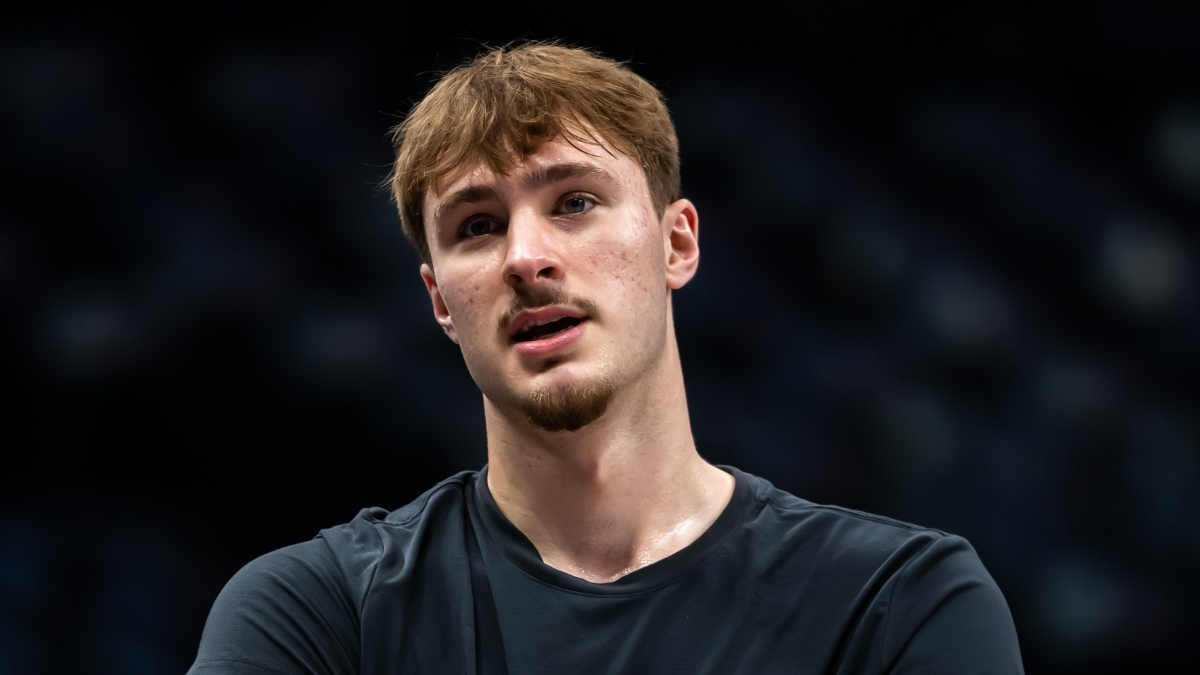
The Dallas Mavericks returned to the practice floor Wednesday coming off one of their most complete performances of the season — a 114–97 road win over the New York Knicks at Madison Square Garden — with a single rotation question still unresolved ahead of Thursday night’s matchup against the Golden State Warriors. How many minutes Cooper Flagg can handle remains the variable.
Flagg returned Sunday after missing two games with a left ankle injury, playing under a minutes restriction while helping Dallas control the game from wire to wire in New York. That restriction remains in place heading into Thursday, according to head coach Jason Kidd, despite Flagg showing no visible limitations in his return.
“He was on a 20- to 25-minute restriction, so we’ll see if we can get some more minutes,” Kidd said Wednesday. “If not, understand he’s still in that 20 to 25 range.”
Dallas has already submitted its injury report. Flagg is available. The question is usage.
What the New York Knicks Game Showed for Cooper Flagg
The Knicks game provided a clear case study for how Flagg impacts Dallas even without a full workload.
Dallas never trailed in New York, built a lead as large as 30 points, and held New York to 29.0% shooting from three-point range while forcing the game into a pace the Knicks never recovered from. The Mavericks shot 48.8% from the floor, went 15-of-32 from three (46.9%), and generated 32 fast-break points.
Flagg finished with 18 points, seven rebounds, three assists, and a team-best +21 plus-minus in 28 minutes. He shot 7-of-14 from the field, attacked early gaps before New York could load up, and consistently turned defensive stops into transition opportunities.
From Flagg’s perspective, the ankle never entered the decision-making process once the game started.
“I feel great,” Flagg said. “Coming back, obviously, I was a little restricted minutes-wise, but I felt great out there. I didn’t second-guess it or anything. Strength felt good.”
That freedom mattered. Dallas played at a noticeably faster tempo with Flagg on the floor, especially during a second-quarter stretch in which the Mavericks scored 44 points and turned a competitive game into a blowout before halftime.
Why Cooper Flagg’s Minutes Directly Affect Dallas Mavericks’ Pace
The Mavericks’ recent surge has been tied to pace and early offense, not just shot-making. Against New York, Flagg’s downhill pressure forced rotations that created clean looks for shooters like Max Christie and Klay Thompson without requiring extended half-court possessions.
Kidd pointed to shooting as a facilitator, but not the driver.
“Yeah, it becomes easier when you’re shooting the ball the way we’ve shot it the last three games,” Kidd said. “The court tends to open up. But even when we weren’t shooting it that way, he was still able to get to the paint.”
Dallas has averaged 119.9 points per game over its last seven contests, shooting 49.8% from the field and 38.8% from three during that span. The common thread has been early advantages — something Flagg consistently creates by pushing tempo off rebounds and defensive stops.
Flagg is averaging 18.8 points, 6.3 rebounds, and 4.1 assists across 41 games this season, while also leading the team in steals (1.3). His ability to pressure the rim without stalling the offense is central to how Dallas has stayed functional despite injuries throughout the rotation.
Defensive Load Matters as Much as Offensive Minutes
The minutes conversation isn’t just about scoring. Against New York, Flagg spent extended stretches defending Jalen Brunson while still contributing on the glass. The Knicks were held under 100 points for one of the few times all season, in large part because Dallas finished possessions and immediately converted stops into transition.
“I think it was team defense,” Flagg said. “We know who their guys are, who they want to go to. There were a lot of different guys stepping up and making plays. I thought we covered for each other really well tonight.”
Kidd emphasized rebounding as the foundation.
“We rebounded the ball,” Kidd said. “We knew it was going to be a fight on the glass, and I thought the group did an incredible job of boxing out and giving them one shot. Then turning that into being able to get out and play fast.”
That workload — switching, rebounding, then sprinting into early offense — is precisely why Dallas is being deliberate with Flagg’s minutes rather than simply extending them immediately.
Why the Golden State Warriors Change the Equation
Golden State presents a different type of stress test. The Warriors enter Thursday’s game after allowing 145 points in a loss to Toronto, surrendering 70 points in the first half alone. Immanuel Quickley scored 40 points with 10 assists, while Golden State committed 18 turnovers that led to 34 Raptors points.
Without Jimmy Butler, the Warriors leaned more heavily on Jonathan Kuminga, who scored 20 points on 7-of-10 shooting in 21 minutes. Stephen Curry finished with 16 points after missing his first five three-point attempts, while Golden State shot just 39.6% overall and 6-of-23 from deep in the first half.
Kidd acknowledged Kuminga’s expanded role.
“He got off to a slow start, but it picked up in the second half,” Kidd said. “He’s a young talent who can score, and we expect to see him tomorrow.”
Golden State’s style — constant motion, high three-point volume, and repeated defensive actions within the same possession — places a different physical demand on defenders than the Knicks’ more deliberate approach. That context matters when evaluating Flagg’s minutes.
Looking Ahead to Thursday
Dallas has already submitted its injury report, with Flagg listed as available ahead of Thursday’s matchup against Golden State. The Knicks game offered a clear snapshot of how Dallas intends to manage Flagg’s workload in the short term: controlled minutes, high impact, and continued emphasis on pace, defensive engagement, and early offense.
Even in a limited window, Flagg’s ability to pressure the rim, rebound, and initiate transition helped fuel a near wire-to-wire win in one of the league’s most difficult environments.
Whether that window expands against Golden State will be determined closer to tipoff. What Dallas already has is confirmation that Flagg’s conditioning, balance, and movement held up under game speed — and that his presence remains central to how the Mavericks want to play as they navigate the next stretch of the schedule.
Latest Dallas Mavericks News & NBA Trade Rumors