
When an NBA team makes a trade, it tells you something about itself. The Washington Wizards already made that clear earlier this season by acquiring Trae Young. It was a surprising move for a rebuilding team, but it revealed a clear philosophy: Washington is willing to bet on elite offensive talent whose value has depreciated due to injuries, uncertainty, or league-wide skepticism.
League speculation suggests the Wizards may not be finished operating in that space.
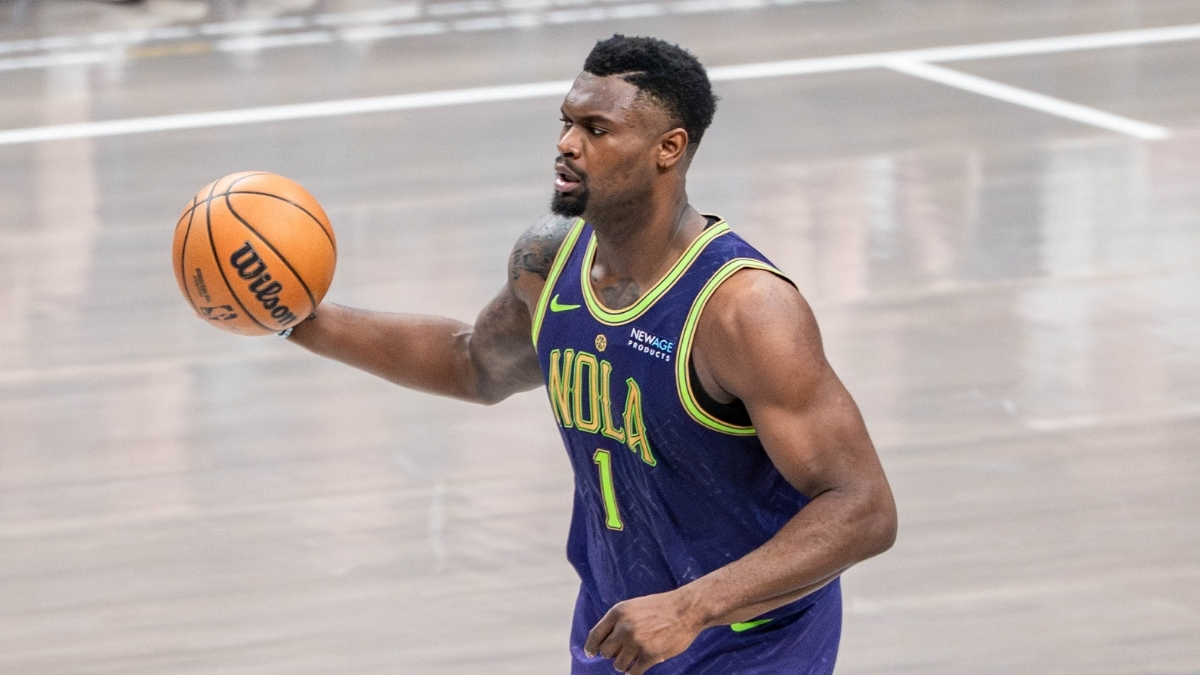
That brings Zion Williamson into the conversation.
According to Josh Robbins of The Athletic, league sources have speculated that Williamson is “someone the Wizards would have to consider if the price is right.” Robbins described the idea as an “extreme long shot,” but noted that it was mentioned often enough by league sources to warrant discussion. Those same sources indicated Washington is unlikely to move its own premium first-round picks, but could instead leverage control over less valuable selections acquired from other teams.
With that context in mind, here’s a trade concept that fits both teams’ incentives.
Washington Wizards Land Zion Williamson in NBA Trade Proposal
New Orleans Pelicans receive:
Washington Wizards receive:
Why the New Orleans Pelicans Do the Deal
At this point, New Orleans would be fortunate to secure even a top-10 protected first-round pick for Williamson. His talent remains undeniable, but the league’s appetite for high-variance stars on max-level contracts has cooled considerably.
Williamson has been productive when available, averaging 21.9 points, 5.7 rebounds, and 3.4 assists in 30 games this season, while shooting efficiently inside the arc. Availability, however, continues to define his market. With two seasons remaining at cap hits north of $42 million, the Pelicans face a shrinking window to convert Williamson into flexibility before the contract becomes more restrictive.
Roster construction also factors heavily. New Orleans invested significant draft capital in Derik Queen, and the on-court fit with Williamson has always been questionable. Two interior-oriented playmakers with defensive limitations create redundancy rather than synergy. Moving Williamson clarifies the offensive hierarchy and allows Queen’s development to proceed without overlap.
From a stylistic standpoint, Cam Whitmore and Will Riley align better with a modern, wing-driven approach. Whitmore’s inconsistent habits have limited his playing time, and Riley is shooting just 23.2 percent from three as a rookie, but both profiles offer upside without the structural complications Williamson presents. Add in Khris Middleton’s $33.3 million expiring contract, and New Orleans gains both financial flexibility and optionality heading into the offseason.
For a franchise searching for clarity, that matters.
Why the Washington Wizards Do the Deal
On the surface, pairing Williamson with Young invites skepticism. Neither is known for defensive impact, and acquiring two offense-first stars in a single season is inherently risky.
Zoom out, however, and the math changes.
If Washington completed this deal, it would have effectively turned CJ McCollum, Corey Kispert, Khris Middleton, Cam Whitmore, Will Riley and a top-10 protected first-round pick into Trae Young and Zion Williamson within one season. Presented with that hypothetical before the year began, most front offices would ask only one question:
Do I have a choice?
Washington can insulate the defensive concerns by surrounding the duo with length and versatility. Bilal Coulibaly and Alex Sarr provide legitimate defensive infrastructure, allowing Young and Williamson to focus on offensive creation. In a weakened Eastern Conference, the upside is clear. A Young–Williamson pick-and-roll would instantly rank among the league’s most difficult actions to defend, generating rim pressure and playmaking gravity few teams can match.
The standings further support Washington’s patience. The Wizards sit at 10–35, last in the Eastern Conference, with no incentive to chase short-term wins. Young has yet to make his Wizards debut after appearing in just 10 games this season prior to the trade, and head coach Brian Keefe has indicated he will be re-evaluated after the All-Star break. That timeline aligns with Washington’s broader view: lose now, evaluate later, and aim higher in 2026–27.
This is not about certainty. It’s about ceiling.
The Bigger Picture for Zion Williamson
Teams also reveal themselves through the players they choose to draft.
New Orleans surely understood that Queen was a difficult fit alongside Williamson. Drafting him anyway suggested contingency planning — or at least openness to change. League skepticism has already followed reports from Chris Haynes indicating the Pelicans told teams Williamson would not be traded this season. Robbins reported that league sources specifically expressed doubt about that stance.
Meanwhile, Washington’s approach mirrors Robbins’ reporting that the Wizards are open to absorbing multi-year contracts if draft sweeteners or young players are attached. If New Orleans decides the final two years of Williamson’s deal represent more risk than reward, Washington is one of the few teams positioned — financially and philosophically — to absorb that gamble.
Notably, the Pelicans sit at 10–36, last in the Western Conference, with one of the league’s poorest point differentials. Despite Williamson’s production when available, New Orleans has struggled to establish consistency or momentum, a reality that inevitably sharpens long-term questions.
Neither franchise is fully defined right now. Both are probing the edges of their identity.
This deal would force clarity.
New Orleans would be choosing flexibility and structure over volatility. Washington would be choosing volatility over stagnation — betting that elite talent, even discounted and imperfect, remains the hardest asset in the NBA to acquire.larity:
And give us some clarity as well.
Latest NBA News & Trade Rumors