
If you’re primarily a college football fan, you might have glossed over the angsty headlines lately about obscure professional basketball players suddenly being granted eligibility to play in college. Totally understandable. Different sport.
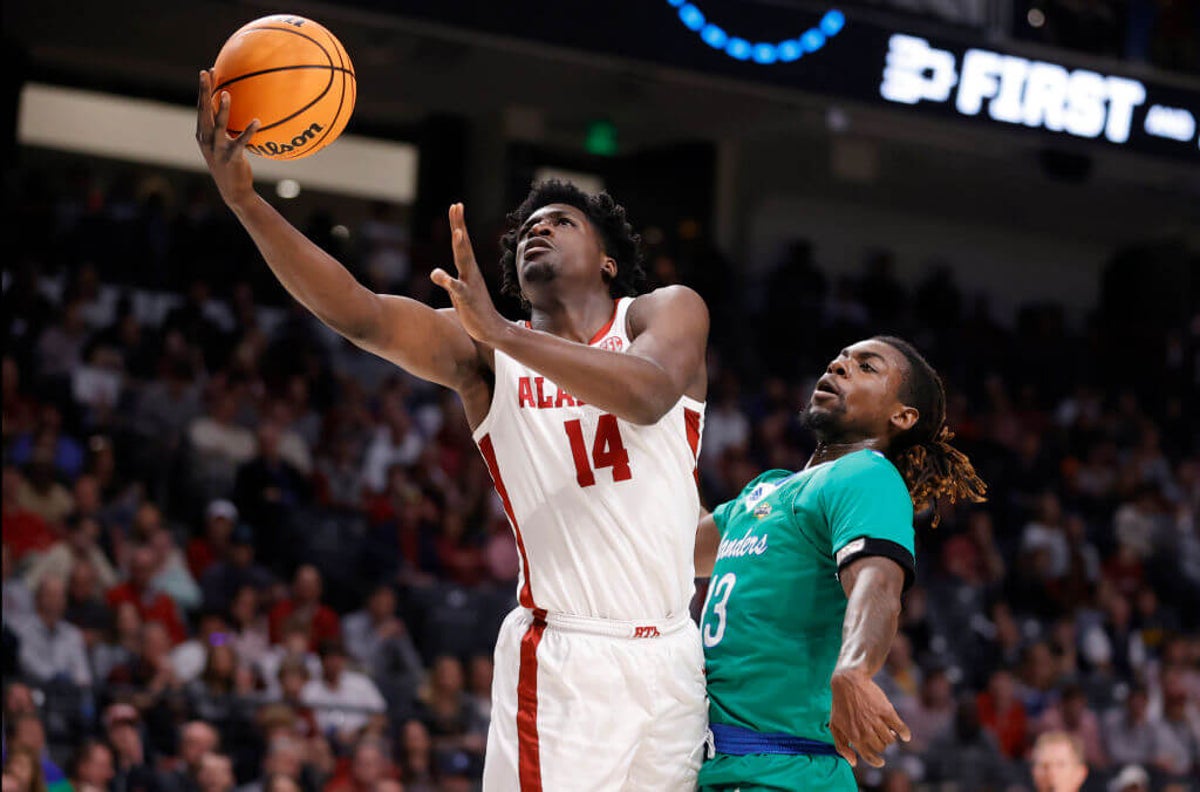
However, you should start paying attention to a brewing situation involving a former Alabama men’s basketball player, who, thanks to a temporary court order, is about to return to the court for the Tide this weekend after a two-and-a-half-year stint in the pros.
Because the potential domino effect could be massive, and it could eventually hit college football.
The NCAA, having found itself constantly mired in eligibility lawsuits, became less restrictive over the past year about allowing pro basketball players with either international or G League experience to compete in college, provided they haven’t previously played in college and, per a bylaw, did not “receive more than actual and necessary expenses to participate on the (pro) team.”
Those players have sought college eligibility, knowing they can earn more in NIL money than anywhere else outside the NBA. Each one seems to push the limits further than the last, causing prominent coaches like Tom Izzo and John Calipari to lose their minds.
Then came this Alabama mess.
Last Saturday, 7-footer Charles Bediako played in a G League game in Birmingham, Ala. By Tuesday, he had enrolled at Alabama and filed suit against the NCAA to be allowed to play for the Crimson Tide as soon as this Saturday. This, even though he had already played there for two seasons, from 2021 to 2023, and had once signed an NBA two-way contract with the San Antonio Spurs.
Both of which fit the conditions that NCAA president Charlie Baker recently said would disqualify an athlete from eligibility.
So of course, on Wednesday, a Tuscaloosa Circuit Court Judge, James H. Roberts Jr., granted Bediako a temporary restraining order, declaring him “immediately eligible” to play for the 17th-ranked Crimson Tide, who host Tennessee on Saturday.
The order is valid for only 10 days, with a hearing scheduled for Tuesday to hear Bediako’s request for a preliminary injunction. If granted, it would likely buy him enough time to complete the season before his five-year eligibility clock expires.
It would also unleash a flood of copycats, possibly beyond basketball.
I began asking around about the possible football ramifications of these basketball cases a few weeks ago amid the furor over Baylor’s James Nnaji, whom the NCAA granted eligibility despite his selection in the 2023 NBA Draft. Officials I spoke to seemed unconcerned because the basketball cases all involved players who hadn’t previously played in college, unlike football players, who have to be at least three years out of high school before turning pro.
Well, Alabama one-upped Baylor and found someone who had already played in college, already declared for the draft (almost three years ago!) and was already four years out of high school. So, I checked back with a couple folks about football, one of whom said, “If schools are now going to violate every rule around eligibility … then yes – it’s just a matter of time.”
The NFL does not have a G League or two-way contracts like the NBA does. However, it does have a draft, minicamps, training camp and a practice squad.
It’s not hard to dream up the football equivalent of Bediako. In fact, let’s use one of the stars of Indiana’s 2025 national championship team, cornerback D’Angelo Ponds, who announced Thursday he is entering the draft after three seasons in college.
Hopefully for his sake, Ponds gets drafted in a great spot, signs a significant rookie contract, makes an immediate splash and never looks back. For our purposes, though, let’s assume NFL teams prove to be skittish about an undersized cornerback who, according to The Athletic draft expert Dane Brugler, is barely 5 foot 8, 174 pounds.
D’Angelo Ponds’ verified measurements (from an NFL scout):
5-8 1/4″, 174 lbs, 29 5/8″ arms
Don’t care. Plays so much bigger than that.
— Dane Brugler (@dpbrugler) January 20, 2026
Ponds slips to the seventh round, where he receives a signing bonus for well less than he made from NIL at Indiana, then gets cut in training camp before receiving most of his salary. He bounces around a couple of practice squads and then signs somewhere else as a free agent. He once again fails to crack a 53-man roster.
By now, it is August 2027. Ponds, who graduated from high school in 2023, still has a semester of eligibility remaining in his five-year clock.
Ring, ring. Coach Cignetti! Remember me?
But the NCAA says, sorry, D’Angelo, you’ve already made about $200,000 from NFL teams. We consider that to be more than “actual and necessary expenses.” Eligibility denied.
Ring, ring. Tom Mars! How would you like to sue the NCAA for the 207th time?
And this being football, not basketball, there could be many more players caught in the “good enough to leave school early, not good enough to make the 53-man roster” pool.
However, of course, the way these basketball cases are escalating, it might not matter if you made the team or not. By next year, maybe Victor Wembanyama will be playing for Duke on his nights off from the San Antonio Spurs.
So let me get this straight, we can now recruit G league players? Is the NBA next? I have first dibs on @Giannis_An34 😂
— Rick Pitino (@RealPitino) September 24, 2025
Needless to say, officials across college athletics are watching the Bediako case closely, fearing this might be one of the last straws before the entire pro-versus-college distinction comes crashing down.
Which, by the way, the NFL would not love, either. That league has spent 60 years or so reaping the fruits of a free farm system, in which college coaches spend 4 to 5 years developing the league’s next wave of talent on its behalf. The idea that a team could waste a draft pick on a guy who says, “Eh, no thanks, I’m going back to Indiana,” has likely never entered a general manager’s brain.
And it doesn’t have to just yet. But keep an eye on Tuscaloosa.