
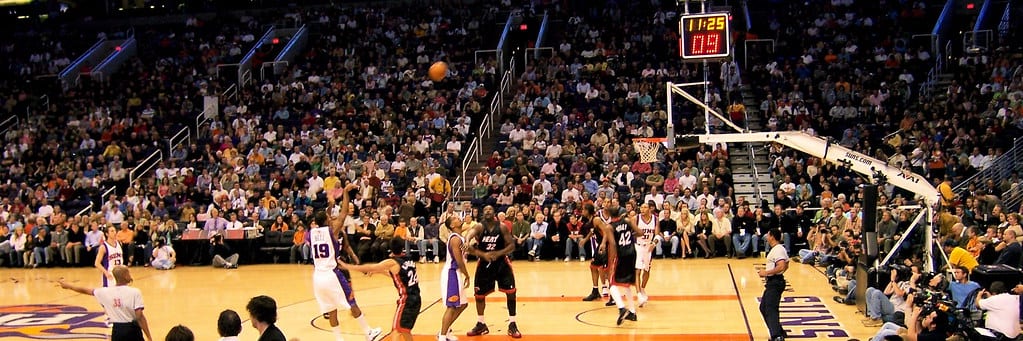
Basketball debates tend to swallow nuance whole. Every time the Miami Heat and the Phoenix Suns face off, it’s easy to reduce the conversation to talent versus toughness — as if those two things are mutually exclusive. But I see more than a mere matchup. The Heat vs. Suns rivalry, faint compared to old NBA blood feuds, symbolizes an identity crisis in the league: are teams built for grit and grind or for aesthetics and pace? Are modern fans drawn by the dogfight or the highlight reel?
When I watch Miami, I’m reminded of basketball’s blue-collar soul. “Heat Culture” isn’t just a catchphrase; it’s a declaration of values. The team plays as though every possession is a test of willpower. They close ranks when adversity hits, and you can feel that in their defensive structures — the way players rotate, overhelp, and trust the system more than any individual flair. There’s something deeply human about their approach, almost moralistic in its insistence that work ethic still matters in an era drowning in superstar entitlement.
Then there’s the Phoenix Suns: a team that once embodied the beauty of fluid basketball, from the “Seven Seconds or Less” days to today’s precision-heavy offense. If the Heat is a worker’s lunchbox, the Suns are a modern art exhibit — every pass and pull-up curated. When they’re fully functional, it’s gorgeous. But sometimes, it feels brittle. The Suns have talent, but talent now behaves like quicksand — alluring, but hard to build on. Watching them struggle with chemistry reminds me how hard it is to balance entertainment with execution.
I’ve noticed that fans gravitate toward whichever philosophy mirrors their worldview. Heat fans, many of whom followed the team through lean years, prize loyalty and work ethic. They see their team as an extension of their own resilience. Suns fans, often craving beauty and innovation, align with the visionary side of basketball. For them, the game isn’t about outmuscling opponents but outthinking them. It’s fascinating how these two small-market franchises — both warmer in climate and tone — have become archetypes for the NBA’s larger identity struggle.
Every Heat vs. Suns meeting exposes this tension: one team weaponizes cohesion, the other relies on crafted brilliance. I remember watching a recent game where Miami stole a win they had no business taking. They shot worse, passed less, and yet dismantled Phoenix in the final minutes. It was predictable but profound. The Heat didn’t out-talent the Suns — they outlasted them. And that persistence, that refusal to bend to style trends, feels oddly radical in a league obsessed with flash.
But I’m conflicted too. I’ve always loved Phoenix’s aesthetic — the hypnotic arcs of their pick-and-roll execution, the choreography of Devin Booker’s footwork, the unspoken language of spacing. Basketball at its best is art, not war. The Suns remind me of that. Yet, art without guts feels hollow. That’s where Miami intrudes like a moral compass, demanding proof that brilliance can also be earned.
As a fan of the sport more than any brand, I think about what this says about our cultural moment. We’ve turned sports into an extension of personal philosophy. We tune into teams that validate how we see life: structured or spontaneous, disciplined or creative, gritty or glamorous. The Heat-Suns contrast isn’t merely tactical; it’s existential. It’s a mirror held up to what we value as people. For some, victory is survival. For others, it’s an expression.
I don’t believe either is right or wrong. The Miami Heat proves you can succeed with less if you commit more. The Phoenix Suns prove you can redefine success if you dare to break patterns. When they play each other, it’s less about the scoreboard and more about the subtle question humming underneath: what does it mean to win in the modern NBA — to outwork or outcreate?
In the end, I find my allegiance shifting game by game. Some nights, I want the Suns to remind the world that beauty still belongs in the sport. Other nights I crave the Heat’s defiance — a collective middle finger to the algorithmic era of basketball analytics. But that’s what makes this matchup so special. It captures the duality of fandom: our admiration for both structure and freedom, hustle and art, muscle and mind.
When the Heat and Suns meet, I see the state of the NBA distilled into forty-eight minutes — passion versus polish, labor versus luxury, team versus talent. Watching it unfold, I realize that basketball itself is still trying to choose a side.