
The Los Angeles Lakers have always relied on their exceptionalism. It’s the best market in the NBA for a star player. The bright lights of Hollywood can be irresistible. That’s why, one way or another, the Lakers always seem to roster one of the league’s defining talents.
For the last few years, that’s been LeBron James. Now, Luka Dončić will usher in the next era of Lakers basketball. With Dončić locked into a long-term extension that climbs from roughly $46 million this season toward the $60 million range later, the organization would be smart to surround him with players who simplify the game — not ones who complicate roster-building decisions down the line.
That naturally points to the center position.
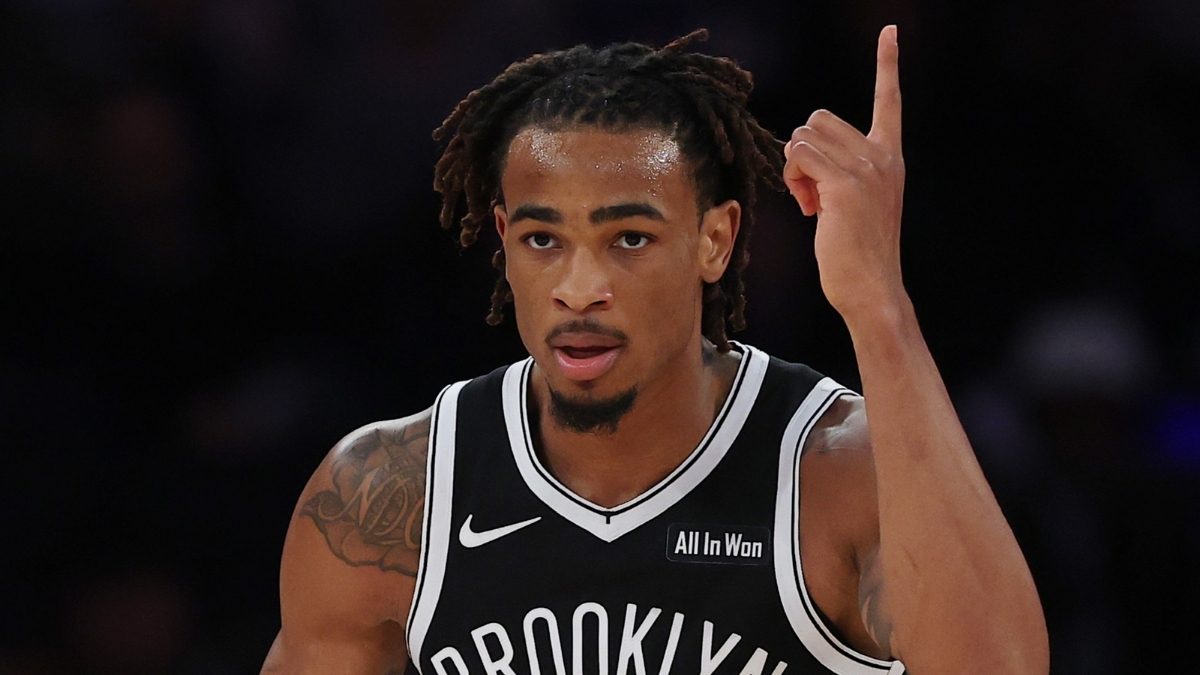
How about Nic Claxton of the Brooklyn Nets?
Los Angeles Lakers Pair Luka Dončič with New Center in NBA Trade Rumors
Brooklyn Nets receive:
Los Angeles Lakers receive:
Why the Brooklyn Nets Do the Deal
Claxton is a highly useful player. His ability to guard across positions is scarce, and his defensive mobility remains his calling card. He has also expanded his offensive profile, increasingly functioning as a dribble handoff facilitator rather than a pure rim-runner.
That growth shows up in the numbers. Claxton is averaging 12.6 points, 7.5 rebounds, and 4.0 assists across 42 games this season while shooting efficiently from the field. For a center, that assist total matters — it reflects a player capable of keeping the offense moving without demanding touches.
But usefulness is not the same as necessity.
Claxton is under contract for three more seasons on a deal that starts at roughly $25 million and declines annually. That’s a reasonable number for a contender. For a rebuilding team, it’s an asset — and one that should be converted into future value.
The Nets’ place in the Eastern Conference standings reflects a team still searching for its next offensive centerpiece. Claxton raises a ceiling Brooklyn isn’t close to touching yet. In that context, flipping him for an unprotected first-round pick — especially one tied to a franchise operating deep into the luxury tax — is exactly the kind of leverage rebuilding teams seek.
The incoming contracts help facilitate that. Vanderbilt, Vincent and Hayes combine for salary-matching purposes, but none meaningfully reshape Brooklyn’s long-term cap sheet. Vanderbilt’s deal has structure but flexibility. Vincent’s money comes off sooner. Hayes’ contract is minimal. None prevent the Nets from maintaining financial maneuverability as their young core develops.
That’s the point. This isn’t about the players coming back — it’s about reclaiming optionality.
Why the Los Angeles Lakers Do the Deal
Yes. This is where the Lakers’ financial reality actually supports the move rather than complicates it.
Los Angeles is already operating far above the salary cap, with massive commitments to Dončić and LeBron James anchoring the books. In that environment, the goal is no longer efficiency — it’s consolidation. Turning multiple mid-sized contracts into one high-impact piece is the cleanest way to build around a superstar without clogging future flexibility.
Claxton fits that mold perfectly.
At 26, he aligns with Dončić’s timeline. His contract declines year over year, a quiet advantage for a team that expects to live above the tax line regardless. And from a basketball standpoint, he checks every box the Lakers need at the five: rim protection, switchability, vertical spacing and low-usage efficiency.
Compare that to the status quo. Deandre Ayton does not offer Claxton’s defensive versatility, and the current rotation has struggled to stabilize the position. Claxton would immediately unlock easier pick-and-roll reads for Dončić and Austin Reaves, while improving the Lakers’ defensive floor in playoff environments.
As for the outgoing players, Vanderbilt (5.0 points, 5.1 rebounds), Vincent (4.7 points, 1.3 assists), and Hayes (6.3 points, 3.9 rebounds) are useful pieces — but replaceable ones. None project as long-term answers next to a generational offensive engine.
Which brings the conversation back to the pick.
What could the Lakers realistically do with a future first-rounder that provides more certainty than Claxton? For a franchise already fifth in the Western Conference and structured around immediate contention, the answer is likely nothing.
The Bigger Picture
Los Angeles is the league’s most glamorous market. Brooklyn, despite its advantages, still operates without that assumption of inevitability.
The Lakers can afford to treat draft capital as currency. The Nets cannot.
That’s why this deal makes sense on both levels — basketball and finance. Brooklyn converts a valuable but non-essential player into long-term assets and cap flexibility. Los Angeles converts salary clutter into stability around its next superstar.
One team leans into patience. The other leans into certainty.
History suggests only one of those approaches is available to the Lakers — and they rarely hesitate to use it.
Latest NBA News & Trade Rumors