
While a lot can, and will, change between now and June, we know enough at this point for a solid understanding of the 2026 NBA offseason.
Here’s what the financial landscape is expected to look like in 2026-27:
NBA in 2026-27
ThresholdProjection
Salary Cap
$166M
Luxury Tax
$201.7M
First Apron
$210.7M
Second Apron
$223.7M
The projected $166 million salary cap means a 25 percent max contract would start at $41.5 million, a 30 percent max at $49.8 million and a 35 percent max at $58.1 million. With that projection, teams with cap space would also have access to a $9.4 million room exception, while franchises functioning over the salary cap may have access to a $15.1 million nontaxpayer midlevel exception or the smaller $6.1 million taxpayer MLE, depending on a variety of factors.
In summary, here is how things look in terms of most likely spending power:
Cap space: Bulls (up to $68 million), Wizards ($50 million), Clippers (up to $50 million), Jazz ($45 million), Lakers ($38 million to $47 million), Nets ($36 million to $44 million), Hawks ($23 million to $28 million)
Full $15.1 million nontaxpayer MLE: Hornets, Trail Blazers, Spurs, Bucks
$6.1 million taxpayer MLE but unlikely full nontaxpayer MLE: Pistons, Pelicans, Celtics, Warriors, Suns, 76ers, Timberwolves, Rockets, Heat, Grizzlies, Pacers, Nuggets, Kings
Bird rights and minimums but not second apron: Mavericks
Second apron: Cavaliers, Knicks, Thunder, Magic
Atlanta Hawks
After trading Trae Young to the Washington Wizards for CJ McCollum and Corey Kispert, I now project the Hawks to be a cap space team, wielding $23 million to $28 million in space plus the $9.4 million room exception, depending on their draft picks. It is important to note that their cap space possibilities require Kristaps Porziņģis to leave; re-signing him presumably takes them out of the cap-space derby but would open up the nontaxpayer midlevel exception.
Boston Celtics
The Celtics are actually under the projected tax for the 2026-27 season, but that includes nothing for pending free agent Anfernee Simons. As such, the front office could be choosing between retaining Simons and using the full nontaxpayer midlevel exception for a new addition. It is also very possible that Brad Stevens changes their 2026 spending power between now and then, potentially by trading Simons. They are currently approximately $12 million above the luxury-tax threshold, so reducing or eliminating that bill for this season would have significant financial benefits for the franchise.
Brooklyn Nets
Barring massive changes, the Nets will definitely function as a cap space team. Their own first-round pick and team option decisions on Ziaire Smith and Day’Ron Sharpe will determine if that is closer to $36 million or $44 million.
Charlotte Hornets
They are close to having cap space, but staying over is the better course as of now because it gives the Hornets access to the nontaxpayer MLE and the $5.5 million biannual exception, which is more useful than roughly $10 million in cap space plus the $9.4 million room exception. I prefer the over-the-cap path in part because $15 million is a nice starting salary to offer, and that allows them to retain free agents like Collin Sexton if desired. That said, those two paths being so similar gives their front office a strong incentive to either shed some salary to use a larger amount of cap space or take on long-term salary at this trade deadline (at a premium, presumably) to fill some of the gap between their current obligations and the tax line.
Chicago Bulls
They could wield up to an impressive $68 million in cap space but could use some of that to re-sign their own free agents, including, potentially, Coby White, Nikola Vučević and/or Ayo Dosunmu. White’s low cap hold could be valuable if he re-signs, should Chicago want to make it an even splashier summer.
Cleveland Cavaliers
The Cavs are roughly $10 million over the projected second apron, even if they decline a $10 million team option on Lonzo Ball. Barring massive changes, they will be one of the most expensive teams in the league for 2026-27 with a projected $100 million luxury-tax bill even without Ball. If Dan Gilbert is not willing to pay that type of money for this roster, there are some non-core players they could try to move, such as De’Andre Hunter and/or Max Strus, but it would likely be painful.
Dallas Mavericks
Remarkably, the Mavericks could be close to the second apron if their first-round draft pick is strong enough to bring a big price tag. That and their current place in the standings should be more than enough motivation for their front office to consider offloading long-term salary between now and the deadline.
Denver Nuggets
Trading Michael Porter Jr. for Cameron Johnson saved the Nuggets about $35 million in salary over this season and next combined, but they are still close to the first apron even if they decline a $10 million team option on Jonas Valančiūnas, and that is even before retaining restricted free agent Peyton Watson. It will be another year of tough decisions for their brass, particularly if ownership is still uncomfortably averse to spending despite having Nikola Jokić in his prime.
Detroit Pistons
One of the season’s biggest success stories will likely stay over the cap but below the tax because retaining either Jalen Duren or Jaden Ivey takes them out of the cap-space derby. Even so, they should have the capacity to retain both if desired, and likely both plus Tobias Harris, depending on their collective price tags.
Another key question will be how they value those non-Duren retentions against using the nontaxpayer MLE to bring in someone else. My instinct is they will prefer the talent they have unless someone surprising wants to take less to join the Pistons.
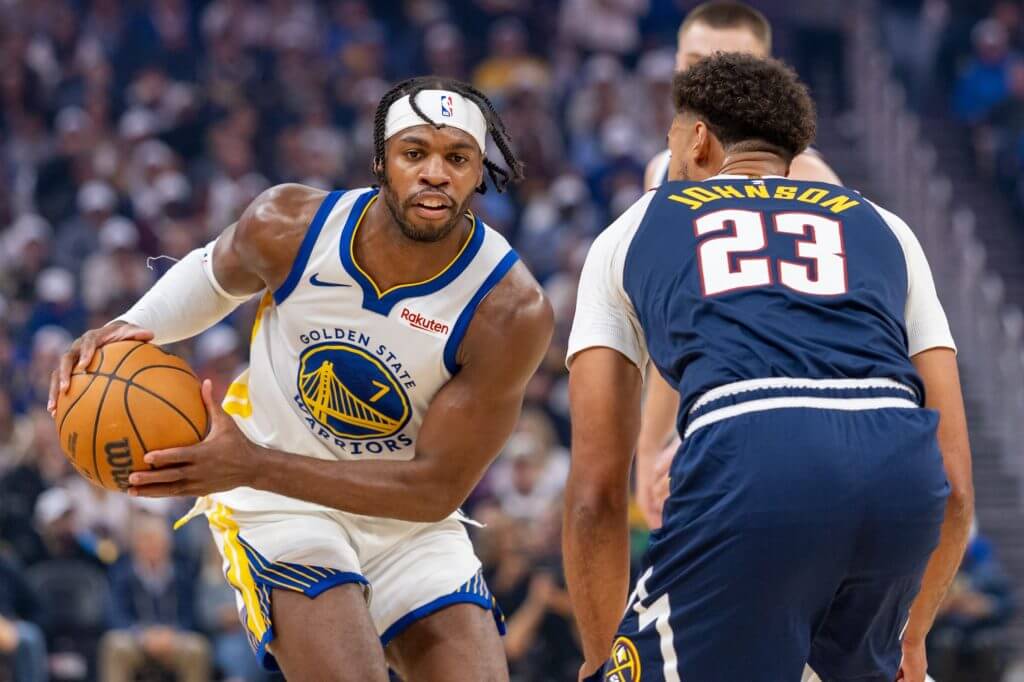
Buddy Hield works against Cameron Johnson and the Nuggets’ defense. (Bob Kupbens / Imagn Images)
Golden State Warriors
Likely over the tax but how far over depends on their $24.3 million team option on Jonathan Kuminga and Buddy Hield’s $3 million partial guarantee (or $9.7 million full salary). If both are back or replaced by players with similar salaries, the Warriors are likely pushing near the second apron in the final season that Stephen Curry and an injured Jimmy Butler are under contract.
The other key variable is Draymond Green, who has to choose between a $27.7 million player option or unrestricted free agency. If he opts out, that could shift their books depending on the eventual outcome.
Houston Rockets
The Rockets have a complicated situation because Fred VanVleet has a $25 million player option coming off a torn ACL, but he likely wants a long-term deal. What kind of per-season salary would that entail? With VanVleet at or near his player option amount, the Rockets could bring him back and re-sign restricted free agent Tari Eason at around the nontaxpayer MLE while avoiding the tax, or they could pay him more via matching an offer sheet or a new contract themselves and pay a small tax bill.
As such, the decision might be Eason vs. nontaxpayer MLE for Rockets general manager Rafael Stone, and that may depend on where the offers end up for Eason more than the Rockets’ own preferences.
Indiana Pacers
Another surprisingly expensive team, the reigning Eastern Conference champions would likely go into the tax if restricted free agent Bennedict Mathurin gets an appropriate salary over the summer. The Pacers have plenty of ways to bring him back and duck the tax by shipping away players like Obi Toppin or T.J. McConnell, but that provides a glimpse of how tricky president of basketball operations Kevin Pritchard’s job will be.
One additional complication: All of the theoretical salaries Pritchard could offload next summer go beyond 2026-27, so a potential trade partner needs to make a more serious commitment to someone like Toppin, McConnell or Isaiah Jackson as opposed to just taking on that player for a season.
LA Clippers
The Clippers are the ultimate variance franchise for the 2026 offseason because Kawhi Leonard and Ivica Zubac are their only key players on locked-in contracts next season. They could retain James Harden (who has a rare partially guaranteed player option) and either stay over the cap or open up a small amount of cap space or go hard the other direction and create $50 million in cap space.
The truth likely lies between those two extremes, but they are fun to consider, even ignoring all of the other uncertainty around the Clippers.
Los Angeles Lakers
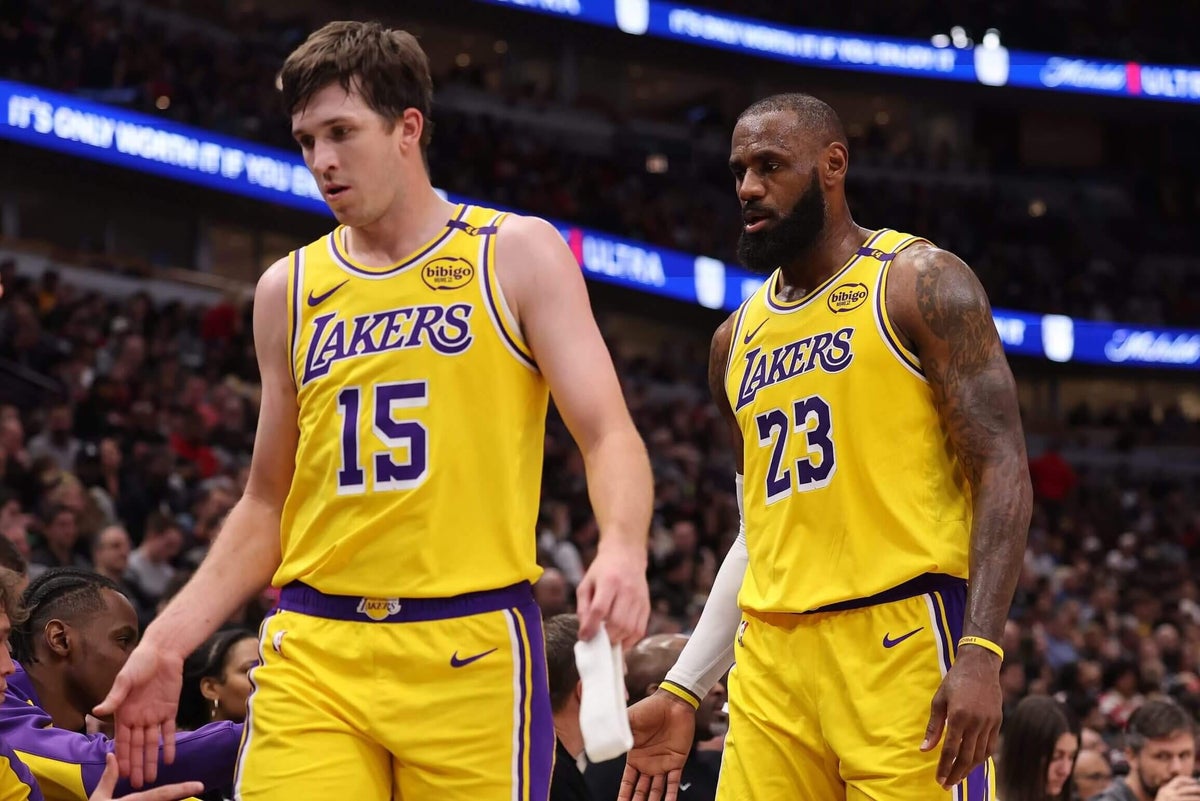
If Austin Reaves declines his $14.9 million player option as expected and LeBron James is wearing a different uniform next season, the Lakers are likely looking at $38 million to $47 million in cap space, depending on which of their other free agents, such as Rui Hachimura, Deandre Ayton and Marcus Smart, stick around. That is enough to make a major impact for the right player to fit next to Luka Dončić and Reaves long-term, but they would likely be an exceedingly top-heavy and eventually expensive team moving forward. That said, the right talent would make a team construction like that worth it since Reaves’ new contract likely takes them out of shifting that spending power to 2027 and beyond, though that is not 100 percent locked in yet.
Memphis Grizzlies
Jaren Jackson Jr. gets another raise next season to $49 million, so the Grizzlies will be unpleasantly close to the luxury tax without major changes, too close to use the full nontaxpayer MLE and maybe even tighter depending on where their two first-round picks end up.
Miami Heat
Miami is about $30 million below the luxury-tax threshold, but that does not include anything for unrestricted free agent Norman Powell, who could generate enough interest to get a salary in that range himself before even filling out the roster. That means it is unlikely the Heat can bring back Powell and use the full nontaxpayer MLE, even if ownership is willing to pay a small tax bill.
Milwaukee Bucks
Beyond Giannis Antetokounmpo, there’s so much left to resolve because the Bucks have six player options for the 2026 offseason. As of now, my instinct is that they will have enough wiggle room under the tax to be able to use the nontaxpayer MLE and still retain some of that group even if they opt out for a raise, though it could get tricky.
Minnesota Timberwolves
There should be more breathing room under the second apron, but the Timberwolves are still likely a luxury-tax team, albeit one with a far more manageable bill than in some recent seasons. Depending on which free agents they retain (such Mike Conley, Jaylen Clark and Bones Hyland), the Timberwolves may be a rare team that could actually use the taxpayer MLE. That is a big enough bump over the minimum to potentially interest someone, but it subjects Minnesota to being hard-capped at the second apron.
New Orleans Pelicans
Assuming the front office retains Zion Williamson and declines the $8 million team option on Kevon Looney, the Pelicans should be about $10 million below the luxury tax, depending on Jose Alvarado’s $4.5 million player option. They might be able to use the full nontaxpayer MLE, but that would require additional moves between now and then.
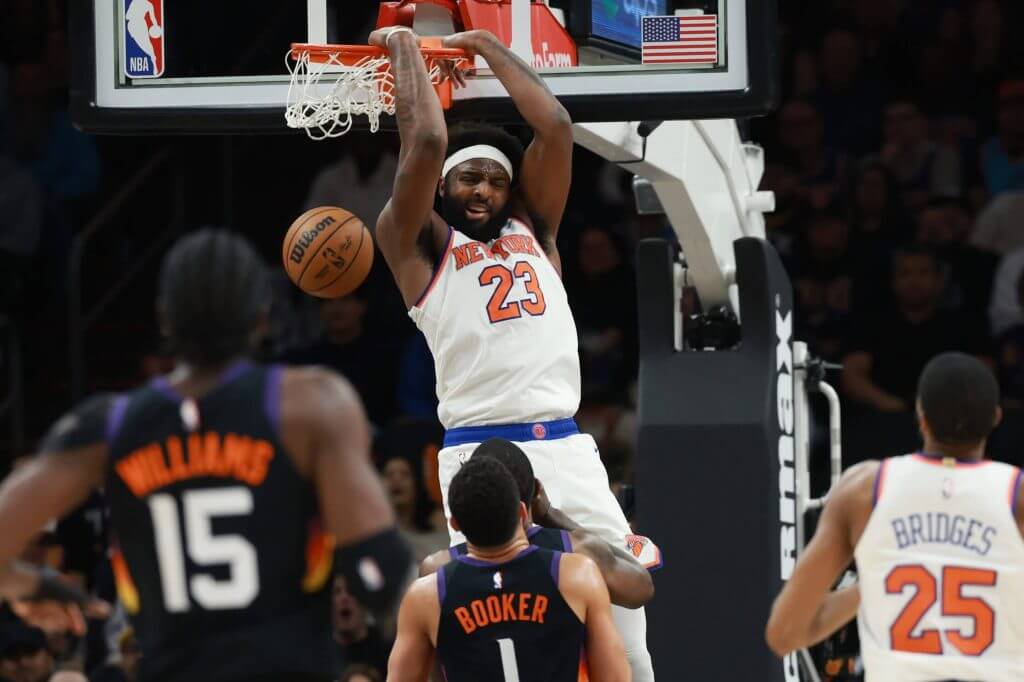
Mitchell Robinson puts home an easy two points against Phoenix. (Mark J. Rebilas / Imagn Images)
New York Knicks
With Mikal Bridges’ extension kicking in and bumping up his salary to $33.5 million, the Knicks are close enough to the second apron that re-signing Mitchell Robinson to any reasonable salary pushes them over; expect them to be a second-apron team in 2026-27.
Oklahoma City Thunder
The current champions will pay the luxury tax in 2026-27, but their second-apron status will largely depend on Isaiah Hartenstein. Can they get him at a lower salary than their $28.5 million team option? If so, they might be able to stay under for another season.
On the other end, if they decline the option and Hartenstein leaves, the Thunder would only have the taxpayer MLE to replace him. One other wrinkle to consider is that the Thunder also possess a team option on Lugentz Dort, but $17.7 million is less than he would get on the open market. Declining the option would presumably involve a raise on a longer contract, likely to pay him less long-term than they would expect him to get as an unrestricted free agent in 2027.
Orlando Magic
The Magic are looking a lot like a second-apron team, as Paolo Banchero’s extension will kick in and push his salary to a projected $41.3 million. They could potentially duck it by finding a new home for Jonathan Isaac (partially guaranteed), depending on how they fill out the rest of the roster.
Philadelphia 76ers
Philly will be paying the luxury tax if it re-signs unrestricted free agent Quentin Grimes for more than approximately $15 million, but it’s likely a fairly small bill. Unfortunately for the Sixers’ front office, it looks like too tight a squeeze to bring back Grimes and use the nontaxpayer MLE.
Phoenix Suns
Brace yourselves: There is a chance the Suns do not pay the luxury tax in 2026-27, which could be the second season in a row for them! That said, Mark Williams and Collin Gillespie are both in line for significant raises in free agency after strong seasons, and that could push the Suns back over the tax threshold, though they could duck under with a different move, such as finding a new home for Royce O’Neale. It feels like the Suns will use whatever flexibility they have for retentions rather than additions, especially since Williams walking likely only opens up the nontaxpayer MLE and Gillespie the taxpayer MLE, neither of which is enough to secure a suitable replacement.
Portland Trail Blazers
Adding Jrue Holiday while retaining Jerami Grant prevents the Trail Blazers from using cap space in 2026, but they should have plenty of wiggle room under the tax to use the full nontaxpayer MLE plus retain Robert Williams and Blake Wesley if desired.
That said, Scoot Henderson will likely start a new contract via extension or restricted free agency in 2027, so the front office might be reluctant to put a multiyear MLE contract on the books unless it is a really exciting talent.
Sacramento Kings
Remarkably, the Kings are uncomfortably close to the luxury tax if they retain DeMar DeRozan (partially guaranteed) at his full $25.7 million salary. That means the choice as of now is likely DeRozan vs. the nontaxpayer MLE, which means the Kings do not have a ton of latitude for much-needed improvements throughout their roster.
San Antonio Spurs
While there is a potential path to cap space by clearing some additional salary, the more likely scenario is for the Spurs to stay over the cap, retain some of their free agents such as Harrison Barnes and Jeremy Sochan and then use the nontaxpayer MLE if they have enough spending power left. Considering their strong season thus far, that is an exciting place to be in the final year before Victor Wembanyama’s huge new contract kicks in.
Toronto Raptors
It seems like the Raptors’ roster is unusually stable, with all of their key players either under contract or with team control via a team option for the 2026-27 season. That means the Raptors are likely keeping things together, as they do not have enough wiggle room under the tax to use the nontaxpayer MLE.
Utah Jazz
Counting Walker Kessler at his $14.6 million cap hold and a projection for their lottery pick, the Jazz are looking at around $45 million in cap space. That is enough for a 25 percent max offer sheet for a restricted free agent but not a 30 percent max contract without some additional cost-cutting, such as shipping away some combination of Taylor Hendricks, Cody Williams or other recent first-round picks. The good thing for president of basketball operations Austin Ainge is that he likely has the flexibility to make that happen if a player is interested in signing that kind of contract with the Jazz, rather than having to do so preemptively before securing a commitment.
Washington Wizards
If the recently acquired Young picks up his player option or opts out and re-signs at a similar salary, the Wizards would have $50 million in cap space this summer. That is far less than the $86 million they had before the trade but still enough to sign a free agent to a 30 percent max contract.