
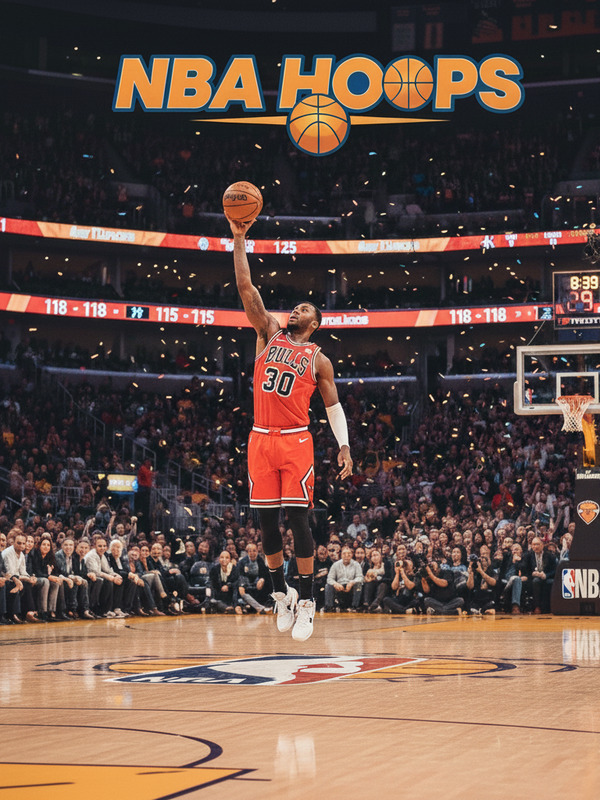
The NBA Standings tightened after a wild night: LeBron and the Lakers surged, Tatum’s Celtics held ground, while Curry’s Warriors stumbled in a playoff-style grind. Every game now feels like April basketball.
The NBA standings just got a lot more crowded. With LeBron James pushing the Los Angeles Lakers to another statement win, Jayson Tatum’s Boston Celtics grinding out a tense victory, and Stephen Curry’s Golden State Warriors dropping a crucial matchup, the playoff picture shifted again in real time. This is the stretch where seeds are won in crunchtime and lost on missed box-outs.
[Check live stats & scores here]
LeBron turns it up, Lakers send a message
The Lakers continue to act like a team that refuses to live in the Play-In neighborhood. LeBron James delivered another all-around clinic, steering Los Angeles past a direct Western rival in a game that felt like a mid-April test. He controlled tempo, punished mismatches in the post, and still found the legs to hit big threes from downtown when the defense sagged.
Offensively, the Lakers leaned into size and physicality. Anthony Davis owned the paint on both ends, erasing drives and cleaning the glass to ignite transition. Stretch shooters spaced the floor just enough for LeBron to get downhill, and the secondary playmaking from the backcourt kept the ball humming instead of stagnating into iso-ball.
Defensively, Los Angeles finally looked connected. Rotations were crisp, switches were communicated early, and they turned live-ball turnovers into instant offense. One opposing player summed it up postgame, saying the Lakers “turned up the physicality in the second half and never let us get comfortable.” That is the exact identity this roster needs if it wants to climb the NBA standings and avoid the Play-In chaos.
In crunchtime, LeBron took over as a closer more than a pure scorer. He manipulated matchups, called for screens to target weaker defenders, and repeatedly made the right read. A late kick-out three, followed by a drive-and-kick that led to free throws, put the game out of reach and underlined why his impact still travels far beyond box-score numbers.
Celtics stay steady behind Tatum’s two-way punch
While the West keeps swinging, the Boston Celtics are still operating like a team that expects home court throughout the playoffs. Jayson Tatum was not just a volume scorer; he was a tone-setter on both ends. He attacked closeouts, got to his midrange spots, and kept the ball moving whenever the defense overloaded his side of the floor.
Boston’s offense once again showcased its versatility. With Tatum and Jaylen Brown drawing primary defensive attention, the Celtics relied on quick-hitting actions, flare screens for shooters, and smart secondary cuts from the corners. The ball rarely stuck, and when it did, it was Tatum going into deliberate isolation against a switch he liked, rising up over smaller defenders with that now-familiar step-back.
On the other side, Boston’s defense was locked in on the perimeter. They ran shooters off the line, forced tough floaters over length, and recovered to the glass to limit second-chance looks. A Celtics assistant coach noted afterward that this felt like a “playoff rep” in terms of defensive discipline, and the tape supports that: very few wide-open looks, almost no miscommunications in pick-and-roll coverage.
The result keeps the Celtics near the top of the NBA standings in the East, opening up a little more breathing room on the field chasing them. At this point, every win is less about style points and more about preserving that precious margin for error when inevitable off nights hit.
Warriors stumble, Curry forced into hero mode
On the West Coast, things were much murkier for Golden State. The Warriors dropped a high-leverage game against a conference rival, and the final stretch again turned into a one-man show for Stephen Curry. He splashed contested threes from way beyond the arc to drag Golden State back into it, but the supporting cast never fully matched his urgency.
Offensively, the Warriors’ classic motion rhythm was there in flashes, but too often Curry had to bail out stagnant possessions late in the shot clock. When the off-ball movement stalled, the defense loaded up on him, forcing tough shots against length and physicality. Even when he scored, Golden State was living on a diet of high-difficulty looks.
Defensively, Golden State’s issues remain familiar: inconsistent point-of-attack defense and lapses in transition. Opponents got downhill too easily, drawing help and spraying the ball out for clean corner threes. A frustrated veteran voice in the locker room emphasized the lack of communication, saying they “can’t keep expecting Steph to save every broken possession and every broken coverage.”
The loss keeps the Warriors hovering in that dangerous Play-In zone, where one cold shooting night could end a season. In a West this deep, the margin between sixth and eleventh in the NBA standings is a couple of bad fourth quarters, and Golden State just burned one of its remaining mulligans.
How the NBA standings look now: elite tiers and the Play-In pack
With the latest results baked in, the hierarchy is starting to crystallize, even if seeds are still fluid. At the top, Boston continues to act like the league’s pacing team, while the West’s elite remains a little more volatile, with contenders trading haymakers night after night.
Here is a compact snapshot of where the power players and key climbers currently stand in the NBA standings, focusing on the upper seeds and the ever-chaotic Play-In line.
ConferenceSeedTeamWLNoteEast1Celtics––Control home court raceEast2Bucks––Chasing hard, star-drivenEast376ers––Health is the swing factorEast7Heat––Play-In but dangerousEast10Hawks––On the bubbleWest1Nuggets––Jokic keeps them steadyWest2Timberwolves––Defense-first contenderWest5Clippers––Star trio finding rhythmWest8Lakers––Rising, eyeing top sixWest10Warriors––Play-In pressure mounting
(W/L records are evolving daily; check the official league page for exact real-time numbers.)
Tier-wise, there is a clear divide between true home-court contenders and the Play-In battleground. Nuggets and Celtics sit in the inner circle, their star engines humming efficiently. Teams like the Lakers, Warriors, Heat, and Hawks are fighting not only opponents, but also variance: one small losing streak could mean a completely different seed, a tougher matchup, or suddenly needing to survive two elimination games.
MVP Race and star power: who is driving this season?
Night after night, the MVP race keeps swinging on massive box scores and signature wins. Nikola Jokic continues to anchor the Denver Nuggets with absurd efficiency, routinely flirting with triple-doubles on elite shooting splits. His impact shows up everywhere: orchestrating halfcourt offense from the elbows, punishing switches in the post, and diming up cutters for easy buckets.
Jayson Tatum’s case leans heavily on winning and two-way value. He might not lead the league in raw points, but he is the primary engine on the team with one of the best records in the NBA standings. When Boston needs a bucket late, they trust his ability to generate a clean look or create an easy opportunity for a teammate off a double-team.
There are also the stat-stuffers who light up the nightly player stats page. Guards are dropping 30-point lines with double-digit assists, bigs are racking up double-doubles in their sleep, and role players are delivering season-defining hot streaks from three. One standout performance from the last slate featured a star guard posting a high-30s scoring night with strong efficiency, mixing step-back threes, drives through contact, and smart kick-outs when help arrived.
On the other end of the spectrum, a few big names are noticeably struggling to find rhythm. Shooting slumps are one thing, but the more concerning sign is when touches stop leading to quality looks inside the offense. When stars start forcing midrange jumpers early in the clock or over-dribbling into traffic, you can feel the tension in the arena. That is where the MVP frontrunners separate themselves: they bend defenses without breaking their own systems.
Injuries, rotations and what it all means for the playoff picture
This time of year, every injury report reads like a plot twist. Several playoff hopefuls are juggling key absences: starting guards on minute restrictions, big men sitting back-to-backs, and wings fighting through nagging soft-tissue issues. Coaches are being forced into creative rotations, and some of those emergency lineups are quietly changing seasons.
For a contender, losing a secondary ball-handler for a couple of weeks can flip crunch-time execution on its head. Instead of clean pick-and-roll reads, you get forced isolations and rushed threes. One coach acknowledged that his team was “still learning how to close without our normal closer,” essentially admitting that the late-game playbook is in temporary flux.
On the flip side, injuries are creating oxygen for breakout bench pieces. Young players are stepping into 25–30 minute roles and flashing real two-way upside: hitting catch-and-shoot threes, defending multiple positions, and bringing the kind of energy veteran legs cannot always provide on a back-to-back. Those surprise jumps in player stats can reshape depth charts when the postseason starts and rotations tighten to eight or nine trusted bodies.
The trade chatter has quieted since the deadline, but buyout additions and 10-day contracts still matter. A single savvy pickup who can defend on the wing, stretch the floor, or steady the second unit can swing a playoff series. Front offices know it; coaches know it; players definitely know it. Every postgame comment about “needing more size” or “another ball-handler” doubles as a message to the decision-makers upstairs.
What to watch next: crunch-time tests and seeding wars
The next few days are loaded with matchups that feel bigger than the schedule says. LeBron’s Lakers have a chance to prove their surge is sustainable as they continue a tough stretch against Western opponents stacked with length and shooting. Each win nudges them closer to a secure top-six spot, each loss drags them back toward the Play-In blender.
Tatum’s Celtics face a tricky run of games against teams that love to space the floor and hunt switches. These are prime stress tests for Boston’s perimeter defense and late-game playcalling. For a group with title aspirations, these are the nights that either sharpen habits or expose cracks.
Curry and the Warriors, meanwhile, are running low on time. Their upcoming slate includes direct competitors for those final playoff and Play-In berths. Every head-to-head now carries tiebreaker weight. If Golden State cannot tighten up its defense and reduce the burden on Curry’s hero-ball, those electric 35-point nights might be remembered more for what they could not save than for what they did.
Across the league, the must-watch games are the ones with layered stakes: top seeds protecting home court advantage, middle-of-the-pack teams fighting to escape the Play-In, and bubble squads treating every night like an elimination game. The NBA standings are no longer just a casual scroll; they are a live, shifting roadmap to who will still be standing when the real season starts.
If you are a fan, this is the stretch you clear your evenings for. Keep one eye on the live scores, another on the box scores, and always, always on how those results ripple through the playoff picture. Because from now on, every made shot, every blown coverage, and every minor injury has the potential to rewrite a seed line.
Stay locked in, refresh the standings, and circle the next heavyweight clashes. The noise around the NBA standings is only getting louder, and the separation between contenders, pretenders, and everyone stuck in between is about to be decided in real time.