
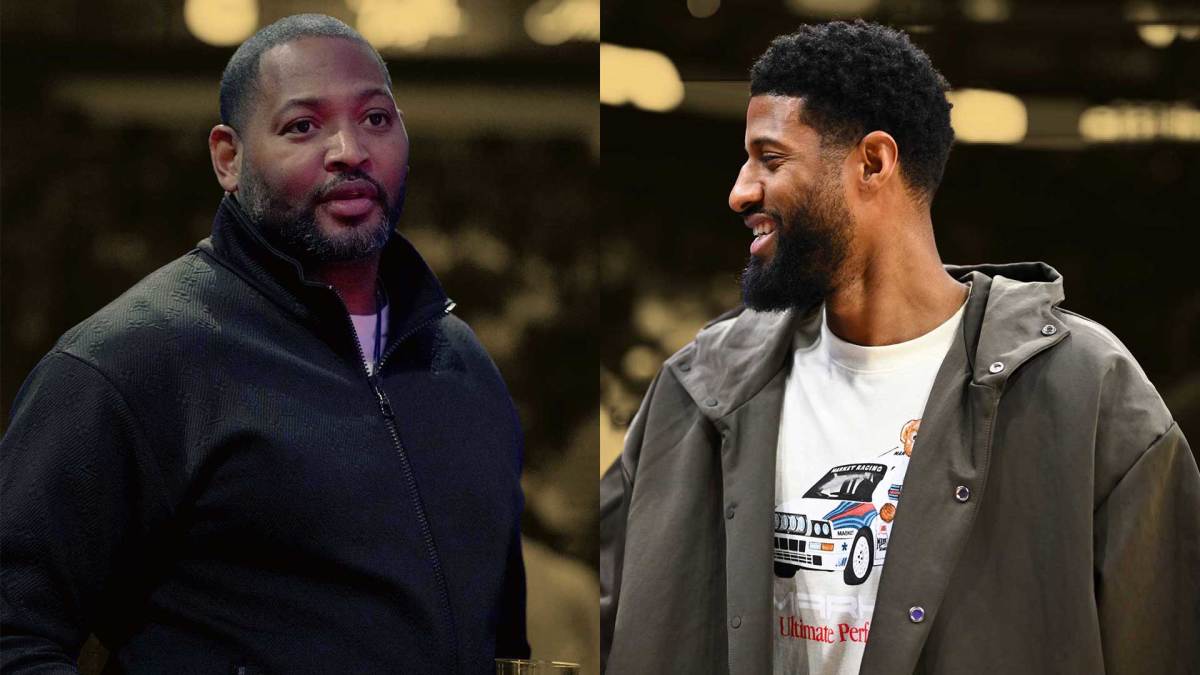
Mental health has become a far more visible and openly discussed issue in today’s sports landscape than it ever was in previous decades, and fans have largely rallied behind athletes who speak honestly about their struggles. However, according to Robert Horry, there is a fine line between raising genuine awareness and repeatedly leaning on mental health as a convenient escape route. For the seven-time NBA champion, the recent Paul George controversy is a clear example of where that line may be getting blurred.
Even more boldly, Horry emphasized that the “mental health” explanation is increasingly being used across the basketball world, not just for understanding and support, but also as a way to soften the consequences of serious mistakes.
Advertisement
Robert Horry explains his issue with the “mental health” card
When news broke that Paul George had violated the NBA’s anti-drug policy and was subsequently handed a 25-game suspension, the reaction was notably restrained. Under normal circumstances, a 16-year veteran leaving his Philadelphia 76ers teammates shorthanded at such a critical stage of the season would have been harshly criticized.
Instead, PG13’s public apology, in which he cited improper medication taken due to mental health concerns, allegedly shifted the narrative away from accountability.
Advertisement
Reflecting on the situation, Horry was careful to clarify that his comments were not rooted in personal animosity. In fact, he openly admitted his admiration for George and how much he enjoys watching the nine-time All-Star play. His issue, rather, lies in what he sees as a growing trend where modern-day athletes use the “mental health” card as a shield to get the situation in their favor.
“I think in the last couple of years, we get this ‘out’ now of ‘mental health,’” Horry said on an episode of his podcast. “I don’t know his mental health, but I just laugh all the time – anytime you get in (trouble), MENTAL HEALTH! And people just step back and say, ‘Whoa!’ I’m not bagging, but I’m just amazed at how much mental health can give you an out in whatever situation. I love Paul George…, but like now in the NCAA, you can get an extra year in college by throwing out mental health. They’re like, ‘Oh s–t we ain’t touching that.’”
Concerns with “mental health” are a serious issue
With the rise of social media, athletes face relentless scrutiny, regardless of their performance or off-court antics. The nonstop media spotlight, criticism, public judgment and online ridicule can take a genuine psychological toll, often far greater than what players endured in past generations.
Advertisement
So, while that context cannot be ignored, Horry’s intent was not to deny the reality of mental health struggles, nor is he dismissing the importance of addressing them; his concern is simply about balance – ensuring that mental health remains a space for genuine care.
Put simply, the former seven-time NBA champion voiced his opinion to bring more attention to this concerning trend, so that such serious matters are not used in the most ill-mannered way.
This story was originally published by Basketball Network on Feb 4, 2026, where it first appeared in the Latest News section. Add Basketball Network as a Preferred Source by clicking here.