
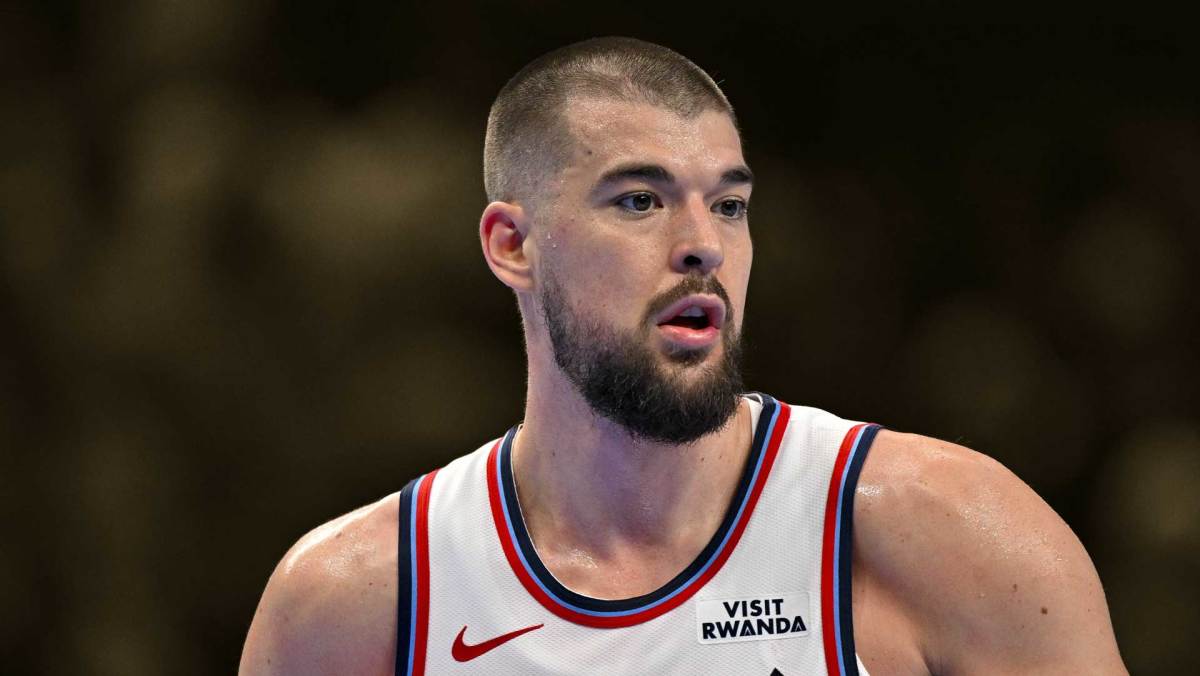
Ivica Zubac entered the NBA without much hype, unlike recent European superstars such as Luka Doncic or Victor Wembanyama. He came up through the Croatian club Cibona, a respected program that has produced NBA talent over the years.
Even there, Zubac wasn’t seen as the team’s main young star, often playing behind another highly regarded prospect. Off the court, things were unstable as well — the club was dealing with serious financial problems, and Zubac wasn’t always getting paid consistently.
Advertisement
Eventually, he moved to another team in Serbia to keep his career on track. And when the Los Angeles Lakers selected him with the 32nd pick in the draft, Zubac finally reached the NBA — but quickly learned that the professional world came with its own harsh realities.
“The first time you come to the NBA, you think you’re suddenly a millionaire, but actually you’re not,” Zubac recalled on the “X&O’s CHAT” podcast, bursting into a smile. “Everything you see, at least half of it is gone, especially in California. The first summer I came to LA and signed my contract, some money came from Mega, I had something in my pocket, but it wasn’t enough. Here teams don’t pay for apartments, in Europe they do. You need to buy a car.”
“Every apartment you rent comes unfurnished; you have to buy furniture, practically everything yourself,” Zubac added. “I had no money, so I called my U.S. agent asking what to do. He said we’ll request some money upfront from your contract, that’s usually how it works with rookies.We asked for $250,000. Four days later, he calls me and says the money is there, check your bank account. I log in and it says $105,000. I called him, ‘Where is my money?’ He says, ‘Welcome to California.'”
Advertisement
Zubac learned about California laws the hard way
California has some of the highest taxes in the United States, both at the state and local level. Residents pay a progressive income tax, with rates ranging from one percent up to 13.3 percent for the highest earners. On top of that, sales tax can reach nearly 10 percent in some cities, and property taxes, while technically capped, often feel high due to expensive home values.
In Zubac’s case, he received less than half of what he expected, something he clearly wasn’t prepared for. It was far from an easy situation, considering that as a 7-foot center, he had already experienced financial issues as a young player in Europe.
Advertisement
“I signed with Cedevita with no money in my pocket, I had nothing, I never got paid,” Zubac recalled. “The night I left Cibona, they sent me all the money they owed me the next day. I was happy, and Misko [Raznatovic] said, ‘Send it all back. If you spend a cent, you can’t go.’ And then I sent the money back and started crying, and I signed with Cedevita.”
Related: How and why did the L.A. get more value for Ivica Zubac than Dallas got for Anthony Davis?
Zubac will have to pay less in taxes in Indiana
Despite a slow start to his NBA career, Zubac found his footing and spent 10 years in California playing for the Lakers and the Los Angeles Clippers, earning just under $60 million in NBA earnings.
Advertisement
Although he admitted that his trade from the Clippers was one of the toughest moments of his life, after signing with the Indiana Pacers, he will at least have fewer worries about taxes, as taxes in Indianapolis are much lighter than in California.
Indiana charges a flat 3% state income tax, plus about 2% local tax for Indianapolis residents, for a total of about 5%. On top of that, sales taxes are lower, and property taxes are more modest, so he will get more of $58.6 million 3-year extension he signed in 2024.
This story was originally published by Basketball Network on Feb 9, 2026, where it first appeared in the Off The Court section. Add Basketball Network as a Preferred Source by clicking here.