
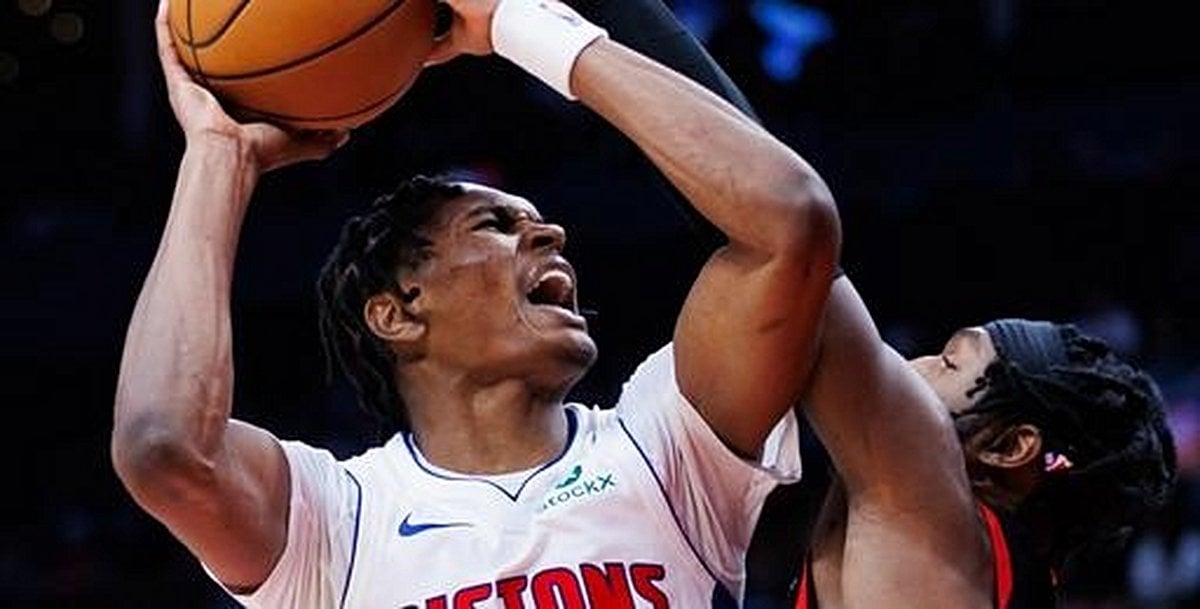
The Detroit Pistons closed out the unofficial first half of the NBA season with a bang, toppling the Toronto Raptors 113-95 at Scotiabank Arena on Wednesday night. It was a game that, on paper, looked daunting for Detroit: they were missing their two top centers, Jalen Duren and Isaiah Stewart, both sidelined by suspensions stemming from a heated brawl with the Charlotte Hornets two nights earlier. Add to that the continued absence of Ron Holland for personal reasons, and you’d be forgiven for expecting a rough ride for the Pistons north of the border.
But the script was flipped. Instead of limping into the All-Star break, Detroit delivered one of their most impressive and complete performances of the season—an emphatic statement that this team is built for adversity and ready for the playoff grind ahead.
Detroit entered the night with a sparkling 39-13 record, sitting atop the Eastern Conference. Toronto, meanwhile, boasted a solid 32-22 mark and had won three of their last four, most recently dispatching the Indiana Pacers 122-104 behind a monster 25-point, 14-rebound night from Scottie Barnes. The Raptors, playing on their home court and facing a short-handed opponent, surely fancied their chances. But the Pistons had other ideas.
From the opening tip, it was clear that Paul Reed—thrust into the starting lineup in place of the suspended Duren—was determined to seize his moment. The 26-year-old big man wasted no time making his presence felt, pouring in 16 of his 22 points in a blistering first quarter. Reed was everywhere: knocking down a three-pointer, driving baseline for a hook, finishing a slick up-and-under scoop, and even slamming home an alley-oop from Cade Cunningham. By the end of the quarter, Reed had scored 11 of Detroit’s first 14 points and set the tone for the rest of the night.
“Paul was huge for us tonight,” Pistons head coach J.B. Bickerstaff said after the game. “We knew we needed someone to step up with Jalen and Isaiah out, and Paul answered that call. He did it all—scoring, rebounding, protecting the rim. That’s what great teams need from their role players.”
Reed finished with a stuffed stat line: 22 points, five rebounds, three assists, four blocks, and two steals. His defensive presence was just as critical as his offensive outburst, tying his season high in blocks and repeatedly stymieing Toronto’s attempts to attack the paint. Not bad for a player who had seen sporadic minutes in recent weeks—he didn’t even appear in six of Detroit’s last nine games before Wednesday.
While Reed was the early story, it was Cade Cunningham who stole the show. The Pistons’ superstar guard put on a clinic, finishing with 28 points, nine assists, and seven rebounds on a hyper-efficient 9-for-14 shooting night. Cunningham’s outside shot, which had been a little shaky this season (down to 33% from deep after consecutive years closer to 36%), was absolutely dialed in: he drilled six of his eleven three-point attempts, repeatedly punishing Raptors defenders for giving him space off screens.
“I just wanted to be aggressive and take what the defense gave me,” Cunningham told reporters. “We know Toronto likes to switch things up defensively, so when they went under those screens, I had to make them pay. It felt good to see the ball go in.”
Cunningham’s three-point barrage included a stretch to open the second quarter where he hit three straight from beyond the arc, pushing Detroit’s lead to double digits. He closed the half with his fifth triple, giving him 22 points at the break and the Pistons a commanding 67-52 advantage. By halftime, Cunningham and Reed had combined for 40 points on an eye-popping 15-for-18 shooting. The Pistons as a team shot 53.7% from the field and 9-for-17 from three in the first half—numbers that would make any coach smile.
Toronto, for all their recent momentum, simply couldn’t keep pace. Immanuel Quickley, Brandon Ingram, RJ Barrett, and Scottie Barnes all had flashes, but the Raptors struggled to generate consistent offense against Detroit’s locked-in defense. Barnes, who had been the hero against Indiana, found himself hounded by Cunningham and Ausar Thompson for much of the night. The Raptors trailed by 15 at halftime and never seriously threatened in the second half.
The Pistons’ hot shooting continued after the break, and they finished the night 14-for-34 from deep (41.2%), a dramatic turnaround from their 5-for-25 showing against Charlotte just two nights prior. That kind of resilience—bouncing back from a rough shooting night and doing it on the road, shorthanded—speaks volumes about the team’s mental toughness.
“This group has a lot of heart,” Bickerstaff said. “We talk about next-man-up mentality, and you saw it tonight. Cade was special, Paul was special, but everyone contributed. That’s what makes us dangerous.”
With the win, Detroit improved to 40-13, joining the Oklahoma City Thunder as the only teams to crack the 40-win mark before the All-Star break. They’re now tied with OKC in the loss column (Thunder are 41-13), a testament to the Pistons’ consistency and depth. The Raptors fell to 32-23 but remain firmly in the playoff mix in the East.
Looking ahead, Detroit will be without Stewart for six more games—he can return March 3 against the Cleveland Cavaliers—while Duren will be eligible to play after the All-Star break. Paul Reed, after his breakout performance, is all but certain to remain in the starting lineup for the Pistons’ next contest, a tough road matchup with the New York Knicks on February 20.
For now, though, the Pistons can savor a gutsy, feel-good win that sends them into the All-Star festivities on a high. They weathered adversity, leaned on their stars, and proved once again that they’re a force to be reckoned with in the NBA’s Eastern Conference. As the season resumes, all eyes will be on Detroit to see if they can keep this momentum rolling—and maybe, just maybe, make a deep run come playoff time.