
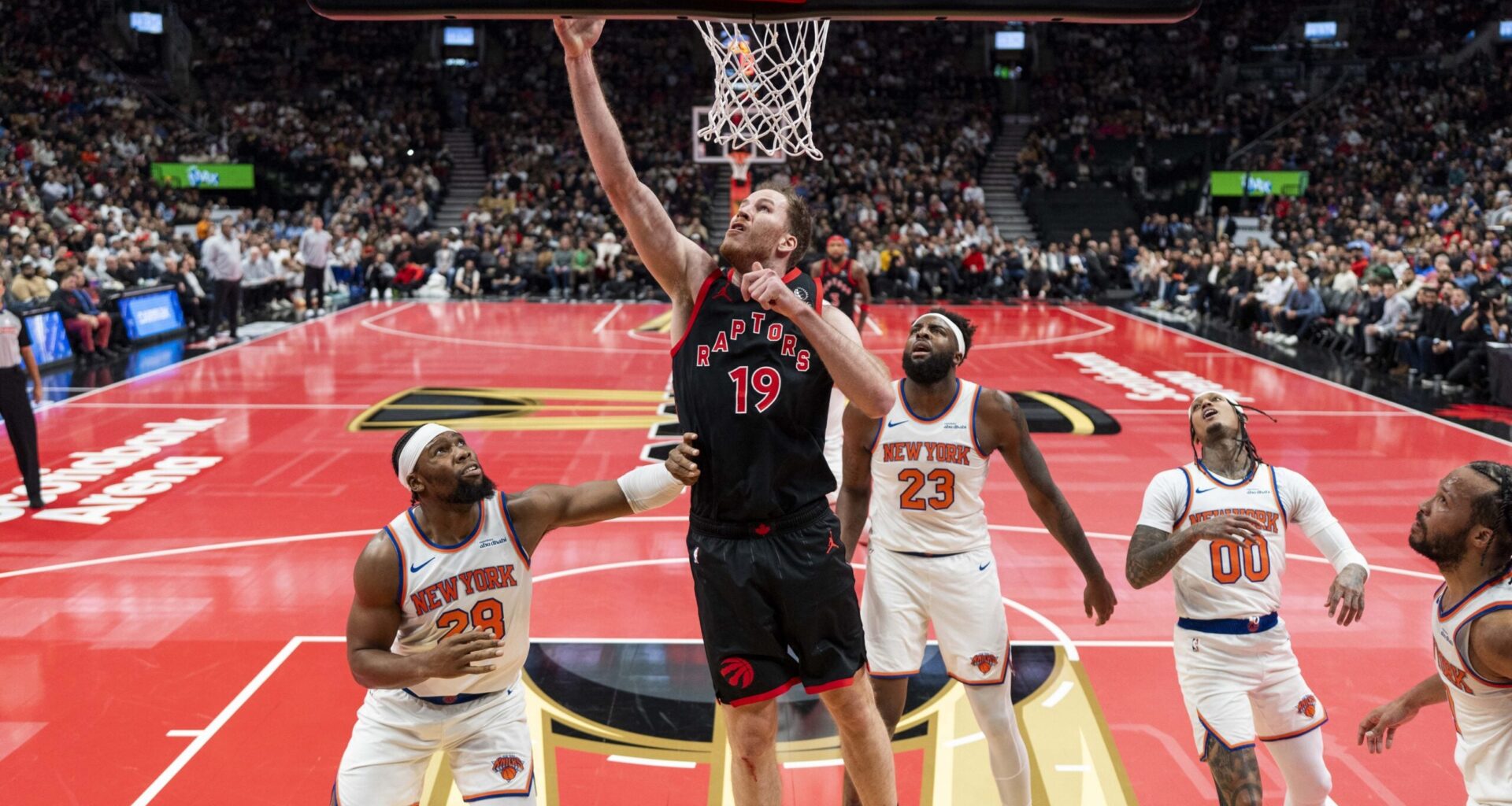
The Toronto Raptors regain more than just a starting center with Jakob Poeltl’s return. They regain structure. During his absence, Toronto’s defensive rotations stretched thinner, rebounding became inconsistent, and the half-court offense lacked interior balance. While the Raptors remained competitive in stretches, the underlying gaps were noticeable.
Poeltl’s presence stabilizes both ends of the floor. His impact may not always dominate the box score, but it reshapes how Toronto functions possession by possession.
What the Toronto Raptors Gain With Jakob Poeltl Back
Interior Defense Stability
Poeltl immediately restores rim protection. Without him, the Raptors often relied on early help rotations to protect the paint. That led to defensive scrambling and open perimeter looks after breakdowns. With Poeltl anchoring the middle, those rotations become cleaner. He absorbs contact at the rim, contests vertically, and allows perimeter defenders to stay home longer. That trust reduces over-helping and limits unnecessary fouls.
Toronto’s defensive structure becomes more predictable — and more sustainable.
Rebounding Control and Possession Value
Defensive rebounding was one of the clearest areas impacted by Poeltl’s absence. While Toronto’s wings are active, they are not traditional interior box-out anchors. Opponents generated extra possessions simply by winning position inside.
Poeltl restores rebounding balance. His positioning seals space and creates cleaner rebounding lanes for teammates. That means fewer second-chance opportunities allowed and more controlled transition chances going the other way.
Possessions become cleaner, and the Raptors can dictate tempo instead of reacting to missed assignments.
Pick-and-Roll Efficiency on Both Ends
Poeltl’s screening ability quietly improves Toronto’s half-court offense. He sets firm, controlled screens that create separation for ball handlers, especially for Scottie Barnes operating downhill. Without him, many actions stalled because the initial advantage was not created. With Poeltl back, guards can attack off stronger angles, and weak-side movement becomes more effective.
Defensively, his return allows Toronto to play more consistent drop coverage instead of hybrid schemes that exposed mismatches. That clarity simplifies assignments and reduces breakdowns against disciplined offenses.
Half-Court Balance and Offensive Flow
During Poeltl’s absence, Toronto leaned heavily on transition scoring. Against organized teams, that approach stalled. In half-court settings, the Raptors often lacked interior gravity.
Poeltl reintroduces that element. Even without demanding touches, his presence in the paint forces defenders to account for him. That opens space for cutters and shooters and gives Barnes more room to operate in the mid-post. The offense becomes less reliant on chaos and more capable of executing structured sets.
Physical Identity and Matchup Flexibility
Toronto has struggled at times against physical frontcourts. Without a true interior anchor, the Raptors were forced to play smaller and faster, which is not always sustainable.
Poeltl allows them to match size and absorb contact. They can control defensive possessions, close out games with stability, and lean into playoff-style basketball when needed. That flexibility matters over a long season.
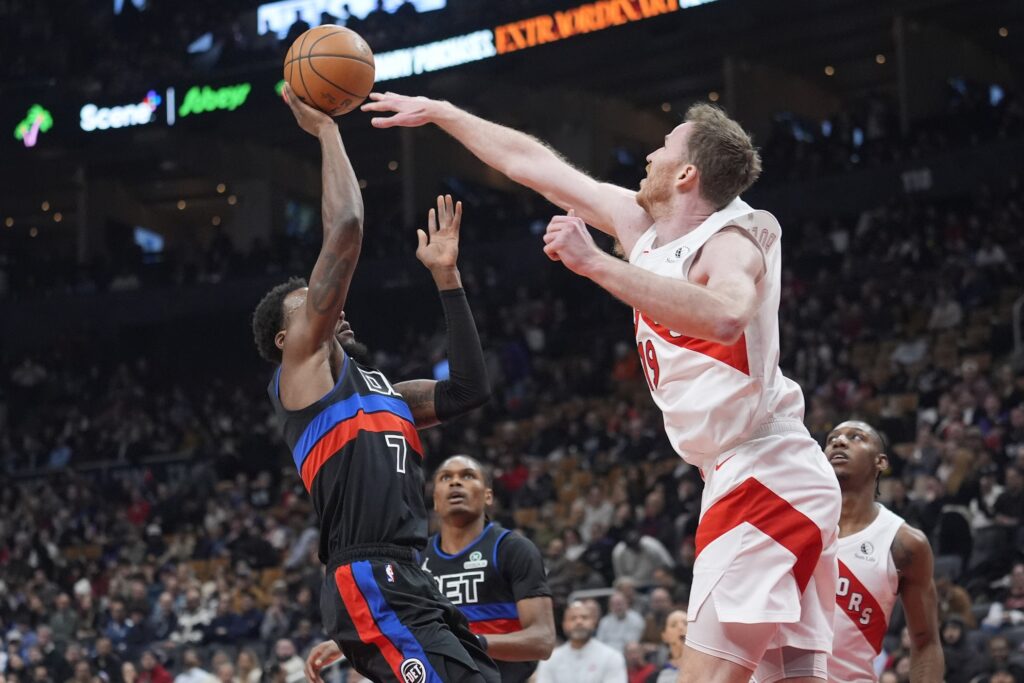 Feb 11, 2026; Toronto, Ontario, CAN; Toronto Raptors center Jakob Poeltl (19) defends against Detroit Pistons center Paul Reed (7) during the first half at Scotiabank Arena. Mandatory Credit: John E. Sokolowski-Imagn Images
Outlook Moving Forward
Poeltl’s return does not dramatically change Toronto’s ceiling overnight. What it does change is the team’s floor. Defensive rotations tighten. Rebounding stabilizes. Offensive actions regain structure.
For a Raptors team seeking consistency, that foundational stability could prove just as important as any scoring surge.
© Kevin Sousa-Imagn Images