
SALT LAKE CITY — The NBA made a statement this week, for better or worse, with a $500,000 fine aimed at the Utah Jazz for “conduct detrimental to the league.”
The topic of tanking has since run rampant on social media, with many questioning the true motive of the penalty and what is acceptable from the league’s perspective.
The following has been released by the NBA. pic.twitter.com/0JFQpOnOmF
— NBA Communications (@NBAPR) February 13, 2026
The Necessary Context For The Utah Jazz Tanking Fine
Beginning in the 2023-2024 season, the NBA rolled out the Player Participation Policy.
Its purpose was to “promote player participation… (in) the interests of fans, integrity of the game, player health, competitive fairness among teams, and transparency.”
One of the violations outlined in the policy reads:
Shutdowns – Teams must refrain from any long-term shutdown (or near shutdown) whereby a star player ceases participating in games or begins to play a materially reduced role in circumstances affecting the integrity of the game.
It’s worth mentioning that Utah has not engaged in season-long rest and load management patterns that the policy was originally drafted to prevent.
In back-to-back games on February 7 and 9, the Jazz sat Lauri Markkanen and Jaren Jackson Jr. for the fourth quarter of close games against the Orlando Magic and Miami Heat.
On the surface, looking strictly at Will Hardy’s rotations, the NBA’s case has some merit; benching two star players for the fourth quarter in back-to-back games falls under a ‘materially reduced role.’
But there are many more layers to unpack.
The @utahjazz have been fined $500,000 by the NBA for resting Lauri Markkanen and Jaren Jackson Jr. in games against the Miami Heat and Orlando Magic. #TakeNote https://t.co/46hZxaieMw
— KSL Sports (@kslsports) February 13, 2026
The Jazz’s Counterpoint
After the games in question and before the fine, it was announced that Jackson Jr. would miss the rest of the season to undergo knee surgery.
Reports said that Utah was made aware of the PVNS growth in his left knee after the post-trade physical. Jackson Jr. reportedly expressed a desire to make his home debut and log minutes with his new teammates before going under the knife. The Jazz shared this sentiment.
Does this not give the team grounds to pump the brakes on his playing time? In the past, the NBA has sent independent physicians to determine player health. Was that option skipped in this case?
This is important from Keith Smith.
Athletes don’t go under the knife willy-nilly; complications, even if rare, are simply far too dangerous to toy with.
Does this help the Jazz address a separate issue? Of course, but nobody is faking an injury. https://t.co/NfGzXHMQUu
— Ben Anderson (@BensHoops) February 12, 2026
Now, an easy rebuttal to these questions would be: “Why not space JJJ’s minutes throughout all four quarters instead of frontloading them through the first three?”
This brings us to the next point; Which is the fact that Utah is still a young, rebuilding team with a lot of roster questions left to be answered, starting as soon as next season.
With Markkanen and Jackson Jr. on the bench against Miami, three players in Utah’s young core combined for 24 of the team’s 30 points. Putting the young players in clutch situations is not only great practice, but helps the coaches and front office put together a portfolio on individuals and determine their fit in the long-term puzzle.
A perfect example is Kyle Filipowski, who plays the same position as the Jazz’s stars and was a second-round pick. Yes, he has shown flashes. But it is completely unknown if he will be an NBA starter or out of the league in three years. Why not do everything you can to figure that out as soon as possible? One could argue that one competitive quarter is more important than a month of garbage time minutes.
Most importantly for this point, the Jazz beat the Heat in that game. Yet the NBA still used the contest as a point in their press release.
One More Interesting Note On Utah Jazz Fine
The Player Participation Policy clearly lays out its penalties for violations. $100,000 for the first, $250,000 for the second, and an additional $1,000,000 for every subsequent violation.
The $500,000 figure does not align with the policy’s structure. The answer is in the press release, though. The policy was directly cited in relation to Indiana’s $100,000 penalty. But the Jazz were cited for “conduct detrimental to the league.”
As previously mentioned, shutting down players falls within the scope of the policy. So why were the Jazz hit with $400,000 more than what a first violation would typically cost?
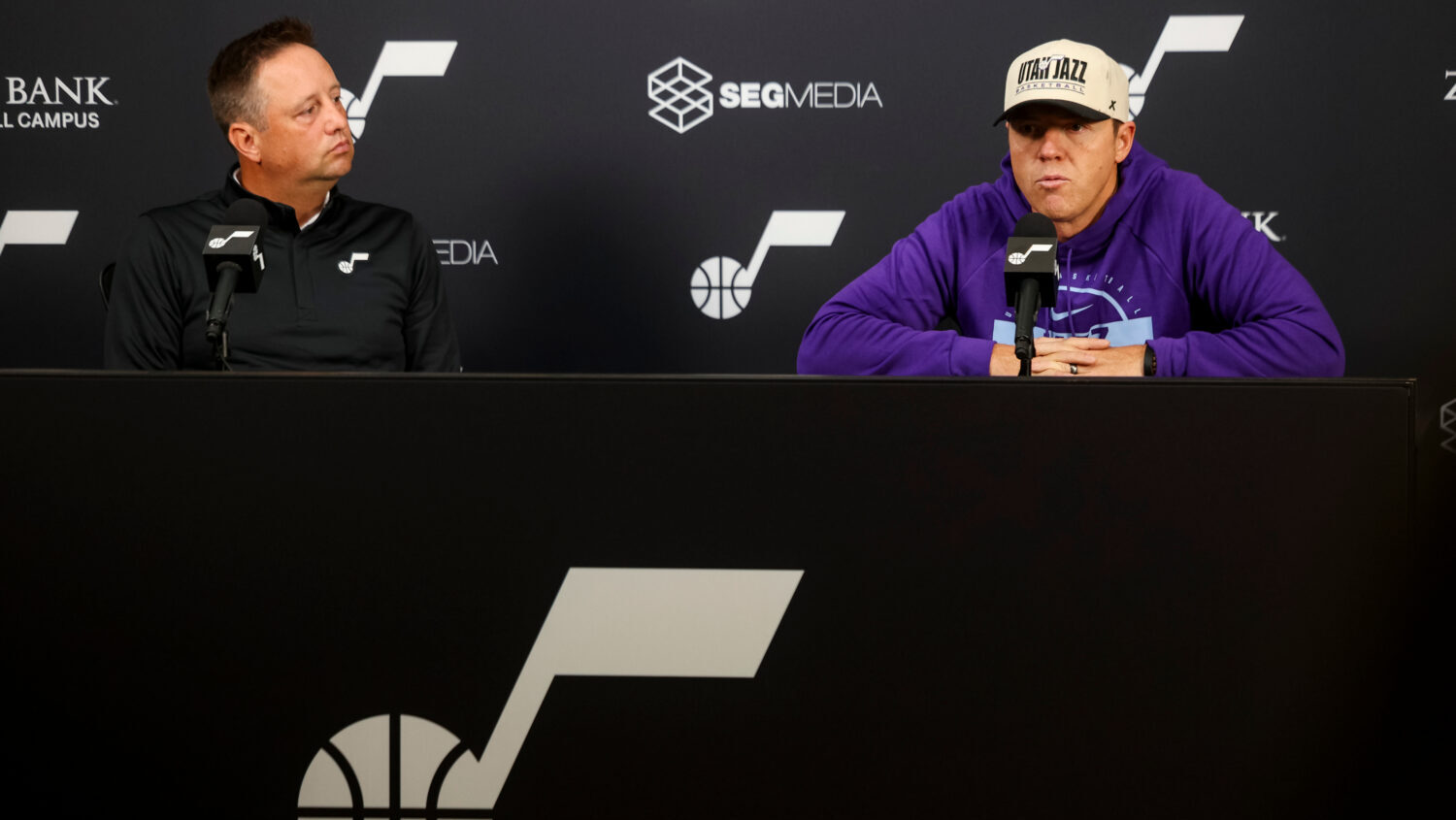
When asked if he would continue to sit Lauri Markkanen in the fourth quarters of games, Will Hardy said:
“I sat Lauri because he was on a minutes restriction. So if our medical team puts a minutes restriction on Lauri, I’ll try to keep Lauri healthy.”
— Ben Anderson (@BensHoops) February 13, 2026
Nonetheless, the move made by the NBA has raised more questions than can even be answered.
If league penalties are being assessed without full explanation and research, and if the league is comfortable policing rotations, it may be entering territory it never intended to govern.
Chandler Holt is a co-host of the Jazz Notes podcast, a Locals In The NFL Insider, and Digital Sports Producer for KSLSports.com. Follow Chandler on X for Utah Jazz and Locals In The NFL updates.
Take us with you, wherever you go.