
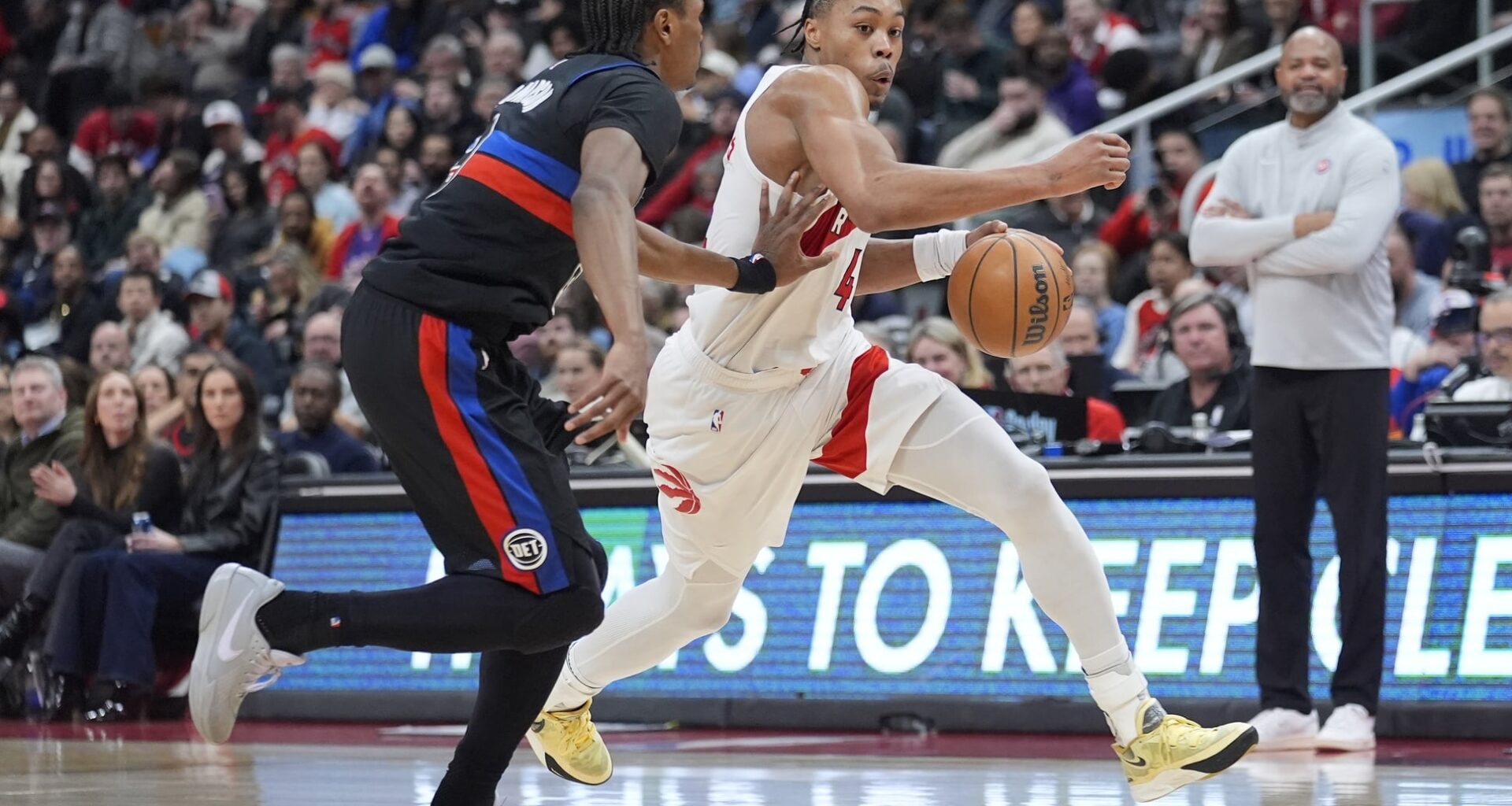
The Toronto Raptors hold a 4–13 record against the top-10 teams this season. On the surface, that number raises legitimate concern. Teams with postseason aspirations are ultimately judged by how they perform against elite competition, and Toronto’s results suggest there is still separation between competitive and contending.
Context matters, however. Three of those four wins came against Cleveland earlier in the season, before roster adjustments and stylistic shifts strengthened their structure. That nuance tempers the narrative — but it does not erase the broader pattern. The real question remains: should the Raptors be worried about their struggles against top-tier opponents?
Should The Raptors Worry About Their Record Against Top Teams?
The 4–13 Record Reflects Structural Gaps
A record like 4–13 is rarely accidental. While several of those games were competitive deep into the fourth quarter, the common thread has been execution under physical pressure. Elite teams consistently win the rebounding battle and control the pace. They limit transition opportunities and force opponents into half-court possessions. That formula has repeatedly challenged Toronto. Against disciplined defenses, the Raptors’ offense becomes more difficult to sustain. Driving lanes shrink. Help defense rotate earlier. Shot quality declines late in possessions. These issues do not always show in highlight stretches, but they surface over the course of 48 minutes. That pattern has not been coincidental — it has been structural.
Physical Teams Disrupt Toronto’s Rhythm
One recurring theme in losses against top-10 opponents is physicality. Toronto thrives when it can push tempo, generate early offense, and attack before defenses are set. Against physical teams that slow the game down and dominate interior positioning, that rhythm fades.
Rebounding battles tighten. Paint touches become contested. Possessions stretch deeper into the clock. Playoff-style basketball emphasizes strength and discipline in the half-court. That environment has exposed the areas where the Raptors remain inconsistent.
Scottie Barnes Embraces The Physical Matchup
Not all of Toronto’s struggles stem from a lack of competitiveness. Scottie Barnes, in particular, has shown he can handle physical environments. Barnes does not shy away from contact. He attacks downhill, absorbs bumps in the paint, and competes on the defensive glass. Against elite teams, he often raises his defensive intensity, taking on tougher assignments and switching across positions. The issue is not Barnes’ willingness to play physically, but the team’s ability to sustain that identity collectively. When Barnes initiates contact and collapses the defense, the Raptors look more structured. However, when opponents load up in the paint and force perimeter isolation, Toronto’s offensive flow becomes less efficient. Barnes’ development as a late-game creator will be central to closing the gap against top competition.
Alijah Martin’s Physical Minutes Provide A Glimpse
Another encouraging development has been the physical edge shown by Alijah Martin in his limited minutes. Martin competes defensively. He pressures ball handlers and does not hesitate to absorb contact on drives. In short stretches, his energy has injected toughness into the rotation. While his role remains situational, those minutes highlight something important: Toronto can match physical intensity when it commits to it. The challenge is sustaining that approach over larger rotations and against deeper opponents. Physical play cannot be isolated into individual bursts. It must be systemic.
Half-Court Execution Remains The Separator
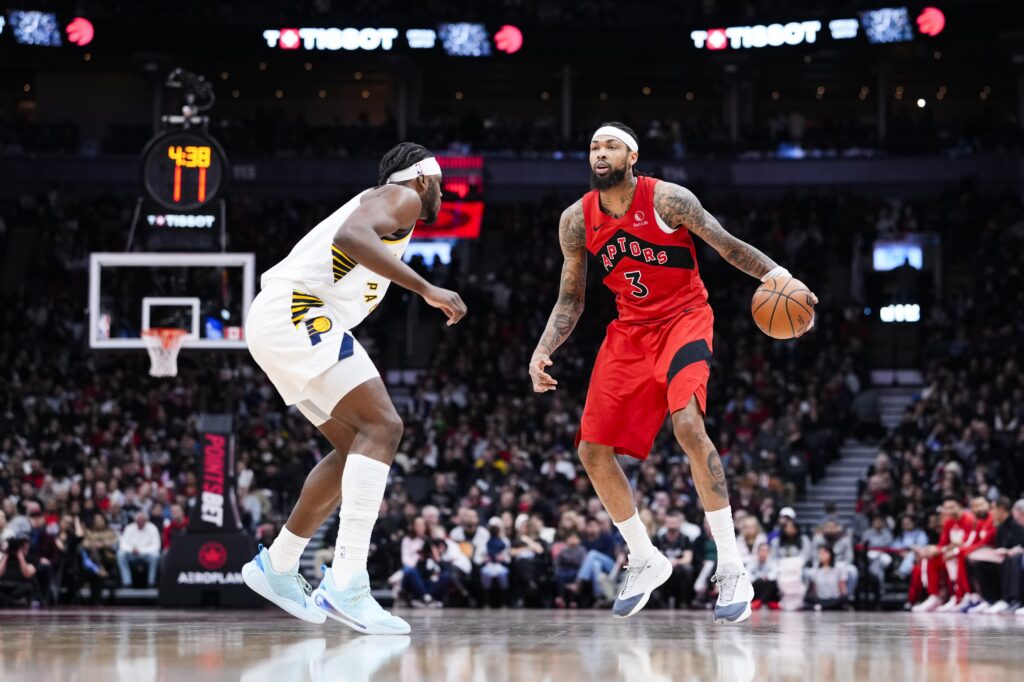 Feb 8, 2026; Toronto, Ontario, CAN; Toronto Raptors forward Brandon Ingram (3) dribbles against Indiana Pacers forward Jarace Walker (5) during the first half at Scotiabank Arena. Mandatory Credit: Kevin Sousa-Imagn Images
Against elite defenses, transition chances decrease significantly. Top teams protect the ball and limit live-ball turnovers, forcing Toronto into organized half-court sets where execution becomes decisive. Without consistent interior scoring pressure or reliable late-clock shot creation, possessions can stagnate. Isolation increases. Ball movement slows. Efficiency dips. The Raptors’ defensive competitiveness often keeps games close, but closing them requires half-court precision that elite teams consistently display. This is not solely about talent — it is about composure, repetition, and late-game precision under pressure.
Is This Trend Fixable?
Ultimately, the Raptors record against top teams reflects both developmental progress and structural gaps that still need to be addressed.
The concern surrounding a 4–13 record is fair, but it is not irreversible. Barnes continues to evolve as a primary initiator. Lineup stability improves when the frontcourt is healthy, particularly when Jakob Poeltl anchors the interior. Role definition sharpens as the season progresses. Most importantly, physical consistency can improve with experience. Young teams often struggle against playoff-caliber discipline before learning how to adapt. The Raptors have shown flashes of matching elite intensity. The next step is sustaining it across full games.
Final Outlook
The numbers suggest a reason for concern. The context suggests patience. Toronto’s struggles against top-10 opponents highlight areas that still require growth: physical rebounding consistency, half-court execution, and late-game composure. Should the Raptors be worried? Concern is justified — especially if physical matchups continue to dictate outcomes. Panic, however, would ignore the developmental trajectory still unfolding in Toronto. The gap is real. Whether it remains permanent will depend on how Toronto responds the next time elite competition tests its identity.
Featured Image: John E. Sokolowski-Imagn Images