
Getty
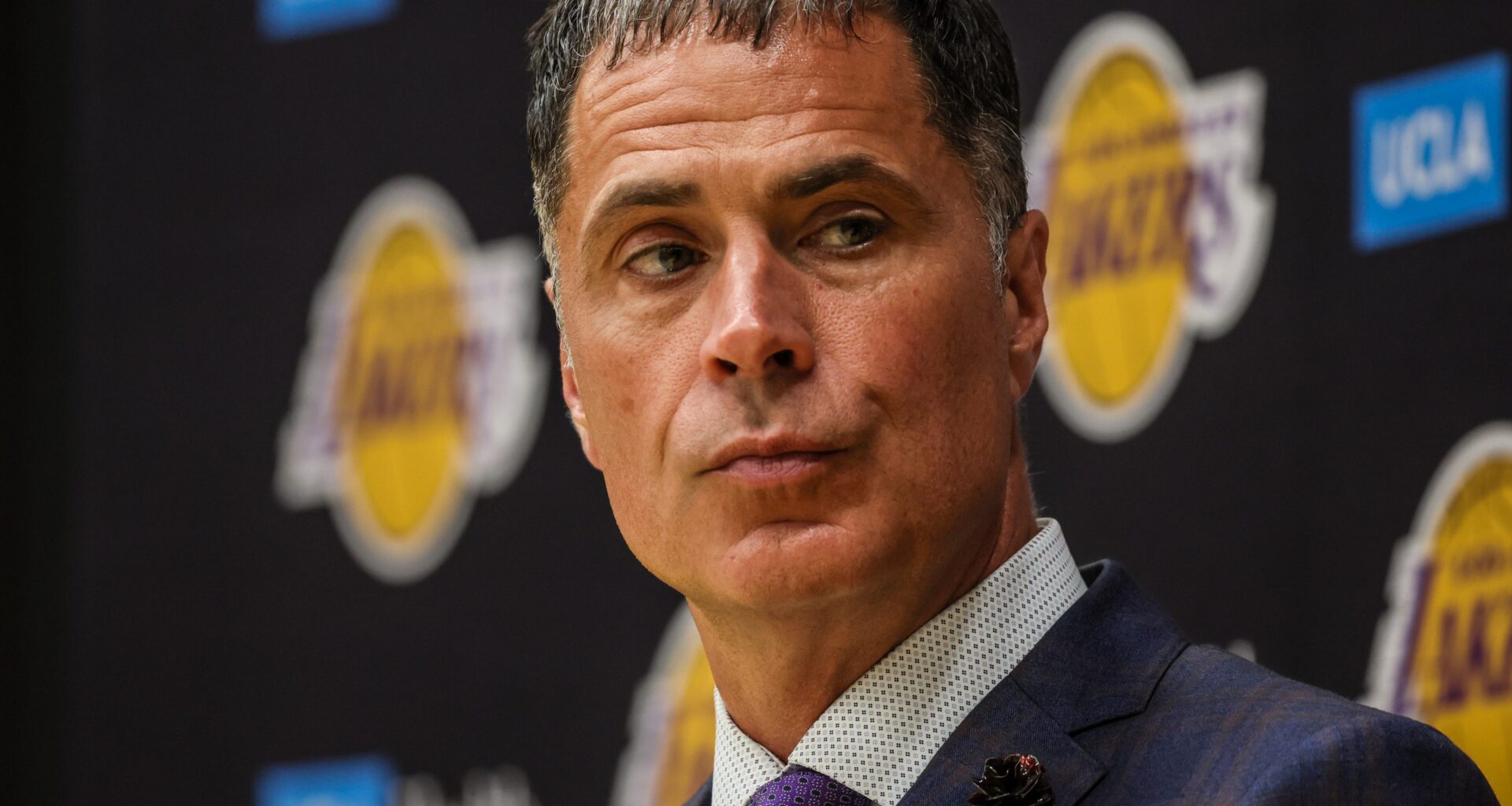
Lakers General Manager Rob Pelinka during a press conference in June 2024
As the February 5 trade deadline came and went, it became increasingly clear that the Los Angeles Lakers were committed to a cautious approach.
Rather than making aggressive upgrades, the front office prioritized preserving long-term financial flexibility. Luke Kennard was the lone addition, brought in to address the team’s need for perimeter shooting.
Crucially, the move did not compromise the Lakers’ projected $55 million-plus in cap space this coming offseason, reinforcing the organization’s long-term vision.
The buyout market represented the next opportunity for general manager Rob Pelinka to strengthen the roster, with one final roster spot still available. Several notable names quickly emerged as potential fits.
Instead of pursuing an external addition, however, Pelinka opted to promote from within, signing G League standout Kobe Bufkin to a two-year NBA deal following his earlier 10-day contract stint with the team.
The move surprised many at the time and is already drawing increased scrutiny as opportunities elsewhere slipped away.
Lakers Miss out on Talented Buyout Targets
Questions have since emerged about whether Los Angeles acted too quickly in filling its final roster spot.
In the days that followed Bufkin’s signing, several intriguing candidates sat on the buyout market, including Lonzo Ball, Cam Thomas, Haywood Highsmith, and Jeremy Sochan.
With their roster full, the Lakers were left to watch from the sidelines. Thomas signed with the Milwaukee Bucks. Sochan reached an agreement with the New York Knicks. And now, Highsmith has also come off the board.
According to ESPN’s Shams Charania, the 29-year-old forward has agreed to a multi-year deal with the Phoenix Suns after considering “multiple playoff teams.”
Lake Show Life’s Maxwell Ogden believes the Lakers missed a valuable opportunity by not pursuing Highsmith.
“It’s a painful development for a Lakers team that desperately needs low-cost talent that can compete and contribute on both ends of the floor,” Ogden wrote. “Though the Lakers weren’t directly named, Highsmith would’ve been a perfect fit in their rotation as a two-way player who would’ve checked multiple pivotal boxes.”
“For a Lakers team that has a well-documented need for both three-point shooting and defense at the point of attack, failing to sign Highsmith is an agonizing twist. Allowing a team they’ve faced in the playoffs a remarkable 13 times only stiffens the blow.”
Head coach JJ Redick has previously downplayed the importance of the buyout market, stating that it “very rarely produces a player that impacts a team’s playoff chances.”
He also pointed to medical concerns surrounding some available players, particularly injury-prone options such as Ball and Highsmith.
Lakers Prioritized Long-Term Security Over Short-Term Opportunity
Redick’s concerns appear to be rooted in caution rather than oversight. According to NBA insider Chris Haynes, teams have been seeking access to Ball’s medical records before seriously considering a move.
Highsmith, meanwhile, has missed the entire season due to injury, though HoopsHype’s Michael Scotto previously reported that he is healthy and ready to return.
Still, this year’s buyout market offered more upside than usual.
Thomas, just 24 years old, averaged 24 points per game last season and has already made an impact with Milwaukee, scoring 34 points in just 25 minutes during a recent win over the Orlando Magic.
Sochan, at only 22, will now bring youth and defensive versatility to a contending Knicks team after being selected in the top-10 of the 2022 NBA Draft.
Both players address areas where the Lakers have struggled, particularly defense and bench production.
Ultimately, the Lakers chose to secure Bufkin, who earned the opportunity after averaging a G League-leading 27.7 points per game while shooting an impressive 43.1% from three-point range.
Crucially, Bufkin was playing on a standard G League contract, meaning he was free to sign with any NBA team, despite being affiliated with South Bay.
The decision also likely reflected a desire to avoid a repeat of 2024, when the Memphis Grizzlies signed Scotty Pippen Jr. during his stint in Los Angeles, highlighting how quickly unsecured G League talent can be poached.
Alternative options remained available with Bufkin, including a second 10-day contract or a two-way deal that would have preserved roster flexibility. Instead, the Lakers committed early, prioritizing internal development and long-term planning.
In doing so, they missed out on proven targets in Thomas, Sochan, and Highsmith, all of whom could have provided immediate help as experienced, dependable NBA contributors.
More Heavy on Lakers
Loading more stories