
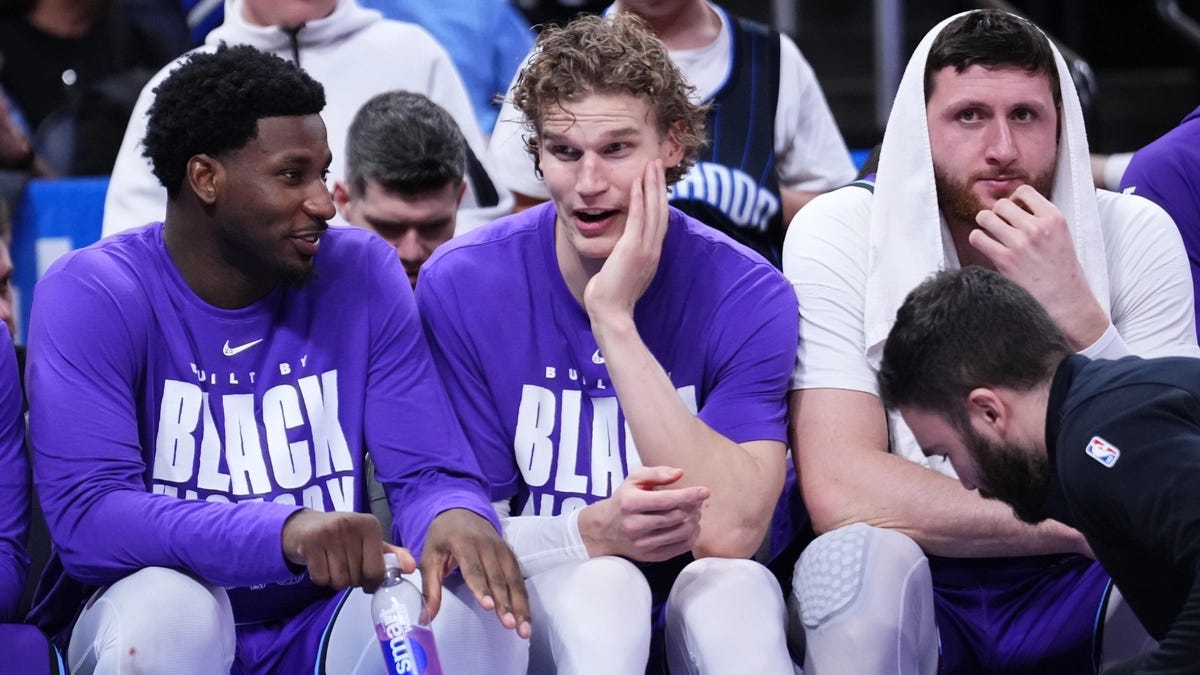
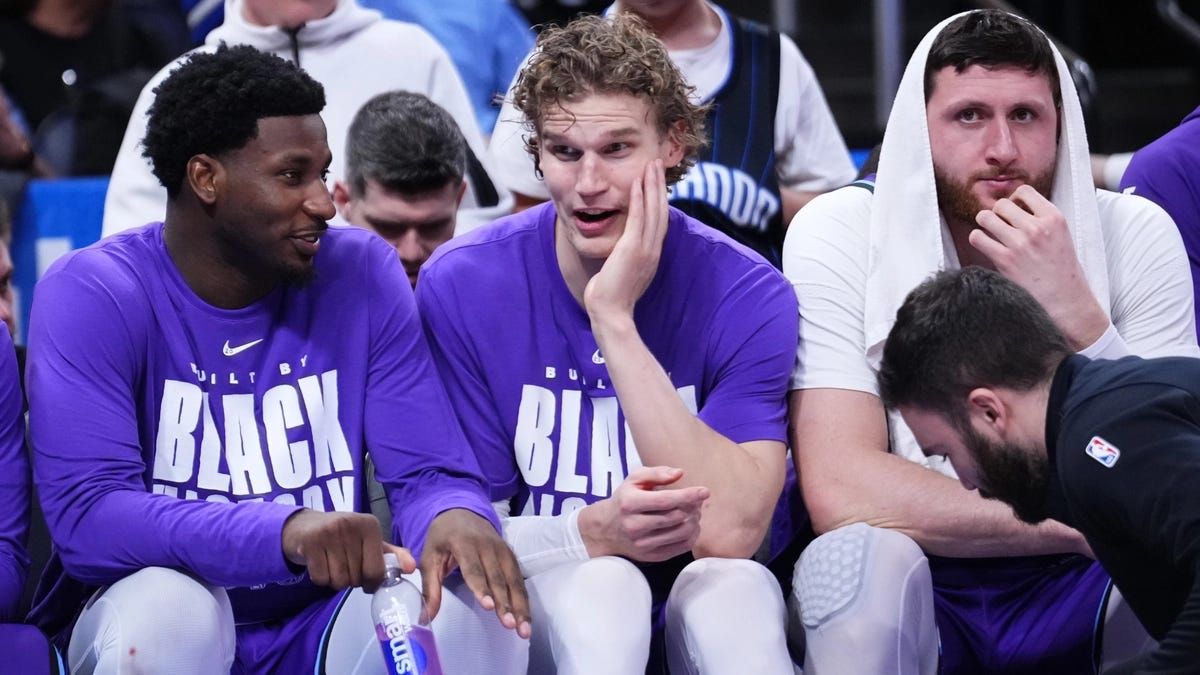
 Jaren Jackson Jr. and Lauri Markkanen of the Utah Jazz sit on the bench in the second half against the Orlando Magic on February 7, 2026. (Rich Storry/Getty Images)
NBA tanking is far from a new problem. Dating back to at least the early-to-mid 1980s, when franchise-altering stars like Ralph Sampson and Hakeem Olajuwon came up in the draft, it was suspected that teams were losing games on purpose to improve their chances at the top pick. In fact, the NBA introduced the draft lottery in 1985 specifically because the Houston Rockets were accused of tanking to have a coin-flip’s chance at Olajuwon via the worst record in the Western Conference.
Of course, tanking back then still meant Houston won 29 games that season. This year, my stats-only forecast thinks six teams — the Kings, Wizards, Nets, Pelicans, Pacers and Jazz — won’t even get to 26 wins, and the betting markets aren’t even sure the Kings will get to 20. The Jazz and Pacers were recently fined a combined $600,000 for “overt behavior […] that prioritizes draft position over winning,” and commissioner Adam Silver said at his annual All-Star press conference that “every possible remedy to stop” tanking is being considered — even potentially drastic changes.
“It’s time to take a fresh look at [the draft lottery] and to see whether that’s an antiquated way of going about doing it,” he said.
That may sound like a potential turning point, perhaps even the prelude to a structural overhaul. But we’ve been here before: When presented with no shortage of potential ways to combat tanking over the past decade-plus, the NBA has always opted for incremental changes at most. And, at least at the macro level, the numbers don’t suggest that approach was misguided.