
On Feb. 5, the Atlanta Hawks were 26-27 and found themselves just four games back of the Philadelphia 76ers for the sixth seed.
As the trade deadline approached, the word on the street was that the Hawks were looking to trade for Dallas Mavericks star big man, Anthony Davis. Atlanta certainly had the assets to make it happen, but as the deadline passed, the Hawks chose not to make a big push.
While a deal for Davis fell through, the Hawks were still interested in another member of the Mavericks’ frontcourt—Daniel Gafford. Unfortunately, the asking price was too high, and Atlanta passed on the opportunity.
A driving force behind Atlanta considering an “all-in” push at the deadline is its remaining strength of schedule. The Hawks will play the 27th toughest schedule in the NBA post-All-Star break. What’s more, 16 of the Hawks’ final 26 games are at home.
However, despite being so close to a top-six seed and having a favorable second-half schedule, Atlanta chose not to make a splash. Instead, they decided to value their flexibility and asset management over chasing a playoff spot.
Not Meeting Expectations
Because of the injuries to Jayson Tatum and Tyrese Haliburton during the playoffs last season, the Eastern Conference was seen as wide open. Atlanta attempted to take advantage of this by signing Nickeil Alexander-Walker and Luke Kennard in free agency. The Hawks also traded for Kristaps Porzingis from the Boston Celtics. All signs pointed towards Atlanta having a good season.
But everything quickly fell apart as the Hawks attempted to build their roster around Trae Young. During the fifth game of the season versus the Brooklyn Nets, Young suffered a knee injury that was later diagnosed as an MCL sprain. He was ruled out for at least four weeks.
An @emoryhealthcare injury update:
Trae Young, who left Wednesday’s game at Brooklyn due to a right knee sprain, underwent an MRI on Friday at the Emory Sports Medicine Complex. The MRI confirmed a right knee MCL sprain and no additional structural damage. Young has begun… pic.twitter.com/hXebsQp54J
— Atlanta Hawks (@ATLHawks) November 1, 2025
Atlanta structured their roster around Young, and they now had to adjust without him.
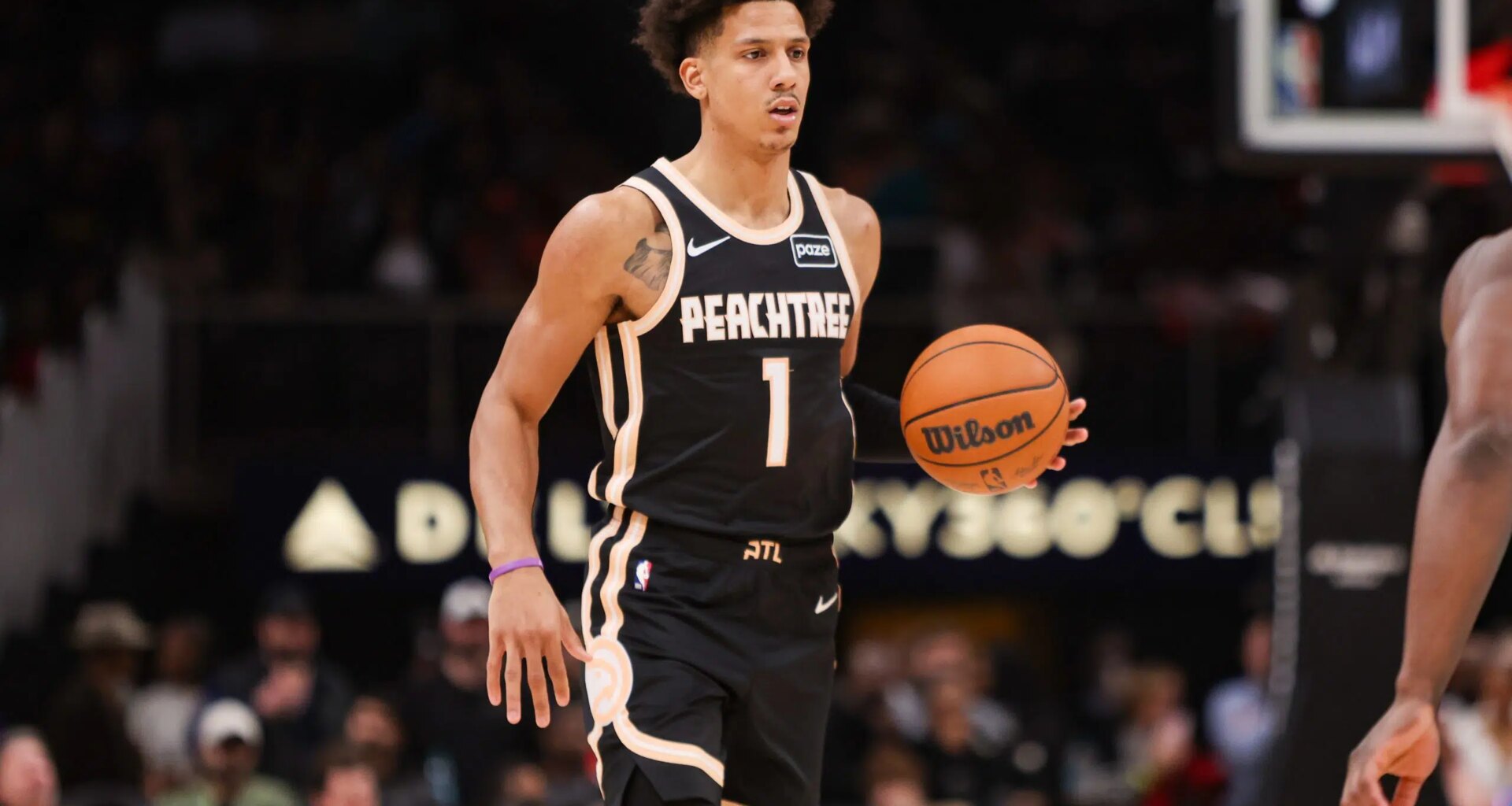
By Nov. 30, the Hawks got on a roll. They were a top-six seed, and Jalen Johnson had taken over the role as the number one option. In fact, questions even began to arise about whether or not Atlanta was better without their franchise star.
By the time Young returned on Dec. 18, the Hawks were 15-13 and still in good shape. However, upon his return, Atlanta proceeded to go on a seven-game losing streak that derailed the season. The Hawks subsequently decided to move Young to the Washington Wizards on Jan 7, ending his near eight year tenure with the franchise.
Flexibility & Asset Management
After the trade deadline, Hawks General Manager Onsi Saleh spoke to the media about the process going into the deadline.
“We wanted to accumulate assets…when I came here two years ago, we were at a deficit of draft assets,” he said.
Before he was in charge, the Hawks acquired Dejounte Murray in 2022 and Saddiq Bey in 2023. These moves cost them three future first-round picks, a first-round pick swap, and five future second-round picks combined. As such, Saleh made it a priority to recoup pick assets at the deadline to make up for these trades. So, he traded Luke Kennard and Vit Krejci at the deadline and received three future second-round picks in return.
The Los Angeles Lakers are trading Gabe Vincent and a 2032 second-round pick to the Atlanta Hawks for Luke Kennard, sources tell ESPN.
— Shams Charania (@ShamsCharania) February 5, 2026
The Atlanta Hawks are trading guard Vit Krejci to the Portland Trail Blazers for Duop Reath and two future second-round picks, sources tell ESPN. Krejci has averaged 9 points and 2.2 3-pointers made per game on 42.3% shooting, which ranks top 20 in the NBA. pic.twitter.com/3MAOTnks5M
— Shams Charania (@ShamsCharania) February 1, 2026
In terms of flexibility, the deadline served as an opportunity to create as much cap flexibility as possible. Currently, the Hawks have three contracts (CJ McCollum, Gabe Vincent, and Jock Landale) that are expiring after the season. Three other players (Jonathan Kuminga, Zaccharie Risacher, and Mouhamed Gueye) have team options for next season.
As of now, Atlanta projects to have just $155 million on the books for next season, which puts the Hawks way under the luxury tax and aprons. There’s no telling what Atlanta plans to do with their payroll space, but Saleh has made it clear he wants to build for the long-term future.
“We aren’t in a place to trade three first-round picks, two first-round picks to try and figure this out. Everything is future-forward,” he said.
Young, Developing Hawks
Among the 14 players on guaranteed contracts, only three of them are at least 30 years old. With so much youth on the Hawks’ roster, there is still a lot of development that can take place. Johnson, who has taken the role of the franchise player, is just 24 years old. Given that, there is no rush to build a team by trading major assets.
While that can certainly be an option in the future, the Hawks want to maintain flexibility. Based on how this season has gone, the best option is to play out the second half of the season and reevaluate in the offseason. So, with many options now at their fingertips, the future is starting to look bright again in Atlanta.