
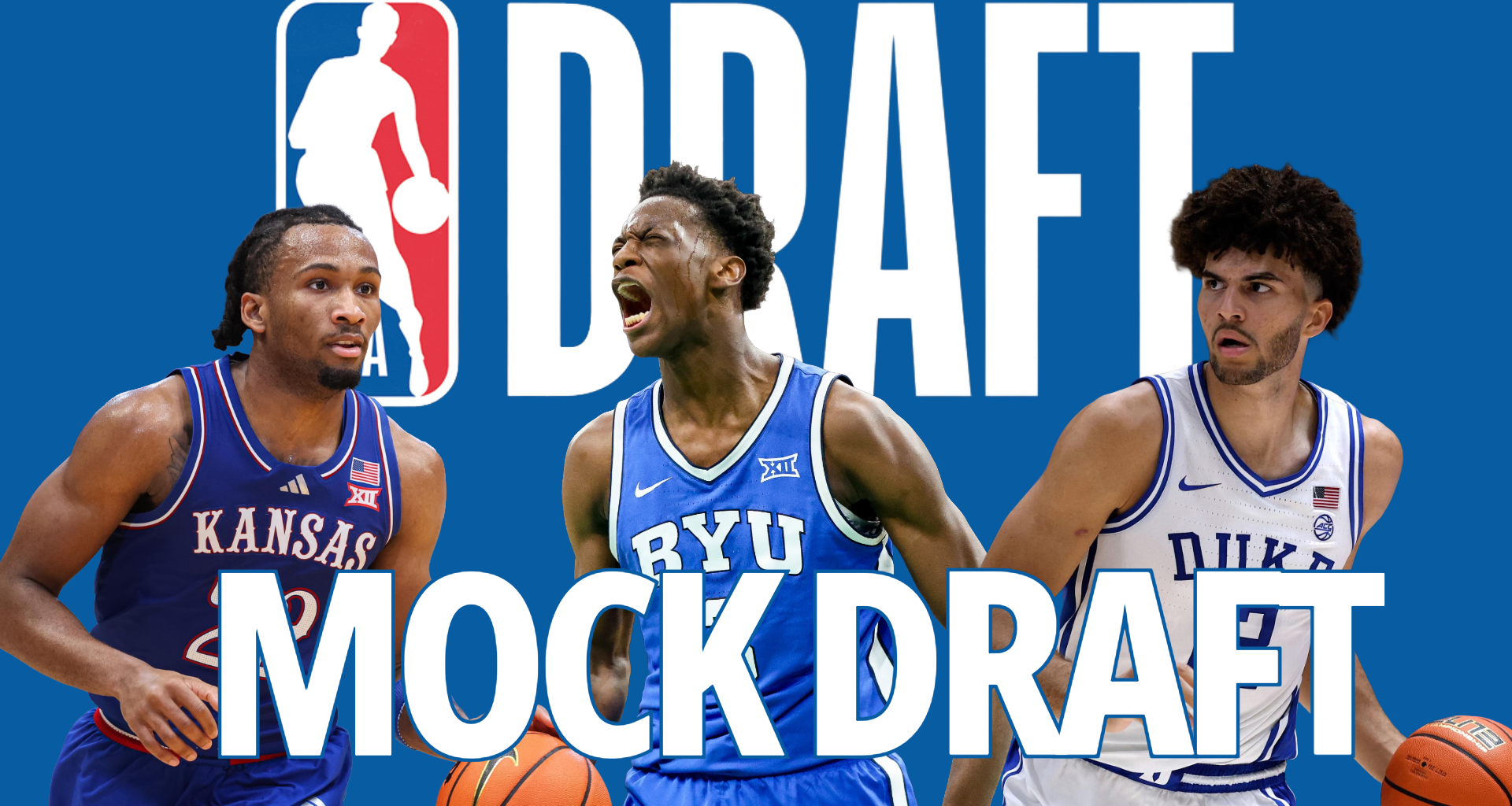
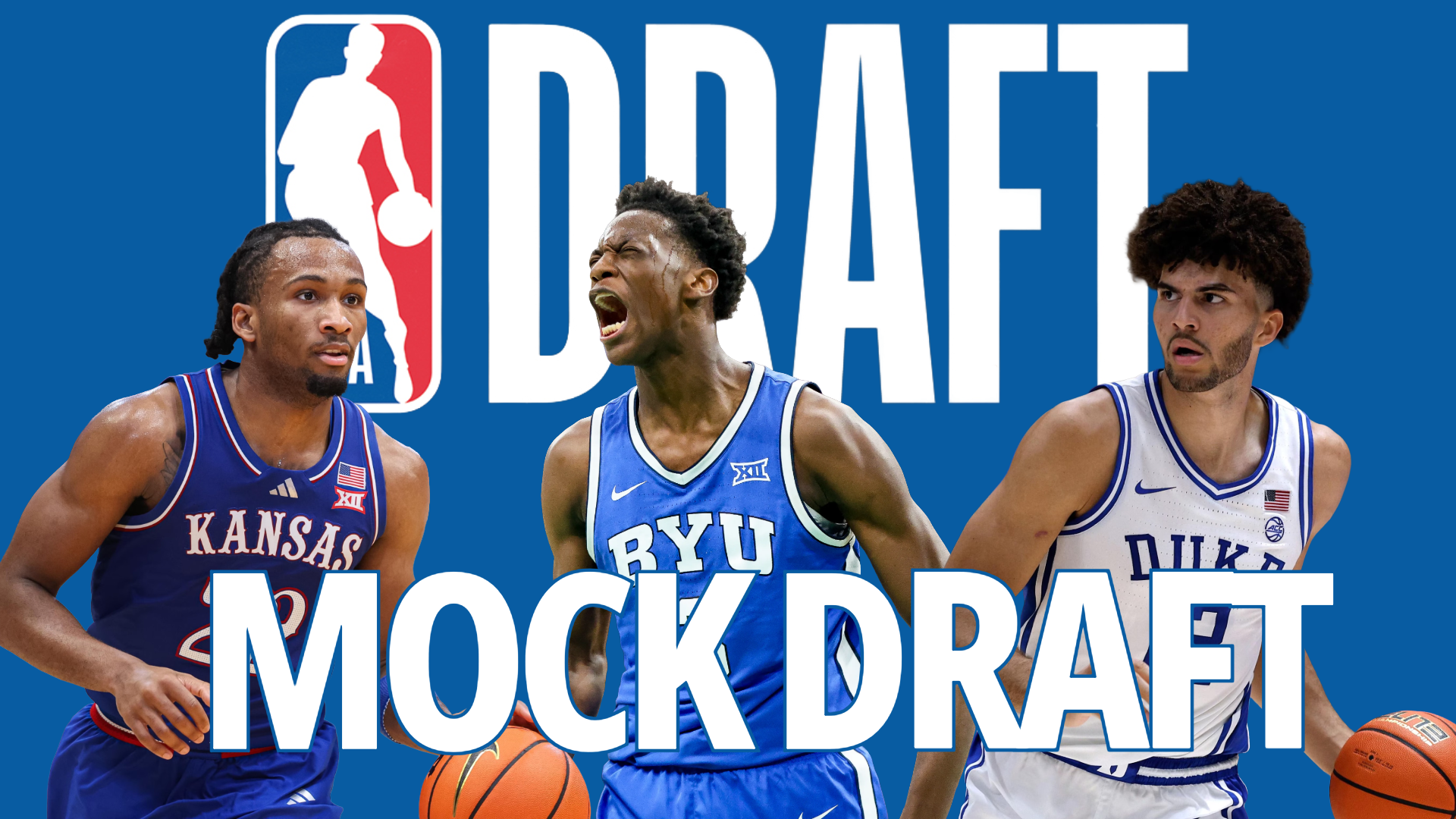
After the NBA trade deadline and All Star Game, the draft order is becoming clearer and clearer as teams tank for a top chance at a loaded freshman class. With conference tournaments happening in less than two weeks, the cream of the crop of this year’s draft class is shaping up on who will be taken in this year’s lottery. Here is who I believe will be taken in the 2026 NBA Draft.
More NBA Content from TWSN
Jayson Tatum is Forcing the Boston Celtics to Make a Decision
Contenders vs Pretenders After The NBA Trade Deadline
Why the Anthony Davis Trade Will Be a Disaster for the Wizards
Sacramento Kings: Darryn Peterson | SG | Kansas
Player Comparison: Klay Thompson
The Kings desperately need guard help after trading De’Aaron Fox last season. Peterson allows them to get an athletic guard who can spot up from anywhere behind the three-point line. Peterson’s averages of 19.8 points per game (ppg), 3.9 rebounds per game (rpg) and 1.2 steals per game (spg) make him a player very similar to the style of Thompson as a primarily shooting threat that can supply solid perimeter defense.
Shooting 41.3% from three on 6.6 attempts per game, Peterson is by far the best shooter in this class and would fill an instant hole at guard. The biggest worry of Peterson is he’s only played in 14 games this season, battling hamstring strains, ankle sprains and even the flu to limit his availability. Still, many scouts have him pegged as the top prospect in this draft.
Washington Wizards: Cameron Boozer | PF | Duke
Player Comparison: Paolo Banchero
Boozer is by far the most consistent player in this year’s draft. Averaging 22.8 ppg, 10 rpg and 1.7 spg, Boozer would add plenty of value on both sides of the floor as a two-way forward. Over this season, Boozer has never scored below 14 points while scoring 35 on two separate occasions, showing his consistent impact on the offensive end.
As the son of two-time NBA All-Star Carlos Boozer, Cameron has the genes to be an NBA great with the stats to back it. At 6-foot-9, 250lb, Boozer is the modern definition of a stretch four, shooting 39.4% from three and an incredibly efficient 58.2% from the floor. In Washington, Boozer can join a group with veterans like Trae Young and Anthony Davis while being able to run the small forward with Alex Sarr likely starting at center.
Boozer is much like Banchero as the two’s frames are very similar, with Banchero only being one inch taller, while their playstyle of big, athletic forwards who are aggressive in the paint.
Atlanta Hawks (Via New Orleans): AJ Dybantsa | SF | BYU
Player Comparison: Tracy McGrady
Averaging a Division I-best 24.4 ppg while standing at 6-foot-9 210lb, Dybantsa may be the purest scorer in this class. Hence, the comparison to McGrady. As a similar build, Dybantsa is a three-level scorer, shooting 53.6% from the floor and 35.9% from three, and leads the Big 12 in offensive win shares at 3.6.
Pairing with Jalen Johnson in Atlanta, the duo could combine to become a dynamic two-man scoring threat to propel the Hawks. Along with Nickeil Alexander-Walker and Onyeka Okongwu, the addition of Dybantsa could make Atlanta instant competitors in the Eastern Conference.
Indiana Pacers: Keaton Wagler | SG | Illinois
Player Comparison: James Harden
Wagler has been one of the biggest risers in this draft class, shaking up the rankings as the second-best guard in this class. His playmaking has shown flashes, averaging 4.3 assists per game (apg) and a 23.6% assist percentage.
His best trait is undoubtedly scoring — 18.5 ppg paired with a 43.2% three point percentage — where he flashes deep range and his frequency of running the pick-and-roll at Illinois makes him a similar archetype to what Harden was with the Rockets. Paired with Tyrese Haliburton and Ivica Zubac, they could form a dynamic, fast-moving offense that uses their preexisting pick-and-roll build.
Brooklyn Nets: Kingston Flemings | PG | Houston
Player Comparison: Derrick Rose
Flemings is another freshman guard who’s stood out in this year’s class. The 6-foot-4 Cougar’s guard is another strong passer, but rather than a primarily shooting point guard, he’s much more similar to the likes of Rose, Fox or Russell Westbrook with a quick first step and strong finishing skills at the rim.
He averages 16.6 ppg and 5.3 apg, with a 33.4% assist rate while shooting 49.7% from the field and 38.8% from three. He’d be a valuable commodity for Brooklyn, whose leader in assists per game is center Nic Claxton at 4.0. Flemings would instantly be the facilitator of an offense in desperate need of one to get the ball to their shooters.
Utah Jazz: Caleb Wilson | PF | North Carolina
Player Comparison: Chris Bosh
Wilson at 6-foot-10, 215 lb is very much reminiscent of a prime Chris Bosh. Averaging 19.8 ppg and 9.4 rpg to go along with 1.4 blockers per game (bpg) and 1.5 spg. His 4.4% block percentage is great for a primary power forward, and he remains efficient at the rim, shooting 61% on two point field goals while leading Division I in dunks.
Wilson could add to Utah’s already tall lineup by playing either forward position with the ability to play at center. His one weakness is an outside shot, only attempting 1.1 threes per game and shooting 25.9%. His poor outside shooting could cause struggles running an offense with Walker Kessler and Jarren Jackson Jr., but his ceiling is too high to pass up.
Dallas Mavericks: Mikel Brown Jr. | PG | Louisville
Player Comparison: Trae Young
Brown Jr. is another elite passer in this class, his 31.8% assist percentage and 5.1 assist per game would make him a perfect running mate for rookie Cooper Flagg. His 17.9 ppg have fluctuated, as he’s been streaky through the year. He scored 45 points Feb. 9 against NC State, making 10 threes and shooting many from NBA range.
He’s had his bad games, with four single digit performances. His streakiness have hurt is shooting percentages, shooting 40.5% from the field and 33.6% from three. His peaks have been phenomenal, but his streakiness could be a cause for concern when he makes the NBA.
Memphis Grizzlies: Nate Ament | SF | Tennessee
Player Comparison: Michael Porter Jr.
Ament is an athletic, 6-foot-10 forward with elite scoring. Averaging 17.7 ppg, Ament has been a major part of Tennessee’s strong season. He’s a high volume shooter attempting 12.6 field goals per game, shooting 42.1%, but has logged nine 20+ point games in 25 starts. He does struggle from three, shooting 31.7%, on four attempts per game.
In Memphis, Ament would add a slashing forward to bring in a new era of Grizzilies basketball after the team dealt cornerstones Desmon Bane and Jarren Jackson Jr. in the last year. His defense is an underrated aspect of his game with 1.5 defensive win shares, with his size allowing him to guard all five positions.
Milwaukee Bucks: Darius Acuff Jr. | G | Arkansas
Player Comparison: Jalen Brunson
Acuff is a high-level passer with an ability to score at all three levels. He’s leading the 20th ranked Razorbacks in points at 21.2 and assists at 6.3, the highest mark in the SEC. He also leads the SEC in assist percentage at 32.5% and 3.5 win shares. He’s been consistent offensively, with two 30 point games and no single digit performances.
His offensive style is reminiscent of Brunson in his crafty playmaking and three point shooting. At 43.2%, his mark is one of the highest in the conference, and 50.3% overall. An offensive guard like Acuff Jr. could greatly benefit Giannis Antetokounmpo if the team decides to hold onto him long term. Even if his defense is average at best, his playmaking and shooting make up for those shortcomings.
Chicago Bulls: Karim Lopez | F | New Zealand
Player Comparison: Herb Jones
Lopez is the first international prospect off the board in this mock draft. Standing at 6-foot-8 Lopez is an athletic two-way forward with a high ceiling. At only 18, he’s one of the rawest prospects in this class, but with the Bulls finally entering a rebuild, he’d be a perfect candidate to begin building with. Lopez has been playing professional basketball since he was 16 in Liga ACB in Spain before spening the last two seasons in the National Basketball League (NBL) in New Zealand.
He’s shown growth across the board, improving in points, assists, rebounds, steals and blocks per game. Averaging 11.8 ppg, he’s not the most dynamic scorer in the class, but his 32 point performance Jan. 30 showed the ceiling he can have on that end of the floor. His size and 1.2 spg and 1.1 bpg makes him a dynamic defender very similar to Herb Jones in his craftiness in shutting down forwards across the floor. With the Bulls plethora of guards, a two-way player like Lopez would be an ideal candidate to begin the rebuild.
San Antonio Spurs (Via Atlanta): Jayden Quaintance | PF | Kentucky
Player Comparison: Robert Williams III
Quaintance would be a significantly higher pick if not for his injury history. After spending his freshman season at Arizona State, Quaintance flashed elite rim protecting ability averaging 2.6 bpg on his way to Big 12 All-Defensive first team, he transferred to Kentucky after tearing his ACL, in February 2025. His injury has come with unexpected complications with knee swelling having him shutdown for all but four games this season. While the injury is a concern, Quaintance was the youngest player in college basketball at 17 last season and doesn’t turn 19 until July.
Going along with 1.1 spg, Quaintance would provide an elite defensive forward to run alongside Victor Wembanyama. For a Spurs franchise that has historically loved running two big men like the days of Tim Ducan and David Robinson, Quaintance could be an ideal fit. With 7.9 RBG last season as well, the 6-foot-9 forward led ASU in rebounds as their primary rebounder and rim protector. His archetype very much resembles Williams III as someone who is elite defensively with a limited offensive skillset. Much like Williams III, injuries are a concern but his ceiling is way higher than WIlliams III ever was.
Charlotte Hornets: Braylon Mullins | SG | UConn
Player Comparison: Danny Green
Mullins is an elite 3-and-D wing for the Huskies, providing elite spot up shooting behind the arc while helping as a lockdown wing. Very similar to Green he’s a primarily three point shooter with 6.1 of his 9.5 field goals per game being threes. He hits them at an effective clip of 37.1% while shooting 45.9% from the floor.
He would be an ideal addition in Charlotte who already have a ball dominant wing in Kon Knueppel and guard Lamelo Ball. WIth the Hornets seeming to have unlocked their potential winning 12 of their last 15 games, Mullins would be a perfect fit as a lockdown guard who can spread the floor and pull up or catch-and-shoot behind the arc.
Oklahoma City Thunder (Via LA Clippers): Brayden Burries | SG | Arizona
Player Comparison: Josh Hart
Burries is a crafty player, often referred to by scouts as a Swiss Army Knife. At 6-foot-4, he’s a rather average size for a guard, but rebounds way better than an average one. His 10.7% rebound percentage with 5.4 rpg is a respectable number that has scouts comparing him to Hart who is a similar size at 6-foot-5 and also known for his hustle rebounding.
Oklahoma City will be most likely shedding cap this summer, with all stars Jalen Williams and Chet Holmgren’s max extensions kicking in, a mix of guards like Lu Dort, Alex Caruso, Isaiah Joe and Aaron Wiggins could become cap casualties this offseason. Looking to replace them cheaply and for the most impact, Burries would fill the hole they leave with a high motor scorer for the Thunder.
Portland Trailblazers: Koa Peat | PF | Arizona
Player Comparison: Aaron Gordon
Peat is the second of back-to-back Wildcats taken to round out the lottery. He attacks the paint aggressively with a high-flying dunk package reminiscent of Gordon. Like Gordon, he lacks a three-point shot, only shooting 0.7 per game at a 33.3% clip. But his 54.2% percentage shows his success rate in and around the paint with a dynamic finishing package and solid jump shot.
As a team built around shooting with Deni Avdija, Shaedon Sharpe and Scoot Henderson, Peat’s offensive ceiling as an athletic forward would help generate open perimeter shots with his paint presence and 13.8 ppg. If he can continually develop an outside shot, Peat has the tools to be a strong three-level scorer in the league.
Related
Subscribe to the TWSN Newsletter for original reporting, bold opinions, and real analysis across NFL, NBA, UFC, College Football, and more.
Straight to your inbox. Always authentic.
Sign up now and never miss a moment.