
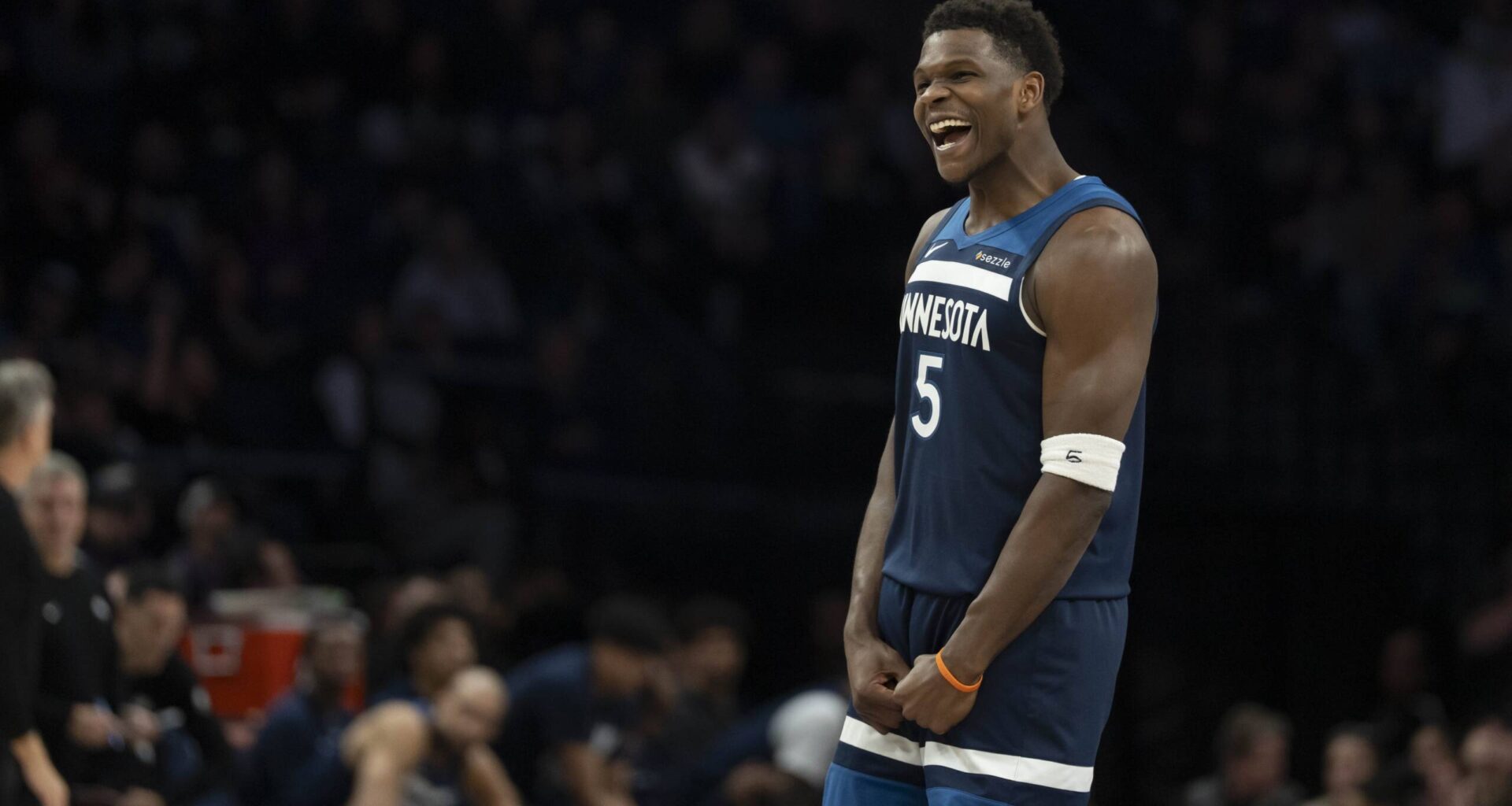
Anthony Edwards has had a decorated start to his career. He has now tallied four All-Star Game appearances in his six seasons, and has been twice selected to second-team All-NBA.
Still, people will always criticize NBA superstars. They can collect awards and championship rings, but people will still question core facets of their game. Some questions are more relevant than others. Still, one that always comes up in conversation is whether a player has a clutch gene.
Even during Edwards’ rapid rise to success, which has turned the Minnesota Timberwolves around, he has not been a stranger to the clutch gene questions.
After five seasons of mediocrity in clutch scenarios, Edwards has been masterful in close games this season. He has showcased numerous heroic plays, dominates clutch-time statistics among his peers, and found a way to showcase his prowess this past weekend at the All-Star Game. As a result, he took home the event’s MVP.
Edwards’ clutch data profile this season is an outlier compared to past seasons. He’s on pace to set a single-season career-high in points and to shatter prior efficiency numbers.
Naturally, in Edwards’ first two seasons in the NBA, he deferred to others in the clutch. Karl-Anthony Towns and D’Angelo Russell’s proven success as scorers slotted them above Edwards in late-game situations.
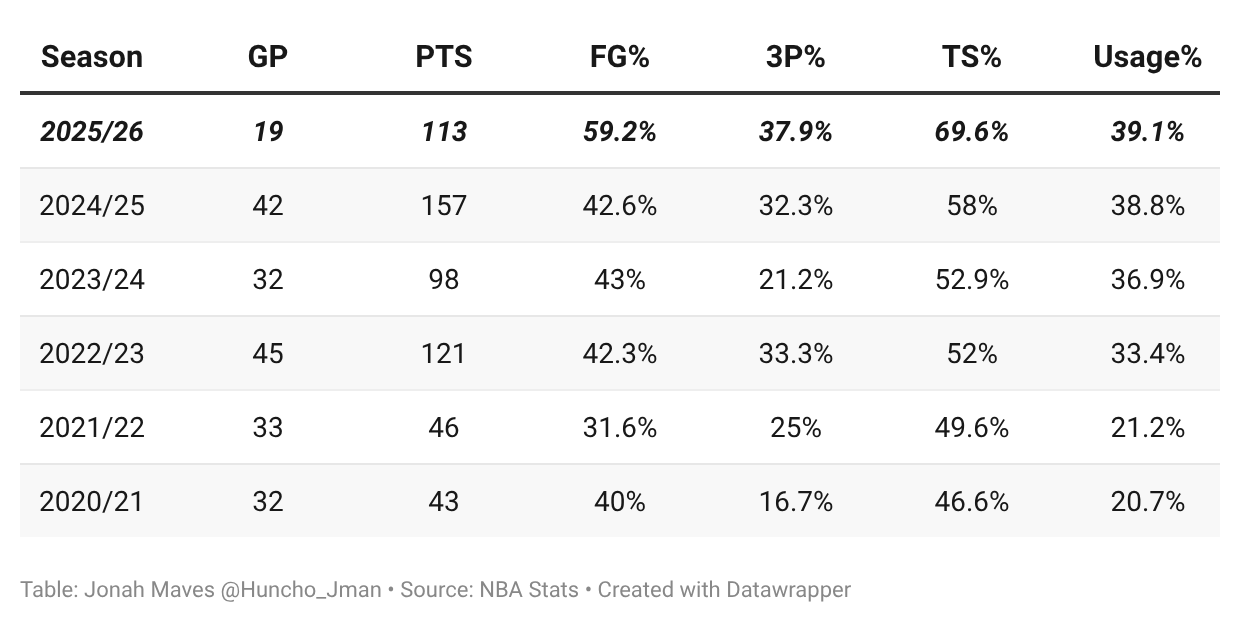
Edwards’ data matched that pecking order. His 43 points and 20.7% usage in his first season, and 46 points and 21.2% usage in his second season, all ranked third on the roster behind Towns and Russell.
However, as Edwards developed as a scorer, he further prioritized his shot-making in his third season. While trading Russell during the 2022-23 season created more opportunities for Edwards, the resulting usage void in clutch time was far too evident to ignore.
Russell had usage rates of 39.6% in the 2021-22 season and 34% in the 2022-23 season. Mike Conley was a significantly lower-usage option than Russell in the clutch. Still, he provided the Timberwolves and Edwards with enough offense to be a more complementary option.
It was clear that Edwards was turning a corner with his late-game scoring and that the Timberwolves were prioritizing him, but there was still plenty of room for development.
Since the 2022-23 season and the Russell trade, Edwards’ usage has increased linearly. As he has become Minnesota’s clear number one option, his usage in clutch time has jumped from 33.4% to a career-high 39.1% this season.
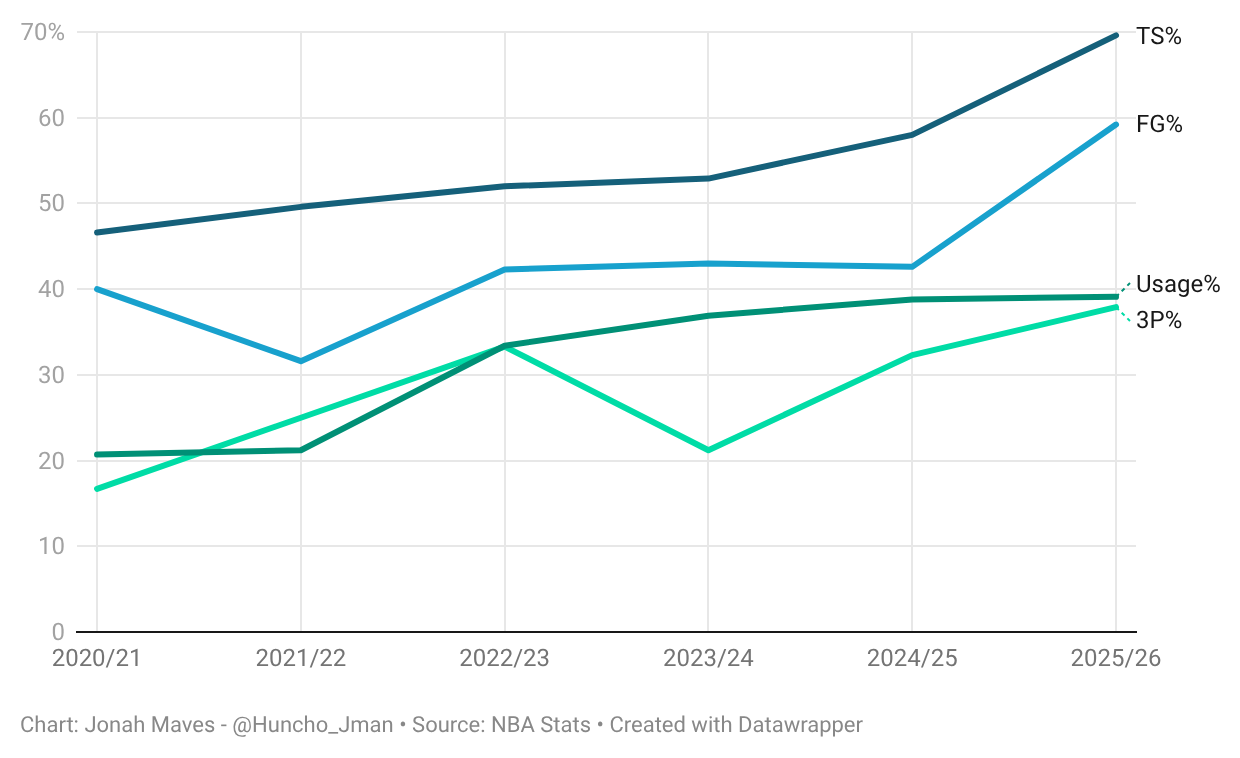
Through Edwards’ core development seasons, he has become more comfortable handling the ball in late-game situations, grown into a playmaker, and developed an elite three-point stroke. He has also improved his true shooting percentage in the clutch.
After hovering around 50% over his first four seasons in the NBA, Anthony Edwards has dramatically improved his clutch efficiency over the past two seasons.
Edwards’ point output (157) was gaudy last season, yet the Timberwolves led the NBA in clutch games. His jump to 58% true shooting was a worthwhile development. However, this season’s outlier numbers have made it difficult to determine how good Edwards truly is in the clutch.
In Edwards’s 19 clutch games this season, he’s shooting an absurd 59.2% from the field with a true-shooting percentage of 69.6%. It is not a sustainable mark, and the rest of the season will likely normalize his data.
It may take one more full season of clutch-time basketball to get the proper sample of Edwards’ clutch performances, but it’s impossible to deny that he has turned a corner as an end-of-game scorer. Even if this season is a dramatic outlier, Edwards’ scoring prowess in late-game situations alone can completely flip close game results.
Clutch minutes are hard to gauge because they are such a small sample, but Edwards has established himself among the league’s best when combining scoring output and efficiency.
Due to Edwards’ ridiculous season, he’s currently the betting favorite on FanDuel and DraftKings for Clutch Player of the Year.
While the honor is more fun than it is legacy-changing, it would serve as a landmark for Edwards. This, after seasons of conversations about whether Edwards could be clutch in late-game scenarios and whether he could find more success with tie-or-go-ahead shots in the game’s final minutes.
Anthony Edwards could finally overcome one of his biggest critiques this season by catapulting himself into becoming one of the league’s best.