
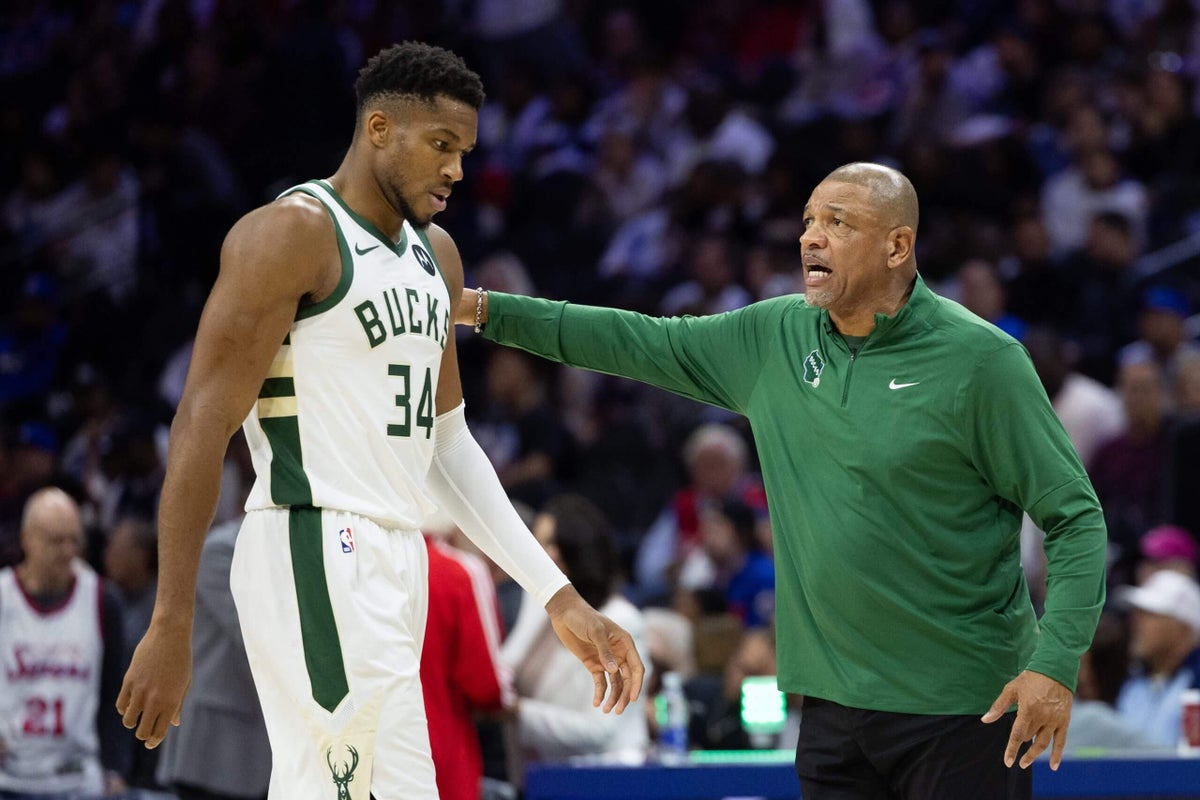
This is not where the Milwaukee Bucks wanted to be with 29 games remaining on their 2025-26 regular-season calendar.
As the Bucks (23-30) prepare for the post-All-Star-break portion of their schedule, they are outside of the playoff picture, 11th in the Eastern Conference standings. They are 1 1/2 games behind the Charlotte Hornets for the final spot in the East’s Play-In Tournament and six games behind the sixth-seeded Philadelphia 76ers.
TeamRecordGB of #1
7th
28-25
12
8th
29-27
12.5
9th
26-29
15
10th
26-30
15.5
11th
24-31
17
12th
23-30
17
Before play resumed after the All-Star break Thursday night, the Bucks were 24th in offensive rating (113.1) and 22nd in defensive rating (116.4), and they were getting outscored by 3.3 points per 100 possessions, according to stats from NBA.com. Their underlying statistics aren’t any better.
In four factor ratings — effective field-goal percentage, turnover percentage, offensive rebound percentage and free-throw rate — on both sides of the ball, the Bucks are above average in only two of the eight total categories with the third-best effective field-goal percentage on offense and 10th-best defensive rebounding percentage, per Cleaning the Glass. Meanwhile, the Bucks are in the bottom 10 leaguewide in five of the six remaining categories, including last in offensive rebounding rate.
Simply put, head coach Doc Rivers has not been able to find a winning set of tactics for the Bucks this season. Giannis Antetokounmpo missing 23 of Milwaukee’s first 53 games put the team in a compromised position, especially considering how much this roster was built to rely upon its superstar. But those are the questions that teams have to figure out every season, and the Bucks haven’t had the answers thus far.
If the Bucks want to make a playoff push, they must find a way to play winning basketball more consistently. Here are three of the biggest questions the Bucks need to answer across their final games.
How well (and how often) can the Bucks play with Giannis?
With Antetokounmpo on the floor this season, the Bucks have outscored opponents by 5.4 points per 100 possessions with an offensive rating of 121.7 (94th percentile) and a defensive rating of 116.3 (45th percentile), per Cleaning the Glass. While that means the Bucks consistently outplay opponents when he is on the floor, that is also the lowest net rating for lineups featuring Antetokounmpo since the 2017-18 season (plus-2.4). To pull themselves out of the lottery and into playoff position, the Bucks will need Antetokounmpo lineups to be even better after the All-Star break.
During his league-mandated media availability at All-Star Weekend, Antetokounmpo hinted he is close to returning to the floor, and while the Bucks need him, they also need him to be fully healthy. After his latest calf strain, the Bucks star admitted he returned too early from his two injuries earlier in the season. To protect him in the 13 games he played after returning to action on Dec. 27, the Bucks kept Antetokounmpo on a minutes limit (30 to 32 per game). That is not something the Bucks should be willing to do this time around.
The minutes limit put real constraints on Rivers’ rotations. Whether it meant taking Antetokounmpo out in the middle of a run or trying to use all his minutes while things were going well, Rivers was forced to deploy him in unusual ways — and the Bucks struggled at times because of it. When Antetokounmpo returns, the Bucks need to make sure he is healthy enough to be played freely.
Once they get Antetokounmpo back fully healthy, they will need to make sure that they maximize his minutes, playing him with the best possible lineups. It might make the team worse in the moments without Antetokounmpo on the floor, but the Bucks’ best basketball has been with their best player on the floor, so they will need to squeeze as much out of those moments as possible as they try to make the playoffs.
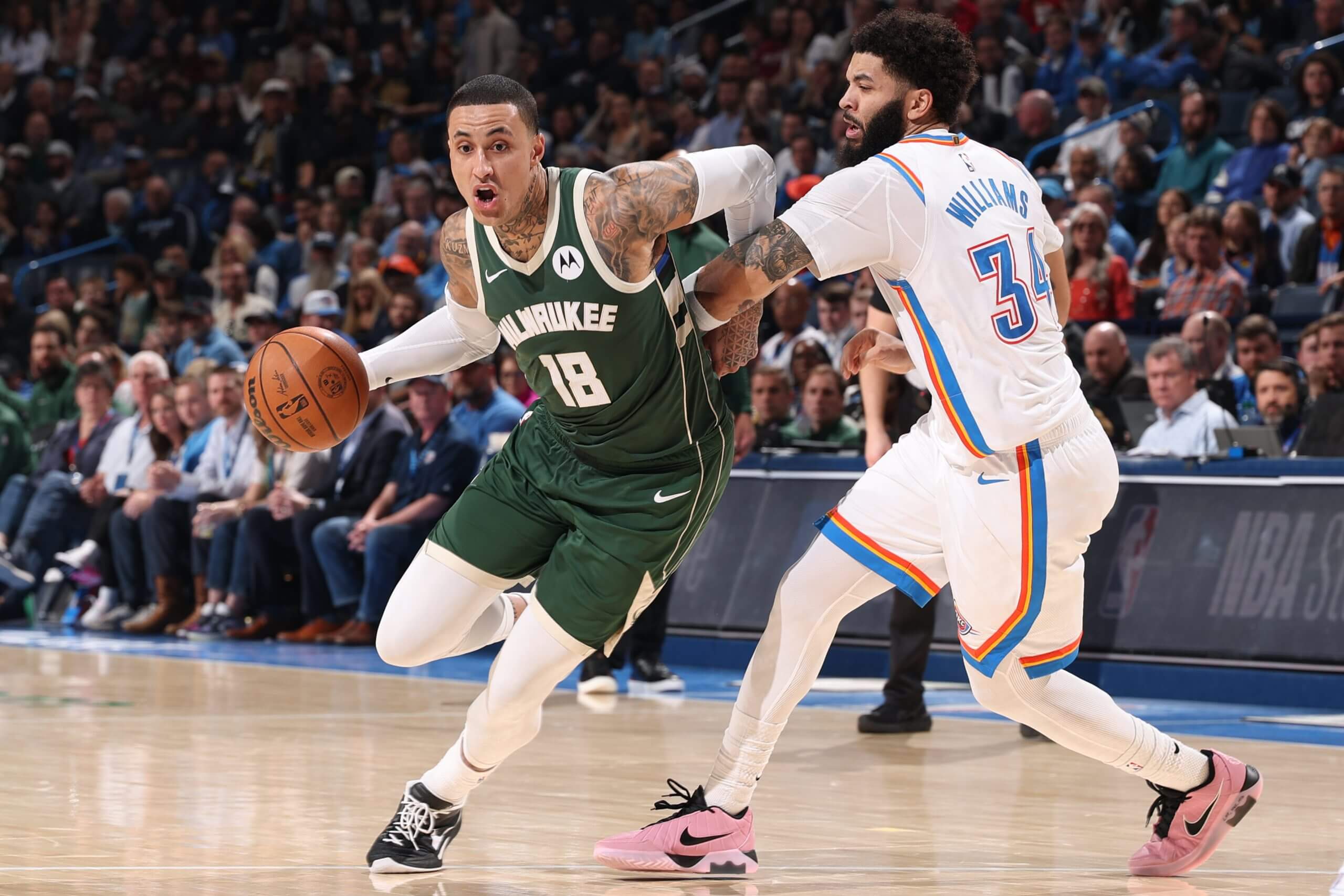
Kyle Kuzma (18) averaged 14.7 points, 4.4 rebounds and 2.1 assists in 16 November games while shooting 51.2 percent from the field. (Zach Beeker / NBAE via Getty Images)
Can Rivers find a formula to make the Bucks more synergistic?
Antetokounmpo has accounted for MVP numbers all season, but multiple players on the roster have also put together strong stretches of play:
Ryan Rollins averaged 18.3 points, 4.2 rebounds and six assists while shooting 48.6 percent from the field, including 41.2 percent from 3, in the first 20 games.
Kevin Porter Jr. has put up strong numbers throughout the season, but his numbers improved to 19.8 points, six rebounds and 8.4 assists per game over the final five games before the All-Star break.
Kyle Kuzma averaged 14.7 points, 4.4 rebounds and 2.1 assists in 16 November games while shooting 51.2 percent from the field.
AJ Green is averaging 13.1 points, three rebounds and 1.9 assists and is shooting 42.9 percent from 3 in February (seven games).
Unfortunately, the Bucks have rarely been able to stack those strong performances to play great basketball as a team. Some of that is just the nature of basketball; there is only one ball, so it can sometimes be difficult to get everyone involved to put up the biggest and most efficient numbers possible at the same time. But the Bucks have struggled too often this season to find those moments of synergy throughout their roster.
On top of that, Rivers has yet to find a way to get the most out of Myles Turner, their second highest-paid player. There have been games where Turner has looked comfortable, and the Bucks have leveraged his skill set, but those moments have been overwhelmingly rare as Rivers hasn’t consistently maximized Turner’s offensive versatility.
It’s worth noting that even if the Bucks haven’t been able to get the most out of everyone in their lineup at the same time, the lineup of Porter, Rollins, Green, Antetokounmpo and Turner has outscored opponents by 13.6 points per 100 possessions in 356 possessions. So, Rivers has found some combinations that have worked, but overall, he needs to find a way to make all the pieces work together more consistently after the break and figure out how to get the most out of all the players on this roster.
Did the Bucks find a winning formula before the All-Star break?
The Bucks won five of their last six games before the break. That stretch was their best six-game segment this season and included their first three-game winning streak of the season. So what, if anything, was actually different about that stretch?
While many of their underlying statistics remained similar to the team’s season-long trend lines, one thing that stood out during the Bucks’ final six games before the break was a newfound focus on offensive rebounding.
Teams coached by Rivers over the past decade have largely decided against pursuing offensive rebounds, and that was true for the start of this season in Milwaukee. Despite being regularly questioned about the Bucks losing the possession battle, Rivers forcefully insisted that his team was just not capable of being a strong offensive rebounding team when asked by The Athletic about the category during the first month of the season.
That changed in the final six games before the All-Star break.
Beginning on Feb. 3, the Bucks recorded the league’s 13th-highest offensive rebounding percentage, grabbing 30 percent of available offensive rebounds. In the season’s first 47 games, they grabbed just 23.6 percent of available offensive rebounds, the league’s lowest rate, according to stats from Cleaning the Glass.
“Our offensive rebounding, that’s something else we’ve been emphasizing,” Bucks lead assistant Darvin Ham told reporters following a 110-93 win over the Oklahoma City Thunder on Feb. 12. “We’ve been losing the possession game, but Doc has unleashed the guys, totally encouraged them (to) go get us extra possessions.”
The Bucks’ strong effort on the offensive glass in those games also carried over to the defensive end, where they secured 79.4 percent of their opponent’s misses, the highest defensive rebounding percentage of any team in the league during that stretch.
It remains to be seen if the team’s focus on rebounding continues after the break, but it is one of the effective ways to control the possession battle. The Bucks, who have been one of the league’s most efficient offensive teams this season, took more shots than their opponents in three of their last six games before the break and took 22 more shots than their opponents overall across those six games.
If the Bucks can consistently win the rebounding battle on both ends, they will give themselves a better chance to win after the break.