
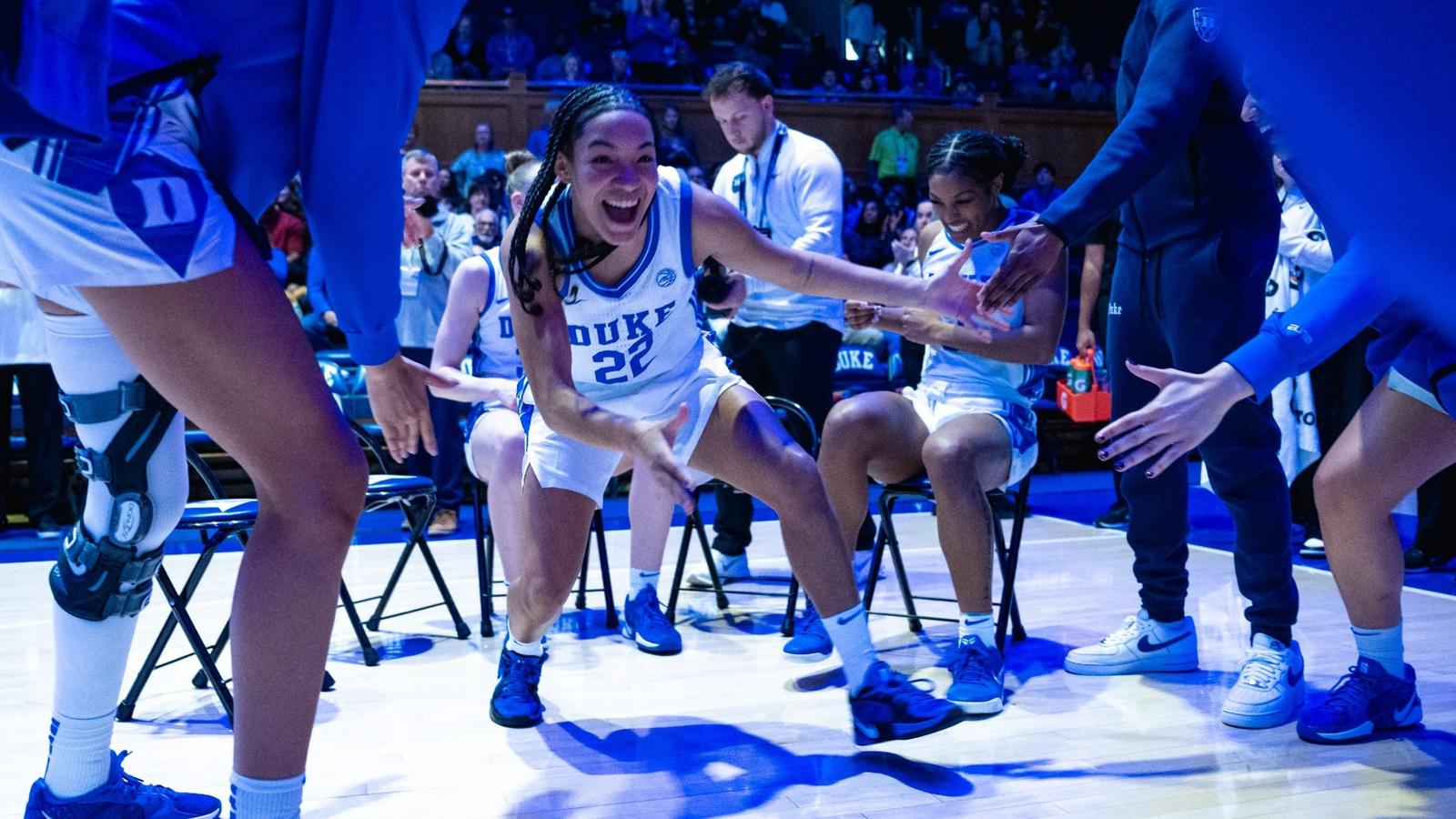
The players had to show their grades to be able to play, placing accountability on the kids to be able to reap the benefits of basketball on Saturdays and practices during the week.
“You had to show your grades,” Mair said. “You had to have threes and fours to be able to play. You had to be academically in a great spot. (It was great encouragement) because I wanted to play on Saturday. I wanted to go to Orchard Gardens and play basketball on my team and go to practices. But if you weren’t getting it done in the classroom, you couldn’t play.”
It was around middle school when Mair recognized she was better than average at the sport. After all, in eighth grade she was playing for both her middle school and for the varsity team at the high school.
Mair excelled on the court for Brooks School in North Andover, Massachusetts where she led the girl’s basketball team to the 2018-19 NEPSAC Class D title and was named the 2020 NEPSAC Class B Player of the Year after averaging 18 points, 8.0 rebounds, 4.0 assists and 3.0 steals per game. This is also the time when Mair began to understand through conversations with her coach Ushearnda Stroud the opportunities basketball could provide her, and perhaps more importantly, for her mother.
“I just played basketball for fun,” Mair said. “I never thought about my mom not having to pay a dime for me to go to school. She took me to colleges. It was the first time I’ve ever been on college campuses. She told me, ‘You can come here for free, play basketball, do all this stuff to help your mom.’ And I was like, maybe this is something I should take seriously.”
Stroud drove Mair down to George Washington for a small camp, her first college camp. And it turned out to be the first Division I offer for Mair.
Mair remembers still being in awe at the thought of her mom not having to pay for anything and she continued to work hard — just like she does every day for Duke — and the bar continued to get higher.
“It just became a goal for me,” Mair said. “When she explained to me what college basketball could do for you as a player, I was like, ‘I definitely want to be a part of this.’ And this is in eighth grade before I’m going to high school. Now I’m going to workouts, maybe twice a day, instead of once, or starting to learn about lifting. I kind of wanted my mom to just live a more peaceful life and if I could do that through basketball, I wanted to be able to give that to her.”
Pineda immigrated to the United States from Honduras when she was around 12 or 13 and then had three children — Trayana, Taina and Talik — by the time she was in her early 20s. Pineda worked hard to provide the best for her kids and for them to have every experience possible.
“She’s always had to work every day of her life,” Mair said. “Since she was a teenager, (she worked) to be able to provide for us. For me to make my mother proud and happy means a lot to me because she sacrificed a lot for every single one of us.”