
Christine Shelby | OBSERVER Staff Writer
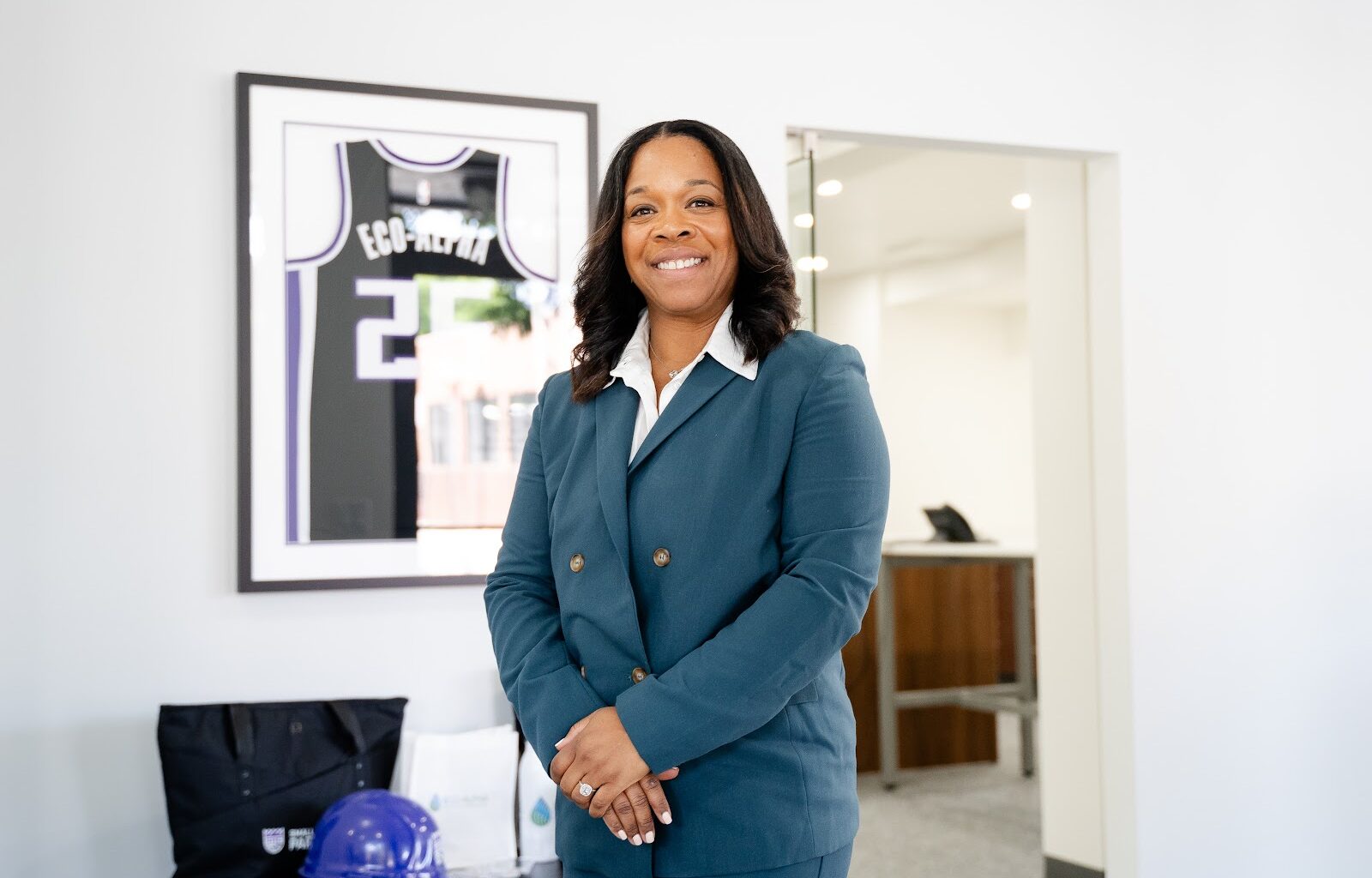
On a bright sunny day in Sacramento, Dr. Melanie Harrison Okoro, founder and CEO of Eco-Alpha Environmental and Engineering Services, Inc., welcomes visitors to her office in Sacramento’s Alkali Flats neighborhood.
In her bright new digs, Dr. Okoro says the hard-scrabble neighborhood “in the ’70s was a vibrant area. It was a very diverse area. There were restaurants, there was community.”
Dr. Okoro didn’t just relocate and renovate an office space; she also created room for others, with tenants living above the office. While she has long-term plans to develop sustainable housing for more residents, she also purchased a lot next to her building. She used her creative insights and hired artist Aliyah Sidqe to create a mural on the lot that beautifies the neighborhood, transforming it into a destination similar to the effect other murals have on different neighborhoods in Sacramento.
Eco-Alpha’s commitment to the community is now highlighted through a partnership with the Sacramento Kings. This partnership is part of the Sacramento Kings’ Small Business Program, which provides small businesses the chance to gain exposure during home games at Golden 1 Center. Eco-Alpha will have opportunities to engage in branding, experiential, and activation services without the significant resources typically required for partnerships with professional sports teams.
While discussing the partnership, Dr. Okoro emphasized the alignment between her company’s values of serving the community in various ways and the Kings’ community-based approach. “It fits perfectly with our mission, especially considering the arena is one of the first LEED Platinum sports venues in the country,” she says.
The partnership spans three years, with Dr. Okoro noting that only four other teams have similar programs for small businesses, positioning the Kings as leaders in social impact. Eco-Alpha is one of 40 other local small businesses participating in the Sacramento program.
Eco-Alpha offers a range of environmental, engineering, and training services. Notably, it provides facility support for buildings throughout the U.S., including sports venues and K-12 schools. The name “Eco-Alpha” reflects Dr. Okoro’s background in ecology and her competitive drive. Initially, her main goal was to establish a sustainable company by utilizing her expertise and the relationships she had fostered at National Oceanic and Atmospheric Administration (NOAA). Securing her first client and consistently delivering high-quality service were early priorities. Word-of-mouth referrals fueled the company’s growth, allowing it to expand its services into the closely allied field of engineering, led by her husband and president of Eco-Alpha, Uzoma Okoro.
As CEO, Dr. Okoro views herself as a “leadership merchant.” For her, this role encompasses more than just management; it involves representing her company professionally in every interaction and engagement. She prioritizes creating a welcoming and connected atmosphere, ensuring that people feel at ease during encounters with her. By actively listening to her clients’ needs, she can provide tailored advice and assist them in progressing strategically towards their goals.
Her approach to sustainability not only focuses on protecting the environment but also on building a lasting company and embodying a sense of stewardship shaped by her upbringing. As a leader, Dr. Okoro recognizes the crucial importance of supporting the next generation of scientists, and the Eco-Alpha internship program is one way she promotes that sustainability, benefiting both her company and early-career scientists.
“I am building a foundation where I believe the innovation comes from a diverse but also a young workforce,” she says.
Dr. Okoro’s journey to championing sustainability and starting a company that now has more than 100 employees nationwide began at Johnson C. Smith University, an HBCU. She initially intended to study biology with aspirations to be a neurosurgeon. However, an early experience at a hospital led her to reconsider. Her introduction to evolution and ecology by her advisor, ecology professor Dr. Joseph Fail, proved pivotal.
“He was tough as nails,” Dr. Okoro recalls. He encouraged her to take his course in evolution, a field she was unfamiliar with. Though she didn’t know what ecology was, she believes her competitive nature and her interest pushed her to do well.
Dr. Okoro continued her studies in ecology and pursued an internship in wetland ecology, spending two years in a laboratory at UNC Charlotte, where she published two papers as an undergraduate. She then briefly attended Wake Forest School of Medicine before a conversation with her former undergraduate advisor led her to the doctoral program at the University of Maryland, Baltimore County, focusing on water in the urban environment.
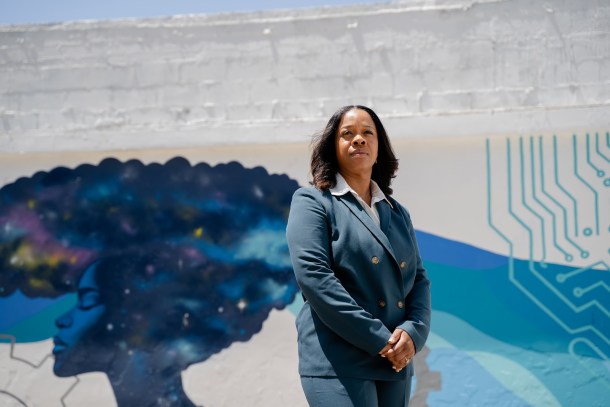 Dr. Melanie Harrison Okoro commissioned a mural outside her building in Alkali Flats to beautify the neighborhood. AmaYah Harrison-Bryant, OBSERVER
During her doctoral program, Dr. Okoro witnessed the importance of science communication, inspired by her advisor’s ability to engage audiences. She published five more articles, recognizing her aptitude for explaining complex problems and their solutions. This skill became a cornerstone of her approach to applied science and serves her well as a leader in her field.
After earning her doctorate, Dr. Okoro joined the NOAA, where she spent nine years working on diverse issues related to threatened and endangered species, water quality, and habitat across California. This experience collaborating with various stakeholders honed her negotiation skills and deepened her understanding of the environmental sector.
In 2018, three months after receiving an employee of the year award, Dr. Okoro made a significant decision to resign from NOAA and establish Eco-Alpha. Her motivation stemmed from a desire to provide higher-quality services than she had observed in her previous role. Even though working for NOAA was a dream job, she made what she says was “the best decision I have ever made.”
When offering advice to anyone interested in becoming an entrepreneur and taking the bold step of working for themselves, Dr. Okoro stresses the importance of understanding one’s purpose. “It doesn’t really matter what you decide to do,” she says, “but until you have tapped into what drives you every single day to get up, then the company isn’t really going to matter, right?”
For Dr. Okoro, competitiveness is the driving force behind Eco-Alpha’s success. Seizing opportunities, creating opportunities, and focusing on the community keep the organization moving in the right direction.
For more information on Eco-Alpha visit eco-alpha.com/home. For information about the Kings’ small business partner program visit nba.com/kings/small-business-partners.EDITOR’S NOTE: This story is part of the Digital Equity Local Voices Fellowship Lab. The Lab initiative is made possible with support from Comcast NBCUniversal.
Related